Combating Musty Odors and Sweating Vents Along the River
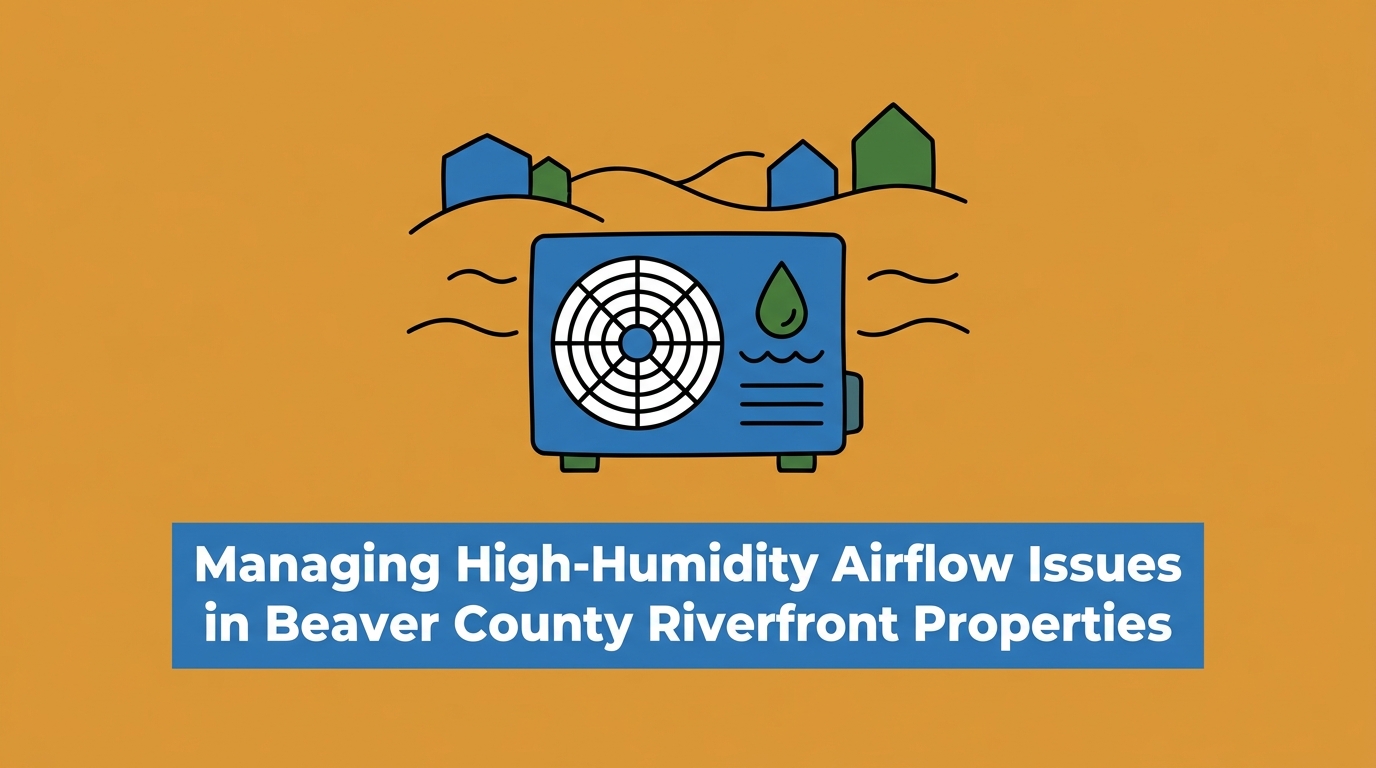
Managing high-humidity airflow issues in Beaver County riverfront properties starts with recognizing a simple truth: your home faces environmental challenges that standard suburban houses simply do not. If your AC is running nonstop but the house still feels damp, or if you are constantly wiping condensation off your supply vents, you are already experiencing the effects of a localized micro-climate. Living near the water creates a unique set of indoor environmental hurdles. During July in Western Pennsylvania, the heavy, moisture-laden air settling in the river valleys puts an immense strain on your cooling system.
The frustration of sweating AC vents, restricted airflow, and lingering musty odors is a daily reality for many homeowners in this specific geography. Standard HVAC maintenance advice often falls short because it assumes a normal, inland moisture load. The real decision point comes when you realize that basic filter changes and standard tune-ups are no longer enough to keep your ductwork dry. Recognizing when your system requires specialized moisture-control interventions is the first step toward reclaiming your indoor comfort. When peak summer humidity hits, addressing the root cause requires a combination of professional air duct cleaning and targeted whole house sanitizing services to fully reset your system's baseline health.
The Micro-Climate Effect: Dew Points in the Ohio and Beaver River Basins
To understand why your HVAC system struggles, you have to look at the regional data. Beaver County riverfront properties near the Ohio and Beaver rivers exist in a distinct micro-climate. Large bodies of moving water create localized temperature inversions and significantly elevated ambient moisture levels. When the sun beats down on the river valleys, evaporation drastically increases the moisture content in the surrounding air. This heavy air settles around your property, creating a continuous, high-pressure moisture load against your home's thermal envelope.
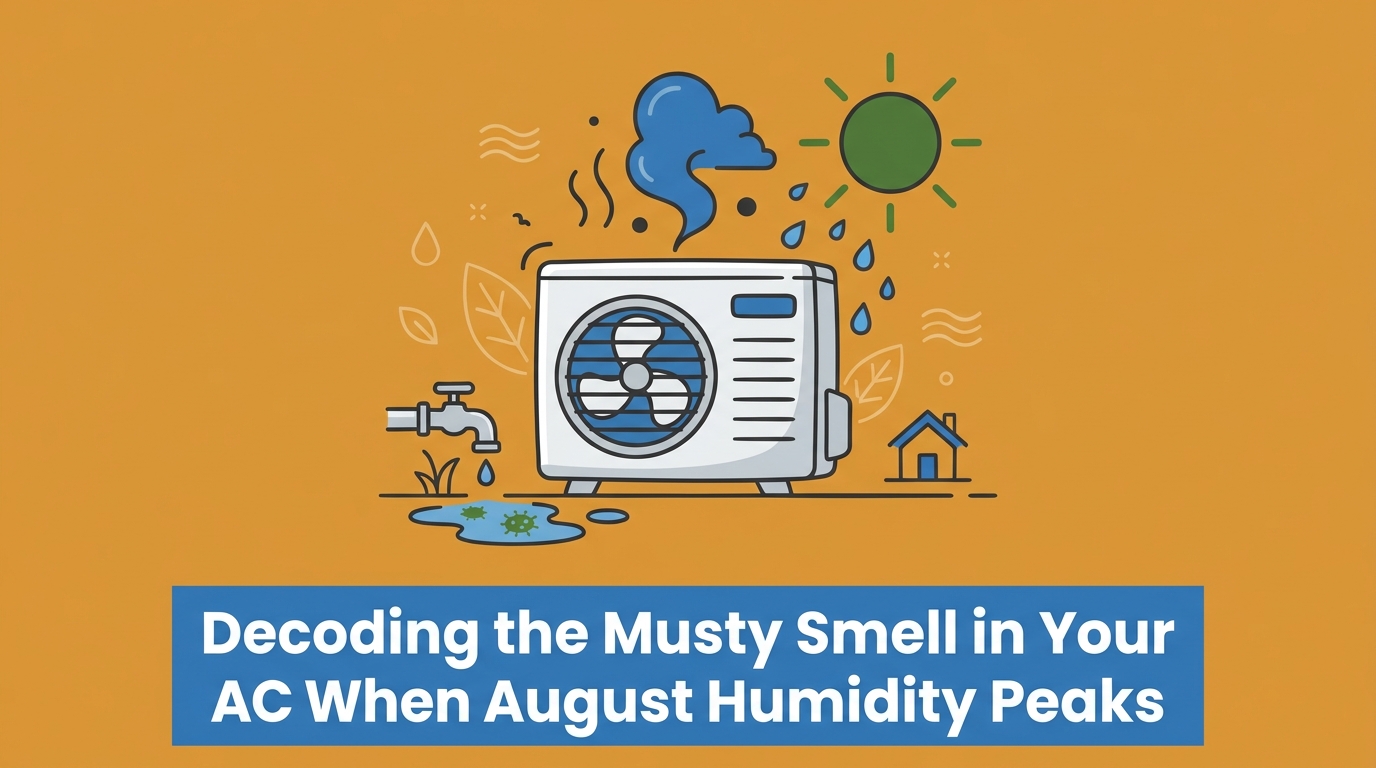
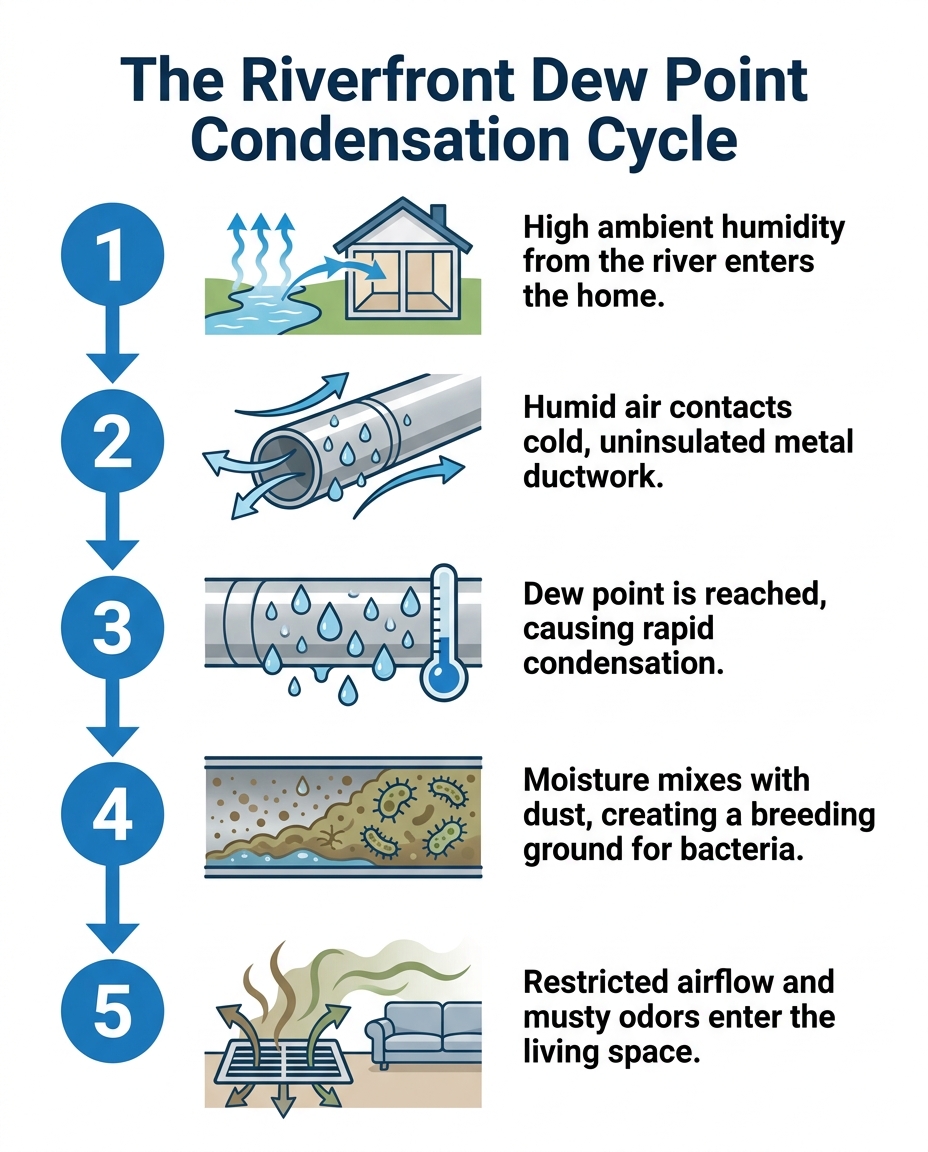
The science behind your sweating vents comes down to the dew point. The dew point is the temperature at which air becomes completely saturated and water vapor turns into liquid water. When warm, highly humid air from the river basin infiltrates your home and interacts with the cold metal of your ductwork, rapid condensation occurs. The cold metal easily reaches the dew point of the surrounding humid air, causing water droplets to form across the surface of the ducts.
The Environmental Protection Agency (EPA) strongly recommends keeping indoor humidity below 60 percent to maintain healthy air quality and prevent biological growth. However, achieving and maintaining this target is remarkably difficult in riverfront micro-climates without specialized interventions. Inland properties at higher elevations simply do not face this relentless volume of moisture. Our deep local expertise in Beaver County shows exactly how this regional riverfront geography directly impacts long-term HVAC health, leading to accelerated wear and tear on unsealed systems.
Understanding the Condensation Cycle in Unsealed Ducts
The condensation cycle in an HVAC system is a continuous loop if left unaddressed. Here is exactly how the process unfolds inside your walls and crawlspaces:
• Infiltration: Warm, moist air enters the home through tiny gaps, poorly sealed windows, or unconditioned spaces like attics and crawlspaces.
• Contact: This humid air meets the cooled exterior surface of the HVAC ductwork, which is actively chilling the air inside to cool your home.
• Condensation: Because the metal duct is colder than the dew point of the humid air, water droplets rapidly form on the metal.
• Saturation: Without proper insulation or sealing, this continuous condensation creates a permanent moisture layer both inside and outside the ductwork.
This cycle does not stop until the moisture source is controlled or the thermal barrier is corrected. Over time, that permanent moisture layer becomes a magnet for every particle of dust passing through the system.
Diagnosing Persistent Vent Smells and Restricted Airflow
Identifying the physical symptoms of moisture overload in your HVAC system is critical for catching the problem early. The most immediate and obvious sign of high-humidity airflow issues is a persistent, damp, musty odor that fills the room the moment the AC kicks on. This sensory cue is a direct indicator that moisture is trapped somewhere within the air distribution system.
Beyond the smell, you will often notice a physical drop in system performance. Excessive moisture inside the ducts acts like a glue. As normal household dust, pet dander, and debris travel through the system, they hit this wet layer and stick. Instead of passing through or being caught by the filter, the debris clumps together. Over time, this wet, heavy sludge builds up along the walls of the ductwork and the delicate fins of the blower motor, physically restricting airflow through the vents. Your system has to work twice as hard to push half as much air into the room.
It is important to differentiate between normal summer cooling operations and problematic condensation levels. A properly functioning system during peak summer humidity might occasionally feel slightly damp for a few minutes upon startup, but it should quickly dry out the indoor air. If your vents are dripping water, or if the musty smell never fades, you have crossed into moisture overload.
A typical pattern we see involves horrible vent smells in a rental property. In one specific case during the summer, a local property manager reached out regarding an overwhelming odor every time the cooling cycle started. The solution required thoroughly cleaning, sanitizing, and checking the furnace components directly through the vents to effectively resolve the unpleasant smells. This highlights how deeply embedded these moisture-driven odors can become.
Bacterial Growth: The Hidden Danger of Riverfront Condensation
The physical restriction of airflow is only half of the problem; the biological consequences of trapped moisture are far more concerning. The combination of dark, enclosed spaces, a steady supply of organic dust for food, and continuous condensation creates an absolutely ideal breeding ground for bacteria, mold, and mildew. Beaver County riverfront properties near the Ohio and Beaver rivers are particularly susceptible to this rapid biological growth due to the sheer volume of moisture available in the air.
Once bacteria and mold take root inside the ductwork, your HVAC blower inadvertently becomes a distribution system for contaminants. Every time the thermostat calls for cooling, the system pushes these microscopic biological pollutants out through the supply vents and into your living space. This significantly degrades indoor air quality and can trigger respiratory irritation, especially in homes with poor ventilation.
The limitations of basic cleaning: When biological growth has established itself in a damp environment, simple vacuuming is entirely insufficient. A standard cleaning might remove the top layer of dry dust, but it cannot eradicate the active biological matter clinging to the damp metal. If the bacteria are not neutralized, the musty odors and air quality issues will return almost immediately.
Another common scenario involves homeowners expressing deep concern about bacteria and contaminants in their air ducts after noticing a decline in their indoor air quality. In a recent case, a thorough duct cleaning paired with a dedicated sanitizing service—verified with before and after pictures—left the ducts completely free of bacteria. This level of professional intervention provides necessary peace of mind and restores safe, breathable air to the home.
Why Generic HVAC Advice Fails for Riverfront Properties
If you search for ways to reduce indoor humidity, you will find a wealth of generic advice that simply does not apply to homes located directly in a river basin. Standard tips are designed for average homes with average moisture loads. They fail completely when tested against the relentless humidity of a riverfront micro-climate.
One of the most persistent myths is that placing a standard portable dehumidifier in the living room will overcome the moisture load of a riverfront property with unsealed ducts. While a portable unit might make the immediate room feel slightly more comfortable, it does absolutely nothing to dry out the unconditioned air trapped in your crawlspaces, attics, or inside the ductwork itself. The ambient moisture from the river will simply outpace the small capacity of a portable unit.
Similarly, basic duct cleaning is only a temporary fix if the underlying condensation issue is ignored. Removing the dust removes the food source for bacteria, but if the ducts continue to sweat, new dust will immediately begin sticking to the wet walls again. To truly solve the problem, you need a comprehensive approach that includes professional sealing, proper insulation, and advanced indoor air quality solutions.
• Run a portable dehumidifier in the hallway. — Riverfront Reality: Inadequate capacity; fails to address moisture inside the actual ductwork.
• Change the HVAC filter once a month. — Riverfront Reality: Helpful, but cannot stop condensation from forming on cold metal surfaces.
• Schedule a basic sweep of the air ducts. — Riverfront Reality: Leaves active bacteria behind if not paired with professional sanitization.
• Keep interior doors open for airflow. — Riverfront Reality: Does not prevent unconditioned, humid river air from infiltrating the return ducts.
Advanced Moisture Control and Professional Duct Sealing
To permanently resolve high-humidity airflow issues, you must stop the condensation cycle at its source. This requires actionable, professional-level solutions designed specifically for mitigating extreme moisture loads. When peak summer humidity arrives, your system needs physical defenses to keep the wet air separated from the cold metal.
The first line of defense is proper duct insulation. Insulation acts as a thermal barrier. By wrapping the metal ducts in high-quality insulation, you prevent the cold surface of the duct from coming into direct contact with the warm, humid ambient air. If the humid air cannot touch the cold metal, it cannot reach its dew point, and condensation will not form.
The second critical step is professional duct sealing. Unsealed ducts act like a vacuum, pulling unconditioned, humid river air directly from your attic or crawlspace into the return system. By sealing every joint, seam, and connection with professional-grade mastic or metal tape, you ensure that only conditioned air circulates through the system. For a deeper understanding of how summer humidity affects your ductwork, it is vital to recognize that sealing the system is the only way to lock out external moisture.
Finally, integrating a whole-home dehumidification system that works in tandem with your sealed ductwork provides the ultimate control. Unlike portable units, a whole-home system treats the air as it passes through the main HVAC unit, ensuring that perfectly dry, conditioned air is distributed to every room in the house.
The Importance of Vapor Barriers
In addition to insulating the ducts themselves, managing the environment around the ducts is highly effective. Vapor barriers are thick, durable plastic sheets installed in unconditioned spaces like crawlspaces and basements.
1. Blocking Ground Moisture: The barrier prevents moisture from the soil from evaporating up into the crawlspace and adding to the humidity load.
2. Protecting the Ductwork: By lowering the ambient humidity in the space where the ducts are housed, the risk of condensation is drastically reduced.
3. Handling Extreme Loads: These barriers are especially critical for homes facing extreme summer moisture loads from nearby rivers, acting as a physical shield against the micro-climate.
Professional Sanitization: The Definitive Riverfront Solution
Once the moisture is actively controlled through sealing and insulation, the final step is to address the damage that has already been done. Controlling the humidity stops new growth, but the existing bacterial and mold growth inside the system must be completely eradicated. Beaver County riverfront properties near the Ohio and Beaver rivers often require a heavy-duty reset to restore safe air quality.
The professional sanitization process is entirely different from standard debris removal. While regular cleaning uses negative pressure and agitation to pull dry dust out of the system, sanitization targets biological contaminants. Technicians apply specialized, EPA-registered antimicrobial solutions directly into the ductwork. These solutions are formulated to coat the interior surfaces, breaking down bacterial cell walls and neutralizing mold spores on contact.
The long-term benefits: Combining aggressive moisture control with complete, professional sanitization yields lasting indoor air quality. By removing the food source (dust), neutralizing the biological growth (sanitization), and eliminating the water source (sealing and insulation), you create an environment where bacteria simply cannot survive. This comprehensive, multi-step approach is the only proven way to permanently resolve the musty odors and airflow restrictions that plague riverfront homes.
Frequently Asked Questions About Riverfront Air Quality
Why are my AC vents sweating in the summer?
Sweating occurs when warm, humid air hits the cold surface of the AC vent, reaching its dew point. This causes the water vapor in the air to rapidly turn into liquid condensation on the metal. In high-humidity areas, this process happens continuously whenever the AC is running.
How do you fix condensation in ductwork?
Fixing it requires reducing indoor humidity, ensuring proper airflow, and adding insulation to the ductwork. You must create a thermal barrier so the humid air cannot touch the cold metal. Sealing leaks in the ducts also prevents unconditioned air from entering the system.
Does duct cleaning help with high humidity?
While cleaning removes the debris that traps moisture, it must be paired with sanitization and sealing to actually solve humidity issues. Cleaning alone will not stop condensation from forming. Removing the heavy, wet dust will, however, immediately improve restricted airflow.
Why is my house so humid with the AC running?
An oversized AC unit is often the culprit, as it will short-cycle, cooling the air too quickly without running long enough to extract humidity. Your AC serves as a natural dehumidifier, but it needs sufficient runtime to pull the moisture out of the air. Leaky ductwork pulling in humid outside air can also overwhelm the system.
How does river proximity specifically affect indoor humidity?
Living near a river creates a localized micro-climate effect where constant evaporation drastically increases ambient moisture levels around the property. This heavy, moisture-laden air places a much higher baseline humidity load on your home's envelope compared to properties situated further inland at higher elevations.
Take Control of Your Riverfront Home's Airflow Today
Living by the river offers beautiful views and a great lifestyle, but it does not mean you have to accept musty odors, sweating vents, and poor indoor air quality. Beaver County riverfront properties near the Ohio and Beaver rivers face unique environmental challenges, but the physics of moisture control remain the same. With the right combination of professional duct sealing, proper insulation, and targeted sanitization, your home's air quality can be fully restored.
If you are tired of battling damp air and strange smells every time the air conditioner turns on, it is time to address the root cause of the problem. Consult a local expert for a thorough inspection of your ductwork to determine where the moisture is infiltrating. By investing in professional whole house sanitizing services, you can permanently eliminate the biological growth and breathe easier all summer long.

Customer Reviews


Superior Air Duct cleaning did a phenomenal job in a timely manner with the tech “Rich” being very professional ,personable and considerate of our property! He explained things as he proceeded and answered all our questions!
I LOVE that they provide before & after photos to see the difference. Give them a try… you won’t regret it
Pam T.
Robert was on schedule and communicated what time he would arrive. He was polite, professional, and respectful of our home. I wanted to wait a couple weeks before posting a review because I wanted to see if the duct cleaning actually made a difference. I am happy to say it did! I vacuum multiple times a week and have already noticed a significant reduction in the amount of dust cleaned up each time. As a home with pets, there will always be something to clean, but getting the ducts cleaned has definitely helped improve the air quality and reduce the dust.
alice A.
Technician Rob arrived early explained the days agenda and then proceeded to work methodically and meticulously over the next 6+ hours cleaning my ductwork. Courteous and professional they answered all of my questions and went above and beyond the call of duty. They even located an old dusty box of rat poison buried in our vents. My only regret is not finding these guys sooner. As a realtor of 22 years and owner of a newly purchased (now dust free) home I highly recommended!
Eric K.
Excellent service! I’ve used them to clean out my air ducts as well as my dryer vent duct and they are excellent. I was very pleased with both jobs and will continue to use them in the future. Great communication as well- from the time I scheduled the appointment until they were at my door.
Erika C.
We had such an amazing experience with Superior Air Duct Cleaning. They were so nice and friendly and did an amazing job. I loved seeing the before and after pictures. Besides doing an amazing job cleaning our air ducts they were so quick at responding and setting up the appointment. We will definitely be using them in the future.
Amanda C.