The Hidden Challenge of Retrofitted HVAC Systems in Historic Homes
Your century-old property has unmatched architectural charm, but navigating hard-to-reach ductwork in older Pittsburgh homes becomes a glaring problem when summer heat sets in and your retrofitted AC struggles to push air through hidden, narrow vents. You notice that some rooms stay stubbornly warm, while others feel humid and stale. The core issue lies behind your delicate plaster walls. Upgrading an older Western PA or Pittsburgh historic home with modern climate control almost always involves squeezing bulky ductwork into tight, non-standard spaces that were never designed to hold it.
As a homeowner, this leaves you facing a difficult decision point. When those hidden passages inevitably fill with decades of dust, pet dander, and construction debris, you have to choose between specialized, non-destructive extraction methods and standard, aggressive cleaning tools. The brute-force whips and heavy high-pressure compressed-air tools used in modern drywall construction can cause severe vibrations, threatening the structural integrity of your fragile walls. Protecting your home requires a targeted approach that respects the architecture while thoroughly removing the buildup. Addressing these hidden challenges is the first step toward significantly improving your indoor air quality without putting your historic property at risk.
Understanding the Architectural Quirks of Pittsburgh's Older Housing Stock
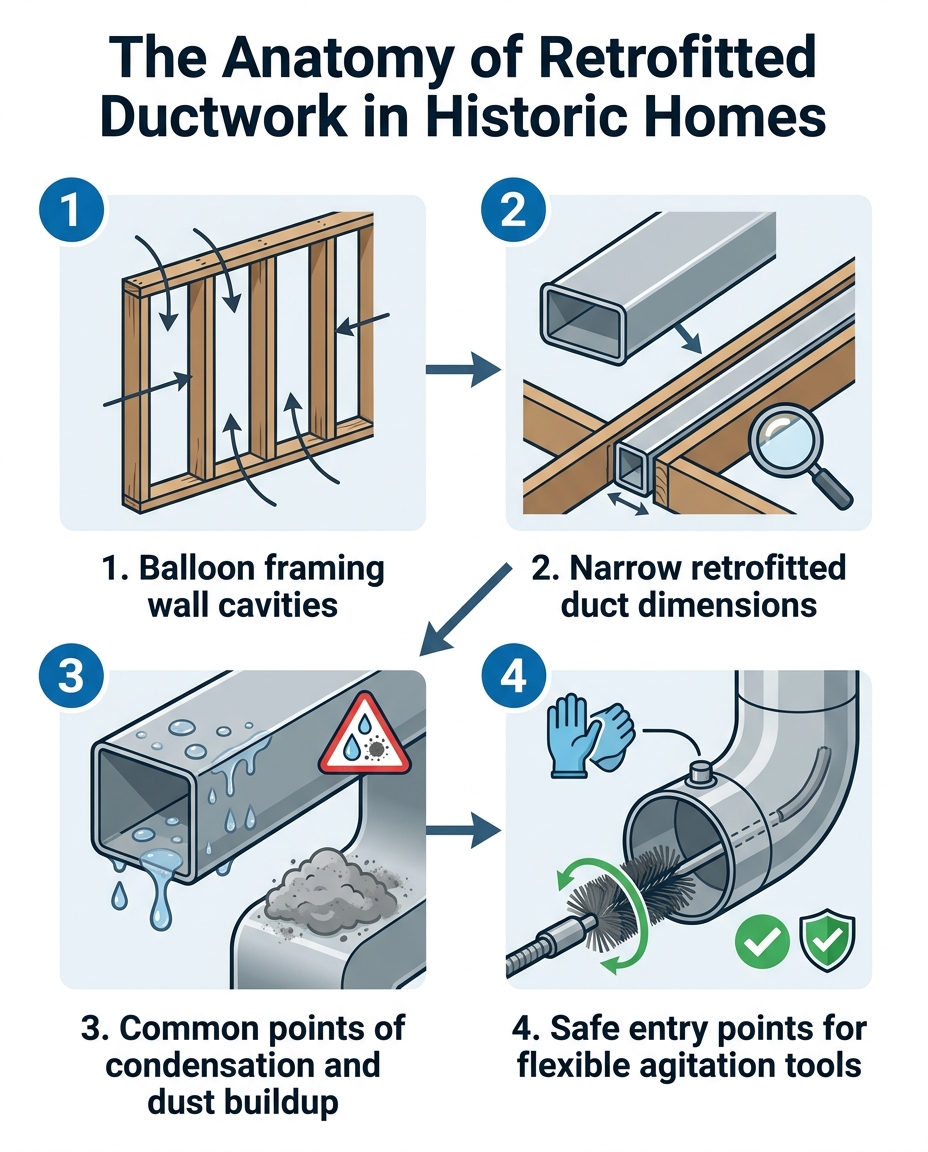
The legacy of balloon framing: To understand why retrofitted HVAC systems behave the way they do, you have to look at how older Western PA and Pittsburgh historic homes were actually built. Prior to the 1940s, a construction technique called balloon framing was incredibly common. In a balloon-framed house, the wooden wall studs run continuously from the foundation sill all the way up to the roof plate. This creates long, uninterrupted vertical cavities inside the walls. While this method made for sturdy homes, it created deep, narrow, and structurally complex pockets that modern contractors must navigate.
The transition from coal to forced air: Most of these historic homes were originally heated by coal fireplaces, gravity furnaces, or radiant boiler systems. These early heating methods relied on cast-iron radiators or natural convection, meaning the original architects never left room for bulky sheet-metal ductwork. When forced-air heating and central cooling became the standard, installers had to find creative ways to route the necessary supply and return lines through the house.
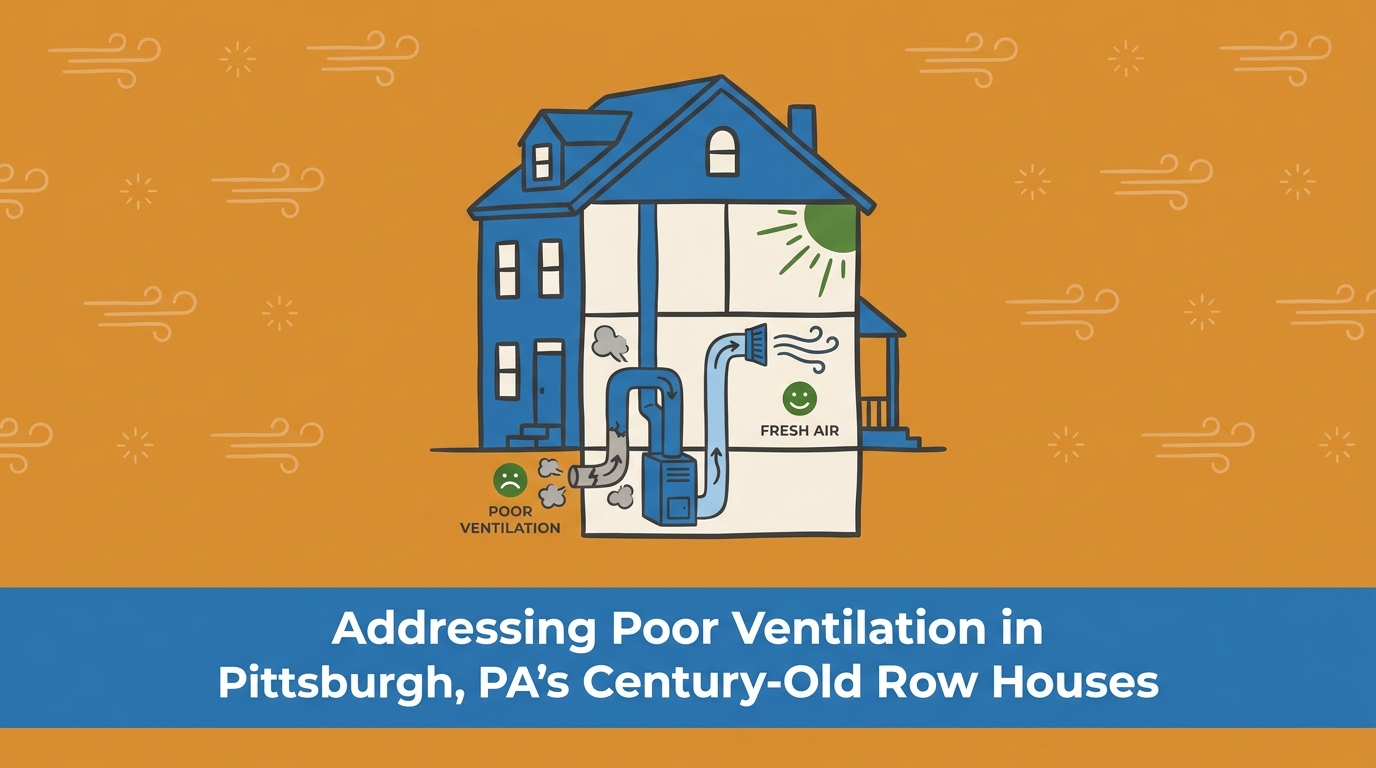
Squeezing ducts into tight spaces: Because tearing down the original plaster was rarely an option, contractors retrofitted the ductwork by panning floor joists and sliding narrow, flattened ducts into those tight balloon-framed wall cavities. They squeezed metal trunks into non-standard spaces, often crushing the ductwork slightly or introducing sharp, unconventional bends just to make the system fit. This historical reality means that scheduling professional air duct cleaning in a historic property is vastly different from cleaning a modern suburban build. The pathways are tighter, the turns are sharper, and the access points are highly restricted.
Why Retrofitted Ductwork Restricts Airflow and Traps Debris
The physics of restricted airflow: When you force a modern HVAC system to push conditioned air through retrofitted HVAC systems, you immediately run into issues with static pressure. Modern standard ductwork typically utilizes 8-inch round trunks or wide rectangular channels that allow air to flow smoothly with minimal resistance. In contrast, the retrofitted ducts in older homes are often reduced to 3.25-by-10-inch rectangular stacks—or even smaller—just to slide behind the lath and plaster.
• Typical Dimensions — Modern Standard Ductwork: Wide, standardized round or rectangular trunks. — Retrofitted Historic Ductwork: Narrow, flattened, or custom-crimped profiles.
• Routing Path — Modern Standard Ductwork: Straight runs planned during initial blueprinting. — Retrofitted Historic Ductwork: Complex routing squeezed into existing wall cavities.
• Airflow Dynamics — Modern Standard Ductwork: Low static pressure, smooth and consistent velocity. — Retrofitted Historic Ductwork: High static pressure, turbulent air at sharp bends.
• Debris Accumulation — Modern Standard Ductwork: Gradual, even dust settling over many years. — Retrofitted Historic Ductwork: Rapid agglomeration at elbows and crimped joints.
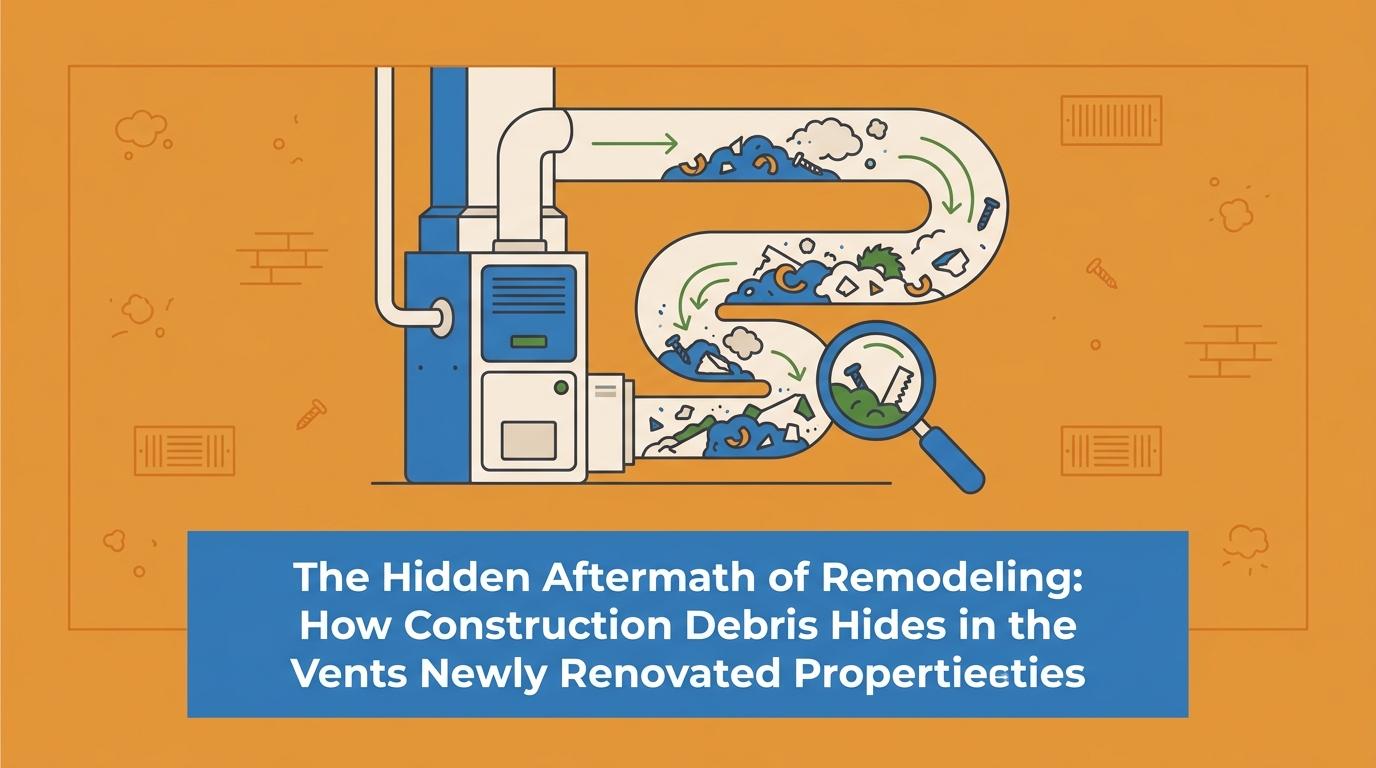
Sharp turns and complex routing: Because installers had to navigate around existing load-bearing beams, historic fireplaces, and intricate staircases, retrofitted ducts feature far more 90-degree elbows and sharp turns than modern systems. Every time the air is forced to rapidly change direction, it creates turbulence. This turbulence slows the air down, causing suspended particulate matter—like dust, pollen, and pet dander—to drop out of the airstream and settle on the metal walls.
Accelerated debris trapping: Over time, this restricted airflow naturally accelerates dust and allergen agglomeration. The smaller the duct, the faster a thin layer of dust impacts the overall volume of air that can pass through. A half-inch of buildup in a massive modern trunk might barely register on your energy bill, but that same half-inch of debris inside a narrow historic wall stack can severely choke off airflow to an entire floor of your home.

The Impact of Summer Humidity on Narrow Duct Systems
The Problem: When July heat and high humidity hit Western PA, retrofitted HVAC systems face their toughest test of the year. Older homes often have ductwork routed through unconditioned spaces, such as damp stone basements, crawlspaces, or poorly insulated attics. As your air conditioner works overtime to push 55-degree air through these narrow metal channels, the stark temperature difference between the cold duct and the hot, humid surrounding air creates a severe condensation risk.
The Cause: Moisture naturally forms on the outside of the ducts, but in older systems with poor sealing, that humid air is often pulled directly into the ductwork itself. When moisture mixes with the heavy dust and allergen buildup trapped in those sharp, narrow turns, it creates a damp, nutrient-rich environment. This is the exact recipe required for mold, mildew, and bacteria to thrive out of sight. Heavy summer cooling loads simply make these hidden airflow and air quality issues far more obvious to the people living in the home.
The Solution: Addressing this requires specialized care that goes beyond a standard vacuuming. One local family moving into an older property during the peak of summer experienced severe allergies and difficulty sleeping. The culprit was a combination of high seasonal humidity and neglected retrofitted ductwork. By thoroughly extracting the debris and performing a complete whole house sanitizing treatment on the vents and furnace, the indoor air quality improved dramatically, allowing the family to finally breathe clearly and sleep comfortably in their new home. Managing the moisture and removing the organic buildup is the only way to stop the cycle.
The Risks of Using Standard Cleaning Tools on Historic Plaster and Lath
The fragility of century-old walls: Modern homes are built with drywall—large, uniform sheets of gypsum board screwed directly into wooden studs. Drywall is relatively flexible and easy to patch. Older Western PA and Pittsburgh historic homes, however, were built using plaster and lath. Builders would nail thousands of thin horizontal wooden strips (the lath) across the studs, leaving small gaps between them. They would then push wet plaster over the wood. The plaster would ooze through the gaps and slump down on the inside of the wall, drying into hardened hooks known as "keys." These hidden plaster keys are the only thing holding your beautiful, historic walls together.
The danger of aggressive vibration: Standard duct cleaning companies often rely on heavy, rigid high-pressure compressed-air tools and aggressive pneumatic whip tools designed to beat the dust out of modern, durable sheet metal. If a technician feeds one of these heavy-duty tools into a narrow retrofitted duct squeezed tightly against a plaster wall, the resulting violent vibration can be disastrous. The rapid shaking easily snaps the brittle, century-old plaster keys hidden behind the wall. Once those keys break, the plaster on the visible side of the wall begins to bulge, crack, and eventually pull away from the lath entirely.
Choosing a non-destructive approach: You cannot use brute force on historic architecture. Preserving the charm and structural integrity of your home requires an approach specifically tailored to regional architecture. It is critical to rely on proper air duct cleaning methods that prioritize finesse over friction. Specialized equipment is required to gently coax debris out of tight turns without transferring kinetic energy into the surrounding wooden framing and delicate plasterwork.
Surgical Access: Navigating Tight Turns Without Architectural Damage
Safely extracting decades of dust from retrofitted HVAC systems requires a highly technical, step-by-step process. Here is how specialized technicians protect your home while achieving a deep clean:
1. Strategic Access Point Mapping: Before any equipment is turned on, technicians map the complex routing of your retrofitted ducts. They identify safe entry points—usually at the furnace trunk line or through existing floor registers—ensuring they never have to cut blindly into original plaster or historic woodwork.
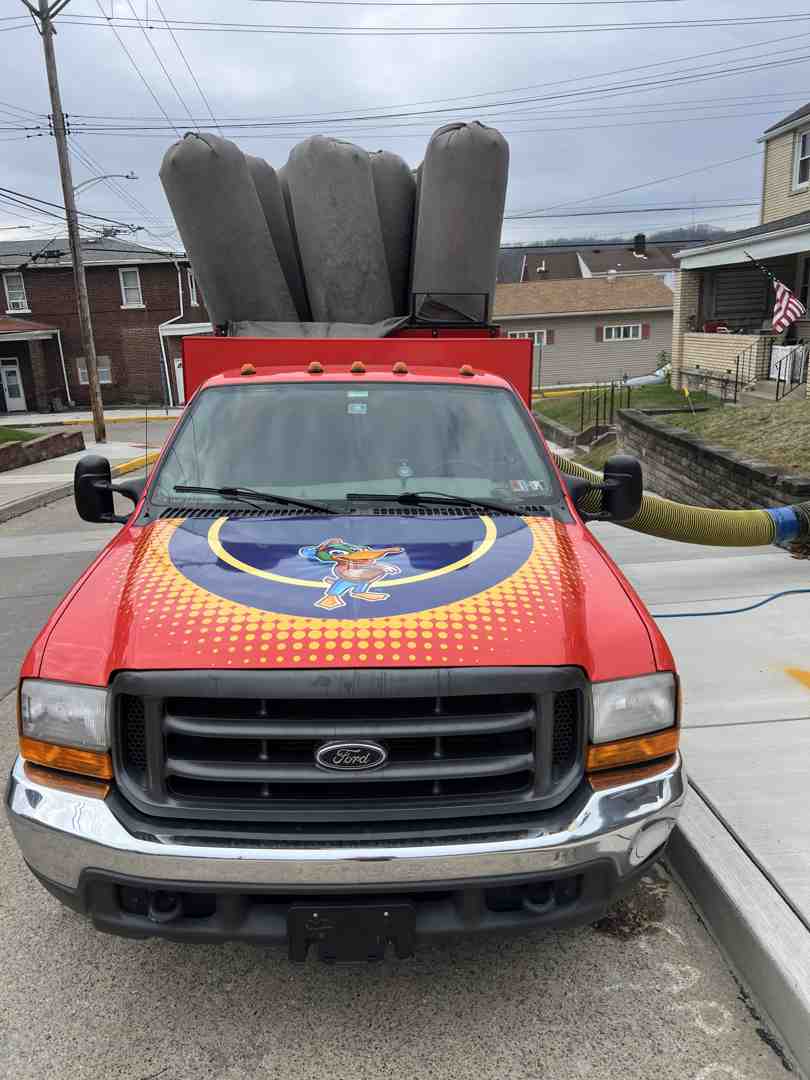
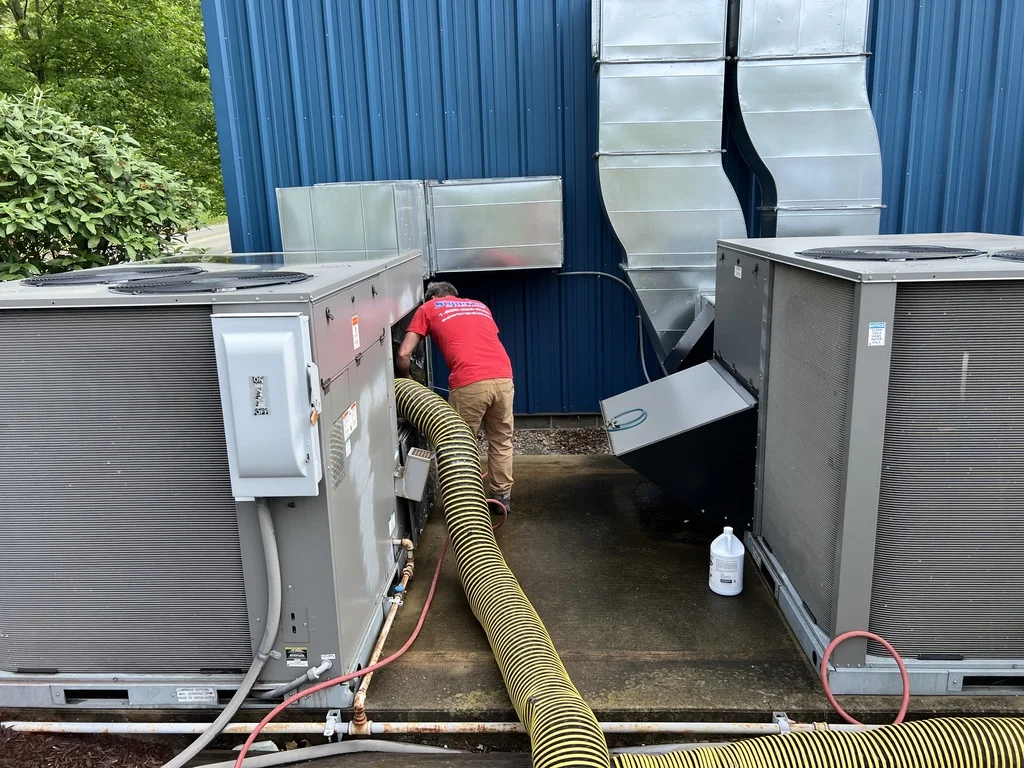
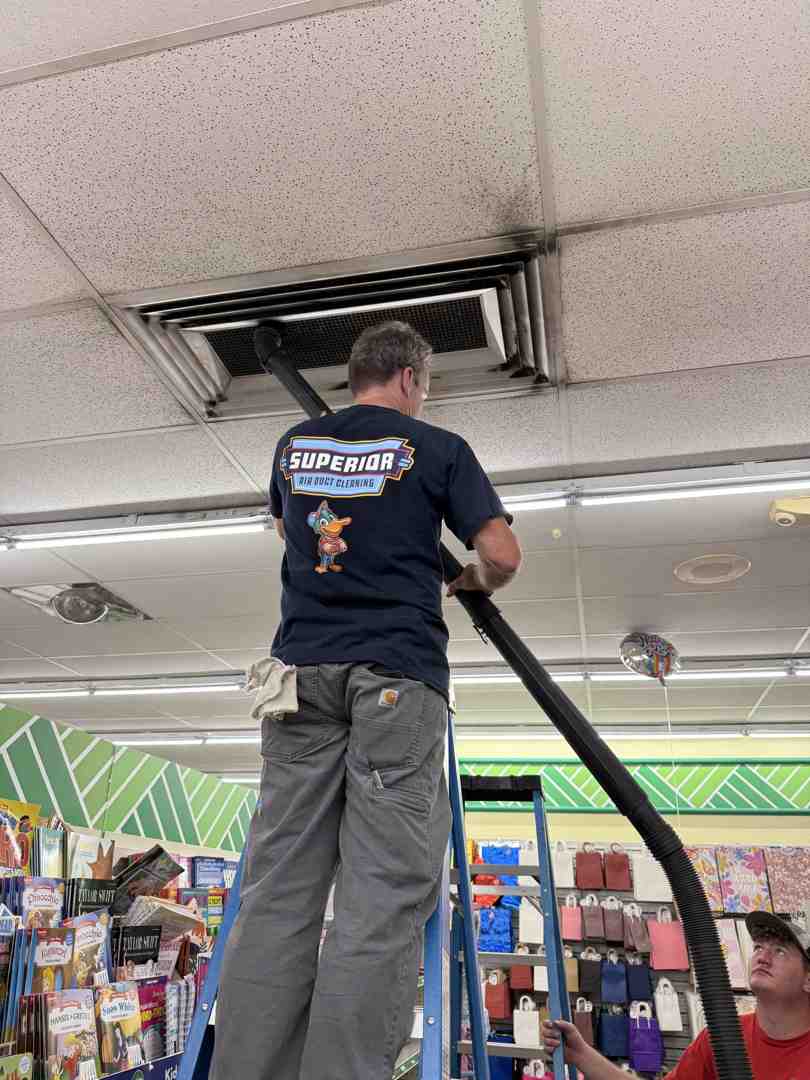
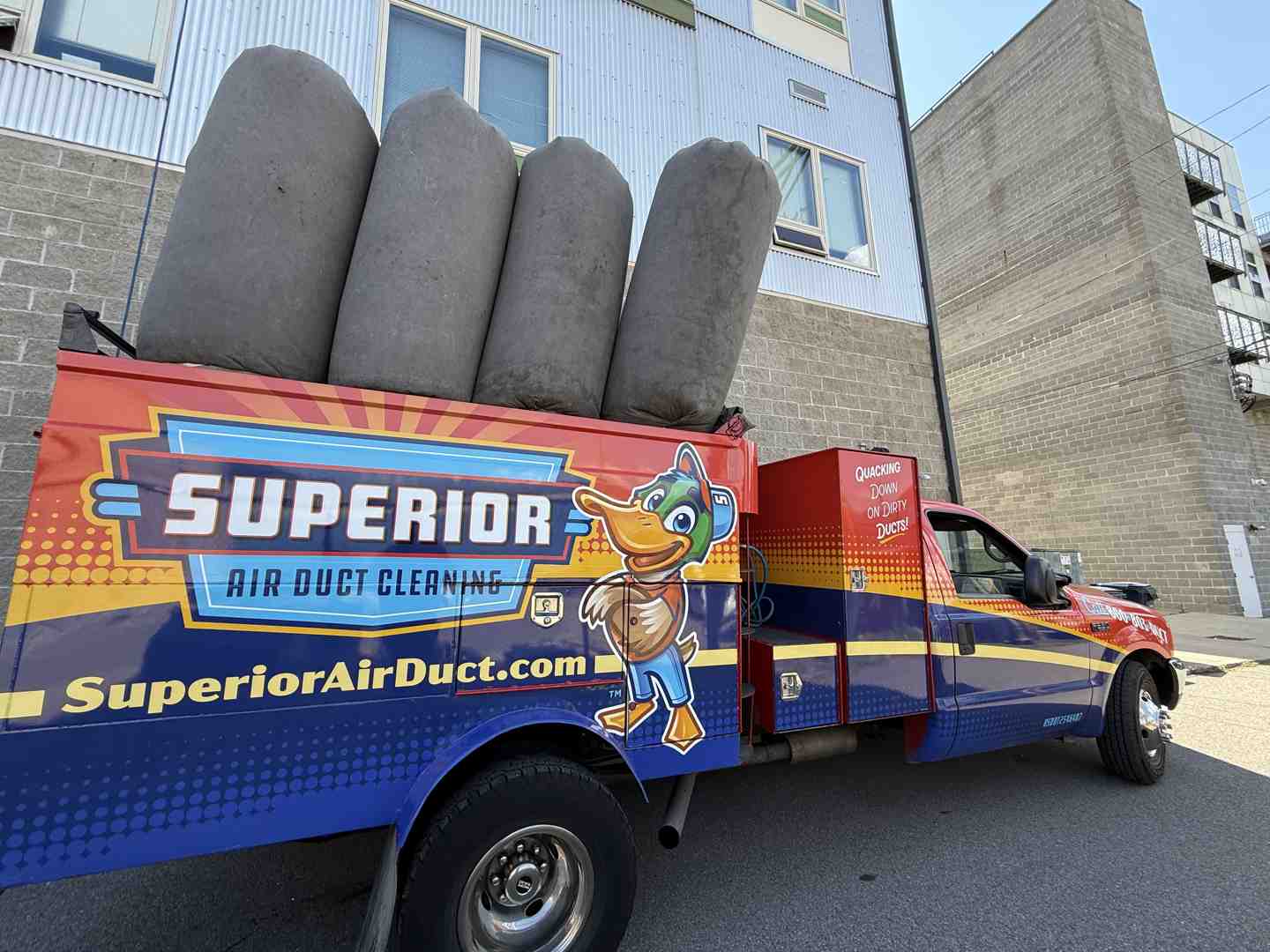
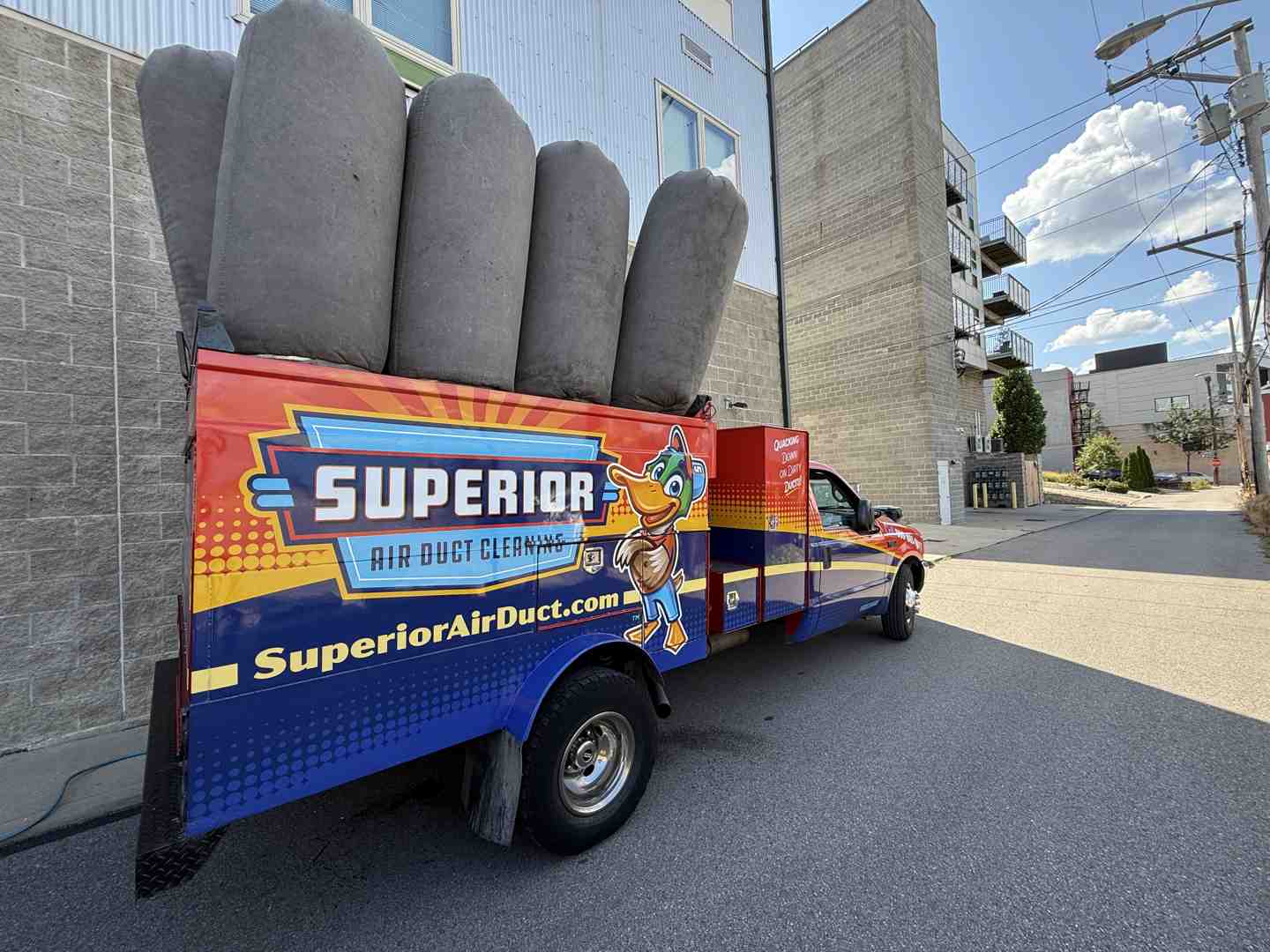
2. High-Velocity Negative Pressure Setup: Instead of relying on rigid brushes to push debris around, professionals connect a high-powered, truck-mounted vacuum to the main trunk line. This places the entire system under intense negative pressure, creating a massive vacuum effect that pulls air and dust directly toward the collection unit. The suction does the heavy lifting, eliminating the need for brute force inside the delicate branches.
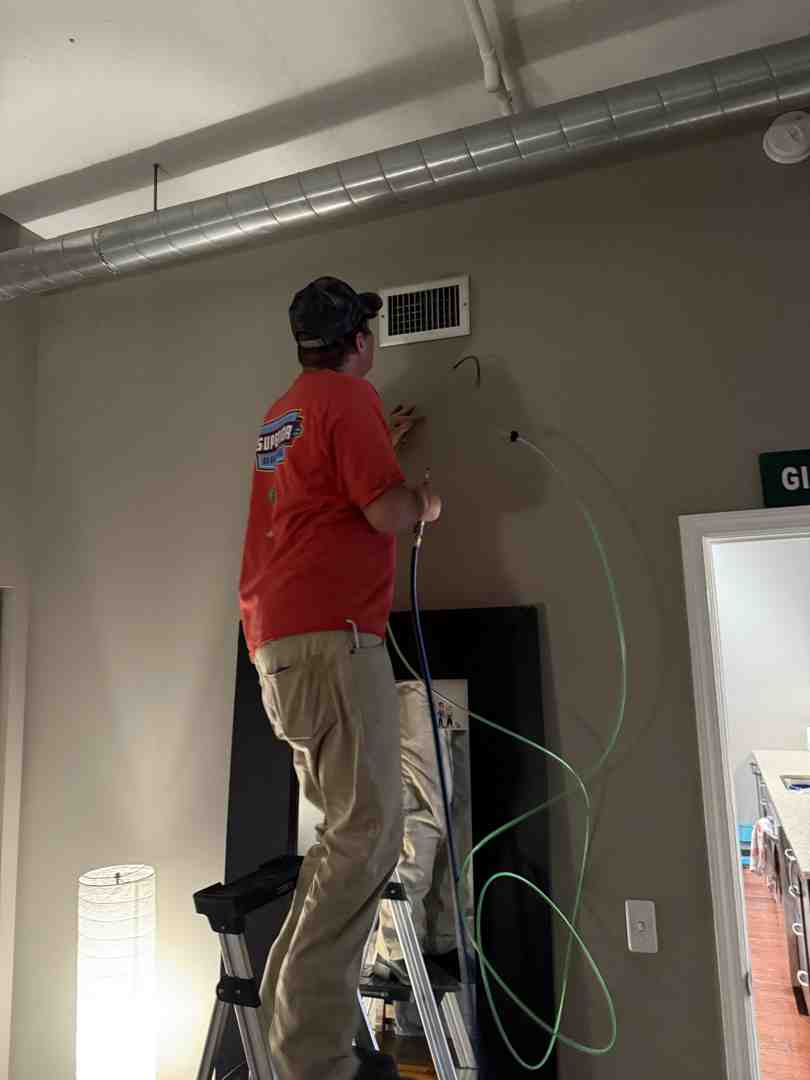
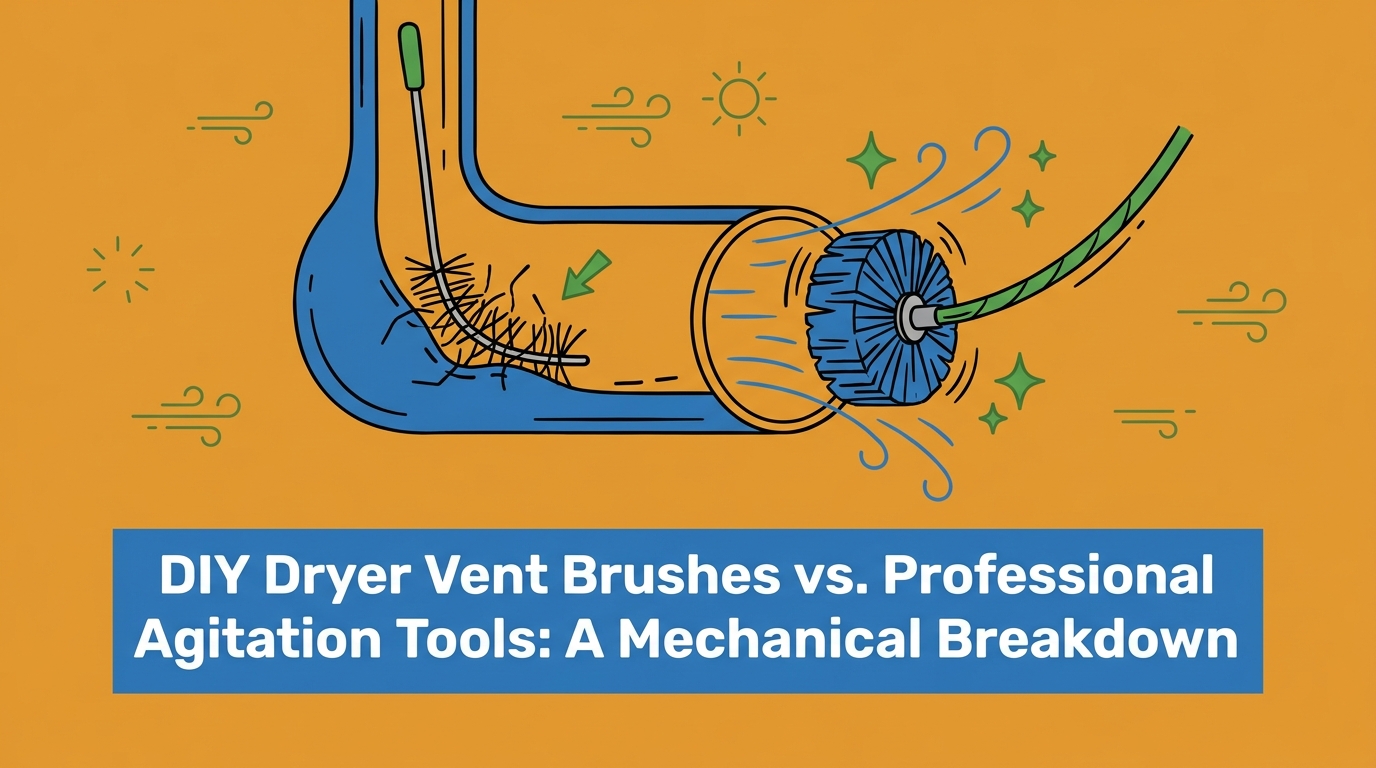
3. Flexible Agitation Deployment: To dislodge stubborn buildup inside sharp turns and narrow wall stacks, technicians use specialized flexible agitation tools. These soft-bristled, air-driven instruments are designed to snake smoothly through tight 90-degree elbows and flattened ducts. They gently sweep the interior walls of the ductwork without vibrating the surrounding framing.
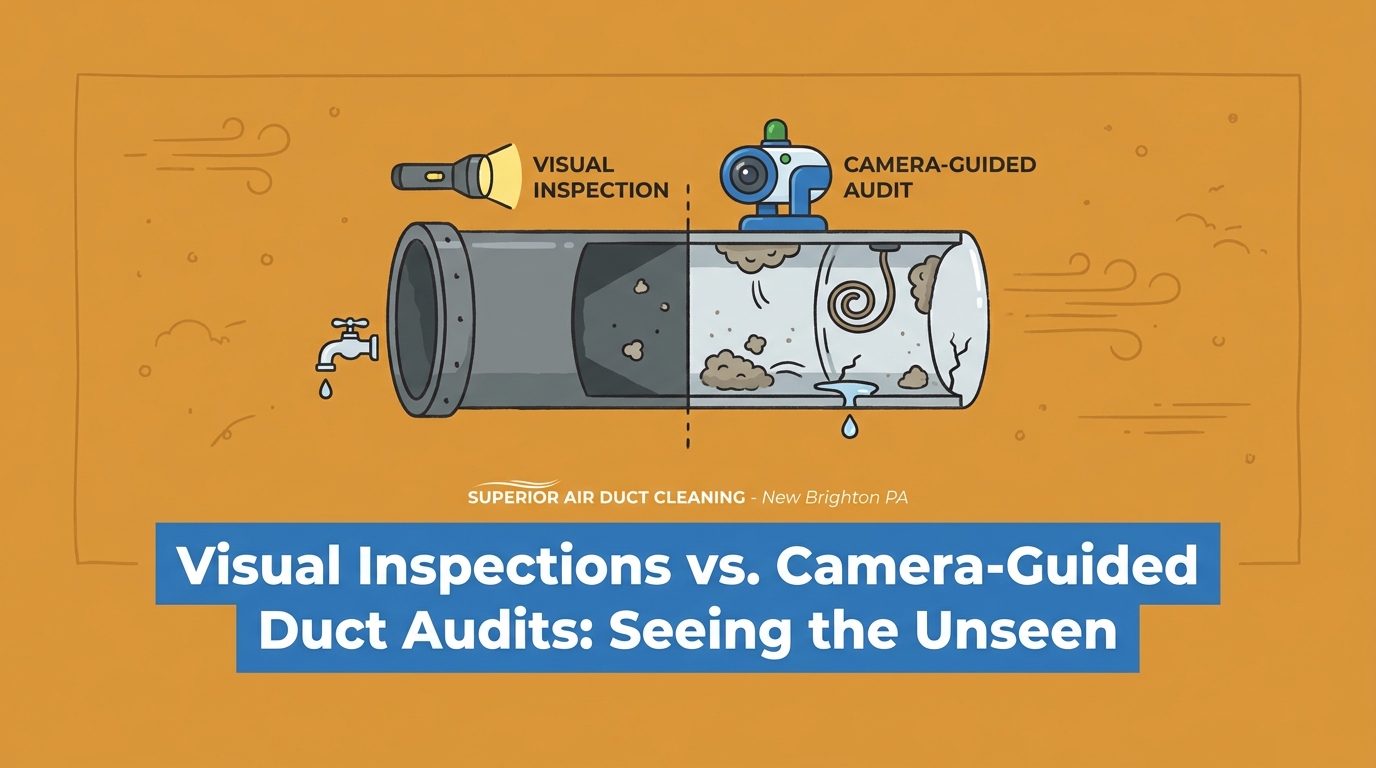
4. Real-Time Verification: Throughout the process, the removal of dust, pet hair, and microbial growth is monitored. Another homeowner researching local companies to address bacteria concerns in their retrofitted system noted the importance of this careful approach; technicians provided knowledgeable service, answered specific architectural questions, and took the time to do the job right, ultimately providing before-and-after pictures that proved the narrow ducts were completely clear.
Frequently Asked Questions About Cleaning Ducts in Historic Homes
How do professionals clean narrow ductwork in older homes?
Professionals clean narrow ductwork in older homes by using flexible agitation tools and high-velocity negative pressure. Instead of forcing rigid, heavy compressed-air tools into tight spaces, technicians snake soft, air-driven whips through the retrofitted lines. A powerful truck-mounted vacuum is attached to the main trunk, pulling the dislodged dust safely out of the home without putting mechanical stress on the narrow metal walls.
Can duct cleaning damage plaster walls?
Yes, duct cleaning can damage plaster walls if improper, aggressive tools are used by inexperienced technicians. Standard heavy-duty pneumatic whips vibrate violently, which can snap the fragile plaster "keys" holding the wall to the wooden lath. To prevent structural stress, specialized techniques use gentle, flexible tools that clean the duct interior without transferring damaging vibrations to the surrounding older Western PA or Pittsburgh historic home architecture.
How do you clean hard to reach air ducts?
You clean hard-to-reach air ducts by identifying strategic access points and utilizing truck-mounted vacuum systems with extended reach capabilities. Technicians map out the hidden retrofitted HVAC systems to find the safest entry points, often working from the basement trunk lines and individual room registers. Flexible rods and air-whips are then guided through the complex turns to ensure every inch is reached without cutting into walls.
Why do retrofitted HVAC systems get dirtier faster?
Retrofitted HVAC systems get dirtier faster because their smaller duct diameters naturally restrict airflow, and their complex routing creates turbulence. When forced air hits a sharp, non-standard bend inside a wall cavity, the air slows down, allowing suspended dust and allergens to drop and settle. This rapid agglomeration means older homes often require more frequent monitoring than modern builds with straight, wide ductwork.
Does summer humidity affect the ductwork in my older home?
Yes, high summer humidity significantly affects the ductwork in older homes by increasing the risk of severe condensation. Because retrofitted ducts often pass through unconditioned spaces like stone basements or attics, the clash between the cold air inside the duct and the humid air outside causes moisture to form. This moisture mixes with trapped dust, creating an ideal breeding ground for mold and bacteria during peak cooling months.
Protect Your Historic Home's Air Quality and Architecture
Maintaining an older Western PA or Pittsburgh historic home is a labor of love, and your indoor air quality shouldn't have to suffer just because your house was built before modern climate control. Retrofitted HVAC systems require specialized care to overcome the challenges of narrow dimensions, sharp turns, and delicate surrounding plaster. By choosing a transparent, step-by-step technical approach, you ensure that decades of accumulated dust, allergens, and summer humidity-driven microbial growth are safely extracted.
You deserve the peace of mind that comes from knowing your property is being treated with the utmost respect. If you notice restricted airflow, lingering odors, or increased dust settling in your older home, it is time to address those hard-to-reach ducts. Reach out to a local expert today to discuss your specific architectural needs and schedule a careful, non-destructive cleaning that protects both your family's health and your home's historic integrity.

Customer Reviews


Superior Air Duct cleaning did a phenomenal job in a timely manner with the tech “Rich” being very professional ,personable and considerate of our property! He explained things as he proceeded and answered all our questions!
I LOVE that they provide before & after photos to see the difference. Give them a try… you won’t regret it
Pam T.
Robert was on schedule and communicated what time he would arrive. He was polite, professional, and respectful of our home. I wanted to wait a couple weeks before posting a review because I wanted to see if the duct cleaning actually made a difference. I am happy to say it did! I vacuum multiple times a week and have already noticed a significant reduction in the amount of dust cleaned up each time. As a home with pets, there will always be something to clean, but getting the ducts cleaned has definitely helped improve the air quality and reduce the dust.
alice A.
Technician Rob arrived early explained the days agenda and then proceeded to work methodically and meticulously over the next 6+ hours cleaning my ductwork. Courteous and professional they answered all of my questions and went above and beyond the call of duty. They even located an old dusty box of rat poison buried in our vents. My only regret is not finding these guys sooner. As a realtor of 22 years and owner of a newly purchased (now dust free) home I highly recommended!
Eric K.
Excellent service! I’ve used them to clean out my air ducts as well as my dryer vent duct and they are excellent. I was very pleased with both jobs and will continue to use them in the future. Great communication as well- from the time I scheduled the appointment until they were at my door.
Erika C.
We had such an amazing experience with Superior Air Duct Cleaning. They were so nice and friendly and did an amazing job. I loved seeing the before and after pictures. Besides doing an amazing job cleaning our air ducts they were so quick at responding and setting up the appointment. We will definitely be using them in the future.
Amanda C.