Why the Questions You Ask Before Hiring a Duct Cleaning Company Can Make or Break the Job
Knowing the right questions to ask before hiring a duct cleaning company can be the difference between a thorough, professional job and a costly mistake. The duct cleaning industry has a well-known problem with bait-and-switch pricing, incomplete work, and fly-by-night operators — and homeowners in Western Pennsylvania and Northeast Ohio are not immune to these tactics.
Here are the 10 most important questions to ask any duct cleaning company before you let them into your home:
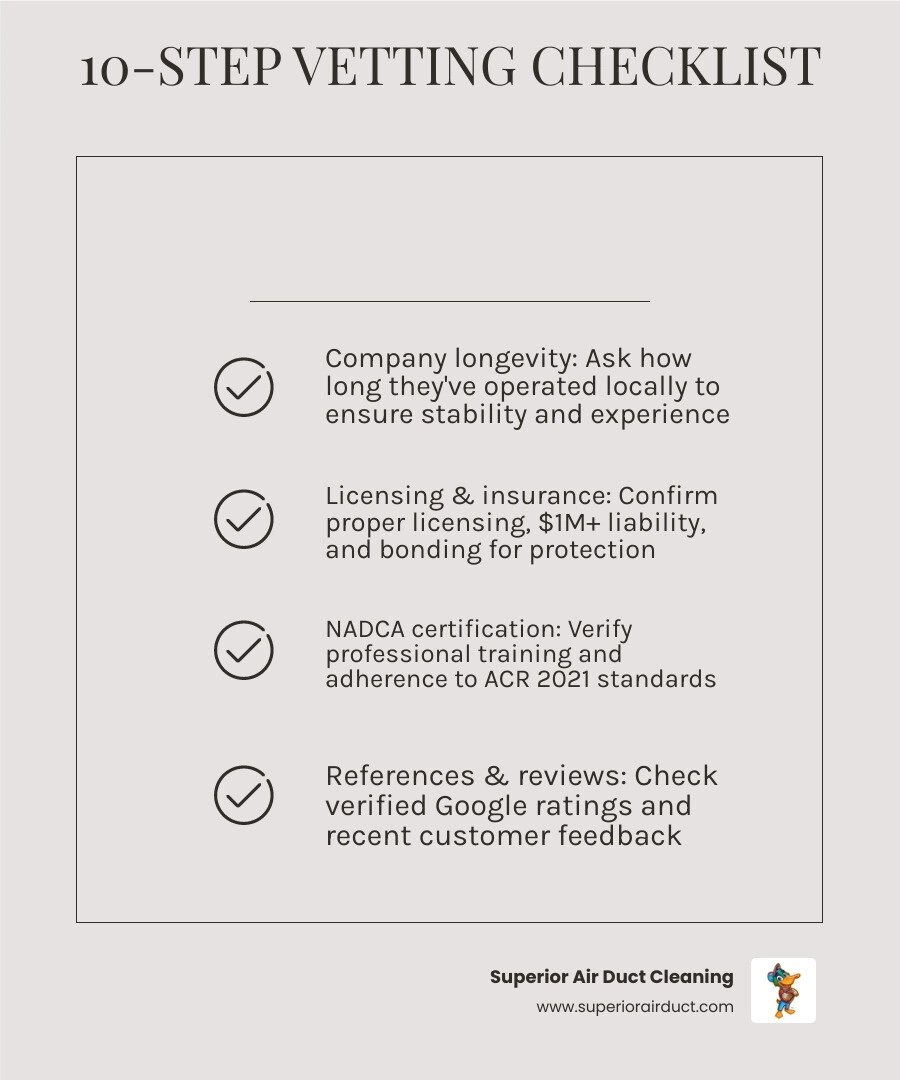
1. How long has your company been in business?
2. Are you licensed, insured, and bonded?
3. Are you NADCA-certified or do you follow NADCA/EPA standards?
4. Do you have references or verified customer reviews?
5. What equipment and cleaning methods do you use?
6. Will you clean the entire HVAC system — ducts, furnace, coils, and registers?
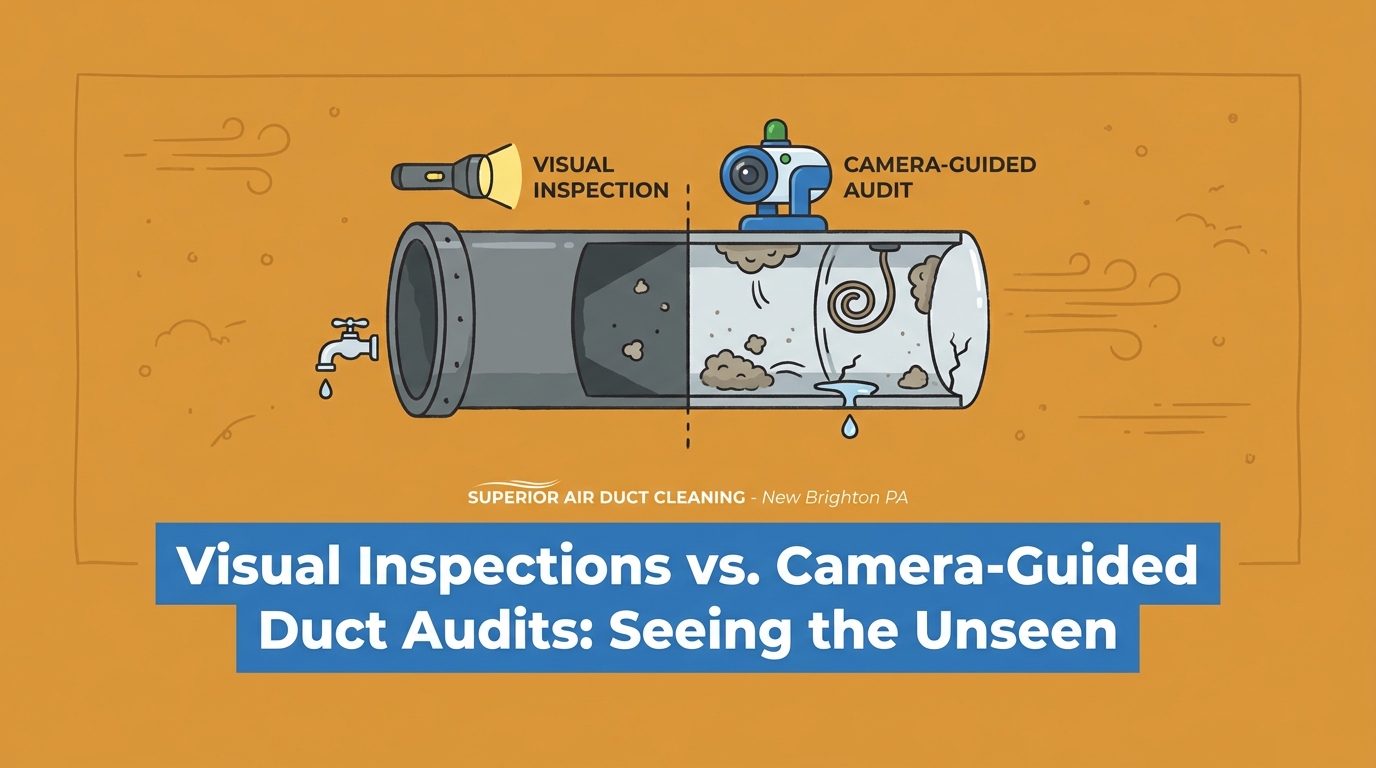
7. Do you perform before-and-after visual inspections with photos or video?
8. Is the quoted price the final price, or are there hidden fees?
9. Do you use any chemical biocides, disinfectants, or sanitizers?
10. How will you protect my home, floors, walls, and pets during the cleaning?
A company that welcomes these questions and answers them clearly is a company that has nothing to hide. One that hedges, rushes past them, or gets defensive is worth a second look — before you book.
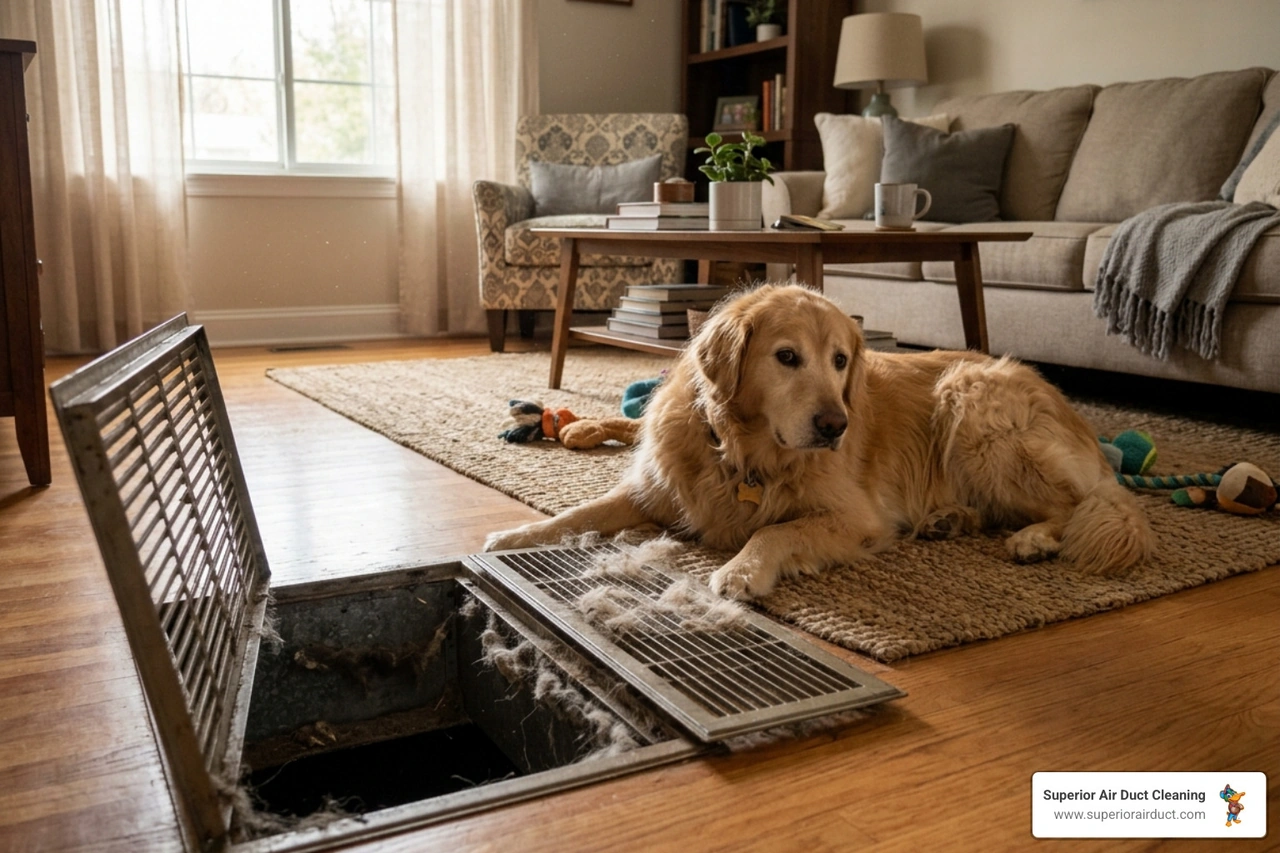
The stakes are real. Your HVAC system circulates air through your home 8 to 12 times every day. What lives inside those ducts — dust, pet dander, mold spores, construction debris — gets pushed into every room, every time the system runs. That matters for anyone in your household dealing with allergies, asthma, or respiratory concerns.
This guide walks through each of these questions in detail, so you know exactly what to listen for and what answers should raise a red flag.
Questions to Ask Before Hiring a Duct Cleaning Company in Pittsburgh, PA
If you are searching in Pittsburgh, Cranberry Township, Beaver Falls, New Brighton, Monaca, Aliquippa, Ambridge, Rochester, or nearby communities we serve, start with the basics. The first two questions often tell you whether you are dealing with a stable professional company or a risky one.
For a broader overview of how to compare providers, our Duct Cleaning Companies Ultimate Guide is a helpful next read.
How long has your company been in business?
This question is about more than age. It is really about track record.
A company with years of experience has had time to build a local reputation, refine its process, and prove that it can consistently do quality work. In our industry, longevity often signals that a business has survived because customers trust it, not because it won a race to the lowest coupon.
When you ask this, listen for more than just a number. A solid answer should show:
• How long they have served homeowners and businesses in your area
• Whether duct cleaning is a core service or just an occasional add-on
• Whether they can explain their process clearly
• Whether they have a visible history of customer feedback
Experience matters because duct systems are not all the same. Older homes around Pittsburgh and surrounding Western Pennsylvania communities may have different duct layouts, access points, and dust issues than newer homes. Renovation debris, pet dander, smoking residue, and moisture problems all change what a proper cleaning should involve.
A company with real field experience should also be able to explain when cleaning is appropriate and when it may not be urgently needed. That honesty matters. If every home is somehow a five-alarm emergency, our eyebrows go up.
For more on what separates experienced professionals from surface-level operators, see our Expert Duct Cleaning Guide.
Are you licensed, insured, and bonded?
This is one of the most important questions on the list.
At minimum, you want to know the company operates legally where required, carries liability coverage, and has protections in place if something goes wrong. Research across the industry repeatedly points to liability insurance as non-negotiable, and a general liability threshold of $1 million per occurrence is commonly viewed as a serious benchmark.
Ask for proof, not just a verbal yes.
Here is why each part matters:
• Licensed: Shows the business is operating under applicable rules and requirements
• Insured: Helps protect you if property damage or jobsite accidents happen
• Bonded: Adds another layer of accountability in some situations
• Workers' compensation coverage: Important if technicians are injured while working on your property
If a contractor cannot provide documentation, that is a red flag. Homeowners should not be left holding the bag for damaged flooring, a broken register, or an on-the-job injury.
We cover this more in our full guide on Questions to Ask Before Hiring a Duct Cleaning Company.
Verifying Professional Credentials and Industry Standards
Credentials do not guarantee perfection, but they do help separate companies that follow recognized standards from those making it up as they go.
For a closer look at why this matters, read Benefits of Choosing a NADCA Certified Local Company.
Essential questions to ask before hiring a duct cleaning company regarding NADCA
Ask whether the company is NADCA-certified or follows NADCA and EPA guidance.
NADCA, the National Air Duct Cleaners Association, is the best-known industry organization for HVAC system cleaning. Its ACR standard is the main national benchmark for assessment, cleaning, and restoration work. NADCA also requires member companies to have at least one Air Systems Cleaning Specialist on staff.
What does that mean for you as a customer?
It means the company should understand proper source-removal cleaning, full-system cleaning principles, and professional documentation standards. NADCA guidance also states that the entire HVAC system should be placed under negative pressure during cleaning. That is a key detail because it helps contain loosened debris and pull it out of the system instead of letting it drift into your living space.
EPA guidance matters too, especially around consumer expectations after cleaning and around chemical use. One important point: the EPA has not approved chemical biocides for use in internally insulated air duct systems. That is a question every homeowner should ask before anyone sprays anything into the ductwork.
Helpful related resources:
• What is NADCA Certification for Duct Cleaning
• NADCA Certified vs Uncertified Duct Cleaning Comparison
A good answer to this question should include:
• Whether the company is a NADCA member or follows NADCA standards
• Whether technicians use full-system source-removal methods
• Whether the system will be placed under negative pressure
• Whether the company follows EPA guidance for post-cleaning expectations and chemical safety
Do you have references or customer reviews?
If a company has done solid work, there should be evidence.
Ask for references, but also check verified reviews on Google and other major platforms. Look beyond the star rating and pay attention to what customers actually say about:
• Punctuality
• Cleanliness
• Communication
• Respect for the home
• Whether the crew explained the work
• Whether the job felt complete rather than rushed
This is especially useful because reviews often reveal the stuff sales pages leave out. Were the technicians courteous? Did they protect floors? Did they leave a mess? Did they pressure the homeowner into extras? Those details tell you a lot.
If you are comparing local providers in our region, our Professional Duct Cleaners Pittsburgh Guide can help you think through the vetting process.
Evaluating Cleaning Methods and Equipment Standards in Boardman, OH
Whether you are in Boardman, Youngstown, Canfield, Poland, Austintown, Warren, Niles, Columbiana, or nearby Northeast Ohio communities we serve, the equipment question matters just as much as the credentials question.
A polished sales pitch is nice. Proper negative-pressure equipment is nicer.
For more warning signs to watch for, see Duct Cleaning Scams to Avoid.
What kind of equipment and cleaning methods do you use?
A reputable company should be able to explain its process in plain English.
The short version: proper duct cleaning usually involves source removal. That means the system is placed under negative pressure while agitation tools loosen debris so it can be captured and removed safely.
Ask whether they use:
• High-powered vacuum equipment capable of maintaining negative pressure
• HEPA-filtered collection or containment methods where appropriate
• Air whips or pneumatic agitation tools to dislodge debris from duct walls
• Camera equipment for inspection
• Protective coverings and containment tools
Be cautious if the answer sounds vague or relies on small portable vacuums alone. Research consistently shows that lightweight, low-suction equipment is usually not enough for a thorough full-system cleaning. Likewise, simple compressed-air agitation without proper containment can move dust around more than remove it.
If you want help understanding what should be included when a company explains its process, our Duct Cleaning Quotes Complete Guide breaks that down.
Will you clean the entire HVAC system including ducts, furnace, coils, and registers?
This is where many homeowners get tripped up.
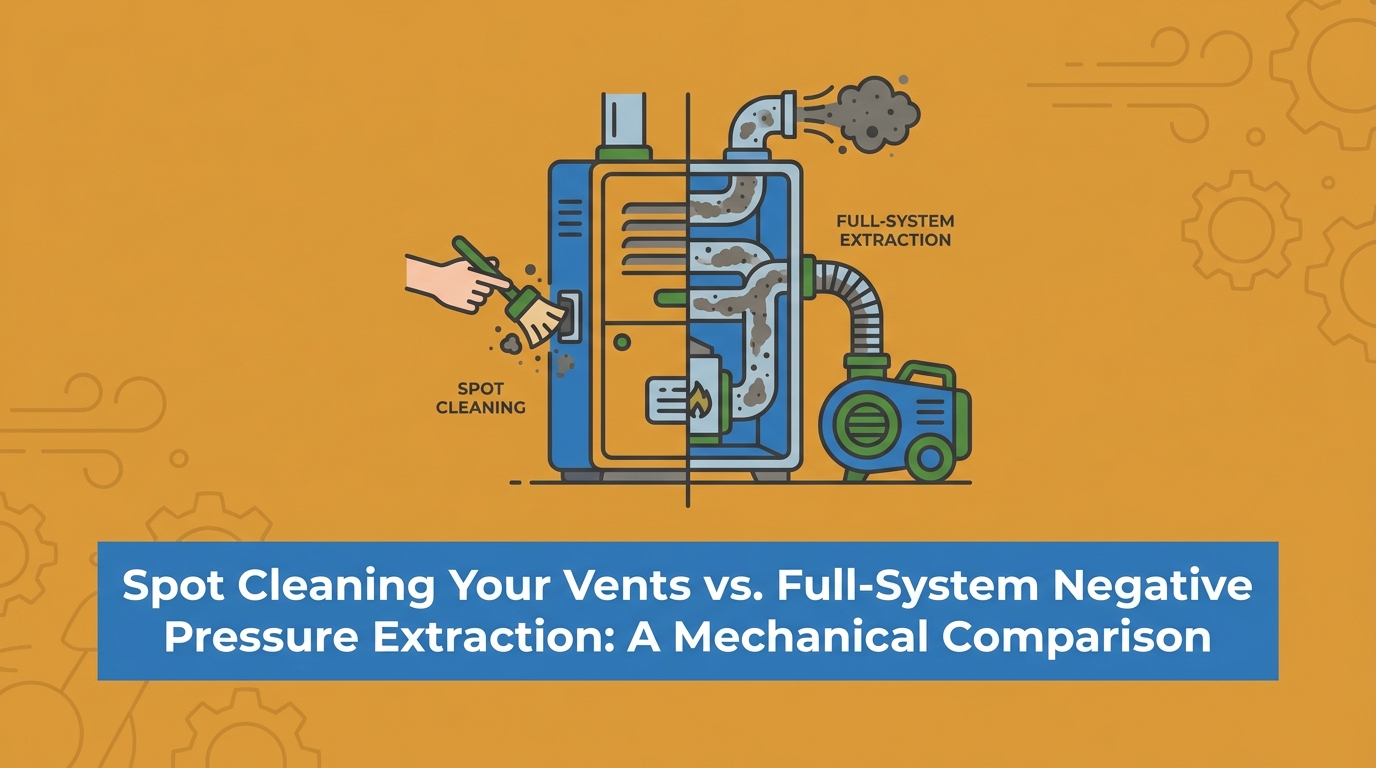
A proper job is not just vacuuming a few vents and calling it a day. The full HVAC system can include:
• Supply ducts
• Return ducts
• Registers and grilles
• Air handler or furnace components
• Blower motor and housing
• Evaporator coil
• Drain pan
• Plenum
If only the visible vents are addressed, contamination can remain in the rest of the system and continue circulating. NADCA and other professional guidance emphasize full-system cleaning for that reason.
Here is a simple comparison:
• Places the system under negative pressure — "Blow-and-go" approach: Minimal or weak suction
• Cleans supply and return ducts — "Blow-and-go" approach: Focuses only on easy-to-reach areas
• Includes key HVAC components — "Blow-and-go" approach: Skips blower, coils, or other system parts
• Uses agitation tools to loosen debris — "Blow-and-go" approach: Relies on superficial vacuuming or compressed-air agitation
• Provides verification of work — "Blow-and-go" approach: Offers little proof beyond verbal claims
This question is also a smart place to ask about hidden fees or upsells. Instead of asking only for a price, ask what is included in the service and whether that scope is final. Bait-and-switch practices are common in this industry, especially when the original offer sounds suspiciously cheap. If a company cannot clearly spell out what is covered before work begins, slow down.
Protecting Your Home and Family During the Process
Good duct cleaning should improve your indoor environment, not turn your living room into a dust snow globe.
How will you protect my home, floors, walls, and pets during the cleaning?
A professional crew should have a clear answer here.
Ask what they do to protect:
• Floors with drop cloths or floor coverings
• Corners and walls with guards where hoses or tools may pass
• Furniture and nearby belongings
• Registers and openings during active cleaning
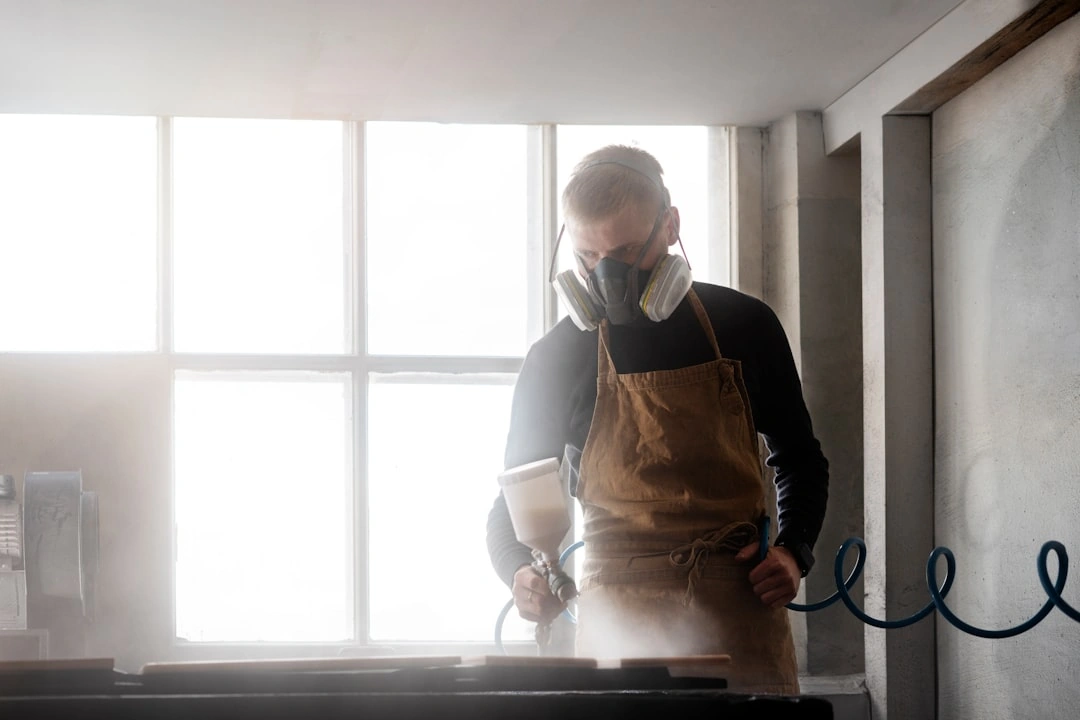
• Pets, children, and anyone sensitive to noise or airborne irritants
It is reasonable to ask whether technicians wear boot covers, how hoses are routed, and whether work areas are cleaned before they leave. This is not being picky. This is your house.
You can also ask how they control dust during the process. A proper negative-pressure setup should help keep loosened debris contained rather than floating into the home.
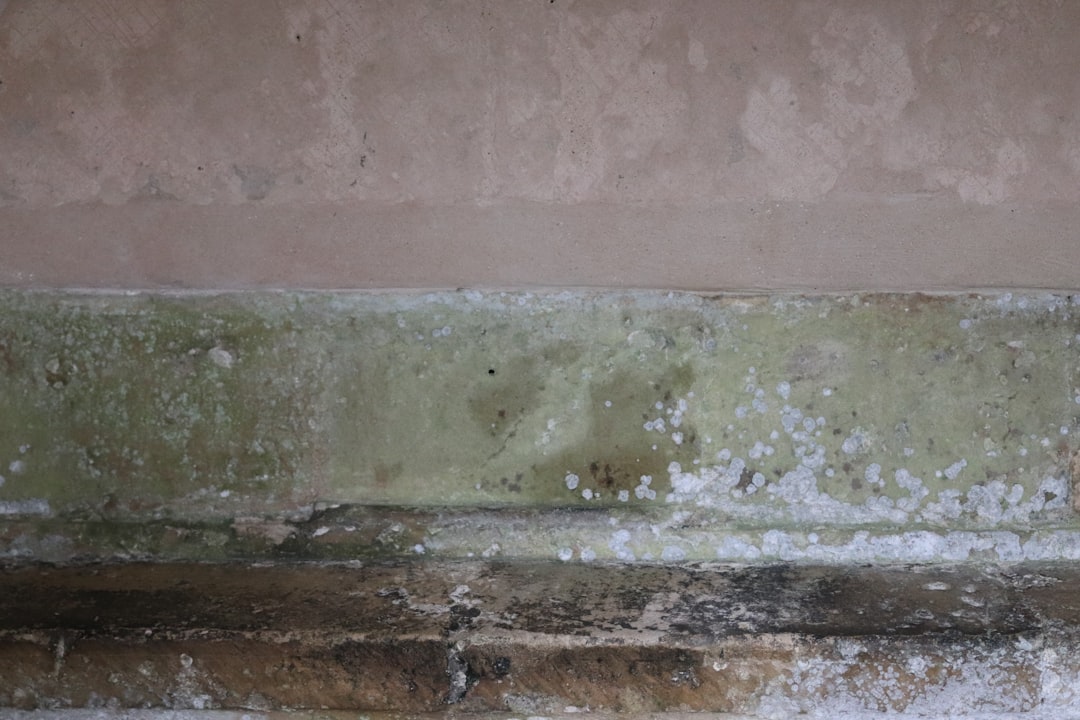
If mold or suspicious residue is part of the concern, our article on Superior Air Duct Cleaning Common Mold Types Found in Air Ducts may be useful background reading.
Do you use any chemical biocides, disinfectants, or sanitizers?
This is a question many homeowners do not think to ask until after the smell hits them.
If a company recommends any chemical treatment, ask:
• What exactly is being used?
• Why is it needed?
• Where will it be applied?
• Is it approved for that use?
• Is it safe for children, pets, and sensitive occupants?
• Will there be any residue or odor afterward?
This matters because chemical use in duct systems is not a casual decision. EPA guidance is especially important here. As noted earlier, the EPA has not approved chemical biocides for internally insulated air duct systems.
In some situations, a sanitizer or disinfectant may be discussed as part of a broader cleaning or contamination response. But it should never be treated like a magic spray that fixes every problem. If there is confirmed mold, moisture intrusion, or other contamination, the real issue may involve identifying and correcting the source as well.
In plain English: if the whole plan sounds like "we spray something and hope for the best," ask more questions.
Post-Cleaning Verification and Accountability
The easiest way to avoid guessing whether the job was done well is to ask for proof.
Final questions to ask before hiring a duct cleaning company about visual inspections
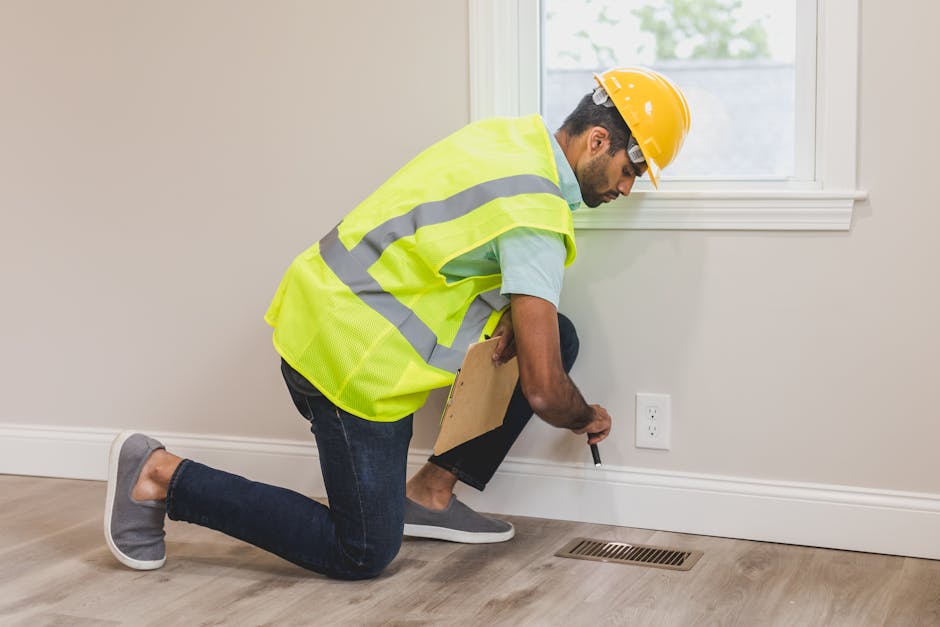
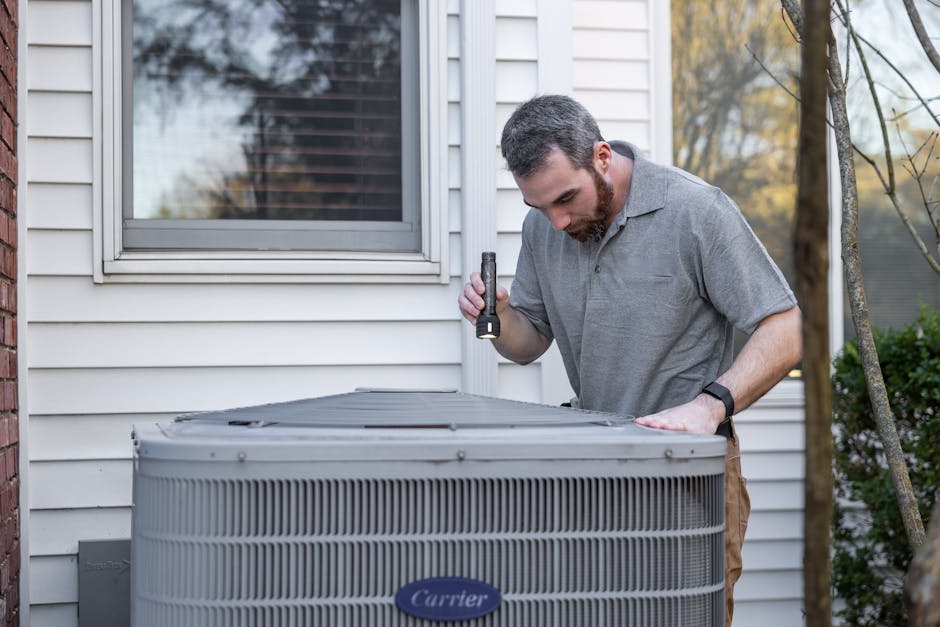
Ask whether the company performs before-and-after visual inspections with photos or video.
This is one of the best ways to verify the work. A pre-cleaning inspection helps show the condition of the ductwork and identify heavy debris, construction dust, or possible problem areas. A post-cleaning inspection helps confirm the debris was actually removed.
Look for companies that can provide:
• Photo documentation
• Video inspection where needed
• Visual confirmation of key system areas
• A post-cleaning walkthrough or explanation
• A clear process if something still needs attention
EPA guidance includes a post-cleaning checklist for consumers, and that is a useful mindset to bring to the appointment. You do not have to become a duct-cleaning detective overnight, but you should expect more than "trust us, it is clean in there now."
If a company offers a workmanship guarantee or agrees to address concerns after the job, that is also a positive sign. Accountability matters.
Frequently Asked Questions about Duct Cleaning
How often should I have my air ducts cleaned?
NADCA generally recommends inspection and cleaning as needed, with many homes falling into an every 3 to 5 year range depending on conditions.
You may need cleaning sooner if you have:
• Pets that shed
• Indoor smokers
• Family members with asthma or allergies
• Recent renovations or remodeling
• Water damage or moisture concerns
• Visible dust buildup around vents
• Musty odors when the HVAC system runs
The right schedule depends on what is happening in your home, not on a random postcard coupon.
Does my new construction home need duct cleaning?
Often, yes.
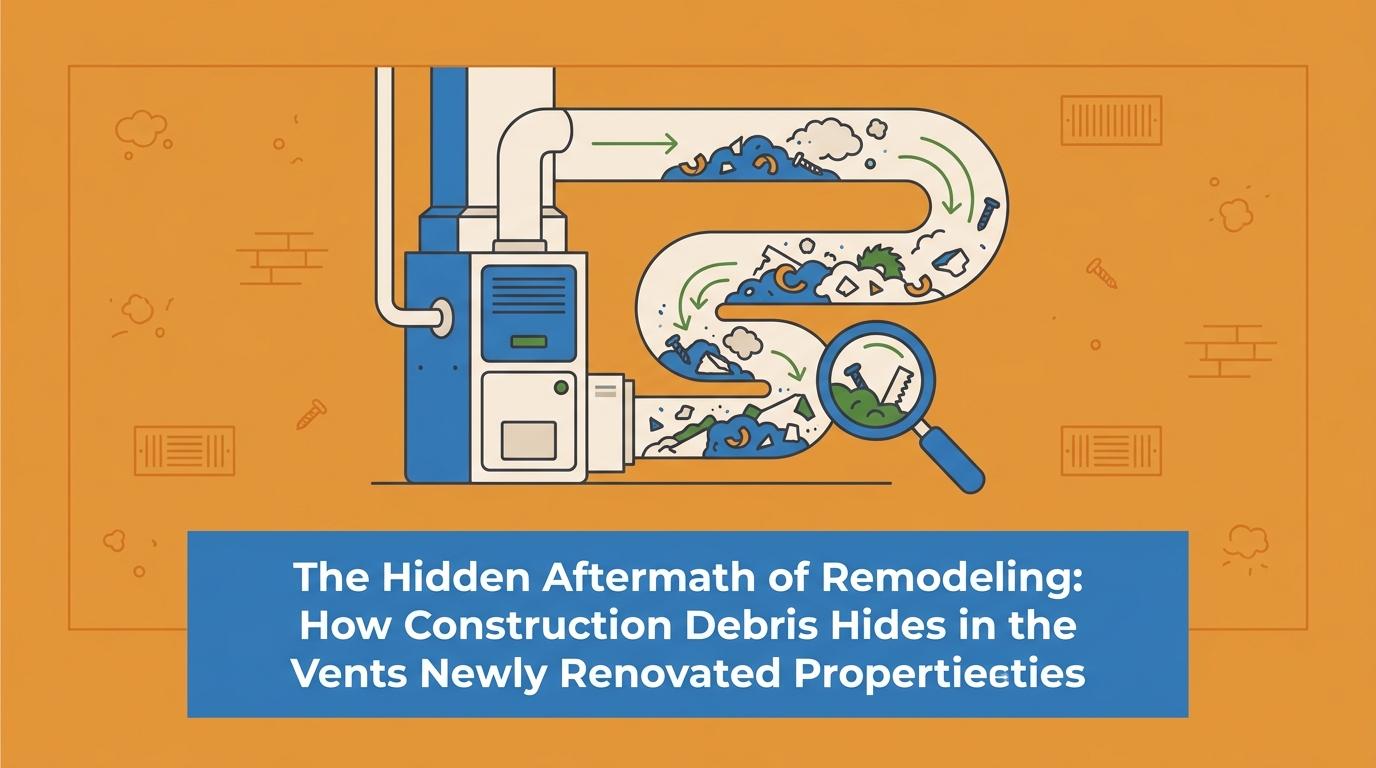
New construction and major remodeling can leave behind drywall dust, sawdust, insulation fibers, and other debris. Ductwork is frequently installed before the project is fully finished, which means construction particles can end up inside the system long before move-in day.
If your home is newly built or recently renovated in Western Pennsylvania or Northeast Ohio, it is smart to ask for an inspection. Construction debris inside the system can affect air quality and system cleanliness from day one.
Can duct cleaning help with my seasonal allergies?
It can help in the right situation.
Duct cleaning may reduce the circulation of built-up dust, pollen, pet dander, and other particulates that contribute to poor indoor air quality. That can be especially helpful in our region during heavy allergy seasons, or in homes where dust and allergens have collected over time.
That said, duct cleaning is only one part of the picture. Filtration, humidity control, source removal, and routine HVAC maintenance also matter. A trustworthy company should be honest about that rather than promising that duct cleaning alone will solve every sneeze in the house.
Conclusion
Asking the right questions before hiring a duct cleaning company protects your home, your HVAC system, and the people breathing the air inside it. From experience and insurance to NADCA standards, full-system cleaning, visual proof, and home protection, each question helps you separate professional service from guesswork.
If you are looking for residential or commercial duct cleaning in Western Pennsylvania or Northeast Ohio, we invite you to learn more about our air duct cleaning services.
A little vetting up front can save a lot of frustration later. And in duct cleaning, that is one shortcut we do recommend.

Customer Reviews


Superior Air Duct cleaning did a phenomenal job in a timely manner with the tech “Rich” being very professional ,personable and considerate of our property! He explained things as he proceeded and answered all our questions!
I LOVE that they provide before & after photos to see the difference. Give them a try… you won’t regret it
Pam T.
Robert was on schedule and communicated what time he would arrive. He was polite, professional, and respectful of our home. I wanted to wait a couple weeks before posting a review because I wanted to see if the duct cleaning actually made a difference. I am happy to say it did! I vacuum multiple times a week and have already noticed a significant reduction in the amount of dust cleaned up each time. As a home with pets, there will always be something to clean, but getting the ducts cleaned has definitely helped improve the air quality and reduce the dust.
alice A.
Technician Rob arrived early explained the days agenda and then proceeded to work methodically and meticulously over the next 6+ hours cleaning my ductwork. Courteous and professional they answered all of my questions and went above and beyond the call of duty. They even located an old dusty box of rat poison buried in our vents. My only regret is not finding these guys sooner. As a realtor of 22 years and owner of a newly purchased (now dust free) home I highly recommended!
Eric K.
Excellent service! I’ve used them to clean out my air ducts as well as my dryer vent duct and they are excellent. I was very pleased with both jobs and will continue to use them in the future. Great communication as well- from the time I scheduled the appointment until they were at my door.
Erika C.
We had such an amazing experience with Superior Air Duct Cleaning. They were so nice and friendly and did an amazing job. I loved seeing the before and after pictures. Besides doing an amazing job cleaning our air ducts they were so quick at responding and setting up the appointment. We will definitely be using them in the future.
Amanda C.