The Hidden Culprit Behind Weak Furnace Airflow
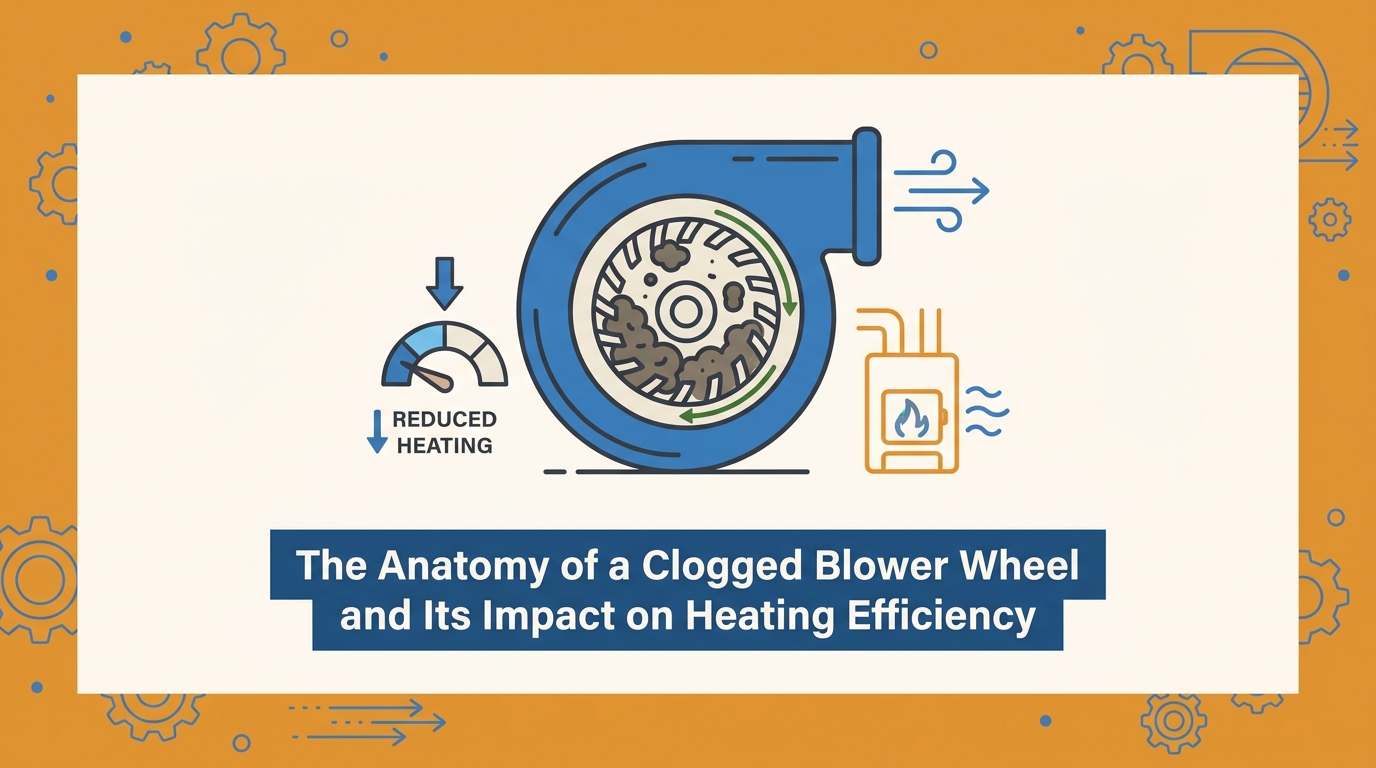
Your furnace is running nonstop, but the vents are barely pushing out any warm air, leaving your rooms feeling chilly and uncomfortable. Understanding the anatomy of a clogged blower wheel and its impact on heating efficiency is the first step to solving this frustrating problem. At Superior Air Duct Cleaning, our team often sees homeowners notice weak airflow or longer heating cycles and immediately blame the age of their furnace or assume they just need a new air filter. While a fresh filter is important, the true mechanical bottleneck is often hidden deep within the system where you cannot see it.
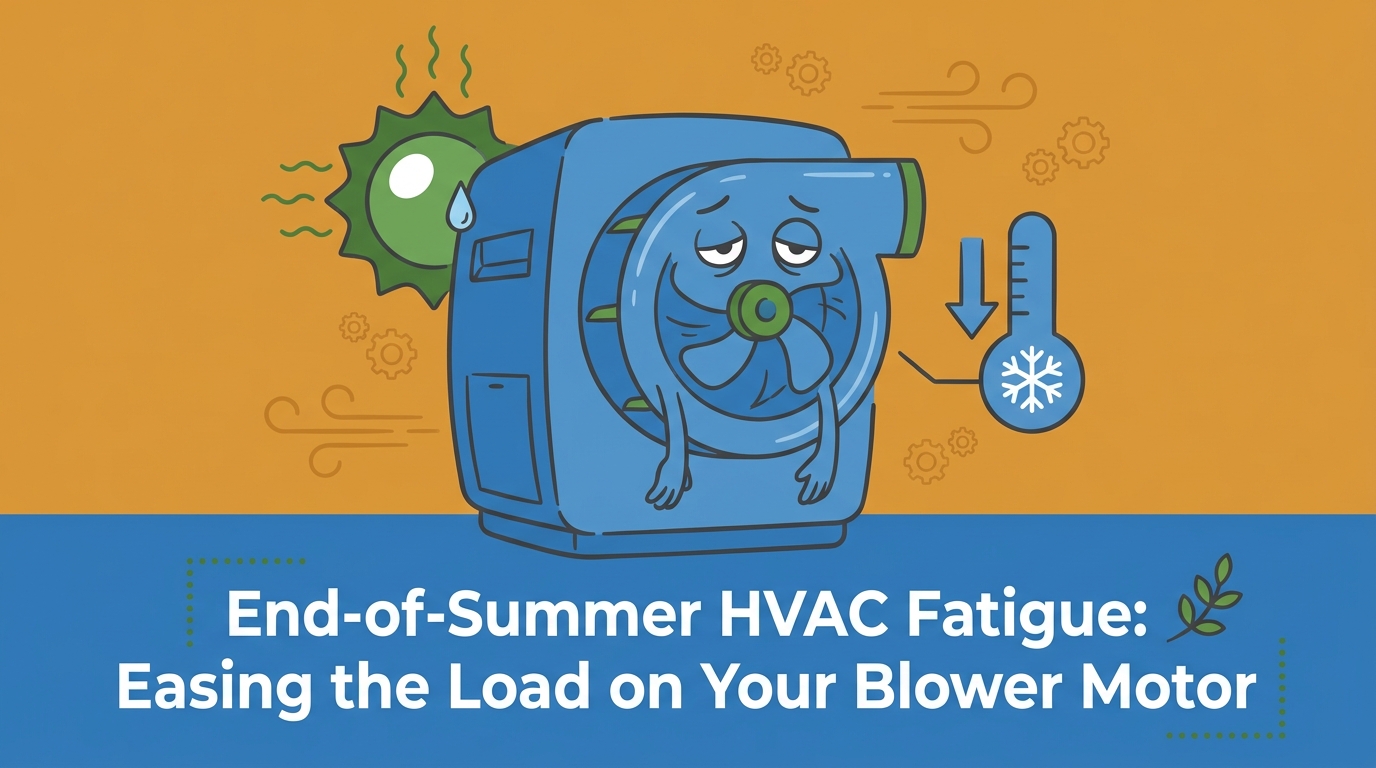
The blower wheel is the mechanical heart of your furnace's airflow system. It is responsible for pulling cold air from your home, pushing it across the heat exchanger, and distributing the newly warmed air back through your ductwork. When this component gets dirty, it alters the entire physics of your HVAC system. A seemingly insignificant amount of household dust—just one millimeter of caked-on dirt—is enough to severely restrict performance and suffocate your furnace.
Evaluating your indoor air quality and seeking professional air duct cleaning before winter hits can restore system aerodynamics. By addressing this hidden culprit during the early fall pre-heating season in September 2026, you ensure your system operates at peak capacity when you need it most. Let's break down exactly how this crucial component works, why it fails, and what it takes to restore it to factory-level efficiency.
Understanding the Mechanics of a Squirrel Cage Centrifugal Blower
To understand why a dirty blower wheel causes so many problems, you first need to understand how it is supposed to function. Whether your system utilizes a standard 1/2 HP PSC motor or a newer high-efficiency ECM, the fan inside your furnace is not like a standard ceiling fan or a box fan. It utilizes a specific engineering design known as a squirrel cage centrifugal blower. This cylindrical component gets its name because it looks remarkably like a metal exercise wheel for a small pet.
The design of a squirrel cage centrifugal blower relies on a series of closely spaced, forward-curved blades arranged in a circle around a central hub. These blades are engineered with a very specific "cupped" shape. As the furnace motor spins the wheel, these cupped blades precisely scoop air from the return ducts. The physics of centrifugal force then pushes this scooped air outward at high pressure, forcing it aggressively through the heat exchanger and into your supply vents.
This entire process relies heavily on the sharp, aerodynamic edges and the hollow depth of the blade cups to move high volumes of air efficiently. If the shape of those blades is altered in any way, the fan loses its ability to grip and push the air.
The Role of Forward-Curved Blades in Air Delivery
The forward-curved design of the blades is not just an aesthetic choice; it is a vital aerodynamic feature. Here is why those specific curves matter:
• Volume at lower speeds: The specific curve angle maximizes the volume of air the fan can move without requiring the motor to spin at dangerous, excessively high speeds.
• Pressure generation: The cupped shape is non-negotiable for proper furnace operation because it creates the static pressure needed to force air through dense filters, tight ductwork, and the narrow passages of the heat exchanger.
• Acoustic dampening: Clean, properly cupped blades cut through the air smoothly, which keeps the operation of your furnace surprisingly quiet.
When the squirrel cage centrifugal blower is operating with clean, perfectly shaped blades, your furnace breathes easily. The heat generated by the burners is rapidly carried away and delivered to your living spaces, keeping the internal components of the furnace cool and your home perfectly warm.
How Minor Dust Accumulation Destroys Aerodynamic Efficiency
The transition from an efficient air mover to a struggling mechanical burden happens gradually. Over months and years of operation, microscopic particles of household dust, pet dander, lint, and debris inevitably bypass your air filters. Because the blower wheel is constantly spinning and creating static electricity, these particles stick directly to the blades.
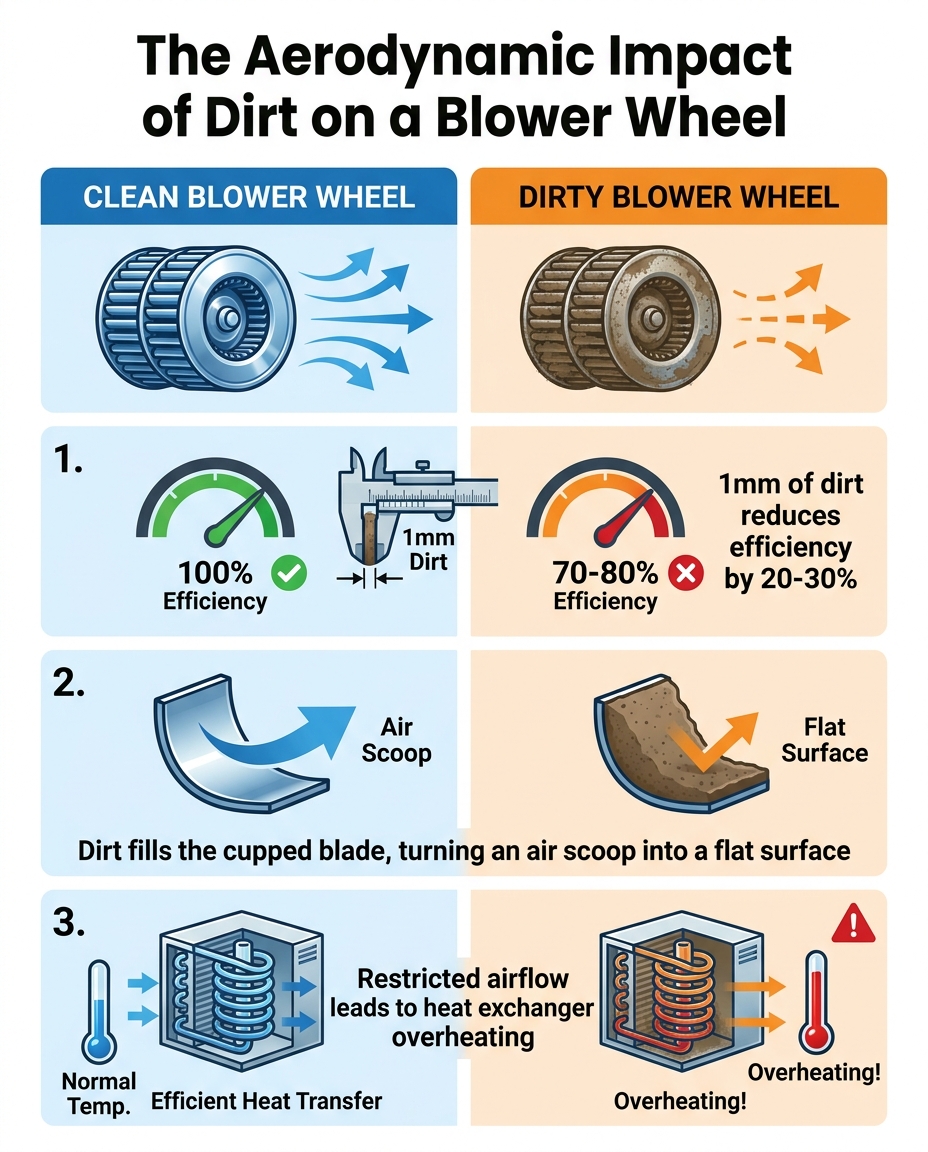
As dirt fills the "cup" of the blade, it physically flattens the aerodynamic profile. The physics are straightforward but devastating: a flat blade cannot scoop air. This flattening effect turns a highly efficient, air-grabbing scoop into a smooth, useless cylinder that merely churns the air in place rather than pushing it forward into the ductwork.
In our experience servicing homes throughout New Brighton, we frequently find that even a fraction of an inch of buildup—literally just one millimeter of caked-on dirt—can reduce the overall efficiency of your blower by 20 to 30 percent. On older 80% AFUE furnaces, this drag is especially punishing. The motor has to work harder, spinning longer and consuming more electricity, just to move a fraction of the air it was designed to deliver.
• Blade Shape — Clean Blower Wheel: Deep, aerodynamic cup that scoops air efficiently. — Dirty Blower Wheel: Flattened profile filled with dust; loses scooping ability.
• Air Movement — Clean Blower Wheel: Pushes high volumes of air through the system. — Dirty Blower Wheel: Churns air in place, drastically reducing airflow.
• Motor Strain — Clean Blower Wheel: Operates smoothly within normal electrical limits. — Dirty Blower Wheel: Works overtime, drawing excess amperage and running hot.
• System Efficiency — Clean Blower Wheel: Peak performance and lower energy consumption. — Dirty Blower Wheel: Suffers a 20-30% drop in efficiency, driving up utility costs.
The bottom line: A dirty blower wheel does not just make your furnace dirty; it fundamentally changes the aerodynamics of the machine, robbing your home of the warm air you are paying to produce.

The Domino Effect: Overheating, Short Cycling, and Poor Air Quality
When a squirrel cage centrifugal blower loses its ability to move air efficiently, the problems do not stop at the fan itself. The failure of this single component creates a destructive domino effect throughout your entire HVAC system. The most immediate and dangerous consequence is overheating.
Because the blower is not pushing enough air across the heat exchanger, the heat generated by the furnace burners has nowhere to go. The heat exchanger retains too much heat, causing the internal temperature of the furnace to spike. To prevent a catastrophic failure or fire hazard, a safety mechanism called the high-limit switch will trip, shutting the furnace down prematurely.
This leads to a phenomenon known as "short cycling." Your furnace turns on, overheats within a few minutes, shuts down for safety, cools off, and then turns right back on because your thermostat is still calling for heat. Short cycling wastes massive amounts of energy, leaves your home cold, and puts immense wear and tear on the ignition components.
Why Restricted Airflow Threatens the Heat Exchanger
The heat exchanger is a critical metal shield that keeps toxic combustion gases separate from the breathing air in your home. It relies on constant airflow to keep its metal surfaces from overheating.
• Thermal expansion: Chronic overheating causes the metal of the heat exchanger to expand and contract far beyond its design limits.
• Stress cracks: Over time, this excessive thermal stress leads to cracks in the metal, which can allow dangerous carbon monoxide to leak into your home.
• Premature failure: What starts as a simple dirty blower wheel can ultimately destroy the most expensive component in your furnace.
Beyond mechanical damage, a dirty blower wheel also acts as a distribution hub for allergens and bacteria. As the wheel spins, it continuously recirculates trapped dust, pet dander, and mold spores throughout your home. For example, our technicians recently helped a local homeowner who reached out regarding poor air quality and severe allergies after moving into a 1980s-era house. By thoroughly cleaning and sanitizing the vents and the furnace assembly—including the blower—the air quality significantly improved, allowing the family to breathe easier and sleep better. In many cases, comprehensive whole house sanitizing is necessary alongside mechanical cleaning to fully restore a healthy indoor environment.
The Dangers of DIY: Why Precision Balancing Requires Experts
Given the severe consequences of a dirty squirrel cage centrifugal blower, we always warn our New Brighton customers that accessing and cleaning the blower motor assembly is not a standard weekend DIY project. It involves high-voltage electrical components, sharp metal edges, and incredibly delicate mechanical tolerances.
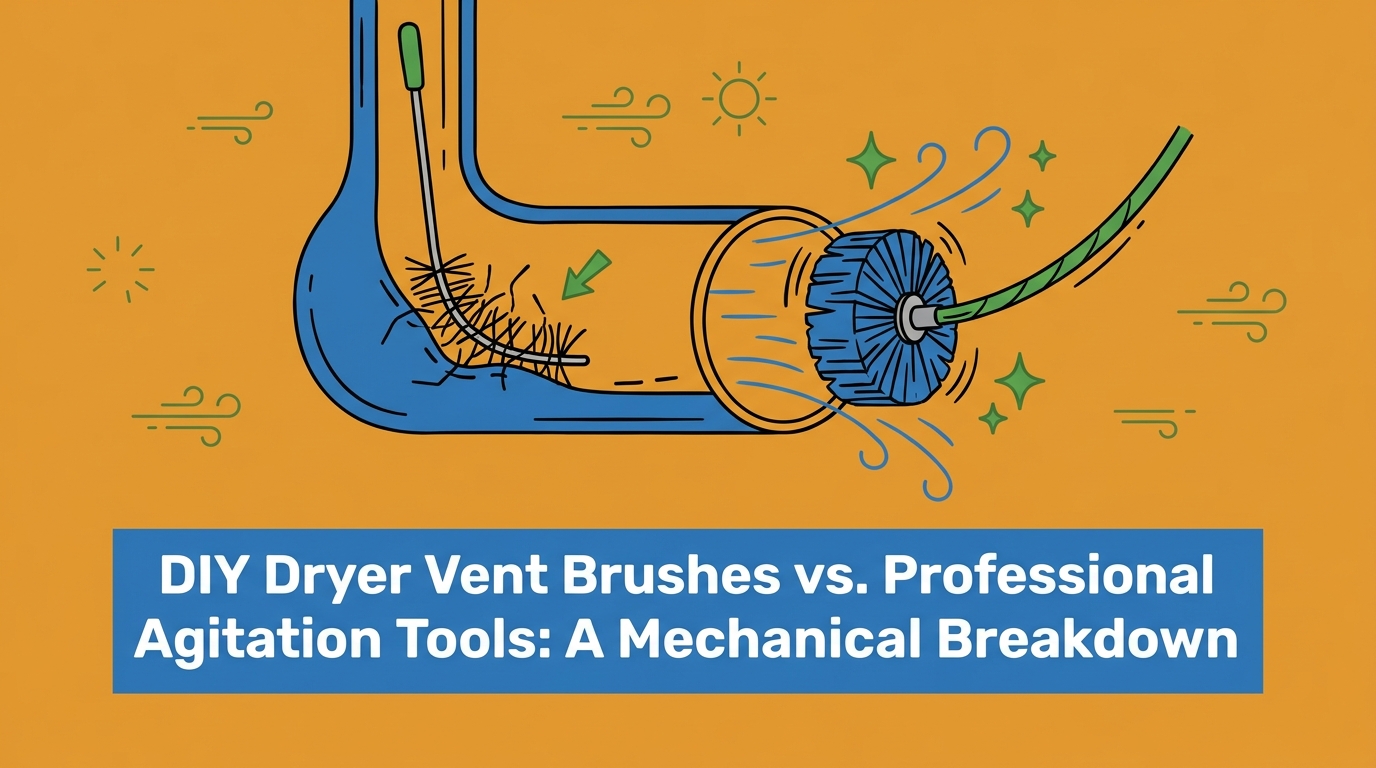
Blower wheels are dynamically balanced at the factory, much like the tires on your car. Small metal weights are crimped onto the blades to ensure the wheel spins perfectly true at high speeds without vibrating. If you attempt to clean the wheel with a wire brush or a vacuum attachment and unevenly scrape dirt off the blades, you will instantly throw the wheel out of balance.
An unbalanced blower wheel will vibrate violently when the motor kicks on. This vibration shakes the entire furnace cabinet, creates loud rumbling noises, and quickly destroys the motor bearings. Once the motor bearings fail, you are looking at a costly motor replacement rather than a simple cleaning.
This is where our team's deep mechanical expertise makes a difference. True professionals understand the core anatomy and delicate balance of the HVAC system, rather than just indiscriminately vacuuming parts. Proper maintenance requires specialized tools to clean the wheel uniformly, often using compressed air and targeted agitation to remove debris without bending the blades or dislodging the balancing weights. Understanding proper air duct cleaning methods ensures that the mechanical integrity of your system is preserved while the aerodynamics are fully restored.
Preparing for Western Pennsylvania's Freezing Winters
The efficiency of your blower wheel becomes a matter of safety and comfort when the weather turns harsh. With Western Pennsylvania winters frequently dropping well below freezing, particularly in older Beaver County neighborhoods, your furnace is put under extreme demands for months at a time. Maximum airflow is critical for managing these intense winter conditions.
A struggling blower wheel with flattened blades might suffice during the mild days of early autumn, but it will fail entirely during a deep freeze. When temperatures plummet, your furnace needs to push large volumes of warm air to the furthest rooms in your house to maintain a stable indoor temperature. If airflow is restricted by just one millimeter of caked-on dirt, the warm air simply won't reach the distant corners of your home.
This restricted airflow leads to dangerous cold spots, especially in bedrooms over garages or additions far from the main trunk line. To compensate for the lack of warm air reaching the thermostat, the furnace is forced to run continuously. This constant operation drives up your energy consumption and sends your winter utility bills skyrocketing.
As we head further into September 2026, scheduling an inspection during this early fall pre-heating season ensures your system can handle peak winter loads without overheating or short cycling. Proactive maintenance is always more cost-effective than an emergency service call on the coldest night of the year.
Restoring Your System's Performance Before the Cold Snaps
Waiting until your furnace fails mid-winter is a costly and uncomfortable mistake. The best approach is to restore the aerodynamics of your blower proactively. A professional mechanical inspection and cleaning of the blower assembly involves a systematic process designed to protect the equipment while maximizing airflow.
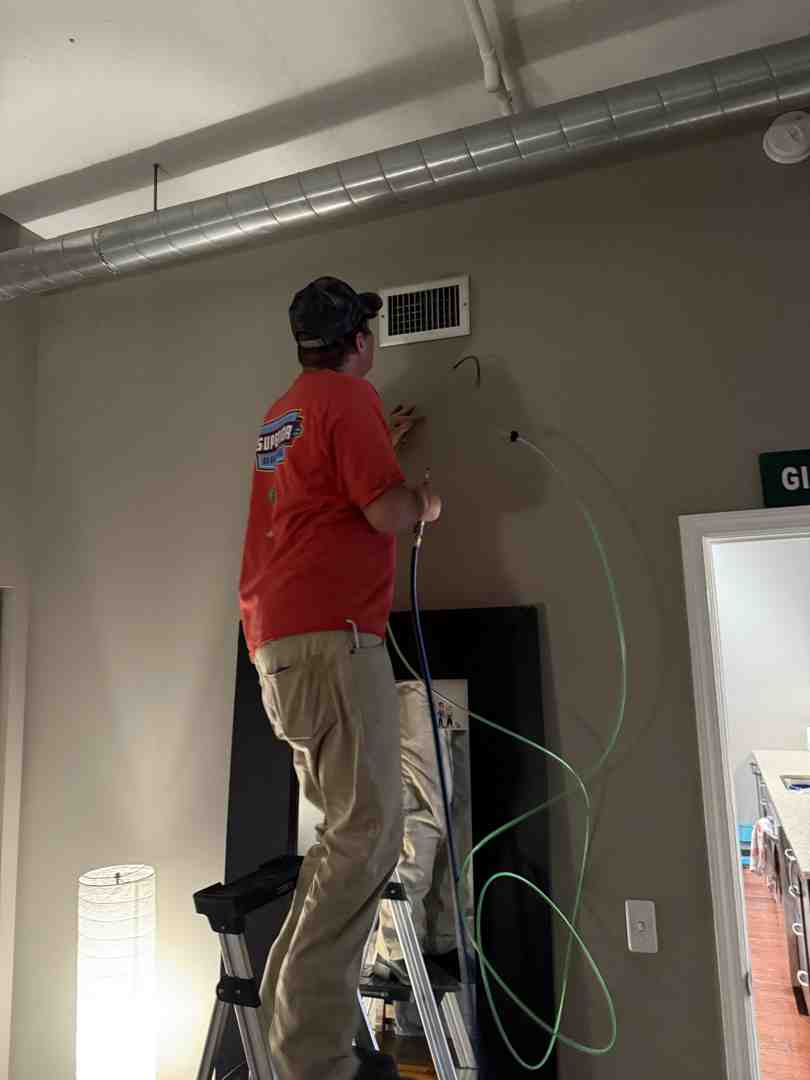
Just this past season, our Superior Air Duct Cleaning crew helped a local customer who needed their ducts and vents cleaned to improve airflow and air quality. The technician was thorough, explained the entire process, and provided before and after pictures to prove the restoration of the system's cleanliness. This visual evidence is crucial, as it shows you exactly how much debris was suffocating your system.
Here is what our professional restoration process typically involves:
1. System Isolation and Safety Check: The technician completely disconnects the high-voltage power to the furnace and verifies that the system is safe to handle.
2. Component Access: The blower compartment is carefully opened, and the control board is protected from dust and debris.
3. Uniform Agitation and Extraction: Using specialized compressed air tools and high-powered vacuums, the technician uniformly removes the dirt from the cupped blades without disrupting the factory balancing weights.
4. Motor and Housing Inspection: The surrounding motor housing and bearings are inspected for wear, ensuring the system will run quietly and efficiently.
5. Visual Verification: Technicians often provide before and after documentation so you can see the restored aerodynamic profile of the blades.
By scheduling this essential maintenance during the early fall pre-heating season, you give yourself peace of mind knowing the system is fully prepared to handle the incoming cold snaps.
Ensuring Your Furnace is Ready to Perform
The physics of your HVAC system are undeniable: clean, deeply cupped blades on your squirrel cage centrifugal blower are absolutely mandatory for proper furnace airflow. When dust and debris flatten those aerodynamic scoops, the entire system suffers. The furnace overheats, energy is wasted through short cycling, and your home is left with cold spots and poor indoor air quality.
Addressing this hidden mechanical issue before the severe weather arrives prevents premature wear on expensive components like the heat exchanger and the blower motor. It also ensures that the energy you pay for is actually converted into comfortable, warm air that reaches every room in your house. Furthermore, proactive maintenance and restoring your system's efficiency might even help you qualify for generic local utility incentive programs designed to reward energy-efficient home operation (we always advise readers to verify current programs with their utility provider or a tax professional).
Don't wait until the first freezing night to find out your furnace can't keep up. Consult with our local experts at Superior Air Duct Cleaning to evaluate your system's anatomy, clean the vital components, and restore peak heating efficiency so you can enjoy a warm, comfortable, and safe winter season.
Frequently Asked Questions
How does a dirty blower wheel affect a furnace?
A dirty blower wheel severely restricts the amount of air a furnace can move. As dirt fills the cupped shape of the fan blades, they lose their aerodynamic ability to scoop and push air. This restricted airflow leads to weak air coming from the vents, longer heating cycles, and increased strain on the blower motor. Ultimately, it reduces the overall heating capacity of the entire system.
Can a dirty blower wheel cause a furnace to overheat?
Yes, a dirty blower wheel is a leading cause of furnace overheating. Because the fan cannot push enough air across the heat exchanger to cool it down, the internal temperature of the furnace rises rapidly. This excessive heat triggers the high-limit safety switch, forcing the furnace to shut down prematurely to prevent a fire or mechanical damage.
How much does a dirty blower wheel reduce efficiency?
Even a very small amount of buildup can cause a massive drop in efficiency. Just a fraction of an inch of dirt on the blades can reduce the blower's efficiency by 20 to 30 percent. This means your furnace has to run much longer and consume significantly more electricity and gas just to maintain the temperature on your thermostat.
Why is my furnace airflow so weak?
Weak airflow is usually caused by a physical blockage or a mechanical failure in the air distribution system. The most common culprits we see are a heavily soiled air filter, blocked return vents, or a blower wheel that is caked in dust. When the fan blades are flat with dirt instead of cupped, they simply churn the air instead of pushing it through your ductwork.
What are the physical signs that my squirrel cage blower needs cleaning?
The most obvious signs are weak airflow at the registers and a furnace that turns on and off rapidly (short cycling). You might also hear a louder humming noise from the furnace cabinet as the motor struggles to spin a heavier, unbalanced wheel. Additionally, an increase in household dust and higher-than-normal winter energy bills strongly indicate the blower assembly needs professional attention.
Why shouldn't I clean my furnace blower wheel myself?
Cleaning a blower wheel requires delicate precision to avoid throwing the component out of balance. The wheels are dynamically balanced with small weights, and unevenly scraping dirt off the blades can cause severe vibrations that will quickly destroy the motor bearings. Furthermore, accessing the blower involves working around high-voltage electrical components and delicate circuit boards, which is best left to trained professionals.

Customer Reviews


Superior Air Duct cleaning did a phenomenal job in a timely manner with the tech “Rich” being very professional ,personable and considerate of our property! He explained things as he proceeded and answered all our questions!
I LOVE that they provide before & after photos to see the difference. Give them a try… you won’t regret it
Pam T.
Robert was on schedule and communicated what time he would arrive. He was polite, professional, and respectful of our home. I wanted to wait a couple weeks before posting a review because I wanted to see if the duct cleaning actually made a difference. I am happy to say it did! I vacuum multiple times a week and have already noticed a significant reduction in the amount of dust cleaned up each time. As a home with pets, there will always be something to clean, but getting the ducts cleaned has definitely helped improve the air quality and reduce the dust.
alice A.
Technician Rob arrived early explained the days agenda and then proceeded to work methodically and meticulously over the next 6+ hours cleaning my ductwork. Courteous and professional they answered all of my questions and went above and beyond the call of duty. They even located an old dusty box of rat poison buried in our vents. My only regret is not finding these guys sooner. As a realtor of 22 years and owner of a newly purchased (now dust free) home I highly recommended!
Eric K.
Excellent service! I’ve used them to clean out my air ducts as well as my dryer vent duct and they are excellent. I was very pleased with both jobs and will continue to use them in the future. Great communication as well- from the time I scheduled the appointment until they were at my door.
Erika C.
We had such an amazing experience with Superior Air Duct Cleaning. They were so nice and friendly and did an amazing job. I loved seeing the before and after pictures. Besides doing an amazing job cleaning our air ducts they were so quick at responding and setting up the appointment. We will definitely be using them in the future.
Amanda C.