The Hidden Impact of Summer Cooling on Residential Ductwork
Your air conditioning is running nonstop to beat the July heat, but the house still feels dusty, and finding reliable local service expertise and area tips can be challenging when you are trying to separate normal summer dust from a genuine ventilation problem. As your cooling system works overtime during these peak temperature months, it circulates trapped indoor air pollutants five to seven times daily throughout your sealed home. At Superior Air Duct Cleaning, a pattern we see often is that this constant recirculation creates an environment where every particle of dust, pet dander, and pollen is pushed through your ductwork repeatedly.
For a comprehensive approach to improving your home's indoor air quality, it helps to understand exactly what is happening inside your ventilation network before making maintenance decisions.
The Reality of the Sealed Home Environment
Modern homes are built to be highly energy-efficient, which means they are tightly sealed against the outside elements. While this keeps your expensive cooled air inside, it also traps airborne particulates. During the summer, windows stay closed, and the HVAC system becomes the sole lungs of your house. In our years of servicing local homes, we've found that if the ductwork is harboring excessive debris, the continuous operation of the blower motor simply redistributes these contaminants into your living spaces.
Many homeowners struggle to determine whether the dust they see on their furniture is a normal byproduct of daily life or a symptom of a larger issue within the HVAC infrastructure. Making this determination requires objective evaluation rather than guesswork. A thin layer of dust settling over a week is normal; a thick coating appearing just days after a deep clean indicates that your ventilation system is actively contributing to the problem.
How Summer Weather Alters Dust Behavior
Increased humidity during the cooling season fundamentally changes how dust and debris behave inside your ventilation network. Dry dust is relatively light and can often be caught by a standard air filter. However, when summer moisture enters the equation, dust particles become heavier and more prone to sticking to the interior walls of galvanized metal or flexible ductwork. This adhesion creates a textured surface inside the ducts, which then catches even more passing debris, leading to a compounding buildup that standard airflow cannot dislodge.
How High Humidity Interacts with AC Condensation in Your Vents
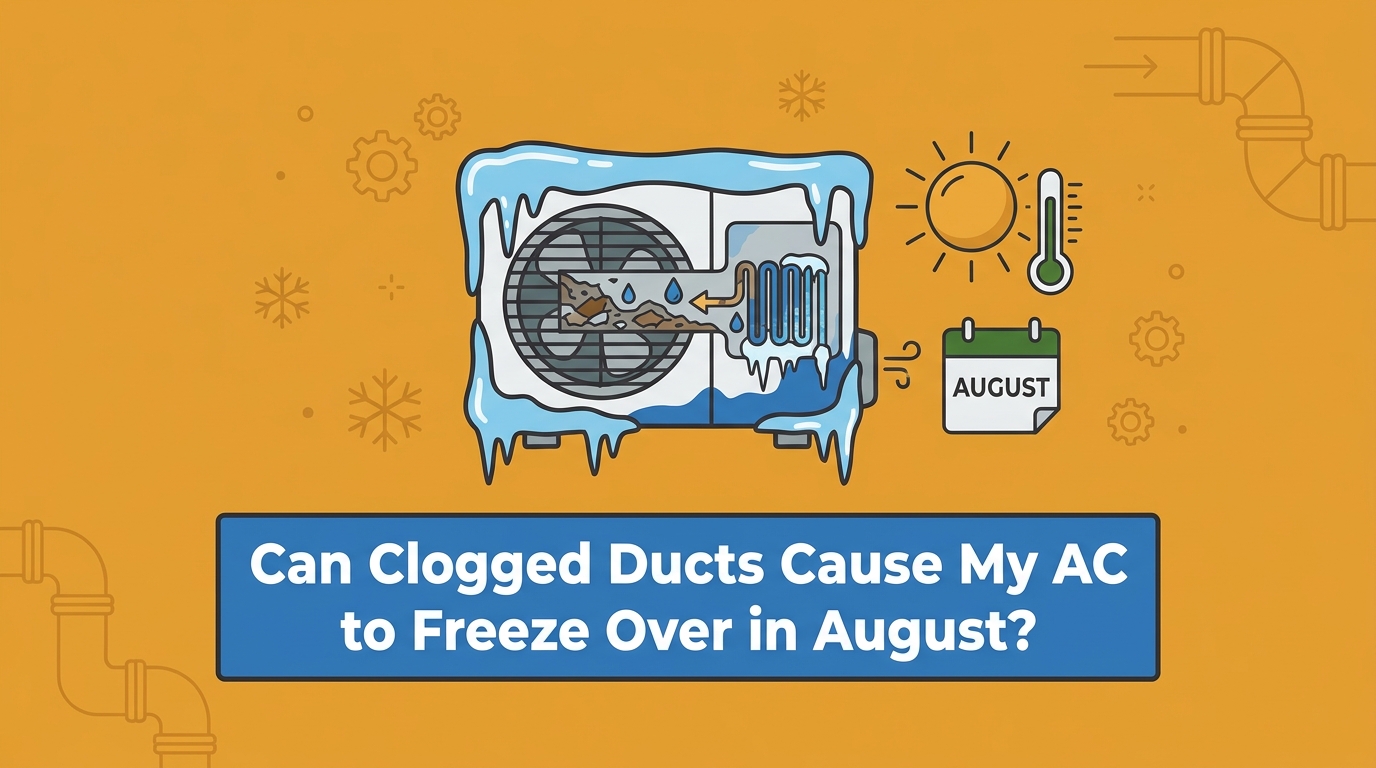
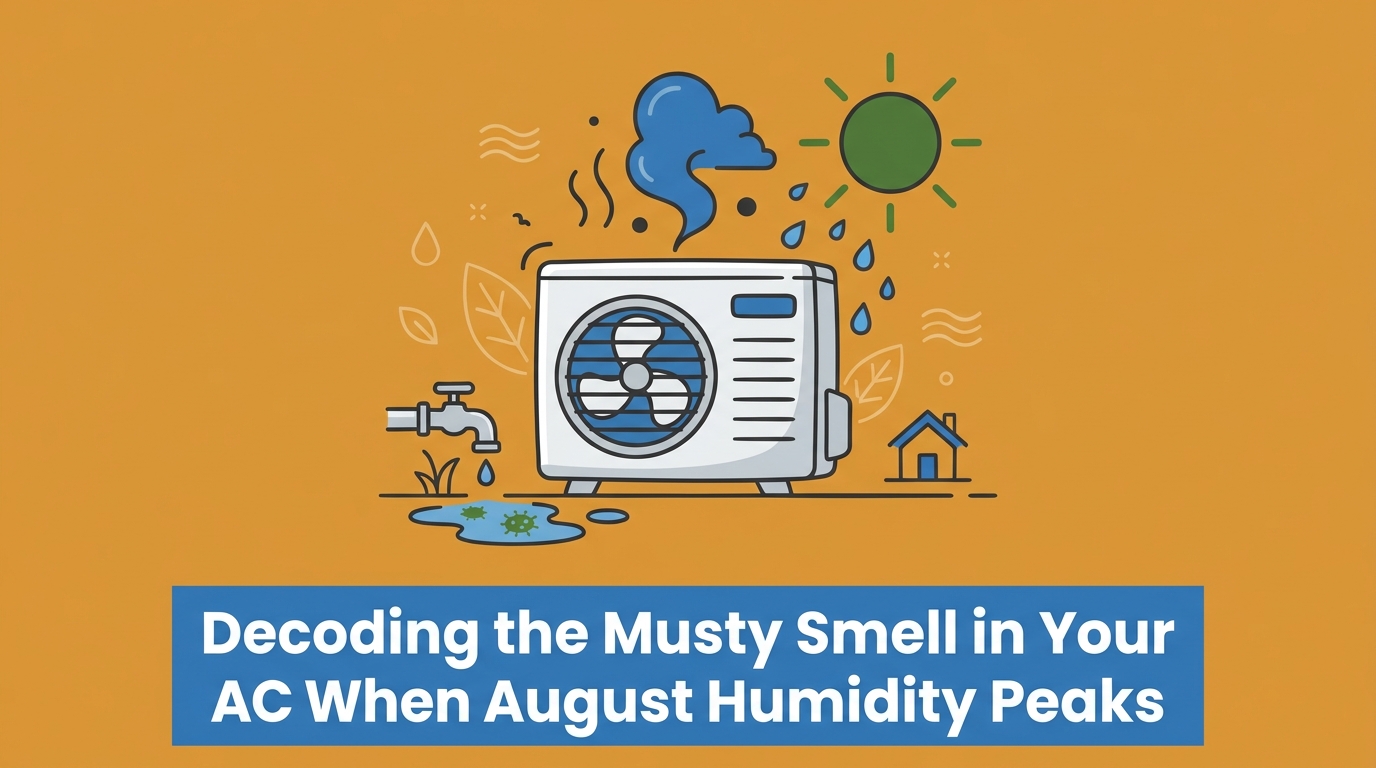
The Problem: Our team knows firsthand that in New Brighton PA and surrounding Beaver County, summer humidity levels frequently exceed 70%. This heavy moisture load in the air creates a specific physical reaction when it interacts with the cold surfaces of your air conditioning system. When warm, humid indoor air meets the chilled metal of your ductwork, condensation forms—much like water droplets forming on the outside of a cold glass of iced tea on a hot afternoon.
The Cause: This condensation introduces liquid water into a dark, enclosed environment. When this moisture mixes with the accumulated dust, pet hair, and organic debris lining the duct walls, it creates an ideal breeding ground for microbial growth. Mold and mildew spores, which are naturally present in all indoor environments, thrive when they are provided with a food source (the organic debris) and moisture (the condensation).
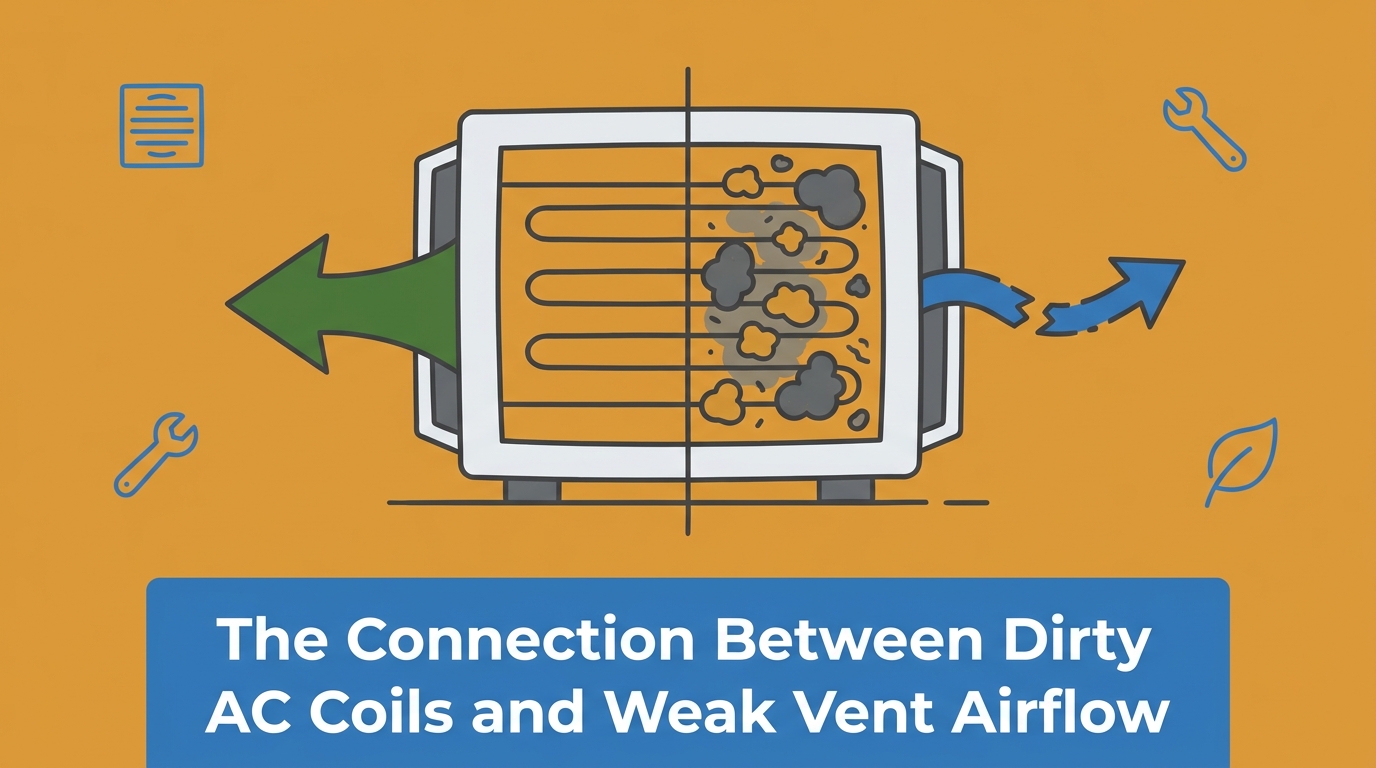
The Solution: Breaking this cycle requires removing the food source. By extracting the accumulated debris, you eliminate the material that traps moisture and feeds microbial growth. Furthermore, clearing this buildup restores proper airflow. Restricted airflow from heavy debris forces the AC unit to work significantly harder to push cooled air into your rooms, reducing cooling efficiency and increasing wear on the blower motor. This physical reaction is a primary driver for proactive duct maintenance during peak heat, often making professional air duct cleaning a necessary step for maintaining system performance.
Technical Checklist: 5 Physical Signs Your AC Ducts Require Professional Cleaning
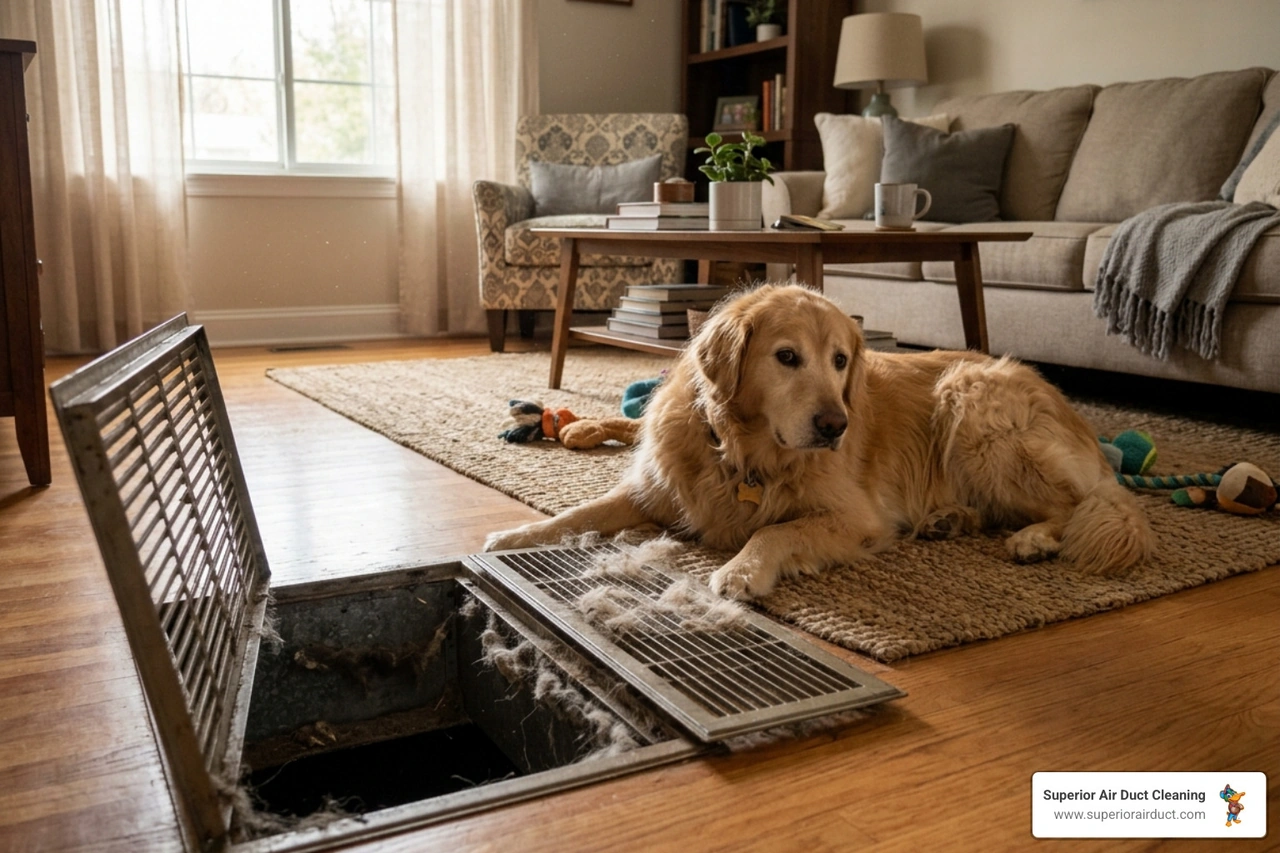
Evaluating your ductwork does not require specialized diagnostic tools; it requires knowing exactly what physical symptoms to look for. One local homeowner recently called our team after noticing heavy dust accumulation around their vents. Our technicians' inspection revealed severe buildup, and our professional extraction removed eight pounds of accumulated dust from the network, restoring proper airflow. Here is an objective checklist we recommend to help you assess your own system.
1. Visible mold growth near cooling components: Inspect the supply registers (the vents blowing air into the room) and the area immediately surrounding your indoor evaporator coil. If you see patchy black, green, or brown spotting on the metal, plastic, or fiberglass insulation, this is a strong indicator of microbial contamination requiring extraction.
2. Evidence of insect or rodent activity: Pests seek out ductwork for shelter and temperature control. If you spot droppings, nesting materials, or insect casings near your vents, or if you hear scratching noises coming from the walls when the system is off, the network has been compromised. The resulting biological waste presents a significant air quality hazard.
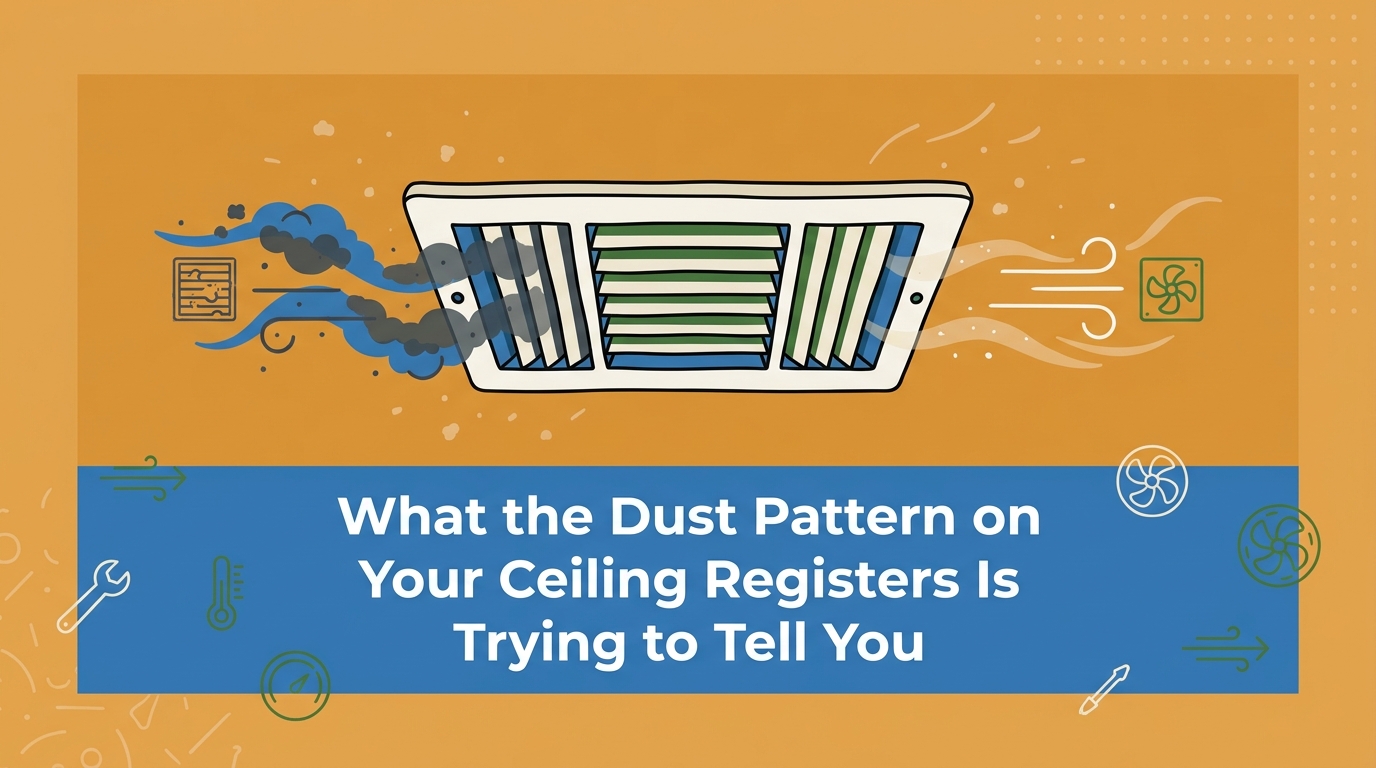
3. Excessive dust blowing from vents: Turn your system on and observe the air coming from the registers against a bright light or sunlight. If you can see a visible plume of dust particles being expelled into the living space, or if dark streaks (called ghosting) are forming on the ceiling or walls directly surrounding the vent, the internal buildup has exceeded the system's capacity to contain it.
4. Restricted airflow with a clean filter: If some rooms in your house feel significantly warmer than others, or if the air pressure coming from the vents feels weak, check your HVAC filter. If the filter is brand new and clean, but the airflow remains poor, there is likely a physical blockage of debris or a collapsed section deep within the ductwork.
5. Persistent musty odors during AC operation: A healthy cooling system should not produce any distinct smell. If you notice a damp, dirty sock, or musty odor that circulates exclusively when the air conditioner kicks on, you are smelling the off-gassing of biological growth or decaying organic matter hidden within the lines.

Addressing Stubborn Odors and Historical Debris Accumulation
Older homes carry the history of every previous occupant, and that history is often recorded in the ductwork. Standard one-inch fiberglass or pleated filters are designed to protect the HVAC equipment from large particles; they are not capable of removing settled, historical debris deep within the ductwork. Over decades, this accumulation can become dense and compacted.
The Science Behind Lingering Odors
Odors are physical particles suspended in the air. Pet dander, skin cells, and hair carry specific proteins and oils that emit persistent smells as they slowly break down. Because these particles are often microscopic, they bypass standard filtration systems and settle in the slow-moving air pockets of your ductwork. A pattern we see often arises when clients move into a previously occupied home. One New Brighton homeowner recently asked our team for help with lingering dog odors from the previous owners every time the AC kicked on. Our thorough clearing of the air vents neutralized the source, and the house no longer smelled like dogs.
Neutralizing Versus Masking
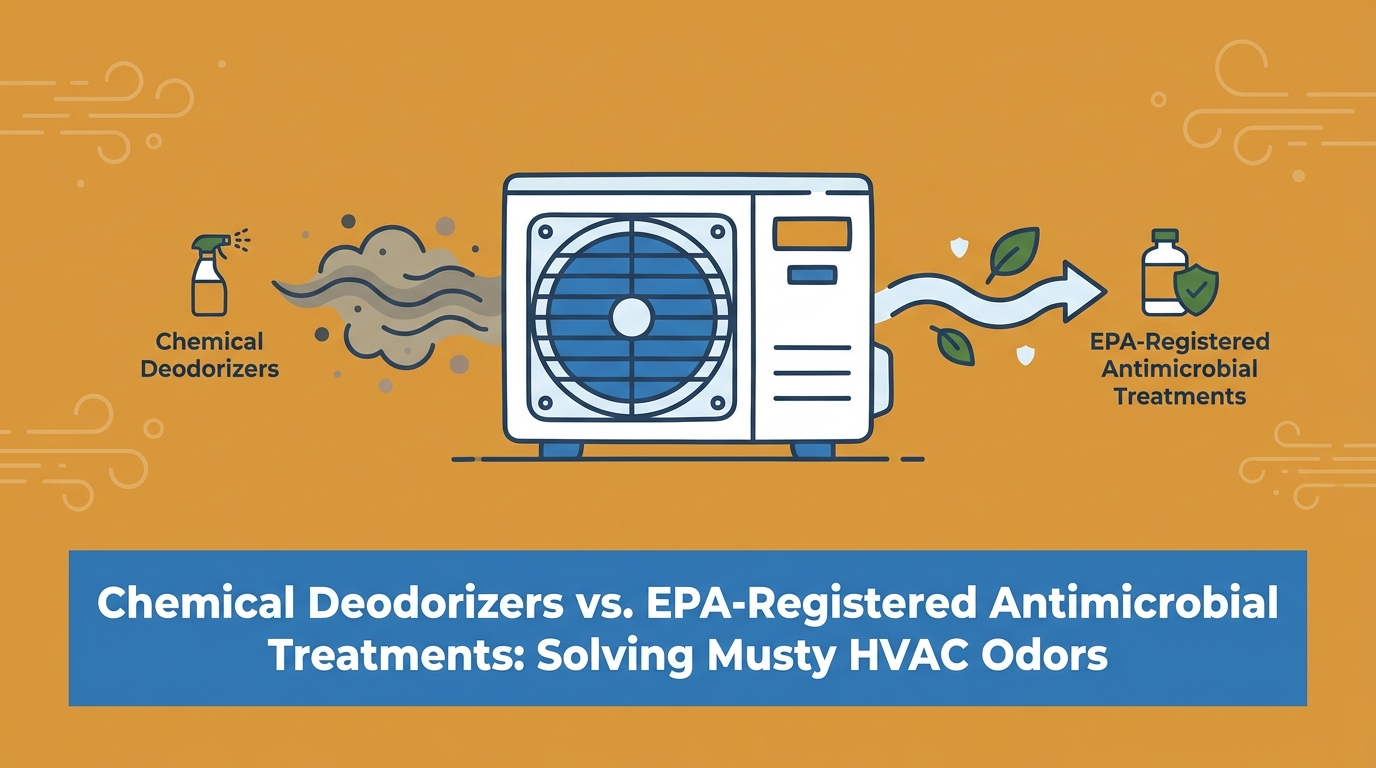
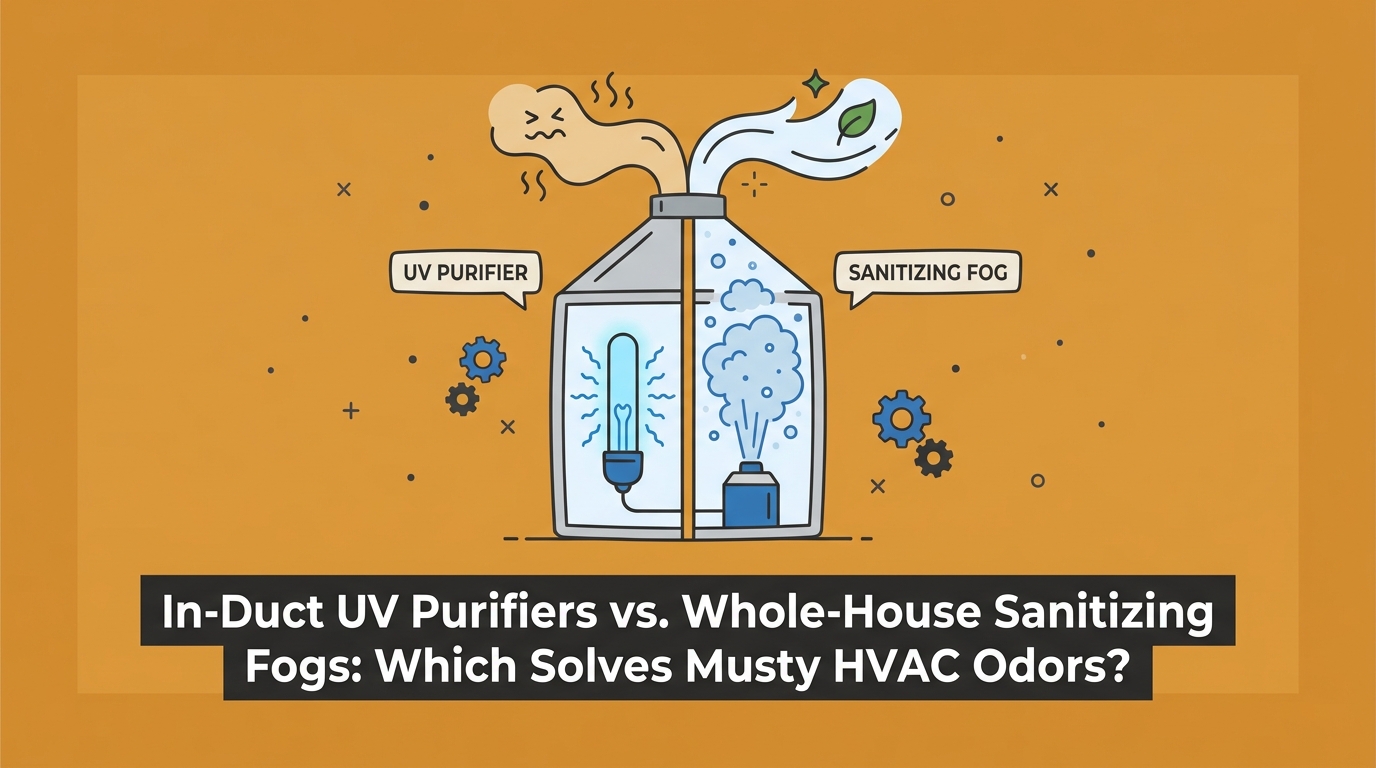
Using plug-in air fresheners, scented candles, or aerosol sprays only masks these odors temporarily by overwhelming your olfactory sensors with stronger chemicals. Comprehensive cleaning neutralizes these odors at the source by physically removing the decaying organic matter generating the smell. For systems that have been heavily compromised by biological contaminants, severe pest infestations, or years of heavy pet presence, supplementary treatments like whole house sanitizing can be applied after the physical debris is extracted to eliminate microscopic bacteria and odor-causing agents.
The Mechanics of Negative Pressure: NADCA Standards vs. Superficial Vacuuming
Not all duct cleaning methods are created equal. The industry is unfortunately plagued by "blow-and-go" services that use inadequate equipment, leaving the heaviest and most dangerous debris behind. Understanding the technical mechanics of proper extraction is vital for protecting your HVAC investment.
Why Negative Pressure is Mandatory
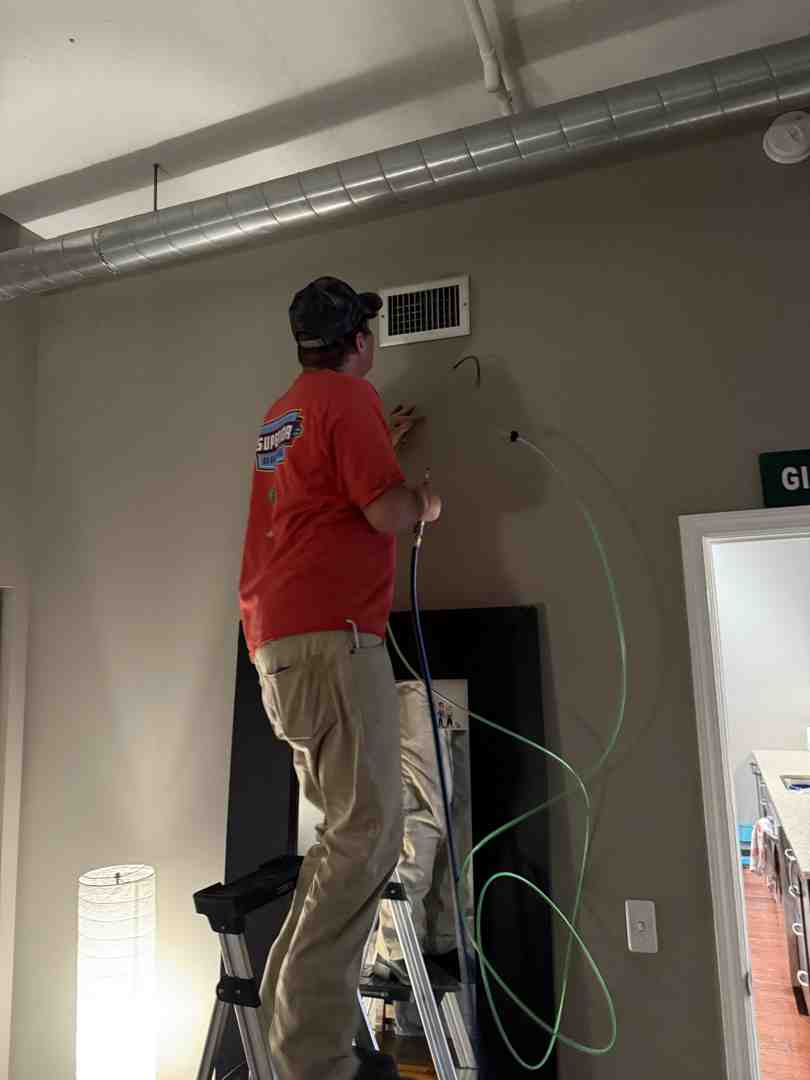
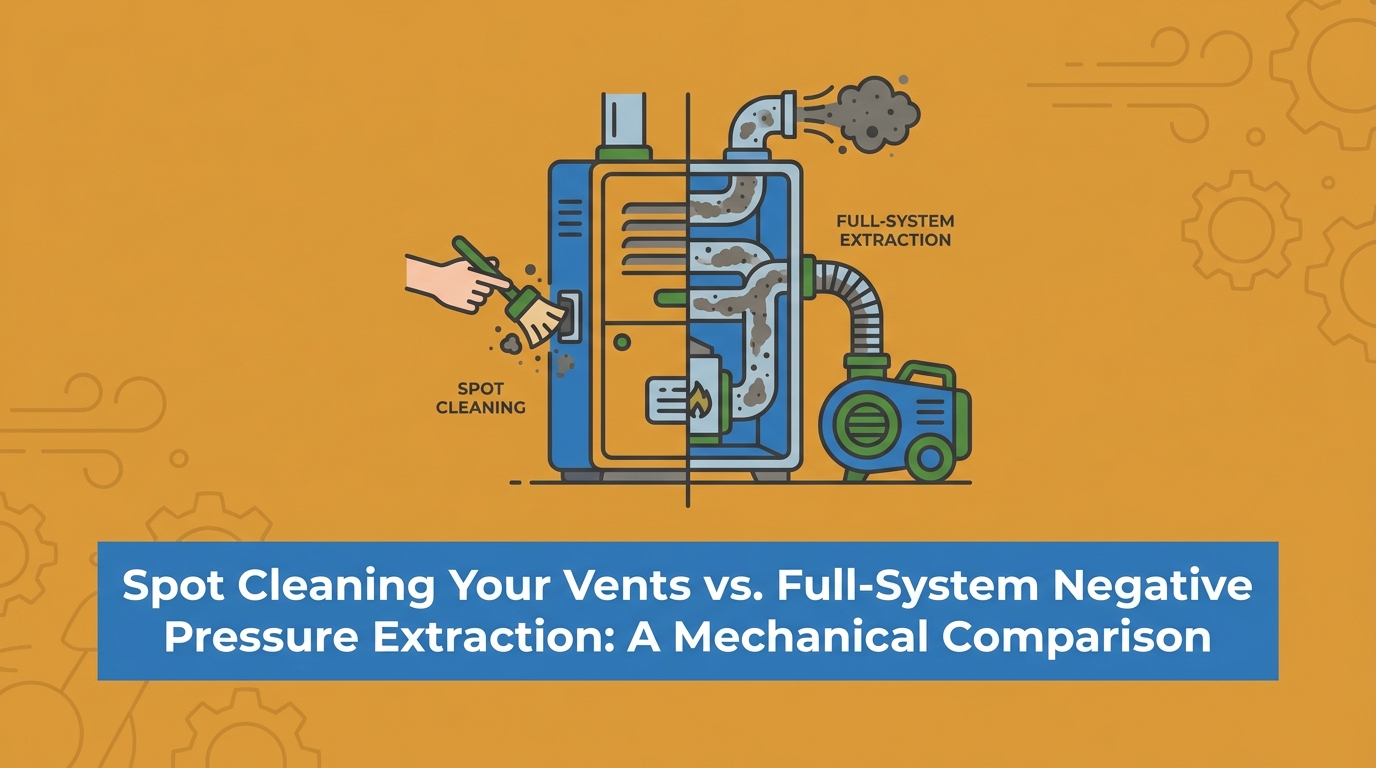
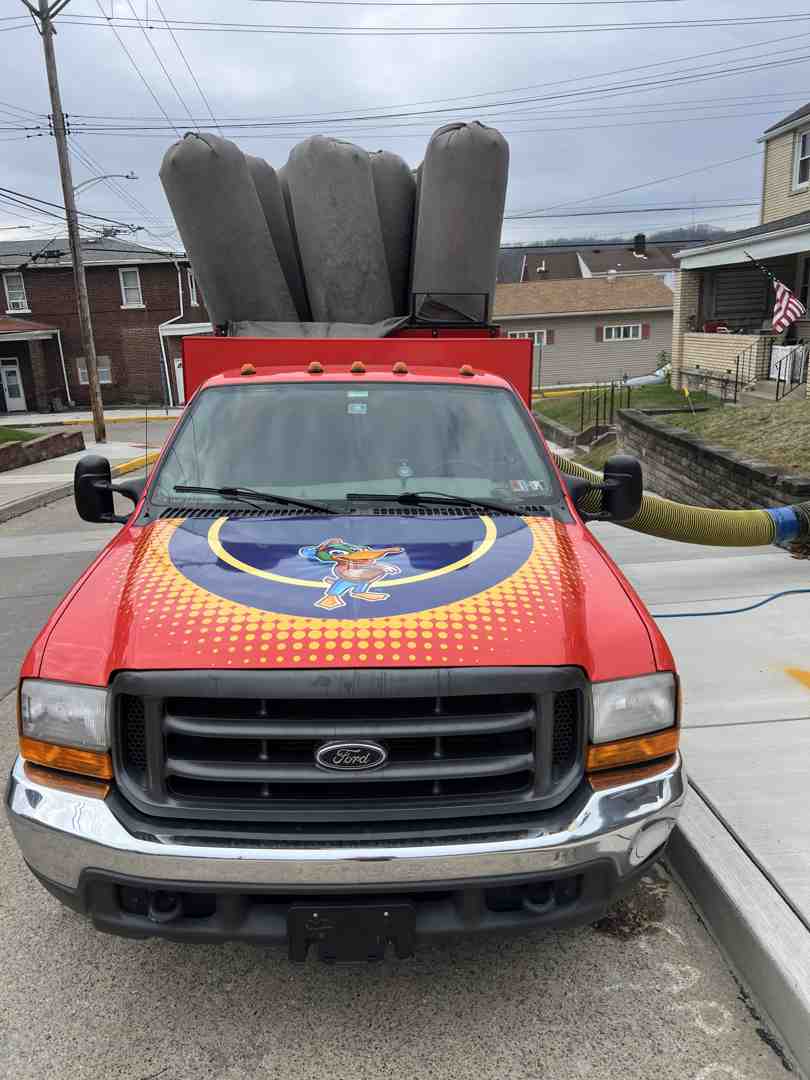
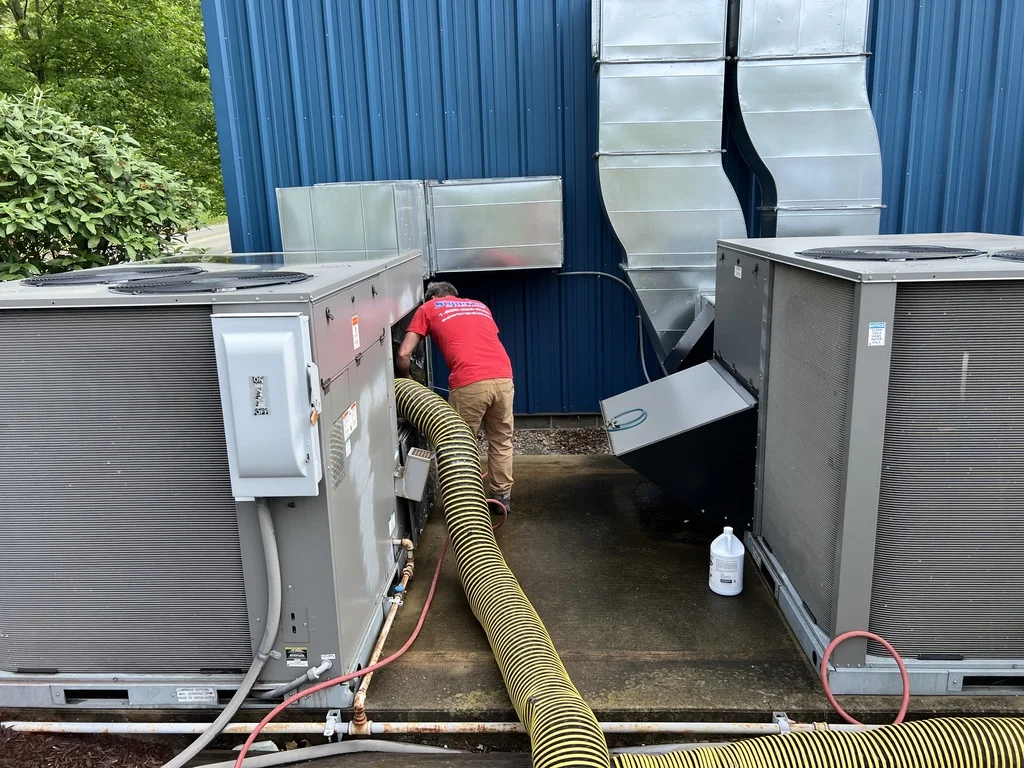
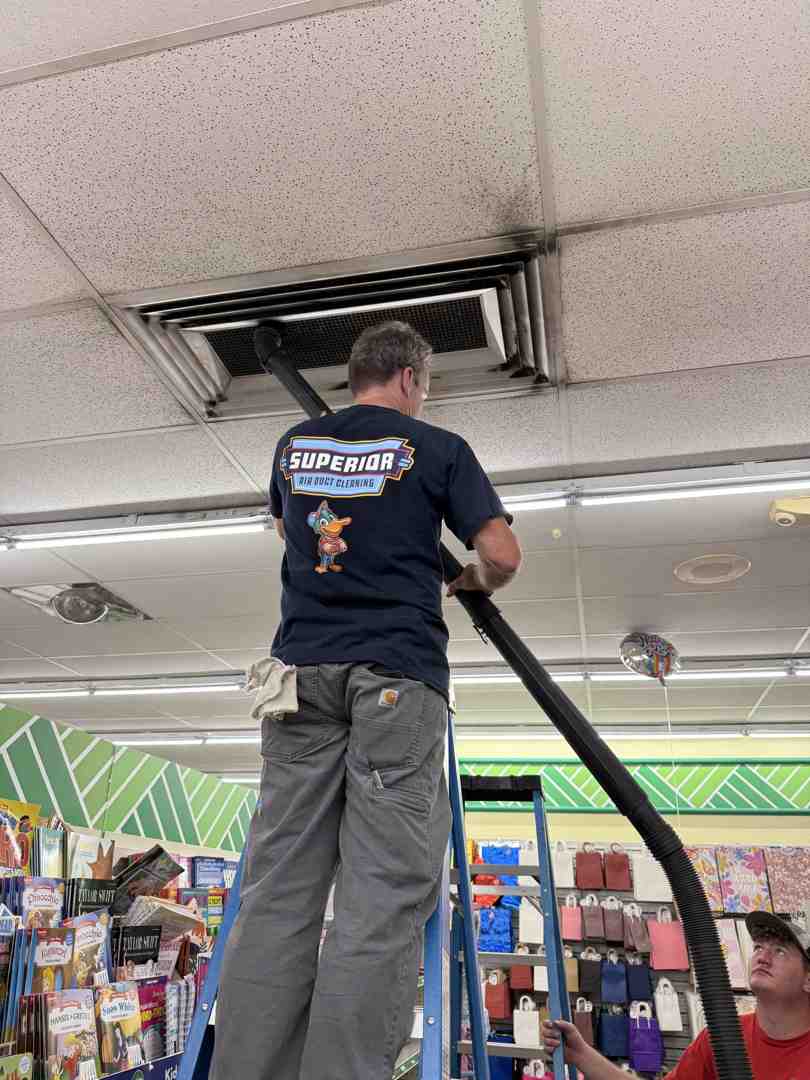
Professional extraction relies on the principle of negative pressure. A high-powered vacuum is connected directly to the main trunk line of your HVAC system, pulling the entire network into a state of negative pressure. This ensures that as agitation tools break the debris loose from the duct walls, the dust is immediately pulled out of the house into a contained filtration unit, rather than being blown out of the registers and into your living room.
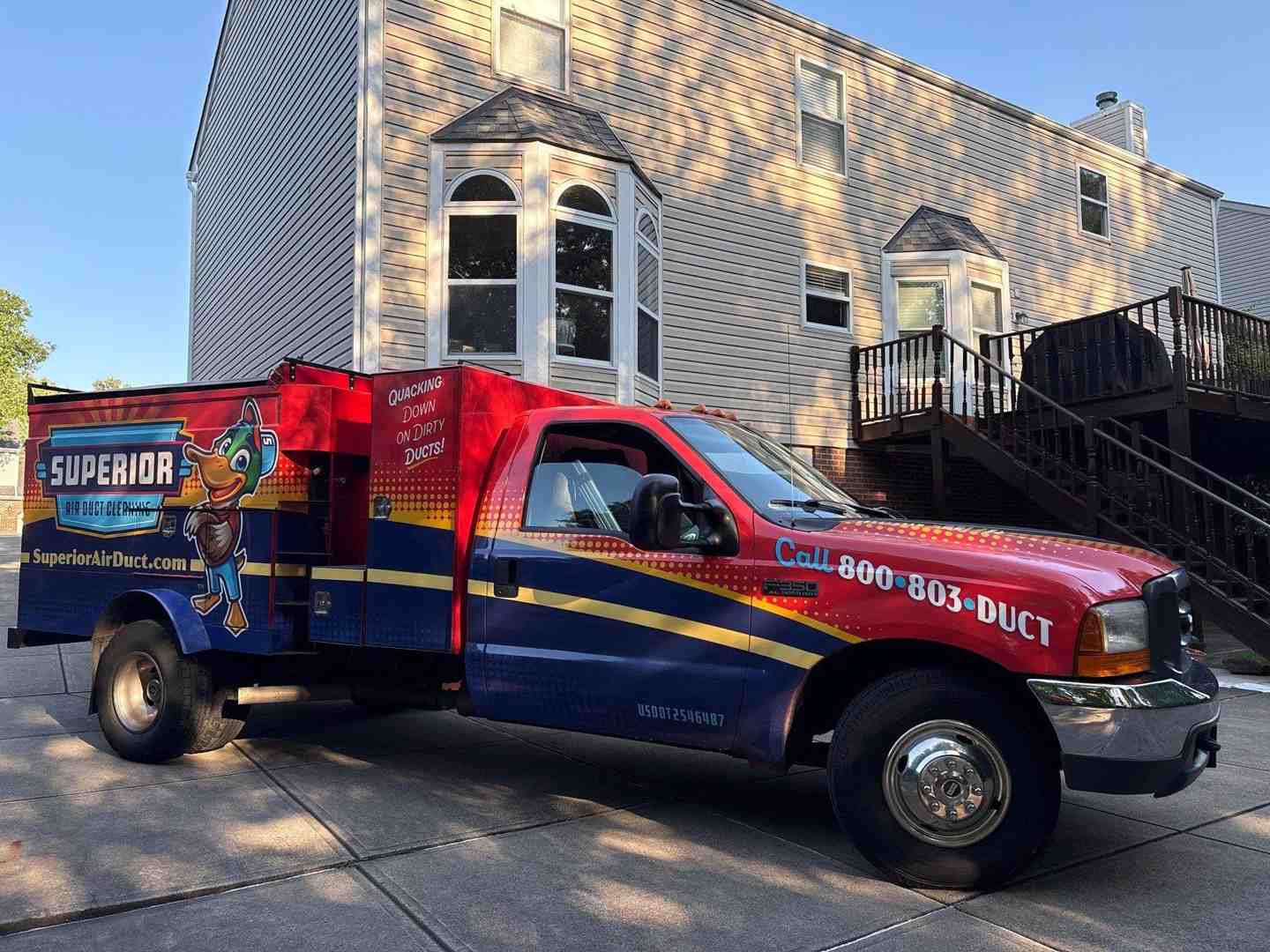
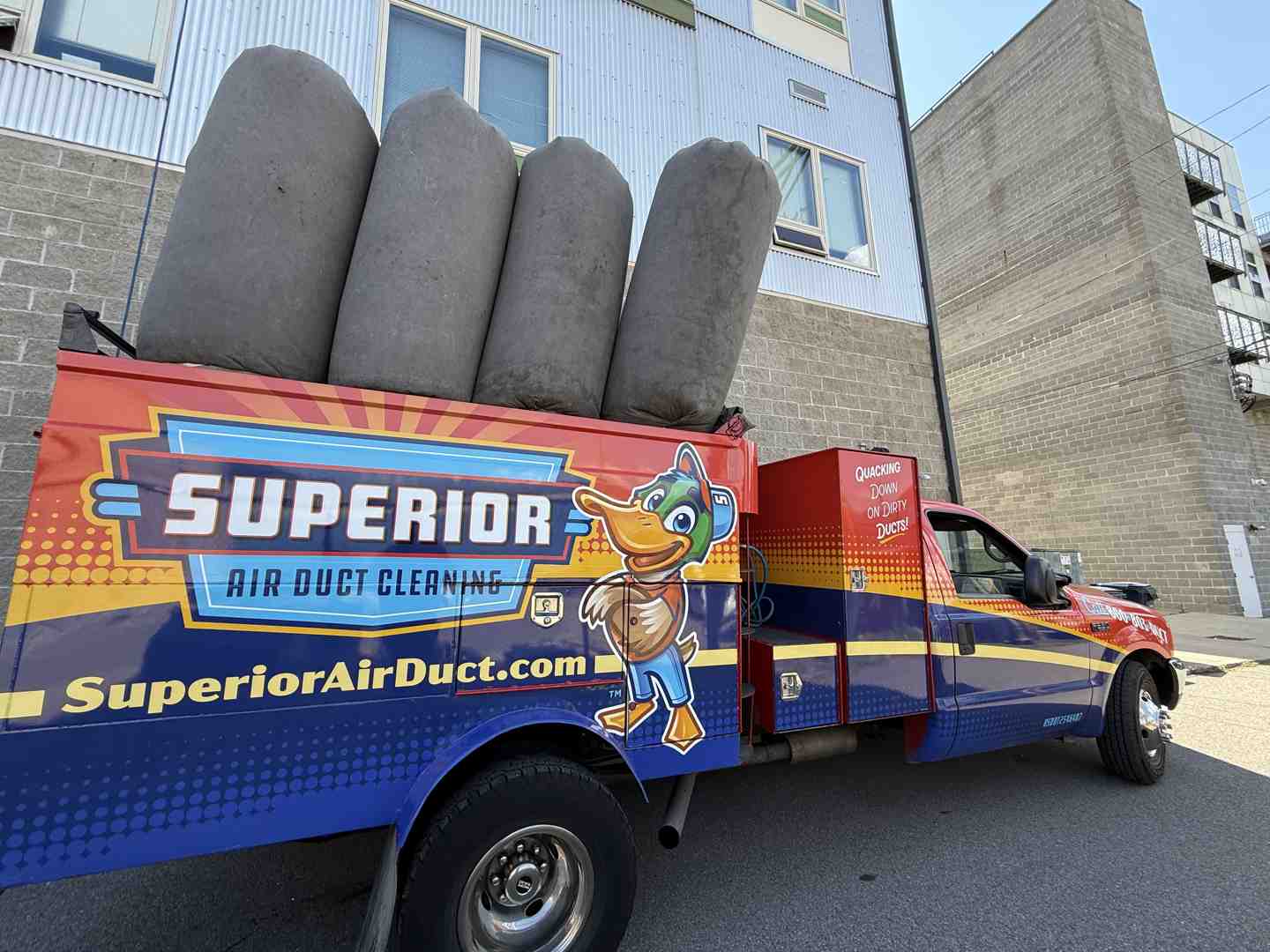
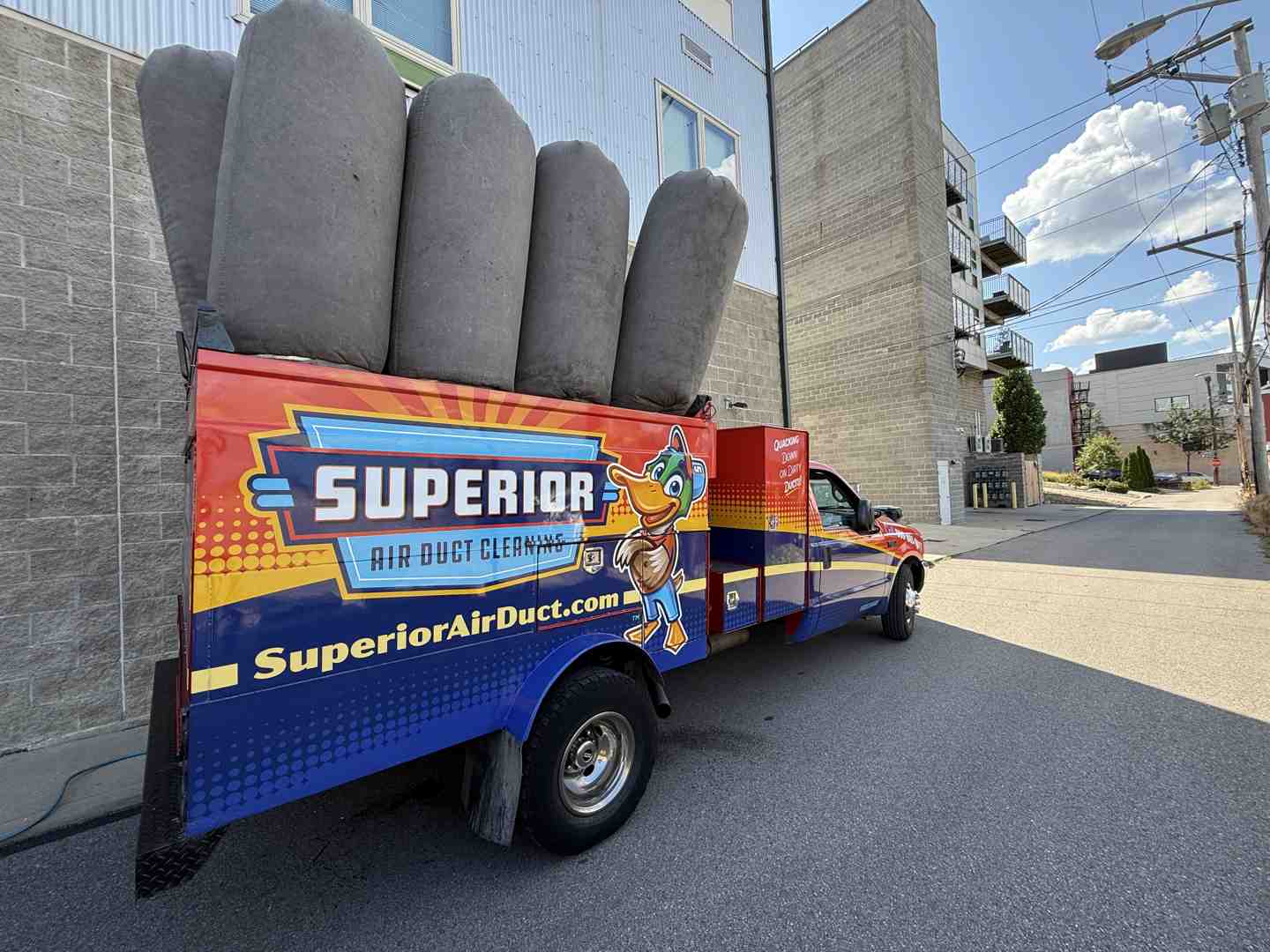
At Superior Air Duct Cleaning, our commitment to NADCA-certified expertise and professional-grade negative pressure equipment ensures a genuine, comprehensive cleaning that protects your home's air quality. Standard DIY methods, like pushing a shop-vac hose down a register, are completely ineffective. A shop-vac lacks the cubic feet per minute (CFM) suction power required to pull heavy debris from a 30-foot duct run. Furthermore, blindly shoving rigid tools into vents can easily tear or crush flexible ductwork, leading to massive air leaks and expensive repairs.
Comparing Extraction Methods
• Equipment Used — NADCA-Certified Negative Pressure: Truck-mounted or heavy-duty portable negative air machines. — Superficial Shop-Vac Method: Standard household or commercial wet/dry vacuums.
• Debris Containment — NADCA-Certified Negative Pressure: Entire system under vacuum; zero dust escapes into the home. — Superficial Shop-Vac Method: No system-wide containment; dust blows back into rooms.
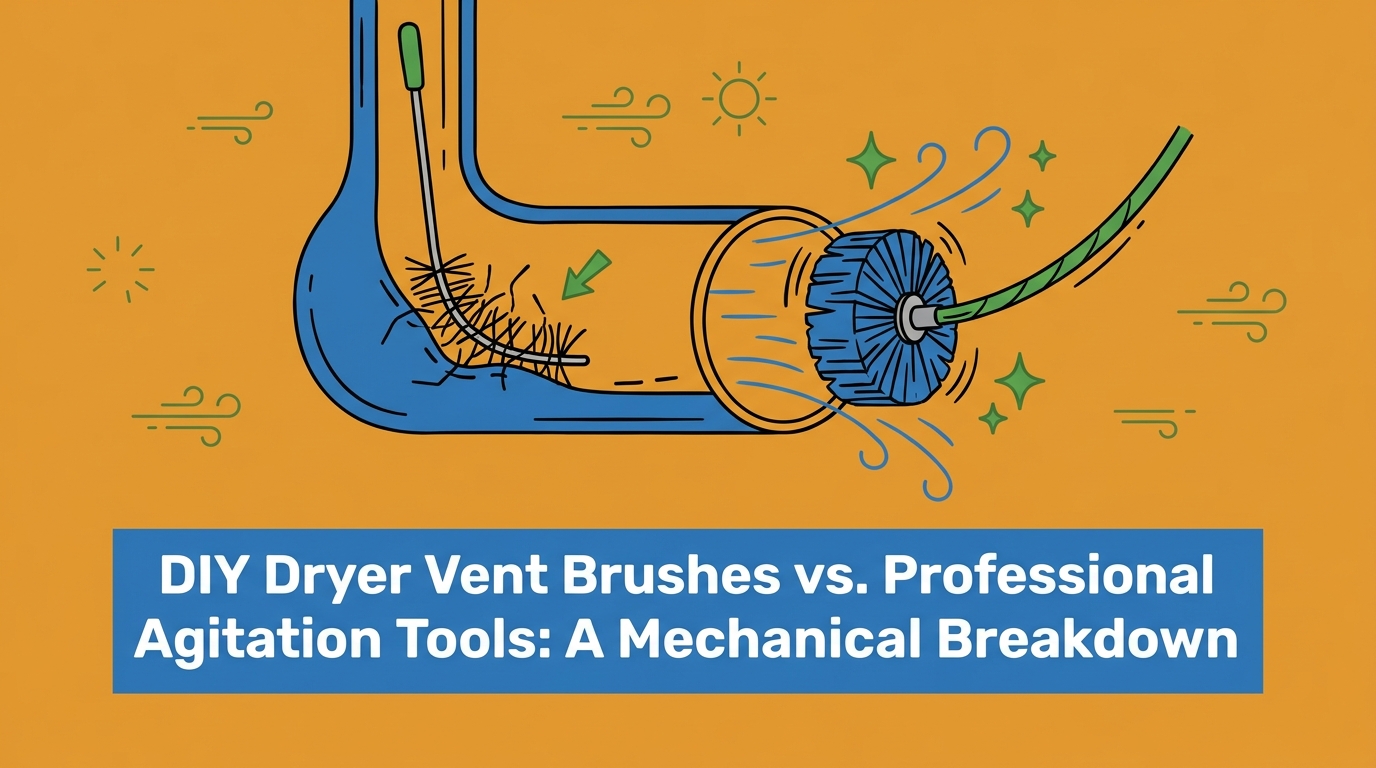
• Agitation Tools — NADCA-Certified Negative Pressure: Pneumatic whips and soft-bristled high-pressure compressed-air tools sized for ducts. — Superficial Shop-Vac Method: Rigid plastic wands that can damage flexible lines.
• System Coverage — NADCA-Certified Negative Pressure: Cleans main trunks, branch lines, plenums, and returns. — Superficial Shop-Vac Method: Only reaches the first 3 to 5 feet behind the register.
For a deeper understanding of the specific tools required to perform this work safely and effectively, reviewing the air duct cleaning equipment utilized by certified technicians can clarify why professional service is necessary.
Evaluating Secondary Ventilation Systems During Summer
Indoor air quality and overall home efficiency extend well beyond your primary HVAC ductwork. Your home contains a network of secondary exhaust systems designed to remove moisture, heat, and hazardous gases. During the peak summer heat, the risks associated with clogged exhaust vents are significantly compounded.
The Danger of Clogged Exhaust Lines
In our experience maintaining home safety, we always recommend prioritizing your dryer vent. When summer temperatures raise the ambient heat in your laundry room or garage, a dryer that is struggling to push exhaust through a lint-clogged vent will overheat much faster. This restricted airflow forces the appliance to run longer cycles, wasting electricity and generating excessive heat that your AC then has to battle. More importantly, highly flammable lint trapped in a superheated vent creates a severe fire hazard.
Physical signs that these secondary lines require immediate attention include clothes taking more than one cycle to dry, the laundry room feeling excessively humid during operation, and the exterior exhaust flap failing to open when the dryer is running. Inspecting all household ventilation points, and scheduling professional dryer vent cleaning services, should be a mandatory part of your comprehensive summer maintenance strategy.
Similarly, bathroom exhaust fans must be clear to effectively remove humidity after showers. If these small ducts become clogged with dust, the trapped moisture will quickly lead to ceiling mold and peeling paint, adding unnecessary moisture load to your already hard-working air conditioner.
Frequently Asked Questions About Residential Duct Maintenance
How do I know if my air ducts need cleaning?
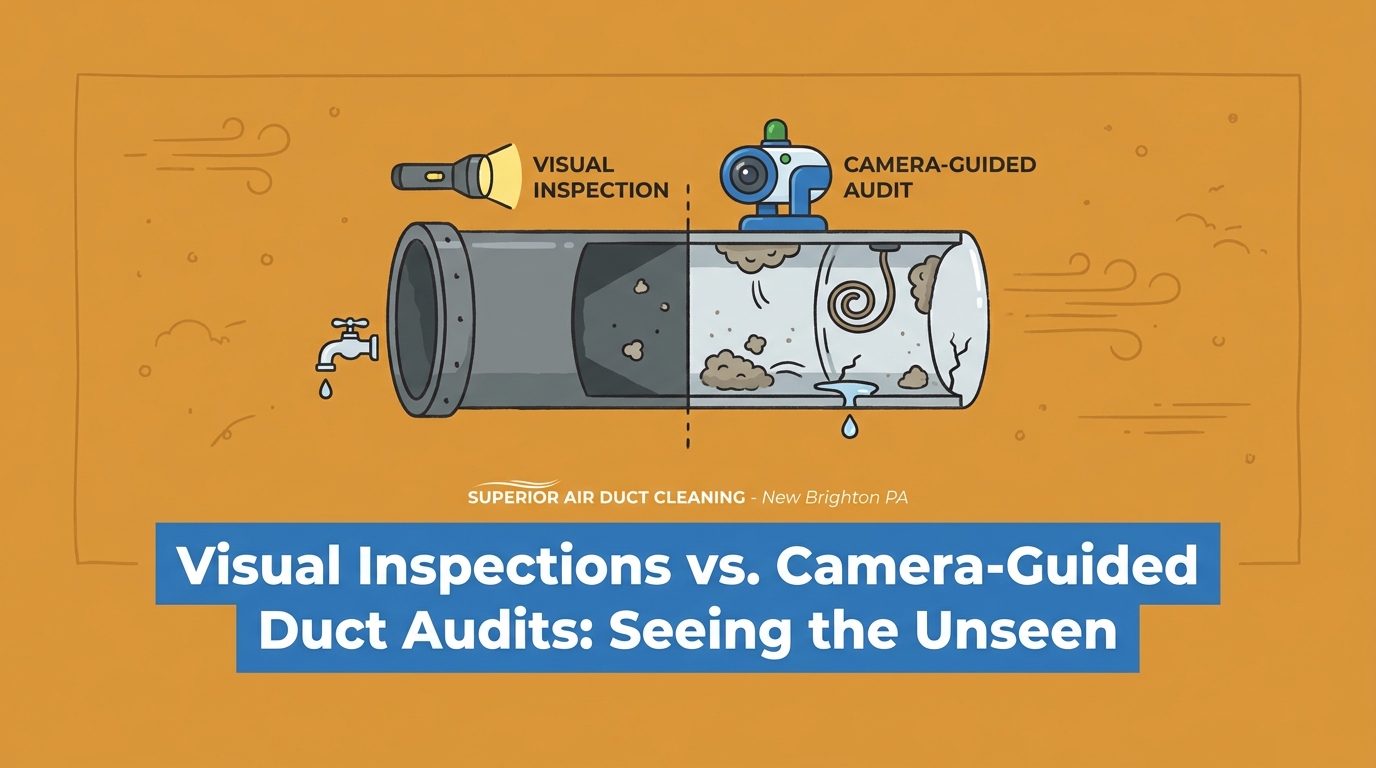
Look for visible mold, signs of vermin, or excessive dust blowing from supply registers. If you are constantly dusting your furniture just days after cleaning, or if you notice restricted airflow despite having a brand-new HVAC filter installed, your system is likely burdened with heavy debris. A visual inspection of the registers with a flashlight can often reveal thick buildup clinging to the metal.
What is the difference between NADCA certified cleaning and standard vacuuming?
NADCA certification requires strict adherence to negative pressure containment and specialized agitation tools, unlike standard vacuuming. Certified professionals place the entire duct network under a powerful vacuum to ensure no dust escapes into your living space, while using pneumatic whips to scrub the interior walls. Standard vacuuming only reaches a few feet into the vent and leaves the majority of the contamination untouched.
Does cleaning air ducts improve AC efficiency?
Yes, removing severe blockages allows the blower motor to push air with less resistance, improving cooling performance. When ducts are lined with inches of compacted dust, the diameter of the pipe is effectively reduced, forcing the system to work harder and run longer to reach the temperature set on your thermostat. Clearing this debris restores the system to its designed airflow capacity.
Can I clean my own air ducts?
Homeowners can clean the surface of register grilles, but deep duct cleaning requires professional negative pressure equipment. Pushing household vacuum hoses or rigid brushes into your vents will only pack the debris further down the line, creating denser blockages. Additionally, DIY attempts frequently result in torn or disconnected flexible ductwork, which leaks expensive cooled air into your attic or crawlspace.
How often should ductwork be inspected?
Industry standards recommend inspecting residential ductwork every 1 to 2 years to assess accumulation. While the actual cleaning frequency depends on factors like pet ownership, local climate, and recent home renovations, a routine inspection ensures you catch moisture issues, pest intrusions, or mold growth before they severely impact your indoor air quality.
Take the Next Step for Your Home's Air Quality
Identifying the physical signs of contamination is the first and most crucial step to achieving better indoor air quality. By monitoring your system for restricted airflow, visible debris, and persistent odors during the summer cooling season, you can protect both your family's health and your HVAC equipment's longevity.
We encourage homeowners to rely on objective criteria rather than guesswork when evaluating their ventilation network. If the technical signs outlined above align with your system's current condition, taking proactive measures will restore proper airflow and eliminate microscopic pollutants. Consult with our certified professionals at Superior Air Duct Cleaning to ensure the extraction is performed safely, thoroughly, and up to the highest industry standards.

Customer Reviews


Superior Air Duct cleaning did a phenomenal job in a timely manner with the tech “Rich” being very professional ,personable and considerate of our property! He explained things as he proceeded and answered all our questions!
I LOVE that they provide before & after photos to see the difference. Give them a try… you won’t regret it
Pam T.
Robert was on schedule and communicated what time he would arrive. He was polite, professional, and respectful of our home. I wanted to wait a couple weeks before posting a review because I wanted to see if the duct cleaning actually made a difference. I am happy to say it did! I vacuum multiple times a week and have already noticed a significant reduction in the amount of dust cleaned up each time. As a home with pets, there will always be something to clean, but getting the ducts cleaned has definitely helped improve the air quality and reduce the dust.
alice A.
Technician Rob arrived early explained the days agenda and then proceeded to work methodically and meticulously over the next 6+ hours cleaning my ductwork. Courteous and professional they answered all of my questions and went above and beyond the call of duty. They even located an old dusty box of rat poison buried in our vents. My only regret is not finding these guys sooner. As a realtor of 22 years and owner of a newly purchased (now dust free) home I highly recommended!
Eric K.
Excellent service! I’ve used them to clean out my air ducts as well as my dryer vent duct and they are excellent. I was very pleased with both jobs and will continue to use them in the future. Great communication as well- from the time I scheduled the appointment until they were at my door.
Erika C.
We had such an amazing experience with Superior Air Duct Cleaning. They were so nice and friendly and did an amazing job. I loved seeing the before and after pictures. Besides doing an amazing job cleaning our air ducts they were so quick at responding and setting up the appointment. We will definitely be using them in the future.
Amanda C.