Why Hidden Microbes Are Harder to Remove Than They Look
How professional sanitizing targets mold and bacteria is one of the most important things homeowners can understand before assuming a quick wipe-down has solved their problem. Here is a fast answer:
How Professional Sanitizing targets Mold and Bacteria:
1. Penetrates hidden areas - Antimicrobial fog reaches inside wall cavities, duct systems, and porous materials where sprays and cloths cannot
2. Destroys cell structure - Active agents like peracetic acid and quaternary ammonium compounds rupture mold cell walls and denature bacterial proteins
3. Neutralizes mycotoxins - Professional treatments break down toxic byproducts that remain on surfaces even after mold dies
4. Leaves a residual barrier - EPA-registered antimicrobials continue working after application, inhibiting regrowth for months
5. Removes spore fragments - HEPA vacuuming captures dead spore bodies that are still allergenic even after treatment
6. Addresses the whole space - Professionals treat HVAC systems, subfloors, and hidden voids that DIY methods routinely miss
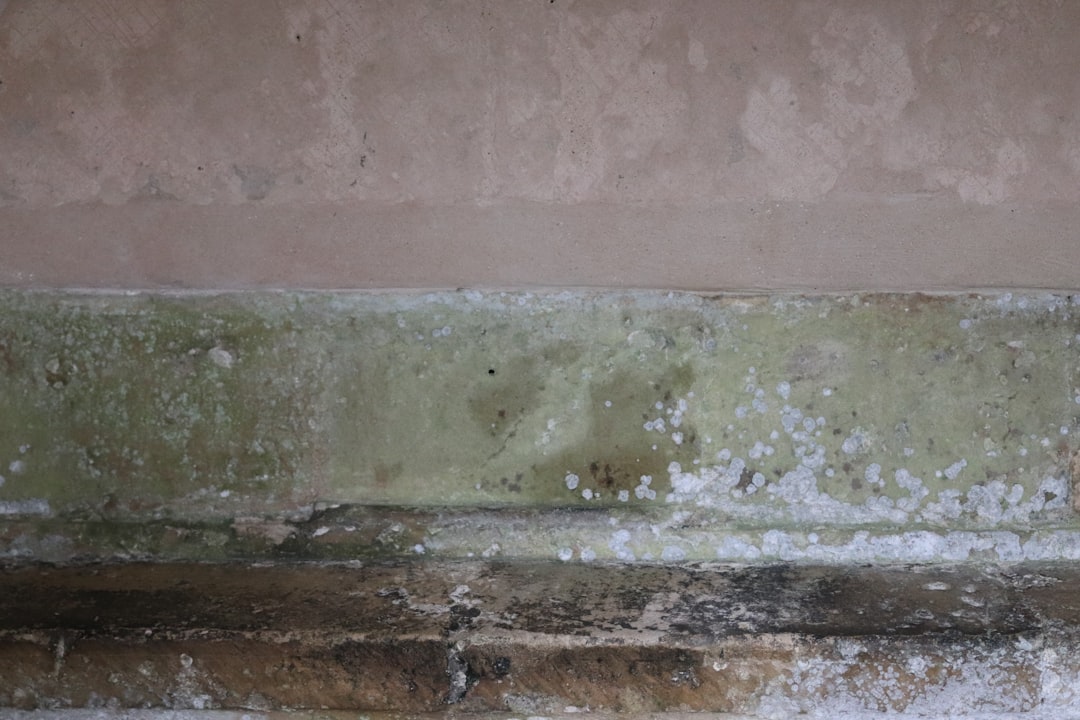
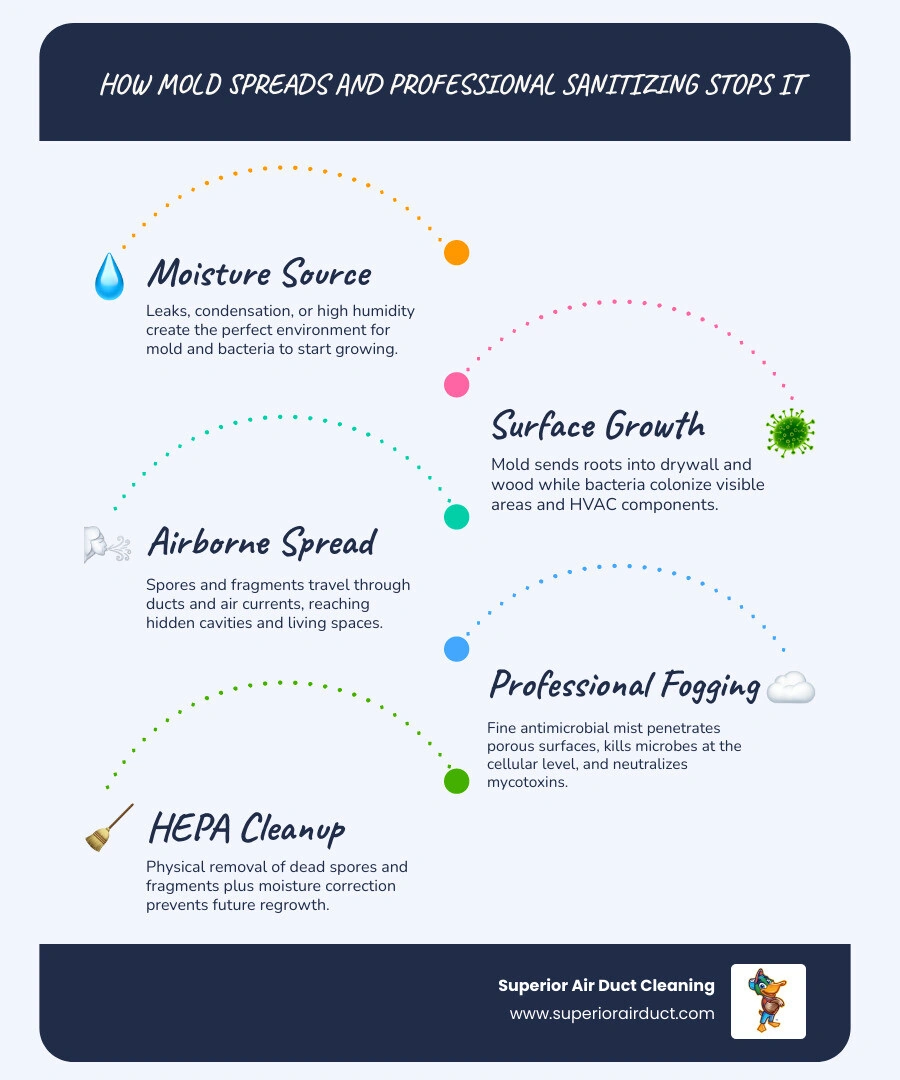
Mold does not stay on the surface. It sends roots into drywall, wood framing, and insulation. Bacteria colonize deep inside duct lining and condensate pans. Standard household cleaners like bleach evaporate before they can reach those roots, especially on porous materials. According to the IICRC S520 standard, bleach does not penetrate porous substrates — and the CDC does not recommend it as a routine mold cleanup agent.
What makes the problem worse is that mold spores can remain viable for years in a dormant state. Even after visible growth is gone, dead spore fragments left behind are still highly allergenic. That means surface cleaning alone can leave your home feeling clean while the underlying contamination continues to affect your air quality and health.
If you are smelling something musty, seeing recurring spots, or dealing with unexplained allergy symptoms that ease when you leave the house, there is a good chance the contamination goes deeper than what you can see.
How Professional Sanitizing Targets Mold and Bacteria Better Than Surface Cleaning
Professional sanitizing is not just "spraying something stronger." A proper treatment combines physical removal, moisture correction, containment, HEPA filtration, and carefully applied antimicrobial products. In other words, we do not just try to kill what is visible. We aim to remove contamination, reduce airborne spread, and make the environment less friendly to future growth.
That matters because mold and bacteria often live in places ordinary cleaning misses: inside ductwork, behind baseboards, in insulation, on subfloors, and in tiny pores of wood and concrete. Since about 10% to 50% of households in many parts of the world experience significant mold issues, this is not a rare "other people" problem. It is a common indoor air quality issue.
What professional sanitizing fog treatment is and how it differs from wiping, spraying, and bleach
Fog treatment uses specialized equipment to create a fine antimicrobial mist that stays suspended long enough to move through the treated space and contact more surfaces than a rag or trigger spray can reach. Traditional wiping only treats what your hand can touch. Standard spray bottles typically produce droplets around 100 to 300 microns. Professional fogging can produce particles around 7.5 microns, which is about 40 times smaller.
That tiny particle size is the whole point. Smaller droplets can move into cracks, seams, duct interiors, and uneven surfaces far better than coarse sprays.
But fogging is not a replacement for cleaning. Industry guidance is clear: antimicrobial treatment is a secondary step, not a shortcut around physical removal. Visible mold still needs to be removed, and wet conditions still need to be fixed first. Otherwise, sanitizing becomes the equivalent of putting air freshener on a gym bag and calling it a renovation.
How professional sanitizing targets mold and bacteria in places DIY methods usually miss
Because the mist is so fine, it can contact areas DIY methods usually miss, including:
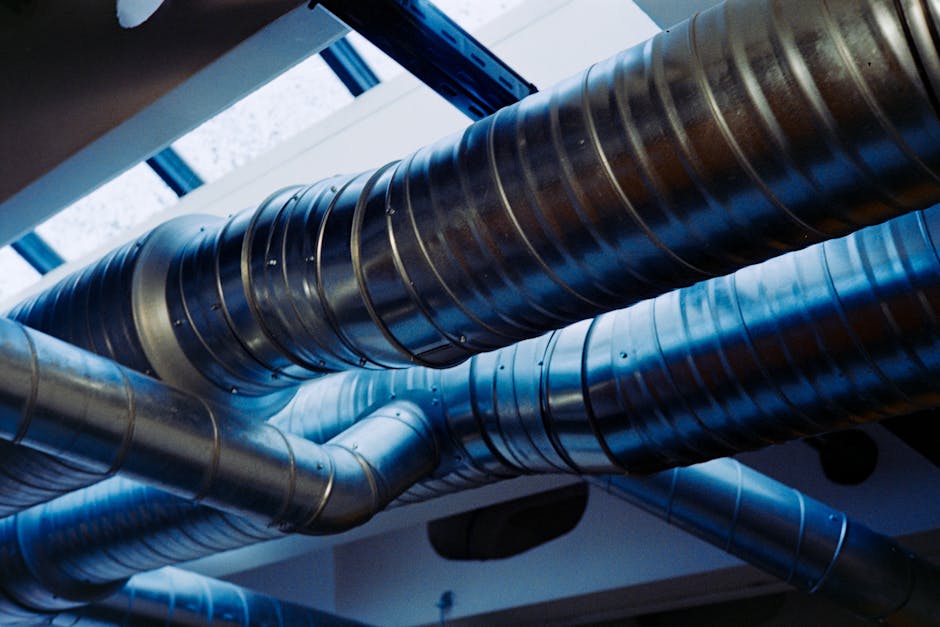
• Duct interiors
• Supply and return vents
• Wood grain
• Drywall pores
• Concrete pores
• Insulation surfaces
• Wall void edges
• HVAC components around condensate
This matters because mold spores are typically about 1 to 30 microns in size. Fine antimicrobial fog is small enough to move around the same kinds of hidden spaces spores settle into.
Why dead mold still matters after treatment
Even when mold is dead, the leftovers are still a problem. Spore bodies and fragments can continue triggering allergies and irritation. That is why professional sanitizing is paired with HEPA vacuuming and air scrubbing.
True HEPA filters capture particles as small as 0.3 micrometers with 99.97% efficiency, which makes them highly effective for trapping most airborne mold spores and fragments. Killing is only one part of the job. Capturing and removing the debris is what helps the air actually feel cleaner afterward.
The Science Behind Penetration, Kill Claims, and Mycotoxin Reduction
Mold and bacteria survive because they have protective structures. Mold spores have tough outer layers. Bacteria can hide in biofilms, which are slimy protective communities that make them harder to remove. Professional sanitizers work by disrupting those defenses.
How professional sanitizing targets mold and bacteria at the cellular level
Different antimicrobial agents work in different ways, but the basic science is straightforward:
• Oxidizing agents attack proteins, enzymes, and genetic material
• Quaternary ammonium compounds disrupt cell membranes
• Sporicidal chemistries damage the outer structures that let spores survive harsh conditions
• Some oxidizers can cause lysis, which means the cell wall breaks open
For homeowners, the practical takeaway is simple: these agents do more than wash a surface. They interfere with the microbe's ability to survive, reproduce, and recolonize.
How professionals reach porous surfaces and hidden areas traditional sprays cannot
Porous materials are where many DIY efforts fail. On wood, drywall, concrete, and similar materials, contamination can extend below the visible surface. Traditional sprays often wet the top layer and stop there. Professional fogging and targeted antimicrobial application improve reach into:
• Wood grain
• Concrete pores
• Fiberglass surfaces
• Subfloor materials
• Irregular duct surfaces
This is also why professionals may recommend removing some porous materials if they are heavily contaminated. Sanitizing can do a lot, but not every water-damaged material is worth saving.
What professional sanitizing can do for odors and mycotoxins
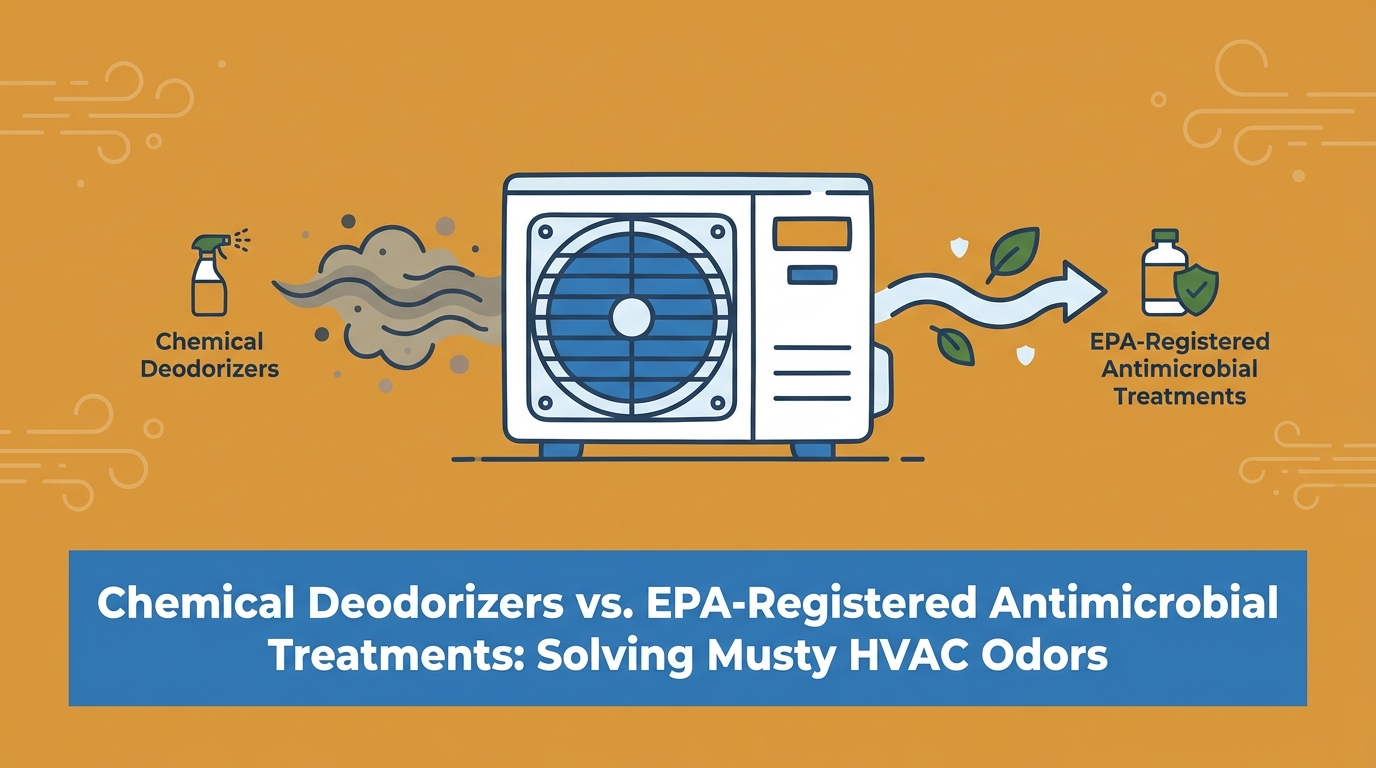
Musty odors are often caused by microbial byproducts, not just "bad air." When sanitizing breaks down mold and bacterial contamination, it can also reduce the compounds causing those odors. If odor is one of your biggest concerns, our article on addressing musty odors from your air ducts explains why smells often point to hidden contamination.
Mycotoxins deserve special mention. These are toxic compounds some molds leave behind. Even after visible mold is gone, residues may remain on surfaces. Professional treatment can help reduce and neutralize these residues more effectively than simple surface wiping.
What a Professional Mold and Bacteria Sanitization Process Looks Like
A proper job follows a sequence. The order matters more than many homeowners realize.
Step 1: Find and correct the moisture source before sanitizing
Mold needs moisture, a food source, and the right temperature to grow. So before cleaning, we first ask: why is mold there?
Common causes include:
• Plumbing leaks
• Roof leaks
• Condensation around HVAC components
• Basement humidity
• Poor bathroom ventilation
• Wet insulation or damp crawlspaces
If the source is not corrected, mold often returns. EPA guidance emphasizes that moisture control is the foundation of successful remediation. If you suspect hidden growth, Is There Mold in My Home? is a helpful next read.
Step 2: Remove visible growth and control airborne spread
Once moisture is addressed, the next priority is preventing spores from spreading during cleanup. Professionals may use:
• Containment barriers with plastic sheeting
• Negative air pressure
• HEPA air scrubbers
• Careful removal of contaminated porous materials
• Controlled cleaning of non-porous and semi-porous surfaces
If mold is suspected in HVAC, the system may need to stay off until it is inspected. Running contaminated ductwork can spread spores throughout the home.
Step 3: Apply antimicrobial sanitizers and complete HEPA cleanup
After physical cleaning comes antimicrobial treatment. This step may include fogging, spray application, wipe-downs, or a combination depending on the material and contamination pattern.
Key details matter here:
• Products must be used according to label directions
• Correct dilution and dwell time are essential
• HEPA vacuuming follows treatment to remove remaining fragments
• Post-cleaning wiping may be needed on accessible surfaces
Some treatments may leave a residual antimicrobial barrier that helps inhibit regrowth for a limited period, but that barrier is a backup plan, not a substitute for dry conditions.
Step 4: Treat HVAC and duct systems if contamination may be circulating
If contamination may be moving through the air system, duct-related treatment becomes important. Mold in ducts, on registers, or around HVAC components can spread spores from room to room. That is why we often recommend looking at the entire air pathway, not just the visible patch on the wall.
Helpful resources include Air Duct Mold Removal and How Whole House Disinfection Works Through Your HVAC.
Safety Rules, Health Risks, and When Homeowners Should Call a Professional
Mold cleanup is not a great weekend hobby for everyone. In some cases, it should not be attempted at all.
Who should avoid participating in mold cleanup
According to CDC guidance, people with the following conditions should avoid mold cleanup when possible:
• Asthma
• COPD or other chronic respiratory disease
• Mold allergies
• Immune suppression
• Significant sinus or eye sensitivity
Children, older adults, and pets should also be kept away from active cleanup areas. If you are noticing symptoms, Signs of Mold Exposure can help you connect the dots.
What safety precautions professionals use during remediation
Proper remediation usually involves:
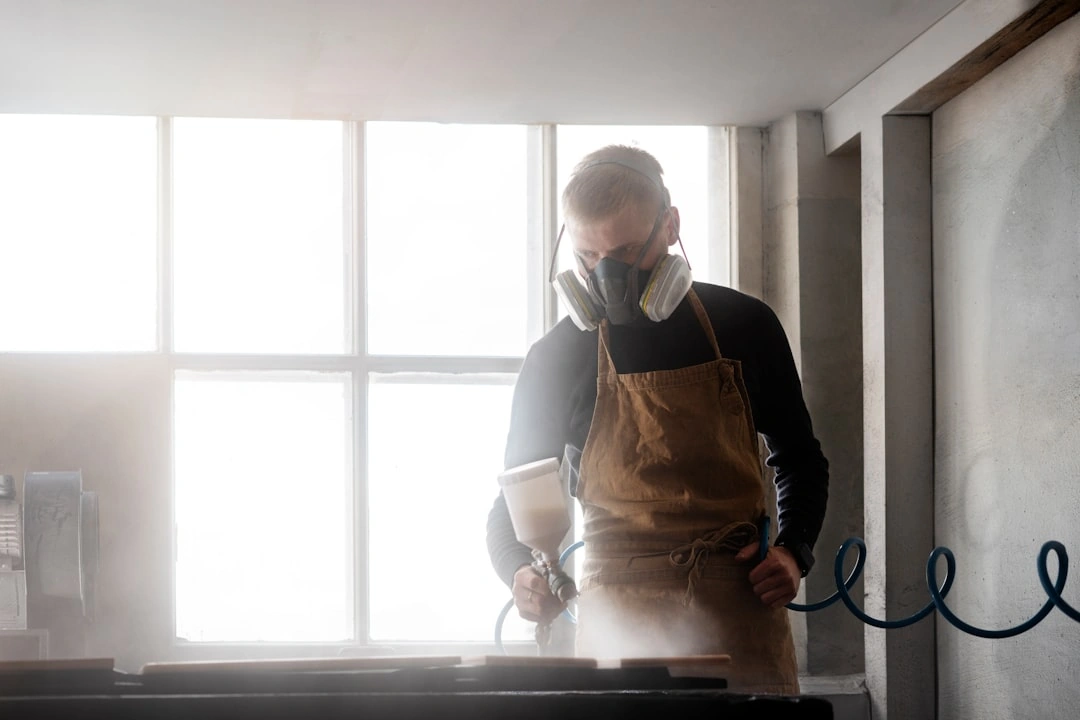
• NIOSH-approved respiratory protection such as N95 or higher
• Gloves
• Goggles
• Protective clothing when needed
• Sealed work zones
• Controlled ventilation
• SDS-guided product handling
• Safe re-entry timing after treatment
Ozone is not recommended for mold treatment in homes because it can create respiratory irritants and does not replace proper removal.
When DIY cleanup may be reasonable and when to hire professionals
DIY cleanup may be reasonable when:
• The moldy area is less than about 10 square feet
• The contamination is on hard, cleanable surfaces
• There is no sewage or grossly contaminated water involved
• No one in the home has significant health sensitivity
It is time to call professionals when:
• Mold covers more than about 10 square feet
• Growth keeps coming back
• The HVAC system may be involved
• Mold is behind walls, under flooring, or in insulation
• Water damage involved sewage or contaminated floodwater
• Occupants have asthma, COPD, allergies, or immune suppression
• There is strong musty odor without a visible source
How Long It Takes, How Regrowth Is Prevented, and What Homeowners Should Do Next
Every project is different, but there are some common patterns homeowners can expect.
Typical timeline and what to expect during professional sanitizing
Many residential remediation projects take about 1 to 5 days depending on the size of the affected area and whether materials need removal. Some fog-based sanitizing treatments can be completed much faster, sometimes within roughly 24 hours including drying and re-entry timing.
A typical flow looks like this:
• Inspection — DIY Cleanup: Visual only — Professional Sanitizing: Moisture and contamination assessment
• Hidden-area reach — DIY Cleanup: Limited — Professional Sanitizing: High
• Air control — DIY Cleanup: Usually none — Professional Sanitizing: Containment and HEPA filtration
• Product application — DIY Cleanup: Household cleaners — Professional Sanitizing: EPA-registered antimicrobials
• Fragment removal — DIY Cleanup: Basic wiping — Professional Sanitizing: HEPA vacuuming and air scrubbing
• HVAC treatment — DIY Cleanup: Rarely addressed — Professional Sanitizing: Can be included if needed
• Verification — DIY Cleanup: Usually none — Professional Sanitizing: Post-treatment review
How professional sanitizing helps prevent future mold and bacteria regrowth
Professional sanitizing helps reduce regrowth in several ways:
• It lowers the microbial load more thoroughly
• It reaches hidden surfaces where colonies start again
• It may leave residual antimicrobial protection on treated surfaces
• It is usually paired with moisture correction and drying
• It can include duct cleaning and sanitizing so spores are not recirculated
Research referenced in our planning shows some residual treatments may continue inhibiting growth for months, but the real long-term protection still comes from moisture control.
Environmental controls that make sanitizing last longer
For lasting results, indoor conditions have to change. The goal is usually to keep indoor humidity around 30% to 50% and avoid chronic dampness.
Helpful prevention steps include:
• Repair leaks promptly
• Use bathroom and kitchen exhaust fans
• Vent moisture outside properly
• Keep condensate systems clean and draining
• Use dehumidifiers in damp basements
• Replace wet materials that cannot dry fully
• Maintain clean ductwork and airflow
• Use HEPA filtration where appropriate
For more prevention guidance, see reduce Mold from Clean Air Ducts, Benefits of Whole House Sanitizing, and Whole House Sanitizing Guide.
Frequently Asked Questions About How Professional Sanitizing Targets Mold and Bacteria
Does professional sanitizing kill mold spores better than vinegar, bleach, or hydrogen peroxide?
Generally, yes, especially in hidden areas and on porous materials. White vinegar can kill up to about 82% of mold species, which makes it useful for some small jobs on accessible surfaces. Hydrogen peroxide can work on solid surfaces too. But household products have clear limits:
• They rely on direct surface contact
• They do not penetrate hidden cavities well
• They are less effective in ductwork and porous materials
• They usually do not include HEPA air control or fragment removal
Professional sanitizing is more effective because it combines removal, fine-particle application, dwell time, and filtration.
Can sanitizing fog treatment work inside air ducts and HVAC systems?
Yes, when used as part of a proper HVAC cleaning and sanitizing process. Mold in ductwork can spread contamination throughout a home, which is why inspection and treatment of the system can be essential. If you are dealing with odors or suspected circulation of contamination, read Air Duct Sanitizing Services in Pittsburgh PA.
Will mold come back after professional sanitizing?
It can if the moisture problem remains. Mold is stubborn, but it is not magical. If water, humidity, condensation, or leaks continue, mold can return even after a good treatment. The best outcomes come from combining:
• Moisture correction
• Thorough cleaning and sanitizing
• HEPA cleanup
• Humidity management
• Ongoing duct and ventilation maintenance
Conclusion: A Cleaner, Safer Home Starts With Complete Sanitizing
Understanding how professional sanitizing targets mold and bacteria helps explain why surface cleaning alone often falls short. The most effective approach reaches hidden areas, destroys microbes at the cellular level, reduces odors and mycotoxins, removes allergenic fragments, and supports long-term prevention through moisture control.
At Superior Air Duct Cleaning, we focus on healthier indoor air for homes and businesses across Western Pennsylvania, eastern Ohio, and nearby communities we serve. If you want to learn more about the process, visit How Our Technicians Accomplish Air Duct Sanitizing. If you are ready to explore whole-home treatment, visit /whole-house-sanitizing.

Customer Reviews


Superior Air Duct cleaning did a phenomenal job in a timely manner with the tech “Rich” being very professional ,personable and considerate of our property! He explained things as he proceeded and answered all our questions!
I LOVE that they provide before & after photos to see the difference. Give them a try… you won’t regret it
Pam T.
Robert was on schedule and communicated what time he would arrive. He was polite, professional, and respectful of our home. I wanted to wait a couple weeks before posting a review because I wanted to see if the duct cleaning actually made a difference. I am happy to say it did! I vacuum multiple times a week and have already noticed a significant reduction in the amount of dust cleaned up each time. As a home with pets, there will always be something to clean, but getting the ducts cleaned has definitely helped improve the air quality and reduce the dust.
alice A.
Technician Rob arrived early explained the days agenda and then proceeded to work methodically and meticulously over the next 6+ hours cleaning my ductwork. Courteous and professional they answered all of my questions and went above and beyond the call of duty. They even located an old dusty box of rat poison buried in our vents. My only regret is not finding these guys sooner. As a realtor of 22 years and owner of a newly purchased (now dust free) home I highly recommended!
Eric K.
Excellent service! I’ve used them to clean out my air ducts as well as my dryer vent duct and they are excellent. I was very pleased with both jobs and will continue to use them in the future. Great communication as well- from the time I scheduled the appointment until they were at my door.
Erika C.
We had such an amazing experience with Superior Air Duct Cleaning. They were so nice and friendly and did an amazing job. I loved seeing the before and after pictures. Besides doing an amazing job cleaning our air ducts they were so quick at responding and setting up the appointment. We will definitely be using them in the future.
Amanda C.