The Myth of the Flashlight: Are You Really Seeing Inside Your Ducts?
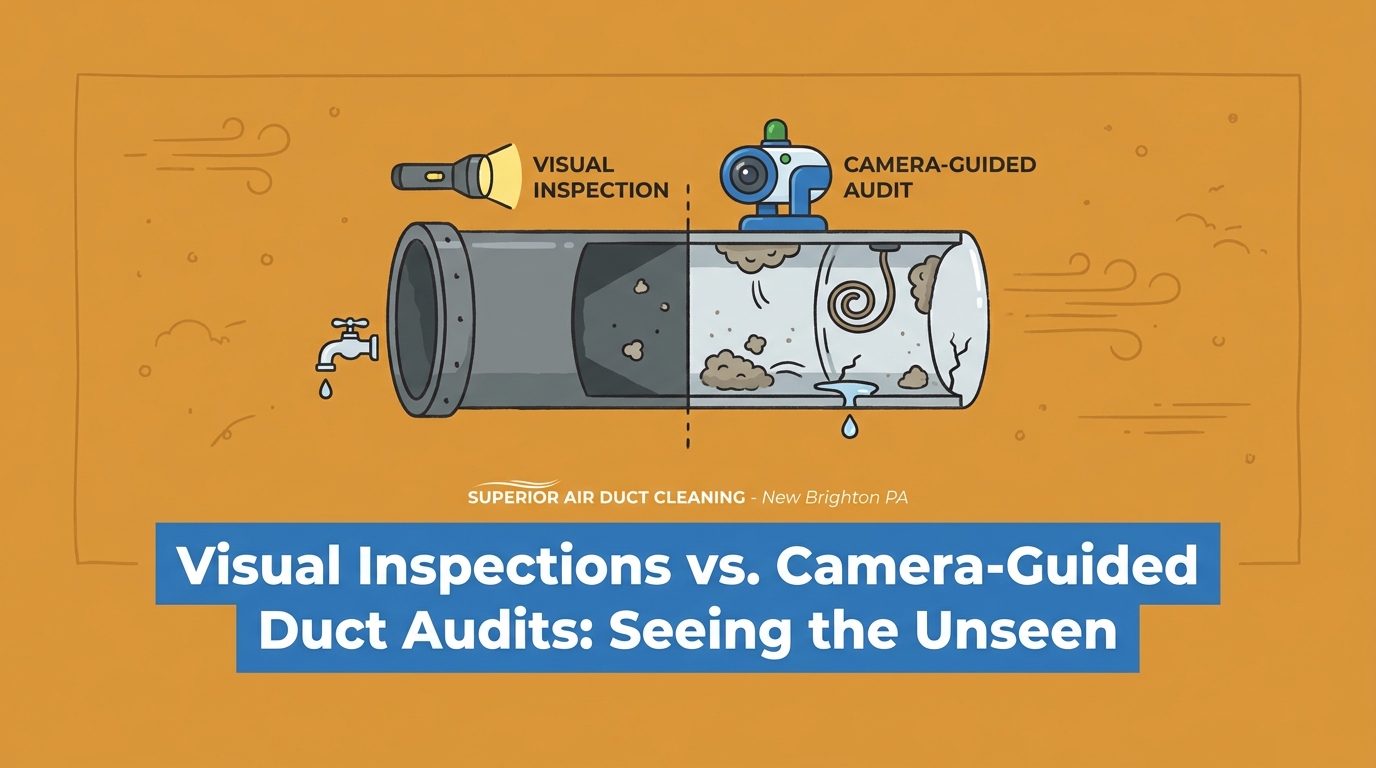
Shining a flashlight down a floor register doesn't mean you have thoroughly checked your HVAC system, which is why understanding the difference between basic visual inspections vs. camera-guided duct audits is the key to knowing what is actually hiding in your ventilation. A quick glance past the vent cover might show a few dust bunnies, but our team at Superior Air Duct Cleaning knows it completely misses the deep bends and long runs where the most severe buildup occurs. Relying on this surface-level check leaves you guessing about the true state of your air quality.
As we approach the September pre-heating season, the urgency to find hidden blockages increases. Before the furnace kicks on for the first time and distributes months of settled debris throughout your living space, you need to know exactly what is inside those metal channels. If you are looking for reliable indoor air quality solutions, understanding your system's true condition is the very first step toward a healthier home.
The core problem you face:
• False confidence: Assuming clean vent covers mean clean ductwork.
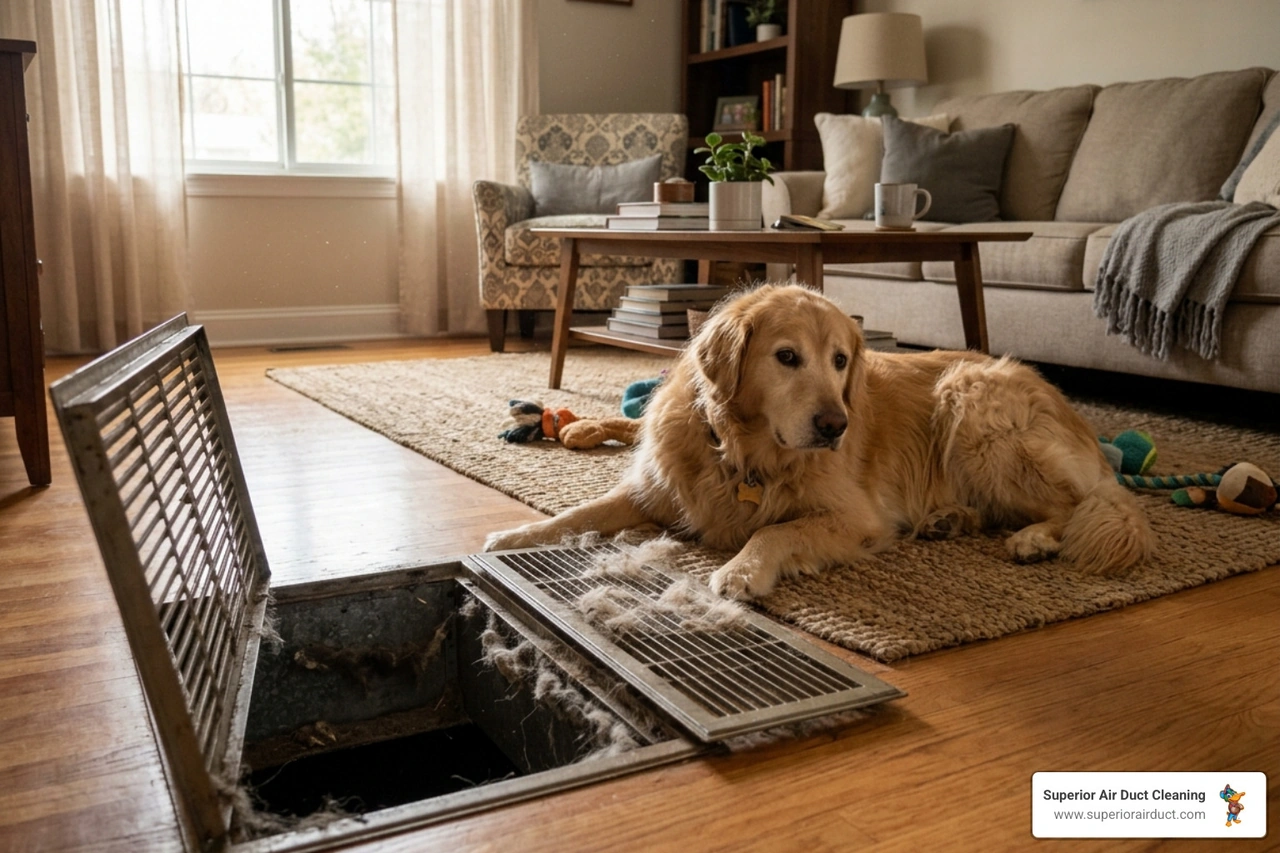
• Hidden accumulation: Missing heavy debris that settles deep in the lateral branches.
• Seasonal timing: Risking a massive distribution of dust when the blower fan powers up for winter.
You have a decision to make before the cold weather sets in: trust a limited visual check, or opt for a comprehensive camera audit that leaves nothing to chance.
The Physical Limitations of Standard Visual Inspections
To understand why a flashlight falls short, you have to look at the physics of light and the geometry of standard New Brighton PA residential ductwork. When a technician or homeowner shines a beam into a register, they are immediately fighting against shadows, dust particles in the air, and the reflective nature of sheet metal. This creates what industry professionals call the "3-to-5-foot illusion."
The light simply cannot penetrate deeply enough to reveal the true condition of the system. You might see a relatively clean stretch of metal near the opening, leading you to believe the entire network is clear. However, the airflow dynamics inside your HVAC system dictate that the heaviest debris rarely settles right at the register. It accumulates where the air pressure drops or where the ductwork changes direction.
Common failures of a basic visual check:
• Limited range: Standard flashlights lose effectiveness after just a few feet.
• Shadow masking: Small mounds of dust cast long shadows, obscuring larger blockages behind them.
• Guesswork: Without seeing the deep interior, any diagnosis is just an educated guess.
Blind Spots at the Bends
HVAC geometry naturally obscures the view. Typical residential layouts feature multiple 90-degree turns, T-junctions, and long lateral branches connecting the main trunk line to individual rooms. A straight beam of light cannot bend around a corner. If a heavy accumulation of pet hair, construction dust, or allergens is sitting just out of sight past the first turn, a naked-eye inspection will completely miss it. In our years of servicing local homes, we've learned that relying on this method can lead to skipped maintenance, allowing hidden contaminants to degrade your air quality all winter long. If you want to ensure a truly clean system, you need professional air duct cleaning backed by accurate diagnostics.
What a Camera-Guided Duct Audit Actually Reveals
Where a flashlight stops, a scoping camera is just getting started. Camera-guided duct audits utilize flexible borescopes equipped with high-intensity LED lighting and high-resolution lenses. These specialized tools navigate multiple turns, dropping deep into the ductwork to provide undeniably clear footage of the system's interior condition.
Just this past summer, a local homeowner reached out to our team at Superior Air Duct Cleaning looking to reduce severe indoor allergens in a house that hadn't had its ventilation serviced in 18 years. By performing a thorough audit and showing the homeowner high-resolution pictures of the deep duct entry points, we identified the exact location of the heavy buildup. Our subsequent cleaning removed the compacted debris, significantly reducing allergens in the living space. This level of precision is impossible without visual confirmation.
What the camera finds:
• Compacted debris: Heavy layers of dirt that have solidified over years of neglect.
• Pest intrusion: Nests, droppings, or compromised duct seals.
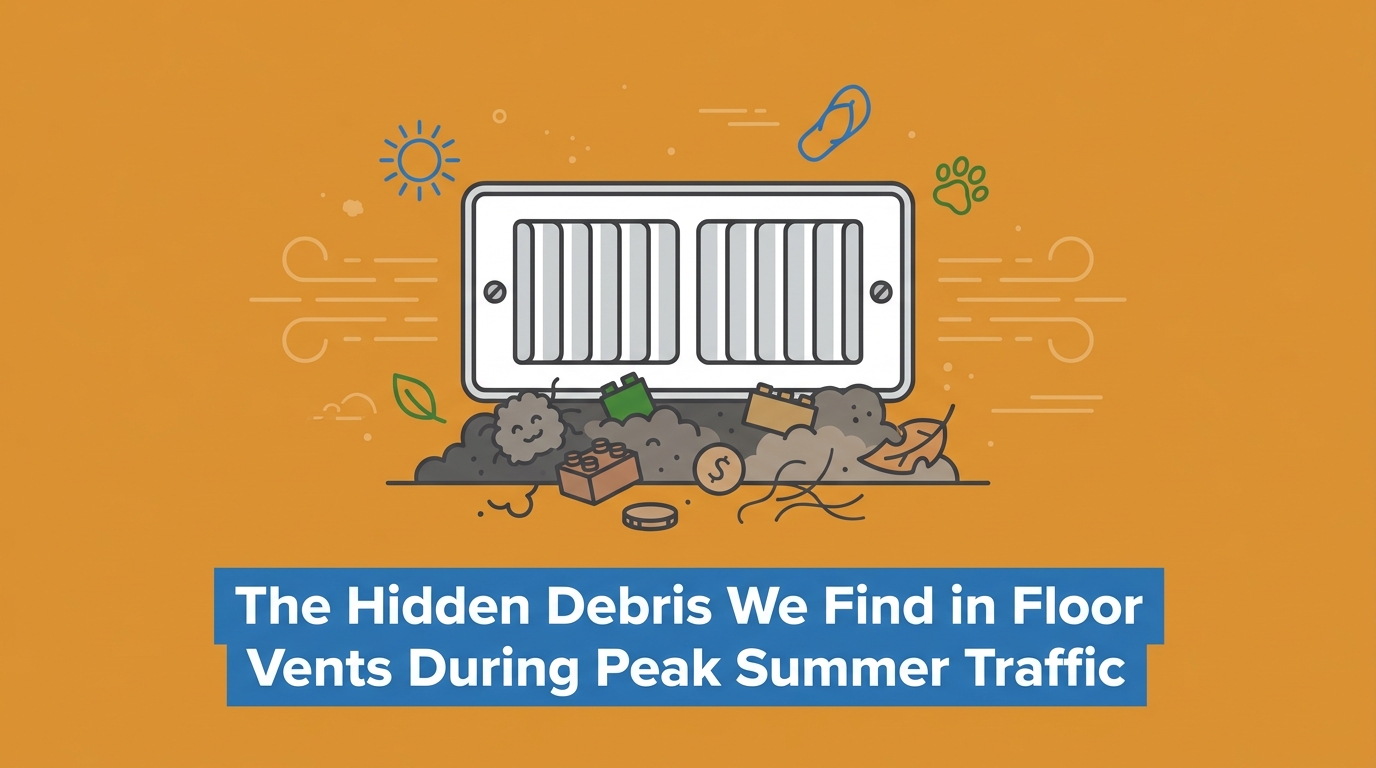
• Hidden blockages: Toys, construction materials, or collapsed flexible ducting restricting airflow.
Identifying Moisture and Clumping
Western PA's stark transition from highly humid summers to freezing winters creates significant condensation risks inside standard New Brighton PA residential ductwork. During the summer, high humidity causes dust and pet dander to become heavy and sticky. This material adheres to the walls of unconditioned duct spaces. As the weather cools, this summer-accumulated dust and moisture clumps together. A camera easily spots these damp, clumped allergens hidden deep in the bends, allowing us to address them before the winter furnace cycle bakes them and blows the particulates into your home.
Side-by-Side Comparison: Flashlight Check vs. Camera Audit
When evaluating visual inspections vs. camera-guided duct audits, seeing the capabilities side-by-side highlights exactly what you are paying for. A quick look down the vent might be free, but it often costs you in missed diagnoses and poor air quality. As you prepare during the September pre-heating season, consider how each method stacks up.
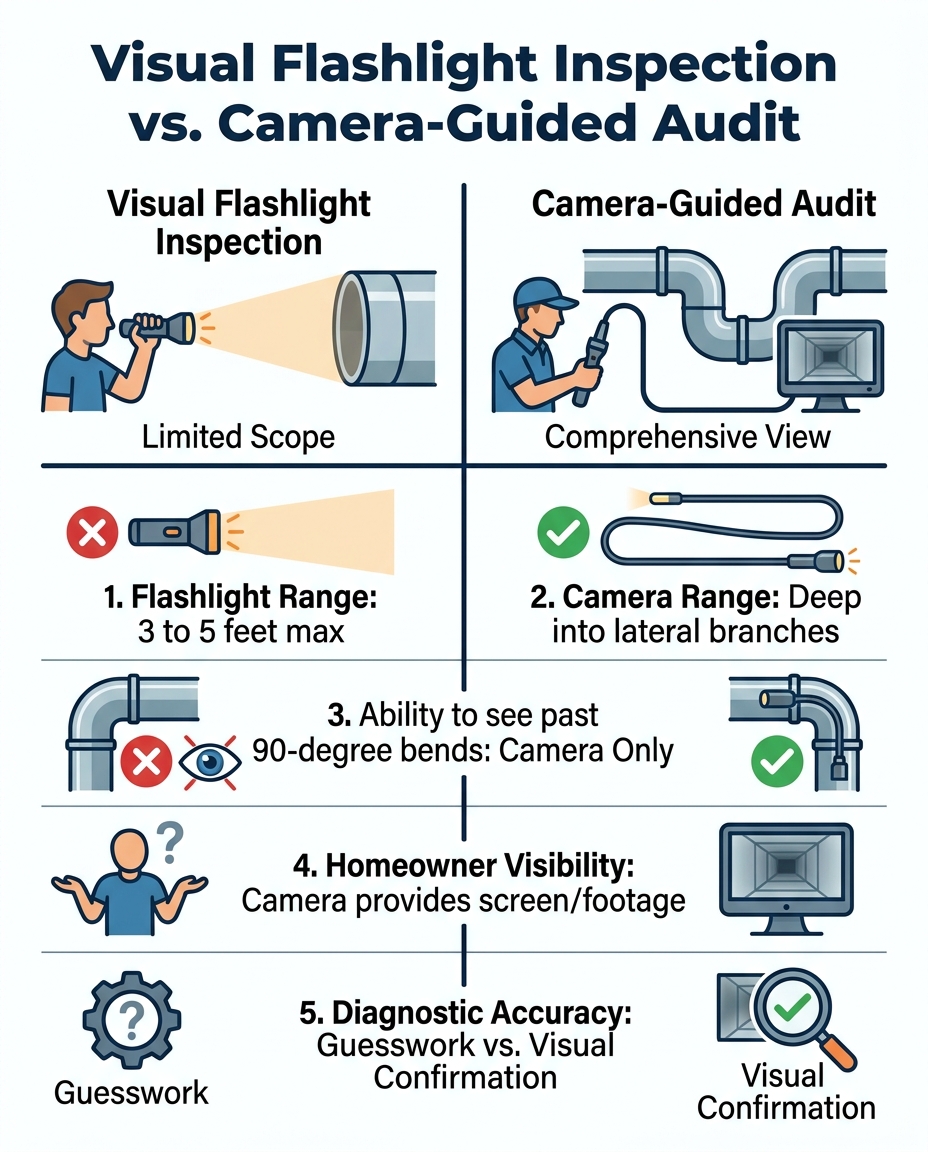
• Diagnostic Range — Standard Flashlight Check: Limited to the first 3 to 5 feet. — Camera-Guided Audit: Extends deep into lateral branches and trunk lines.
• Navigating Bends — Standard Flashlight Check: Cannot see past the first 90-degree turn. — Camera-Guided Audit: Flexible borescopes navigate multiple sharp turns easily.
• Contaminant Accuracy — Standard Flashlight Check: Relies on assumptions and guesswork. — Camera-Guided Audit: Provides high-resolution visual confirmation of specific debris.
• Homeowner Visibility — Standard Flashlight Check: You have to take the technician's word for it. — Camera-Guided Audit: You watch the live screen or review the recorded footage yourself.
• Service Justification — Standard Flashlight Check: Weak proof of whether cleaning is actually needed. — Camera-Guided Audit: Definitive proof showing exactly what needs to be removed.
The difference in diagnostic power is massive. By choosing the more advanced method, you eliminate the guesswork. You will know exactly what your system looks like before and after your ducts get cleaned, ensuring you only pay for the services your home actually requires.
Empowering Homeowners Through Diagnostic Transparency
The most significant advantage of a camera audit isn't just the technology itself—it is the transparency it brings to the service experience. Historically, duct cleaning has been a "trust me" industry. A technician looks down a vent, tells you it is dirty, and you have to take their word for it. At Superior Air Duct Cleaning, our commitment to advanced technology and transparency flips that dynamic entirely. We use camera-guided audits so you can actually see the hidden state of your ductwork on a screen, rather than relying on a verbal summary.
Another homeowner we worked with over the summer spent time researching and comparing companies to address dirty ducts and suspected bacteria in their system. Because our technician utilized a camera to provide clear before and after pictures of the deep interior, the homeowner had absolute, physical proof that the system was thoroughly cleaned and sanitized. This resulted in noticeably improved air quality and total confidence in the work performed.
Why visual proof matters for New Brighton PA residential ductwork:
• Prevents unnecessary work: If the camera shows clean ducts, you save money by skipping an unneeded service.
• Proves intervention is needed: When heavy buildup is present, you see exactly why the cleaning is recommended.
• Verifies the results: Post-cleaning camera sweeps prove that the blockages were actually removed.
This level of diagnostic transparency shifts the control back to you, ensuring your ultimate goal of improved indoor air quality is met with verifiable results.
Extending the Audit: Commercial Systems and Exhaust Vents
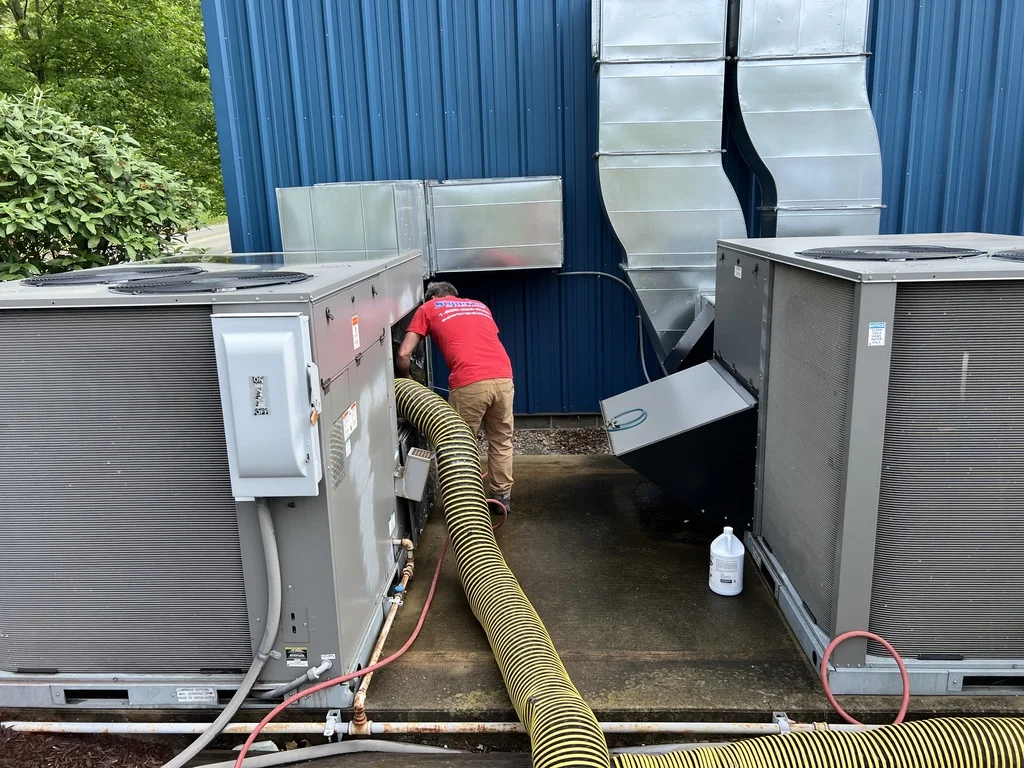
While residential systems benefit immensely from visual confirmation, larger and more complex ventilation networks absolutely require it. Commercial HVAC layouts are vastly different from standard New Brighton PA residential ductwork. They feature massive plenum spaces, extended vertical drops, and intricate zoning dampers that a flashlight cannot even begin to illuminate.
In a commercial setting, guessing is never a viable diagnostic strategy. The liability of poor indoor air quality or restricted airflow in an office building, retail space, or industrial facility is too high. Camera audits allow our technicians to pinpoint exact problem areas in sprawling systems, ensuring that commercial duct cleaning is targeted, efficient, and fully documented for facility managers.
Applying Camera Audits Beyond HVAC Ducts
The need for deep visual confirmation extends to specialized exhaust systems as well. Bathroom exhausts, industrial ventilation, and heavy-duty dryer lines often run through complex, inaccessible building cavities. A blockage in these lines isn't just an air quality issue; it can become a severe fire hazard. By sending a scoping camera through these adjacent ventilation systems, technicians can verify that the entire exhaust path is clear, providing safety and performance verification that a surface-level check simply cannot match.
Frequently Asked Questions About Duct Diagnostics
As you prepare for the September pre-heating season, you likely have questions about the best way to evaluate your system. Whether you are scheduling a whole-house inspection or looking into targeted dryer vent cleaning, having the right answers ensures you choose the most effective approach.
Is a visual air duct inspection enough?
The short answer is no. A basic visual inspection only illuminates the first three to five feet of the ductwork. It completely misses the deep bends, long lateral branches, and hidden junctions where the majority of dust, pet dander, and allergens accumulate over the years.
What does a duct camera inspection show?
A camera inspection reveals the exact interior condition of your entire ventilation system. It clearly displays compacted dirt, mold growth, pest intrusions, disconnected joints, and any physical blockages that are restricting your airflow. This high-resolution footage provides definitive proof of whether a cleaning is necessary.
How do professionals inspect air ducts?
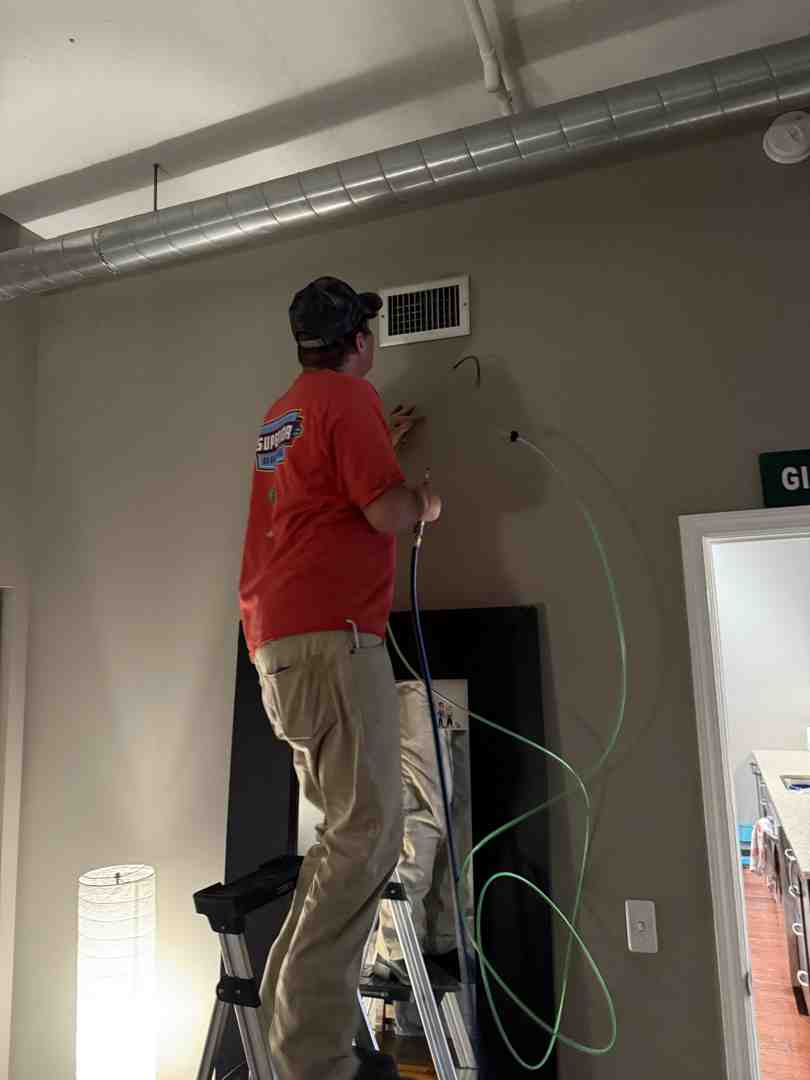
True professionals, like our crews at Superior Air Duct Cleaning, use flexible, LED-equipped borescopes to navigate the twists and turns of your HVAC system. They feed the camera deep into the supply and return lines, monitoring a live screen to identify hidden issues, rather than just shining a flashlight down the register.
Can you see inside air ducts?
Yes, but only with the right equipment. Because ductwork is made of rigid metal or flexible tubing with multiple 90-degree bends, a straight beam of light cannot show you the interior. A specialized scoping camera is required to navigate the corners and transmit a clear image back to a monitor.
Are duct cameras worth the investment?
Absolutely. They eliminate guesswork and prevent you from paying for unnecessary cleanings if your ducts are already clear. Conversely, if your system is heavily contaminated, the camera provides the exact visual evidence needed to justify a thorough, professional cleaning.
How long does a camera-guided duct audit take?
A comprehensive camera audit typically takes between 30 to 60 minutes, depending on the size and complexity of your home's HVAC layout. The technician must carefully navigate the scope through various supply and return lines to ensure no section of the system is overlooked.
Make an Informed Decision Before the Furnace Kicks On
Choosing between visual inspections vs. camera-guided duct audits comes down to how much certainty you want regarding your home's air quality. A clear, technical understanding of what a camera audit reveals empowers you to make better, more informed decisions about your HVAC maintenance. Relying on a flashlight leaves you hoping the system is clean; using a camera gives you the undeniable proof you need.
As the September pre-heating season winds down, now is the time to act. You need to know exactly what is sitting in your ducts before the winter heating season begins and the blower fan pushes hidden debris into your living space. Don't settle for guesswork. Talk to our local experts at Superior Air Duct Cleaning who use transparent diagnostic tools, and ensure your home is truly ready for the cold months ahead.

Customer Reviews


Superior Air Duct cleaning did a phenomenal job in a timely manner with the tech “Rich” being very professional ,personable and considerate of our property! He explained things as he proceeded and answered all our questions!
I LOVE that they provide before & after photos to see the difference. Give them a try… you won’t regret it
Pam T.
Robert was on schedule and communicated what time he would arrive. He was polite, professional, and respectful of our home. I wanted to wait a couple weeks before posting a review because I wanted to see if the duct cleaning actually made a difference. I am happy to say it did! I vacuum multiple times a week and have already noticed a significant reduction in the amount of dust cleaned up each time. As a home with pets, there will always be something to clean, but getting the ducts cleaned has definitely helped improve the air quality and reduce the dust.
alice A.
Technician Rob arrived early explained the days agenda and then proceeded to work methodically and meticulously over the next 6+ hours cleaning my ductwork. Courteous and professional they answered all of my questions and went above and beyond the call of duty. They even located an old dusty box of rat poison buried in our vents. My only regret is not finding these guys sooner. As a realtor of 22 years and owner of a newly purchased (now dust free) home I highly recommended!
Eric K.
Excellent service! I’ve used them to clean out my air ducts as well as my dryer vent duct and they are excellent. I was very pleased with both jobs and will continue to use them in the future. Great communication as well- from the time I scheduled the appointment until they were at my door.
Erika C.
We had such an amazing experience with Superior Air Duct Cleaning. They were so nice and friendly and did an amazing job. I loved seeing the before and after pictures. Besides doing an amazing job cleaning our air ducts they were so quick at responding and setting up the appointment. We will definitely be using them in the future.
Amanda C.