How Truck Mounted Vacuum Systems Work for Ducts — And Why It Matters in Niles, OH
Understanding how truck mounted vacuum systems work for ducts can help you make a smarter decision when scheduling air duct cleaning for your Niles home or business. Here is a quick overview before we walk through each step in detail:
How truck-mounted vacuum systems clean ducts — at a glance:
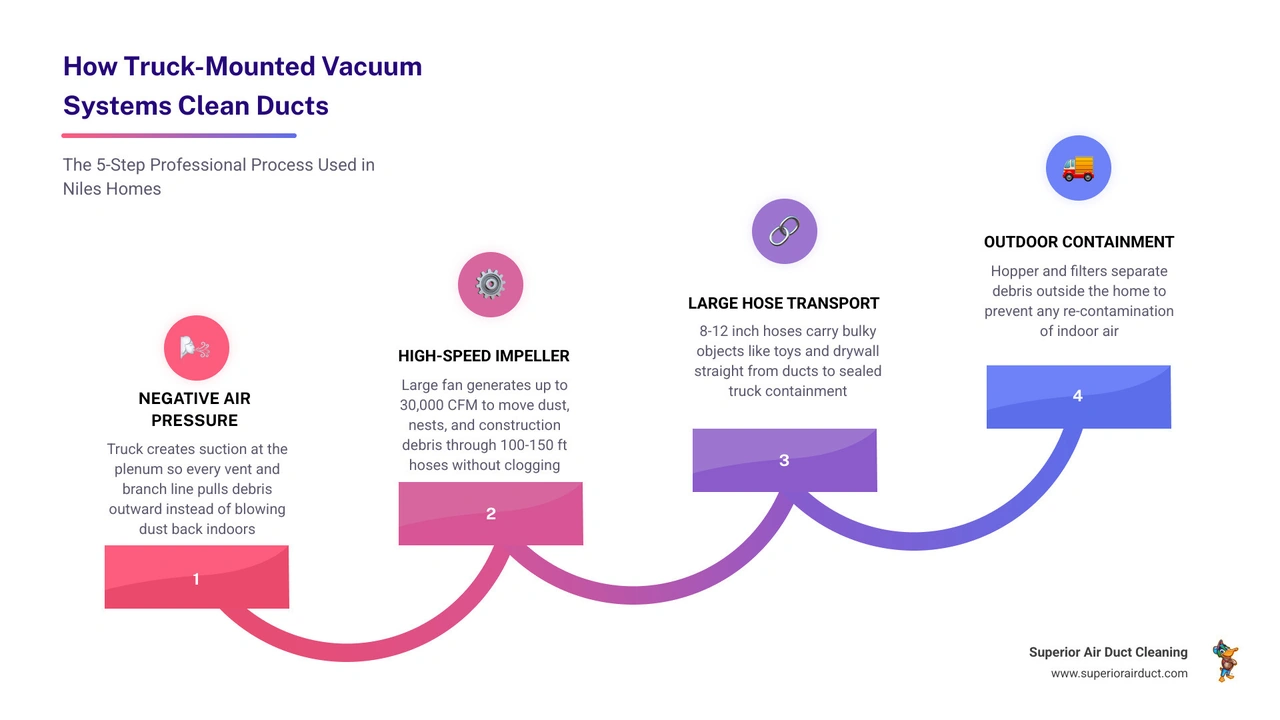
- Create negative air pressure — The truck's powerful vacuum pulls air through the entire duct system, trapping debris in the airflow.
- Drive suction through a high-speed impeller — A large fan spins at high RPM to generate thousands of CFM of airflow.
- Move debris through large-diameter hoses — 8–12 inch hoses carry everything from dust to construction scraps out of your home.
- Separate and contain debris outside — A hopper and filter system on the truck captures everything before it can re-enter your living space.
- Clean branch lines and reset the system — Technicians work through every supply and return run before sealing access points and restarting your HVAC.
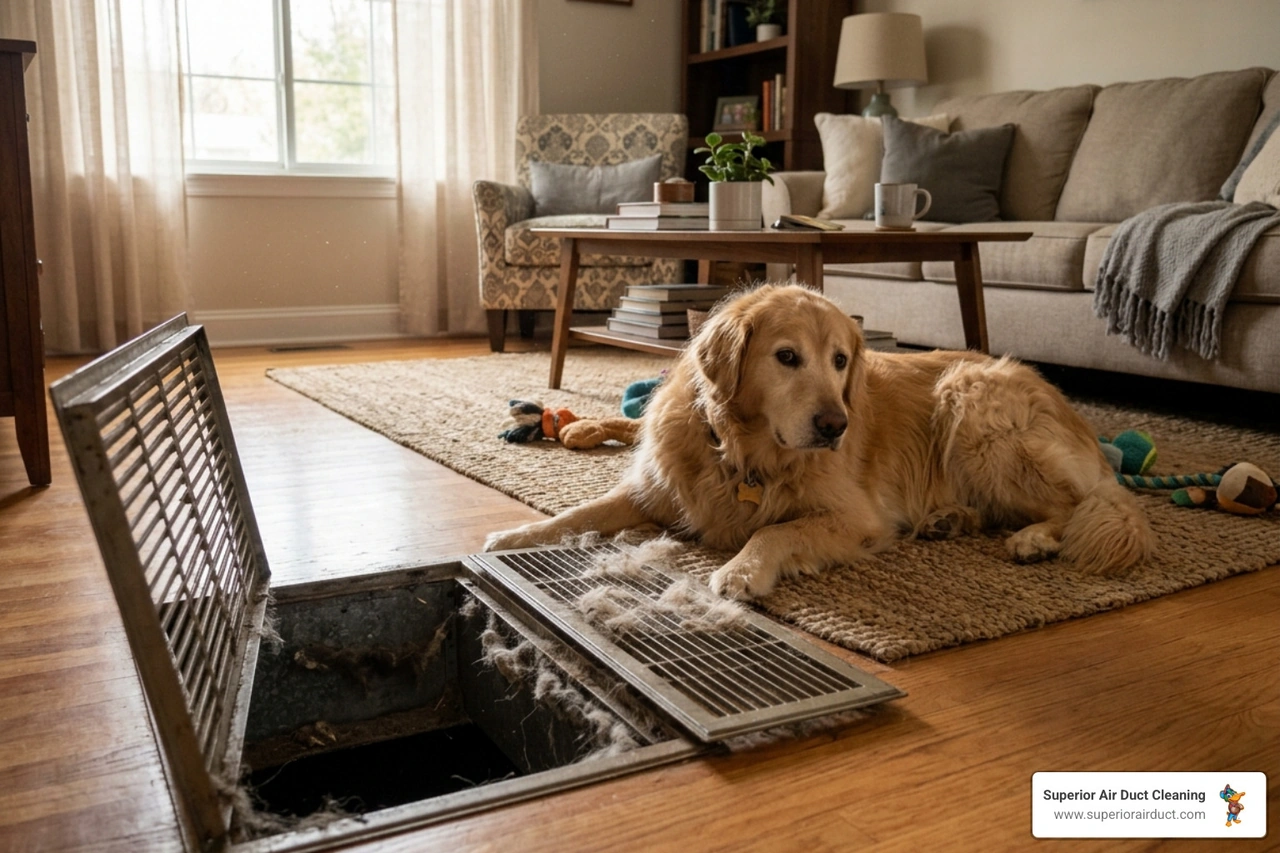
Most homeowners never think about their air ducts until something goes wrong — a musty smell, worsening allergies, or an HVAC system that struggles to keep rooms comfortable. What is actually living inside those ducts might surprise you. Technicians regularly pull out dust buildup, mold colonies, rodent nests, and even lost toys or construction debris left behind from a remodel. In Niles, OH, where older homes and seasonal weather create real indoor air quality challenges, the equipment your cleaning crew brings to the job makes a significant difference in how thoroughly that contamination gets removed.
The good news is that a properly operated truck-mounted vacuum system is engineered specifically to handle all of it — pulling debris out of your ductwork, through large hoses, and directly into a sealed containment unit sitting outside your front door. Nothing comes back in.
Step 1: How Truck Mounted Vacuum Systems Work for Ducts Starts With Negative Air Pressure
The foundation of a professional duct cleaning job is the creation of negative air pressure. Think of it like a giant straw: if you create a vacuum at one end of a tube, anything loose inside that tube is going to be pulled toward the source of the suction. When we arrive at a home in Niles, our first priority is to turn your entire HVAC system into one large, controlled vacuum.
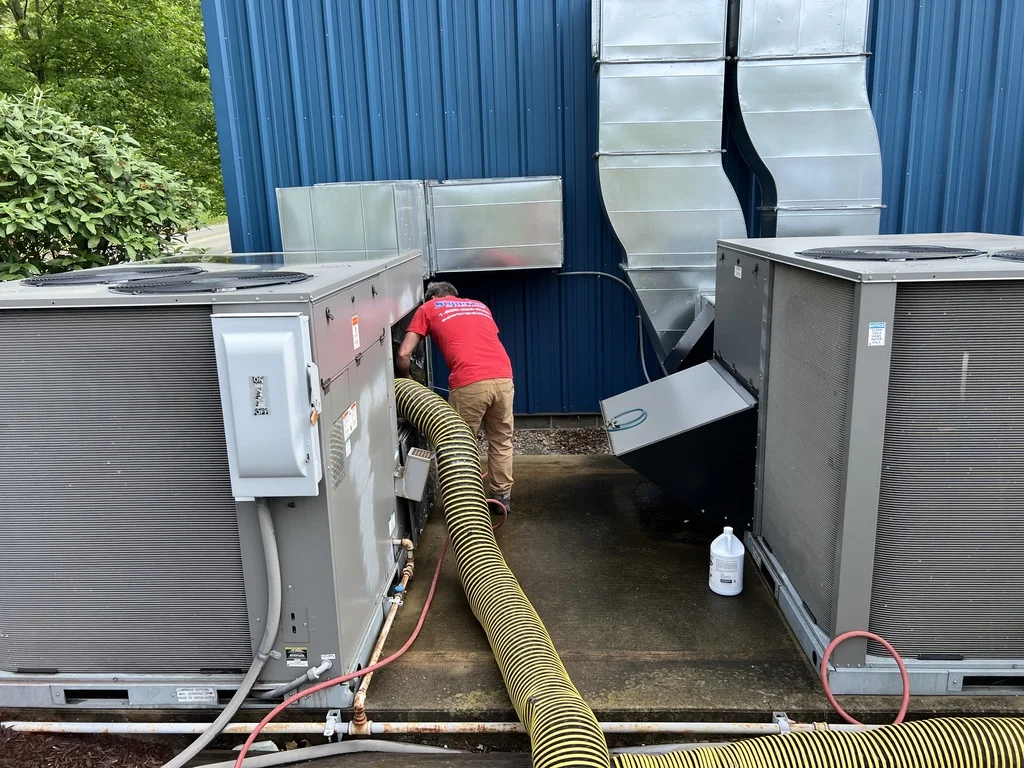
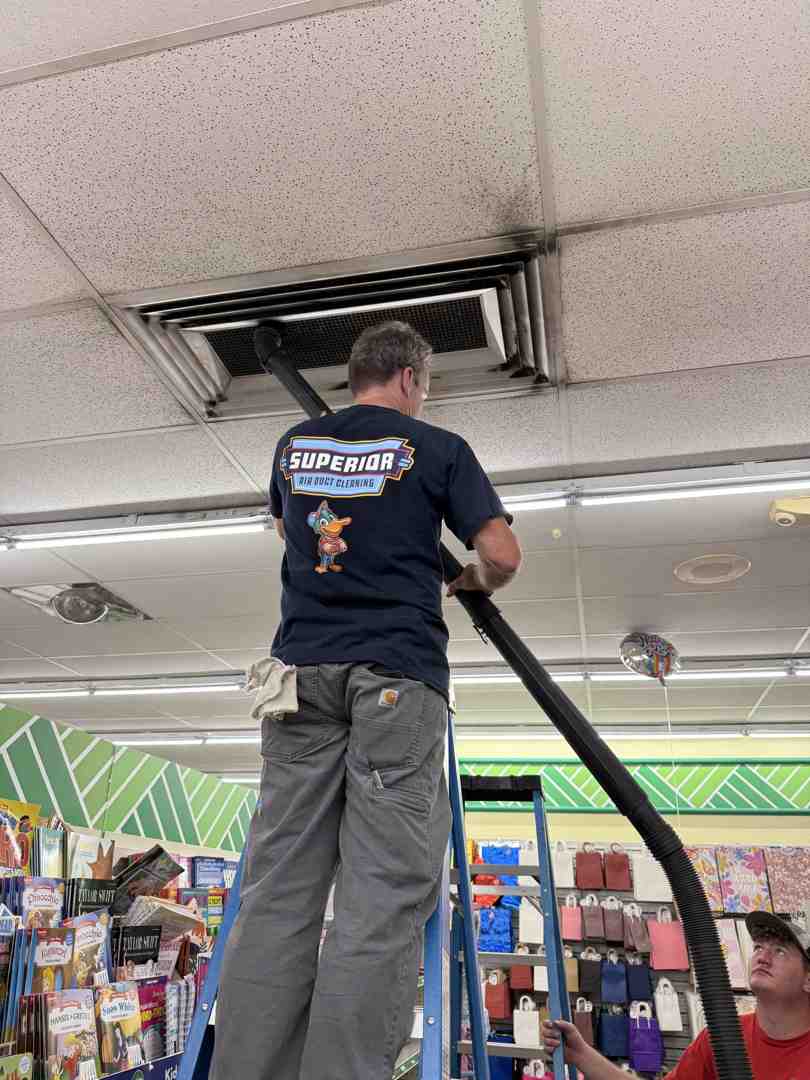
We achieve this by accessing the "plenum"—the main trunk of your ductwork near the furnace. By cutting a temporary access hole and attaching our massive vacuum hose, we ensure that every single vent and branch line in the house is under constant suction. This pressure drop is what prevents dust from blowing back into your living room while we work.
What a truck-mounted vacuum system is and how it differs from portable units
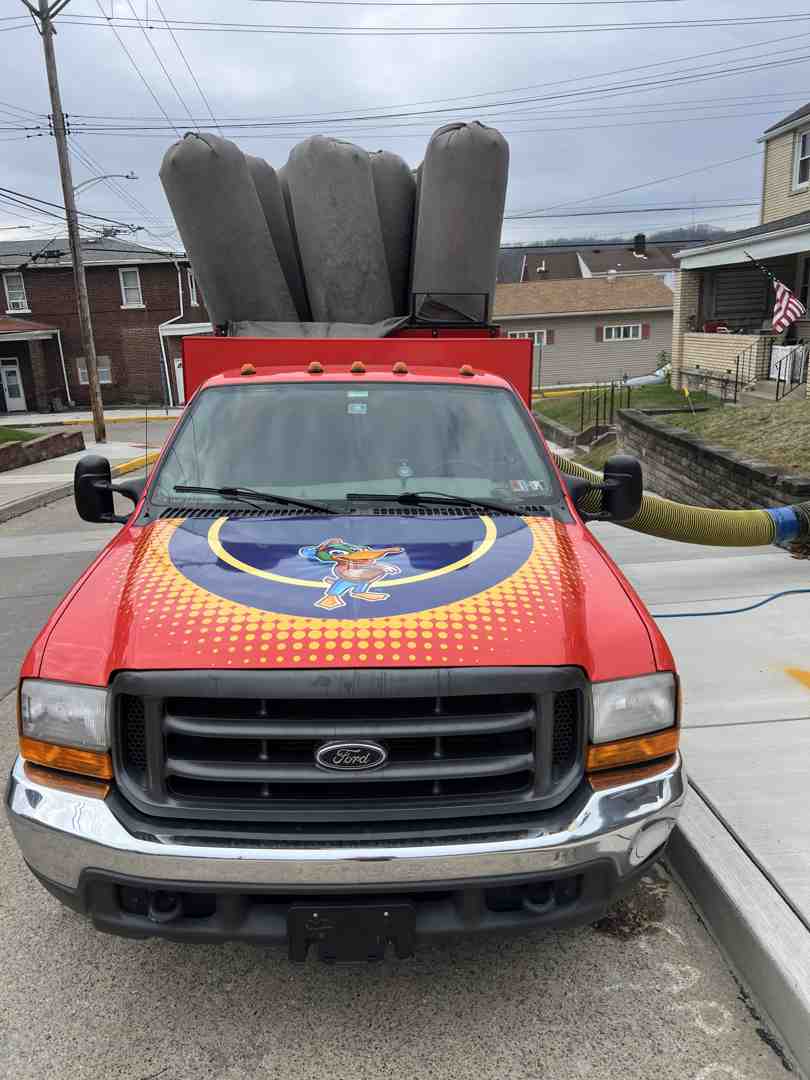
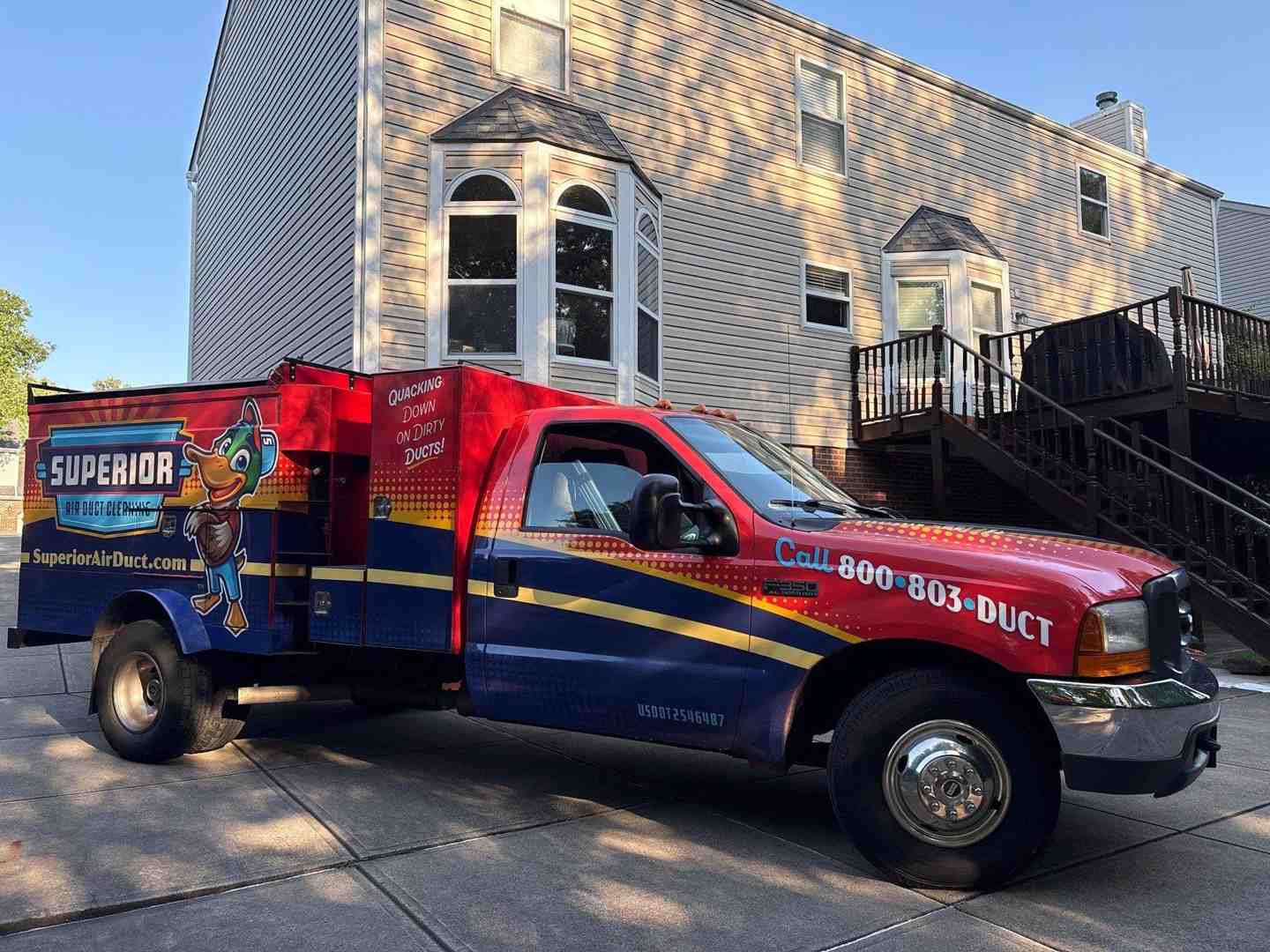
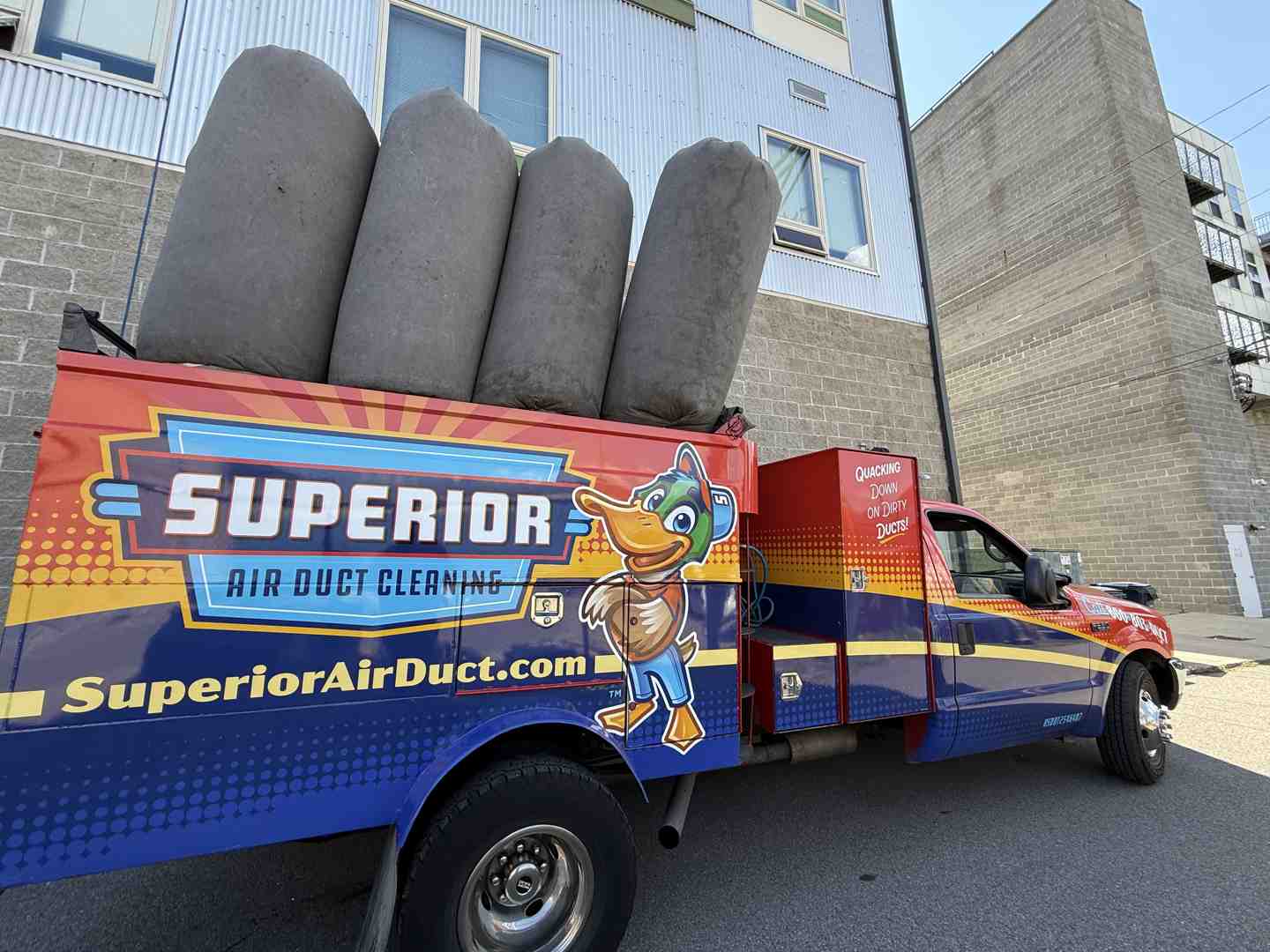
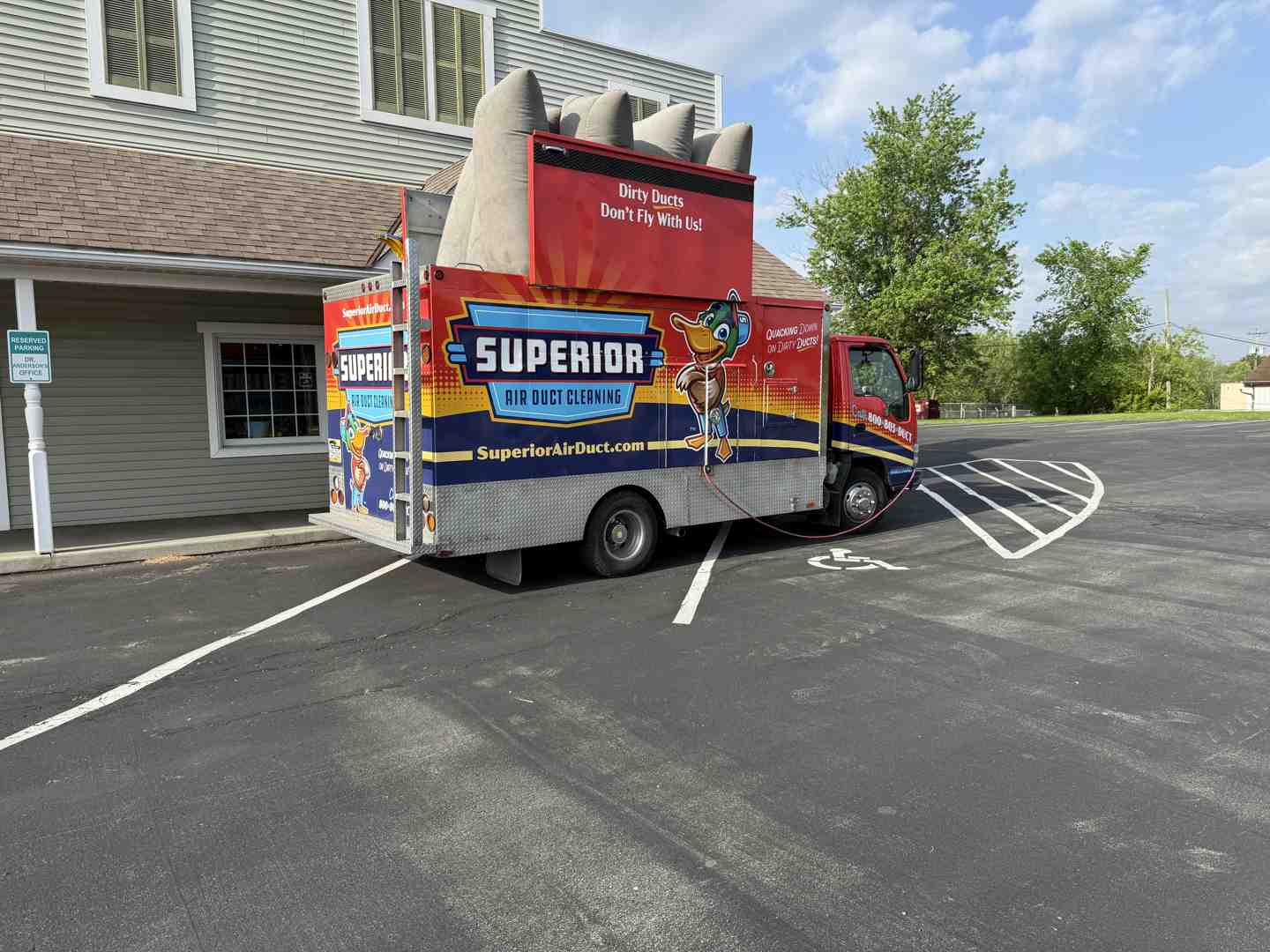
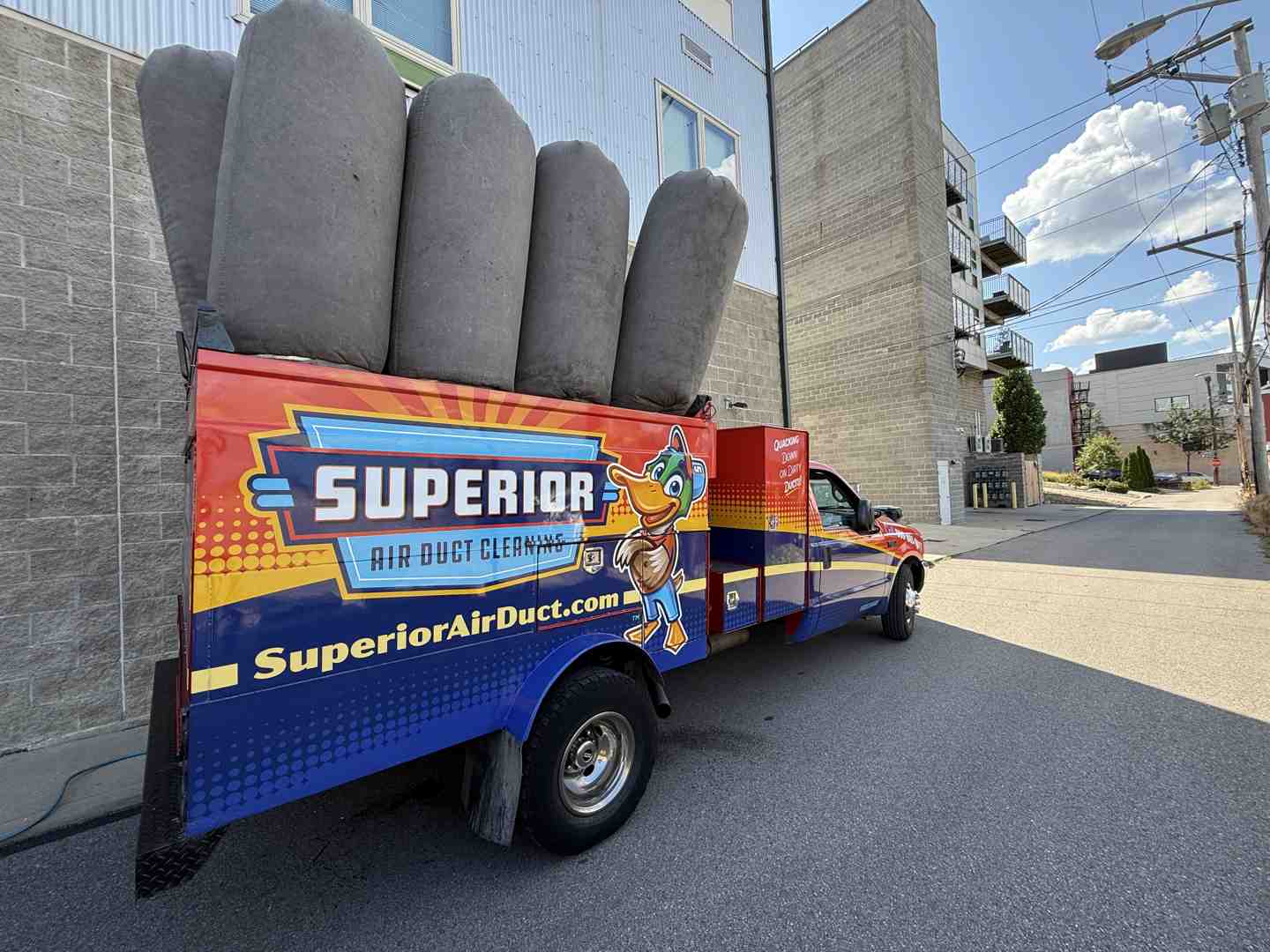
A truck-mounted vacuum system is essentially a high-powered industrial machine built directly into a service vehicle. Unlike portable units, which are small enough to be wheeled into your hallway or basement, a truck mount remains outside.
The primary difference lies in sheer power. Portable vacuums are often rated between 2,000 and 5,100 CFM (cubic feet per minute). In contrast, truck-mounted Power Vac systems can boast up to 12,000 CFM, with some industrial-grade setups capable of drawing over 30,000 CFM. Because the equipment stays outside, there is no risk of the machine leaking dust or odors inside your home, and the noise level indoors is significantly reduced.
Why how truck mounted vacuum systems work for ducts depends on controlled airflow
To make negative pressure effective, we have to control where the air is coming from. If all your vents are wide open, the vacuum power is spread thin. We typically seal off all the supply and return registers throughout the house. By opening only one vent at a time while we clean, we concentrate the full force of the truck's suction on that specific section of ductwork. This prevents "blowback," where dislodged dust might otherwise escape through a nearby vent before the vacuum can catch it.
Why make-up air matters for cleaning performance and indoor air quality
"Make-up air" is the air that rushes in to replace the air being sucked out by the vacuum. This is a critical point for indoor air quality. In what is called an "open-loop" system, the vacuum might pull replacement air from an open door or window where the hose enters the house.
However, if a truck is idling nearby, there is a risk of pulling vehicle exhaust, pollen, or outdoor pollutants into the home. We take care to manage this airflow balance, ensuring that the air used to "push" debris toward our vacuum is as clean as possible, maintaining a healthy environment for your family throughout the process.
Step 2: The Impeller Creates High CFM and Pulls Debris Through the Duct System
The "heart" of the truck-mounted system is the impeller. This is a heavy-duty fan housed within the truck that spins at incredibly high speeds. Whether it is powered by the truck’s main engine through a Power Take-Off (PTO) system or an independent high-horsepower gas engine, the goal is the same: to move a massive volume of air very quickly.
This movement creates high air velocity, which is necessary for "entrainment"—the physical process of picking up a particle and keeping it suspended in the air stream so it can travel all the way to the truck.
How the impeller, vacuum fan, and hose run create suction at the furnace
As the impeller blades spin, they create a low-pressure zone at the intake. This suction travels from the truck, through the long 8-to-12-inch hoses, and directly into your furnace's main duct trunk. The physics here are impressive; the system has to maintain enough static pressure to overcome the weight of heavy debris while pulling it across the distance from your basement to the driveway.
How truck mounted vacuum systems work for ducts when hose length reduces raw power
One thing we always account for is "friction loss." As air travels through a hose, it rubs against the sides, which slows it down. A truck-mounted system can lose up to 50% of its raw suction power over a 100-to-150-foot hose run.
This is why starting with a massive 12,000 CFM unit is so important. Even if the system loses half its power due to hose length, it still delivers approximately 6,000 CFM of effective suction at the furnace. A portable unit starting at only 2,000 CFM simply cannot compete with that kind of sustained pulling power over long distances.
Why agitation tools still matter along with suction
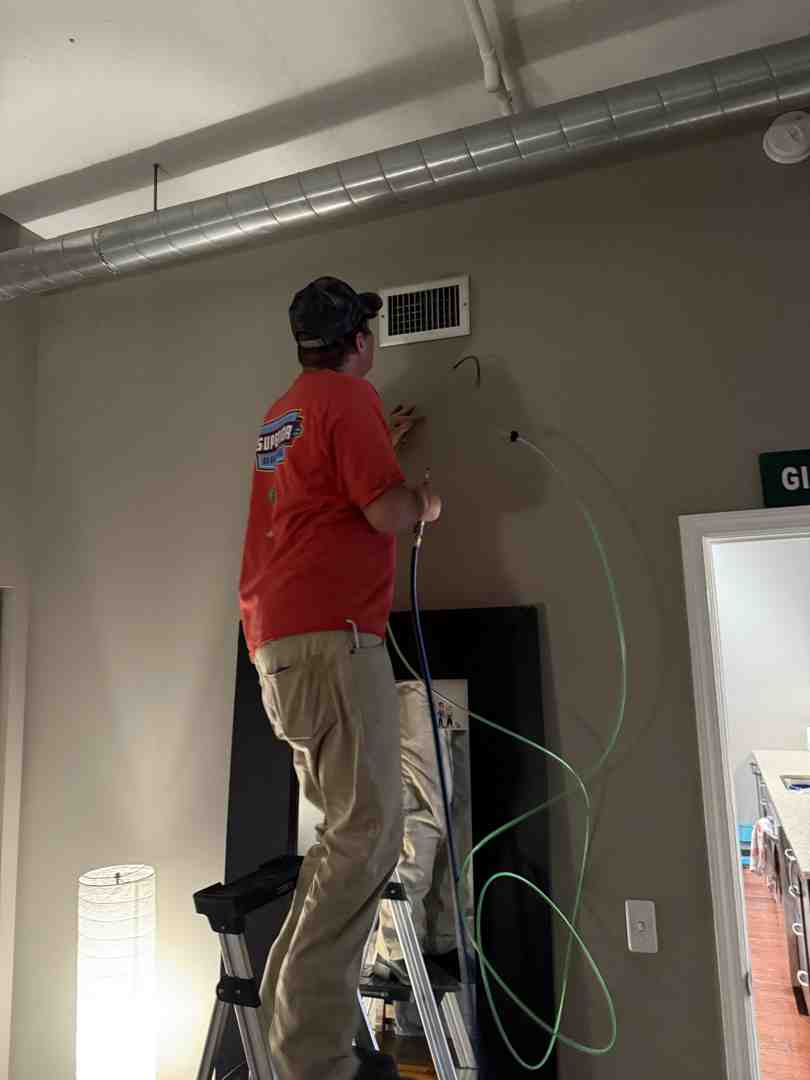
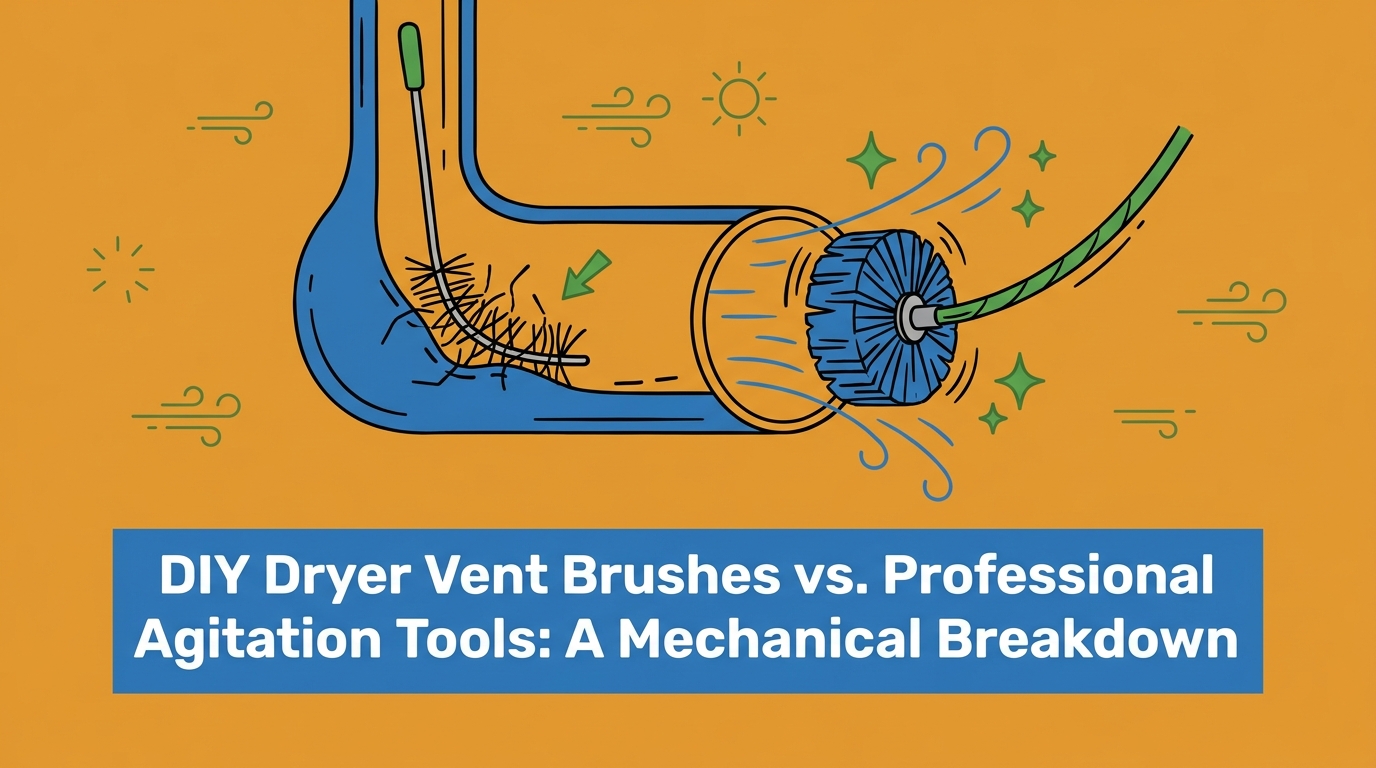
Suction alone isn't always enough to remove "stuck-on" dirt or heavy debris. That is why we use agitation tools in tandem with the vacuum. We use pneumatic whips, skipper balls, and compressed air brushes to physically knock debris loose from the duct walls.
As these tools break the dust and grime free, the constant negative air pressure ensures that the particles have nowhere to go but toward the vacuum hose. Without this combination of "push" (agitation) and "pull" (vacuum), the cleaning wouldn't be nearly as thorough. More info about how our air duct cleaning machines work
Step 3: Large-Diameter Hoses Move Bulky Debris Without Constant Clogging
One of the biggest advantages of how truck mounted vacuum systems work for ducts is the size of the hose. While portable units typically use small 2-to-3-inch hoses that are prone to clogging, truck-mounted systems utilize 8-to-12-inch diameter hoses. This extra "breathing room" is what allows us to remove more than just fine dust.
What the larger hose diameter does that smaller duct vac hoses cannot
A larger hose diameter significantly increases airflow capacity and reduces air resistance. More importantly, it allows for the removal of larger objects that would immediately jam a smaller system. If a technician finds a discarded soda can or a thick layer of matted pet hair in your ducts, a 10-inch hose can whisk it away easily, whereas a smaller hose would require the technician to stop and manually clear a clog every few minutes.
Real debris truck-mounted systems are built to handle
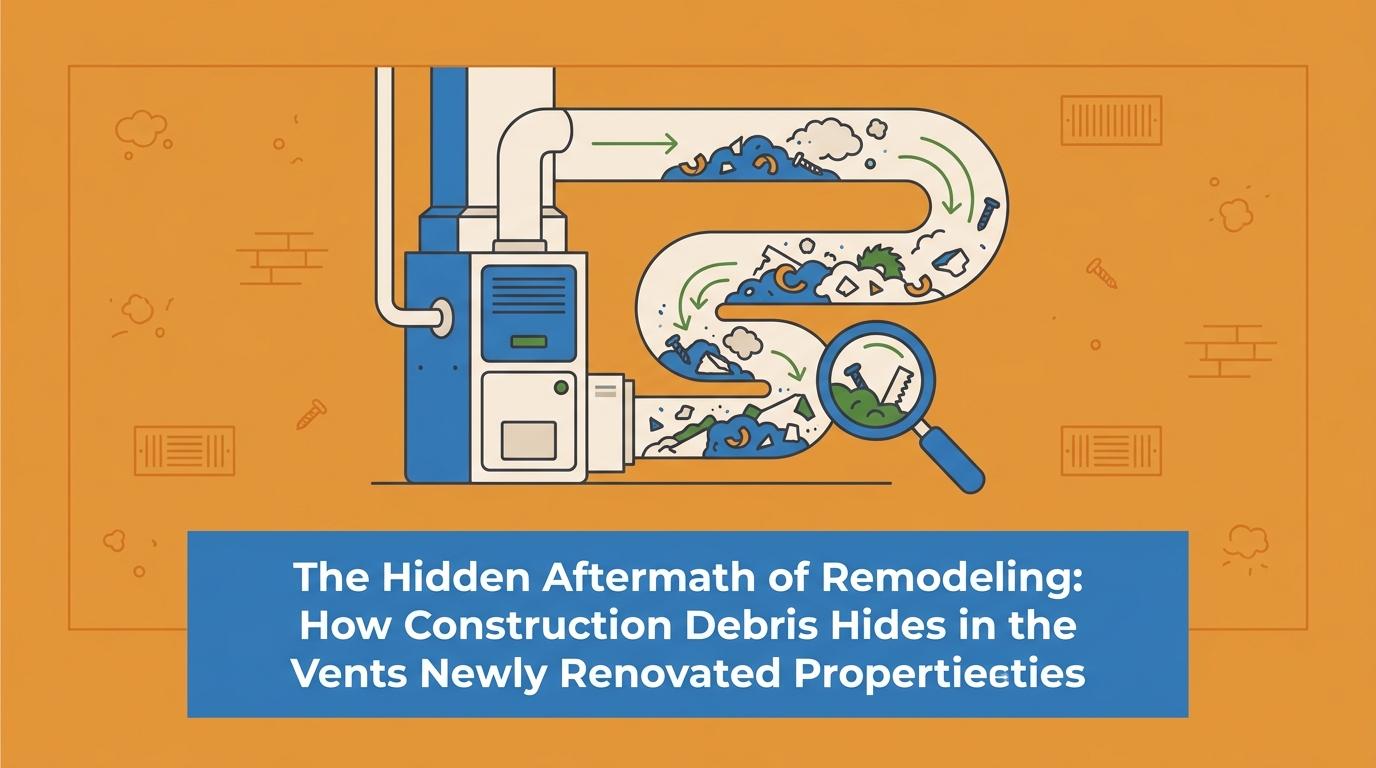
You would be amazed at what we find in ductwork across Western Pennsylvania and Northeast Ohio. Some of the most common items include:
- Construction Waste: Drywall pieces, wood scraps, nails, and ceramic tile shards from previous renovations.
- Household Items: Kids' toys, tennis balls, clothing, and even drink containers or food bags.
- Biological Hazards: Rodent nests, expired rodents, and heavy accumulations of pet dander.
- Tools: We have even found hammers and screwdrivers left behind by original builders!
Why hose routing, bends, and access openings affect performance
Technicians have to be strategic about how they run the hoses. Every sharp bend or "kink" in a vacuum hose creates turbulence, which reduces suction power. We aim for the shortest, straightest path from the truck to your HVAC system. We also ensure that the access panels we create are sealed air-tight around the hose to maintain the integrity of the vacuum.
Step 4: Debris Travels to the Truck for Separation, Containment, and Filtration
Once the debris leaves your home, it enters the truck's containment system. This is where the engineering gets really clever. The debris doesn't just hit the fan; it goes through a separation process to protect the equipment and keep the air clean.
The key components of a truck-mounted vacuum system
A professional duct cleaning truck is a complex piece of machinery. Its main components include:
- The Impeller/Fan: The source of the vacuum.
- The Air Compressor: Powers the agitation tools used inside the home.
- The Hopper: A large collection chamber where heavy debris falls out of the air stream.
- Filtration System: Often a "baghouse" or a series of high-efficiency filters that trap fine dust.
- Collection Bins: Where the waste is stored until it can be properly disposed of.
How the hopper and filters separate debris from the air stream
As the air and debris enter the truck, they hit the "hopper." This is a large chamber where the air suddenly expands, causing the air velocity to drop. This drop in speed allows gravity to take over—a process called "inertial separation." Heavy items like wood scraps or toys fall to the bottom of the bin. The finer dust continues toward the filters, where it is captured before the air is exhausted back into the atmosphere. Some systems even use "reverse pulse cleaning," which uses bursts of compressed air to knock dust off the filters so they don't clog up during the job.
How outdoor collection helps prevent indoor re-contamination
The biggest benefit for a homeowner in Niles is that all this "gunk" stays outside. In some portable systems, if a filter isn't seated perfectly or a bag breaks, dust can be blown right back into your house. With a truck-mount, the vacuum is pulling air out of your home. Even if there were a leak in the truck's filtration system, it would happen outside in the driveway, not in your nursery or kitchen. More info about air duct cleaning proper cleaning methods
Step 5: Technicians Clean Branch Lines, Then Finish With Inspection and System Reset
After the main trunk lines are under vacuum, we move through the rest of the house to clean the "branch lines"—the smaller ducts that lead to each individual room. This is a methodical process that ensures no corner of the system is left untouched.
The typical cleaning sequence in a home or light commercial building
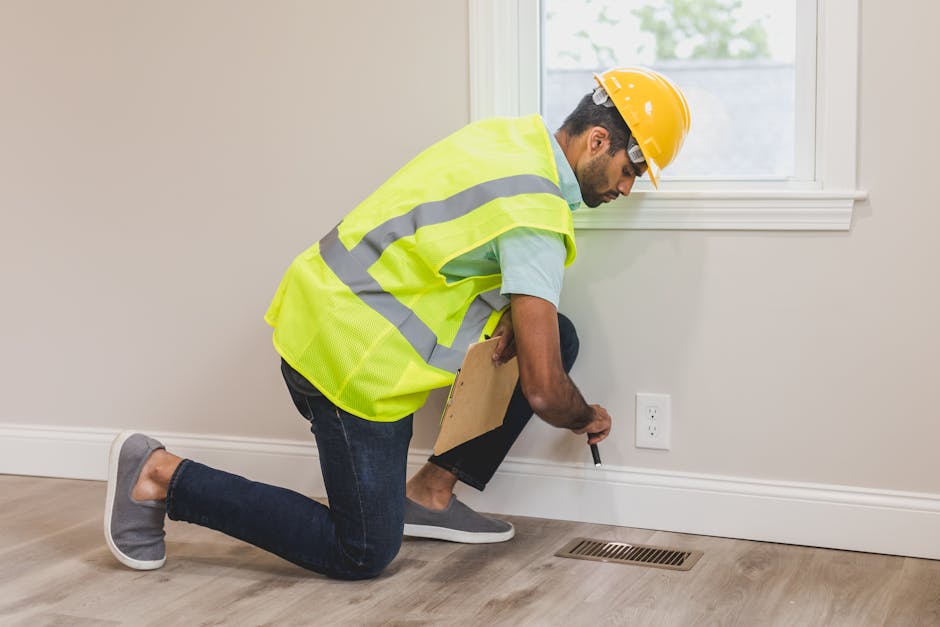
- Initial Walkthrough: We inspect the system and identify all registers.
- System Protection: We lay down drop cloths and seal off all vents to protect your home.
- Negative Pressure Setup: We connect the truck's vacuum to the main plenum.
- Agitation: We work from the furthest vent back toward the vacuum, using air whips to push debris into the main trunk.
- Main Trunk Cleaning: Once the branches are clear, we clean the large main trunks.
- Final Inspection & Sealing: We use cameras to verify the clean, seal our access points with professional-grade panels, and restart your HVAC system.More info about the steps technicians follow in ductwork cleaning
When truck-mounted systems are best for residential vs commercial duct cleaning
Truck-mounted systems are the "gold standard" for almost all residential jobs in Niles, especially for larger homes or those that have recently undergone remodeling. They are also essential for commercial buildings, schools, and hospitals where the duct runs are long and the volume of debris is high. The sustained power of a truck-mount ensures that even the furthest vent in a large office building receives a deep clean.
When a portable system may still be preferable
While we love the power of our trucks, there are times when a portable system is the right tool for the job. This usually happens in high-rise apartments where a hose cannot reach the upper floors, or in urban areas where there is absolutely no place to park a large service vehicle. In these cases, a high-end portable HEPA vacuum can still provide a quality clean, provided the technician uses the right agitation tools and maintains short hose runs to maximize the available suction.
| Feature | Truck-Mounted System | Portable Vacuum System |
|---|---|---|
| Airflow (CFM) | 12,000 - 30,000+ | 2,000 - 5,100 |
| Hose Diameter | 8 - 12 Inches | 2 - 4 Inches |
| Debris Collection | Outside the Home | Inside the Home |
| Power Source | Truck Engine or Gas Engine | Electrical Outlet |
| Best For | Most Residential & Commercial | High-Rises & Limited Access |
More info about truck-mounted vs. portable duct cleaning comparison
Frequently Asked Questions About How Truck Mounted Vacuum Systems Work for Ducts
Does higher CFM always mean a better duct cleaning result?
Not necessarily on its own, but it provides the "foundation" for a good clean. Raw suction (CFM) is half of the equation; the other half is agitation. A technician with a 30,000 CFM truck who doesn't use brushes or air whips will do a worse job than a technician with a portable unit who meticulously cleans every inch of the duct wall. However, having high CFM allows for better containment and the ability to move larger debris that agitation tools knock loose.
Will a truck-mounted vacuum make a mess inside my house?
Actually, it is designed to do the exact opposite. Because the system creates "negative air pressure," air is always being pulled into the ducts, not blown out. This means that even as we knock dust loose, the vacuum is constantly pulling it toward the truck. Combined with our practice of sealing registers, this makes truck-mounted cleaning one of the cleanest home maintenance services available.
What should homeowners expect during a professional duct cleaning visit?
You should expect a team of two technicians to spend about 3 to 5 hours at your home, depending on its size. There will be some noise from the truck and the air compressor, and we will need access to all your vents. We always perform a final walkthrough to ensure your system is running efficiently and your air is cleaner than when we arrived.More info about what to expect during a professional duct cleaning
Conclusion: What Niles Homeowners Should Remember Before Scheduling Duct Cleaning
When it comes to the health of your home and the efficiency of your HVAC system, the equipment matters. How truck mounted vacuum systems work for ducts is a matter of physics—using massive airflow, negative pressure, and large-diameter hoses to ensure that every bit of dust, every construction scrap, and every allergen is physically removed from your home and deposited safely into a truck outside.
At Superior Air Duct Cleaning, we serve neighbors across Trumbull County, OH, including Niles and Warren, as well as our clients in Western Pennsylvania. We believe in doing the job right the first time by using the most powerful equipment available and following NADCA standards for source removal. Whether you are moving into a new home, finishing a renovation, or just want to breathe easier, we are here to help.
More info about the 3 best methods of air duct cleaningSchedule your air duct cleaning today

Customer Reviews


Superior Air Duct cleaning did a phenomenal job in a timely manner with the tech “Rich” being very professional ,personable and considerate of our property! He explained things as he proceeded and answered all our questions!
I LOVE that they provide before & after photos to see the difference. Give them a try… you won’t regret it
Pam T.
Robert was on schedule and communicated what time he would arrive. He was polite, professional, and respectful of our home. I wanted to wait a couple weeks before posting a review because I wanted to see if the duct cleaning actually made a difference. I am happy to say it did! I vacuum multiple times a week and have already noticed a significant reduction in the amount of dust cleaned up each time. As a home with pets, there will always be something to clean, but getting the ducts cleaned has definitely helped improve the air quality and reduce the dust.
alice A.
Technician Rob arrived early explained the days agenda and then proceeded to work methodically and meticulously over the next 6+ hours cleaning my ductwork. Courteous and professional they answered all of my questions and went above and beyond the call of duty. They even located an old dusty box of rat poison buried in our vents. My only regret is not finding these guys sooner. As a realtor of 22 years and owner of a newly purchased (now dust free) home I highly recommended!
Eric K.
Excellent service! I’ve used them to clean out my air ducts as well as my dryer vent duct and they are excellent. I was very pleased with both jobs and will continue to use them in the future. Great communication as well- from the time I scheduled the appointment until they were at my door.
Erika C.
We had such an amazing experience with Superior Air Duct Cleaning. They were so nice and friendly and did an amazing job. I loved seeing the before and after pictures. Besides doing an amazing job cleaning our air ducts they were so quick at responding and setting up the appointment. We will definitely be using them in the future.
Amanda C.