Why Commercial vs Residential Indoor Air Quality Standards Are Not the Same — and Why It Matters
Understanding commercial vs residential indoor air quality standards starts with one simple fact: not all buildings are treated equally when it comes to the air you breathe inside them.
Here is a quick breakdown of the key differences:
| Factor | Residential | Commercial |
|---|---|---|
| Primary standard | ASHRAE 62.2 (ventilation) | ASHRAE 62.1 (ventilation) |
| Regulatory enforcement | Limited; mostly local building codes | OSHA General Duty Clause; local/state codes via IMC |
| Voluntary certifications | Rare | LEED, WELL, RESET, Fitwel |
| PM2.5 guideline | EPA reference: 12 μg/m³ (annual) | WELL: <15 μg/m³ |
| Formaldehyde limit | No federal residential limit | WELL: <27 ppb |
| Radon action level | EPA: <4 pCi/L | EPA: <4 pCi/L |
| CO2 benchmark | ~1,000 ppm (Health Canada) | 900–1,100 ppm (WELL/ASHRAE) |
| TVOC limit | No federal residential limit | WELL/LEED: <500 μg/m³ |
| Humidity target | 30–50% | 30–60% |
| Minimum filtration | Typically MERV 1–4 (basic) | MERV 8+ (commercial general use) |
Americans spend roughly 90% of their time indoors — and indoor pollutant concentrations can run 2 to 5 times higher than outdoor levels. Whether you own a home in New Brighton, PA, manage an office building in Pittsburgh, or run a business in Boardman, OH, the standards that govern your indoor air quality are shaped by very different rules, frameworks, and enforcement mechanisms.
Homes rely mostly on voluntary guidelines and local building codes. Commercial buildings face a layered system of federal guidance, model codes, and optional certifications — each with specific pollutant thresholds and ventilation requirements. The result is a patchwork of standards that can feel confusing for anyone trying to do the right thing for their occupants' health.
This guide breaks it all down clearly — what the standards say, where they differ, and what it means for the air inside your building.
Commercial vs Residential Indoor Air Quality Standards: The Big Picture
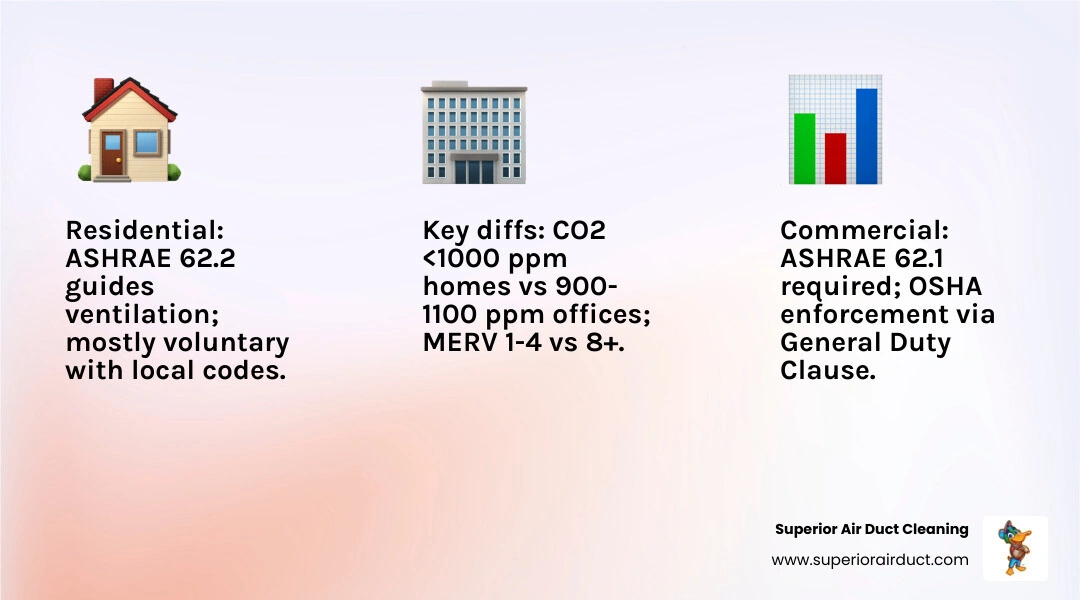
At the highest level, the biggest difference is this: residential standards are usually guidance-driven, while commercial standards are more likely to be tied to workplace obligations, code requirements, and building certifications.
For homes, ASHRAE 62.2 is the main ventilation reference. For commercial buildings, offices, retail spaces, and many shared-use properties, ASHRAE 62.1 is the go-to standard. EPA guidance, WHO health benchmarks, and local code adoption all matter too, but they do not work the same way in every building.
Commercial owners may also pursue certifications like WELL or LEED, which add measurable air-quality targets instead of focusing only on ventilation rates.
| Topic | Residential Buildings | Commercial Buildings |
|---|---|---|
| Main ventilation framework | ASHRAE 62.2 | ASHRAE 62.1 |
| Main compliance driver | Local residential code | Mechanical code, workplace safety, occupancy rules |
| Pollutant thresholds | Often guidance-based | More often documented through programs like WELL |
| Occupancy pattern | Smaller household loads | Higher density, longer shared exposure |
| Air system complexity | Simpler, fewer zones | Multiple zones, larger equipment, shared return/exhaust paths |
What “standards” mean in homes vs workplaces
In homes, "standard" often means best practice or recommended target, not a federal law with routine enforcement. A house may still have poor air even if it technically passed code when built.
In workplaces, the word has more weight. OSHA does not have one broad indoor air quality rule for all buildings, but employers are still expected to provide a safe workplace under the General Duty Clause. There are also specific OSHA rules for certain contaminants and industrial ventilation situations.
EPA guidance is influential in both settings, but EPA does not issue one universal enforceable IAQ rule for all indoor spaces. That is part of why building owners and homeowners alike feel like they are trying to assemble a puzzle without the box picture.
Why commercial vs residential indoor air quality standards are not one-size-fits-all
A three-bedroom house and a three-story office do not behave the same way.
Commercial buildings usually have:
- More people per square foot
- More shared air
- More equipment and cleaning chemicals
- More renovation turnover and tenant changes
- Larger HVAC systems with multiple zones
Residential buildings usually have:
- Lower occupancy density
- More pollutant spikes from daily living, like cooking and showering
- More basement, crawlspace, garage, and radon concerns
- Less formal monitoring
That is why commercial vs residential indoor air quality standards differ so much. The risk profile is different, so the control strategy has to be different too.
Pollutants Both Building Types Share — and Where They Come From
Many of the same pollutants show up in homes and commercial buildings. The difference is usually the source, the duration, and how widely the pollutant spreads through the ventilation system.
Common pollutants in both settings include:
- PM2.5 and PM10
- VOCs
- Formaldehyde
- Radon
- Carbon monoxide
- Carbon dioxide
- Nitrogen dioxide
- Mold spores
- Allergens
- Asbestos in older buildings during disturbance

Residential pollutants: everyday living sources
Homes create pollution the ordinary way: by being lived in.
Typical residential sources include:
- Cooking, especially frying and gas appliances
- Cleaning sprays and scented products
- New furniture, flooring, paint, and cabinets that off-gas VOCs
- Pets, dust mites, and tracked-in pollen
- Damp basements, bathrooms, and laundry areas
- Attached garages that can introduce exhaust fumes
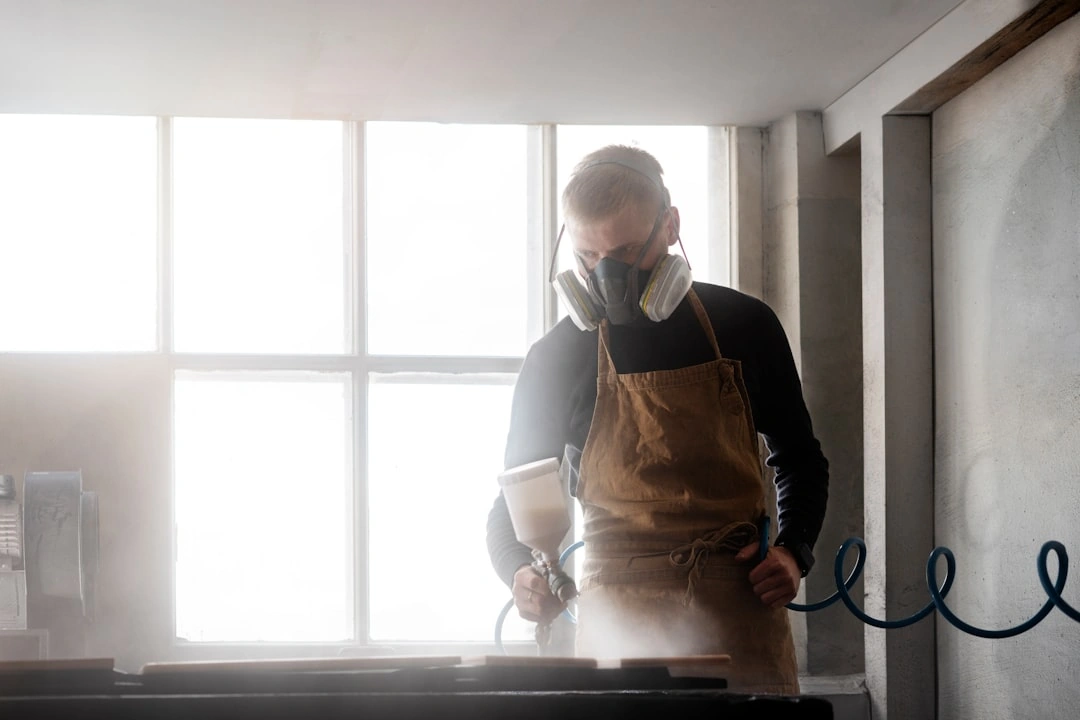
- Remodeling dust
- Soil gases such as radon
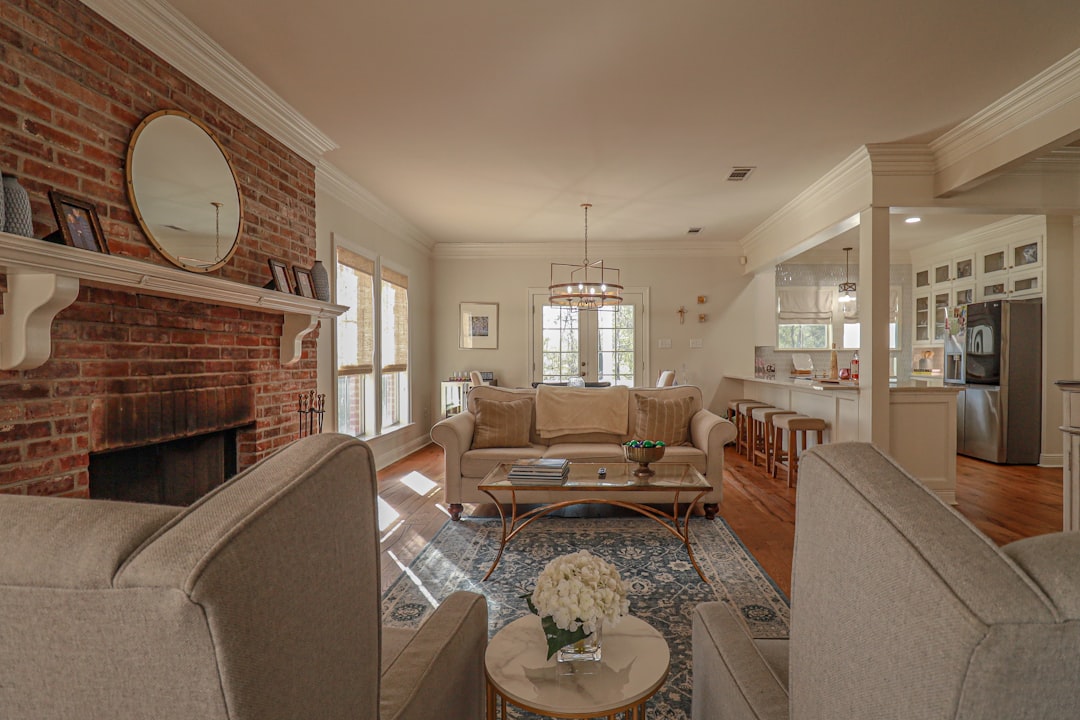
In Western Pennsylvania, Eastern Ohio, and the Northern Panhandle of West Virginia, basements are common, which makes moisture control and radon awareness especially important. When air distribution systems are dirty or leaking, contaminants can circulate farther than most homeowners realize.
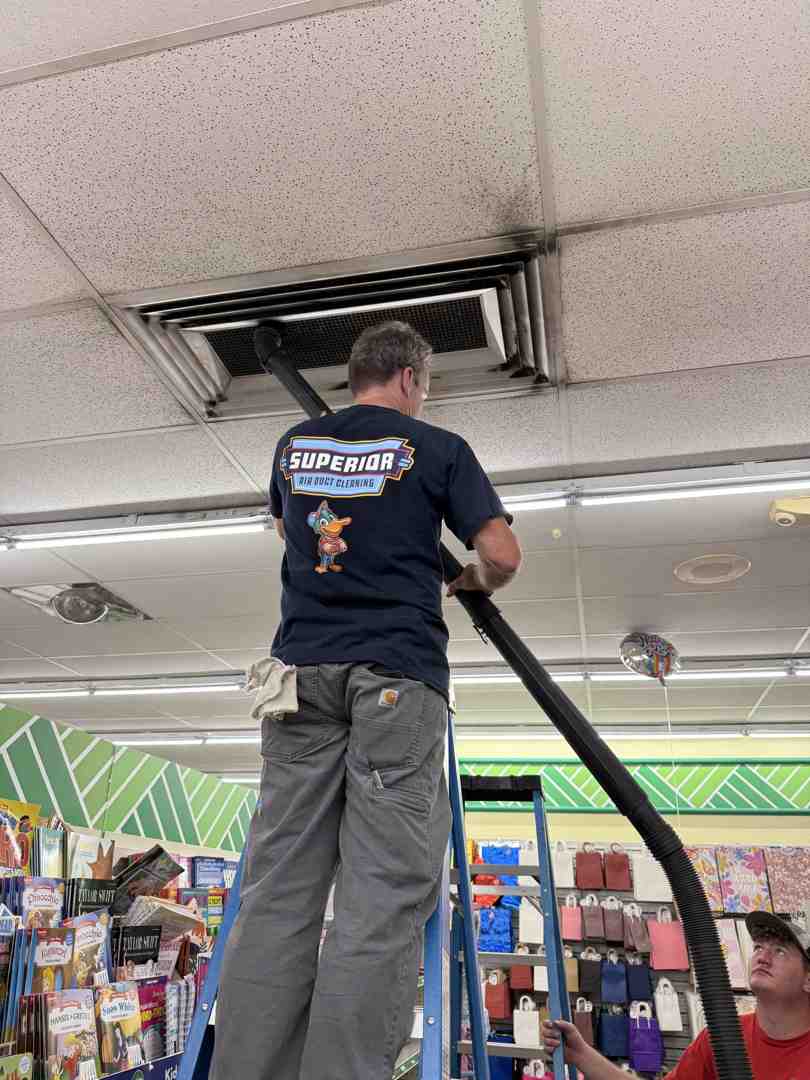
If you want a practical look at service options for homes, visit our air duct cleaning page.
Commercial pollutants: occupancy and building-system sources
Commercial buildings often have the same pollutants, but from bigger or more complex sources.
Common commercial sources include:
- Office equipment and printing areas
- Higher occupant density, which raises CO2 and bioeffluent loads
- Cleaning chemicals used across large floor areas
- Renovation dust and tenant improvement projects
- Emissions from loading areas, garages, or nearby traffic
- Shared kitchens or break rooms
- Poorly balanced HVAC zones
- Moisture problems in roofs, mechanical rooms, or large duct systems
One tenant's issue can also become everyone else's issue if air is shared across zones. That is a major difference between a single-family home and a multi-tenant office or retail building.
For commercial service details, see our commercial page.
commercial vs residential indoor air quality standards for common contaminants
Here is where the comparison gets more concrete:
- PM2.5: EPA outdoor reference is 12 μg/m³ annual and 35 μg/m³ over 24 hours; WELL uses <15 μg/m³ indoors for many commercial spaces.
- PM10: WELL uses <50 μg/m³ indoors.
- TVOCs: commercial certification frameworks often use <500 μg/m³; homes usually do not have a single federal residential TVOC limit.
- Formaldehyde: WELL target is <27 ppb in many commercial settings.
- Radon: EPA action level is 4 pCi/L for both homes and commercial buildings.
- Carbon monoxide: thresholds depend on the standard and averaging period; commercial kitchen guidance may allow up to 35 ppm in some contexts, but lower is always better in occupied spaces.
- CO2: usually treated as a ventilation indicator rather than a toxic pollutant threshold in ordinary buildings.
Recommended Thresholds and Health Effects by Setting
Pollutant numbers can get technical fast, but they matter because they help us distinguish "this room feels stuffy" from "this building needs action."
Residential guideline ranges homeowners should know
For homes, these are useful targets to know:
- Radon: EPA action level is 4 pCi/L
- Humidity: 30% to 50% is a practical target to reduce mold risk and dust-mite growth
- CO2: around 1,000 ppm is often used as a useful ventilation benchmark
- NO2: Health Canada guidance uses 150 ppb over 24 hours as a comparison point
- Carbon monoxide: any persistent indoor CO reading should be taken seriously and investigated immediately
- Visible mold or recurring dampness: not a number, but a major warning sign
There is no single federal residential table that covers every contaminant in every room of every home. That is why source control matters so much in houses.
commercial vs residential indoor air quality standards for offices and large buildings
Commercial and institutional buildings often use more formal targets, especially when aiming for certifications or documented IAQ programs.
Common commercial reference points include:
- Formaldehyde: <27 ppb
- TVOC: <500 μg/m³
- PM2.5: <15 μg/m³
- PM10: <50 μg/m³
- CO2: often 900 ppm or no more than 500 ppm above outdoor air in some frameworks; practical building targets often land in the 900 to 1,100 ppm range
- Radon: <4 pCi/L
There can also be exceptions by space type. For example, commercial kitchens may have different operational limits because combustion and cooking loads are much higher.
How poor IAQ affects health at home vs at work
The symptoms overlap, but the impacts can show up differently.
At home, poor IAQ often shows up as:
- Allergy flare-ups
- Asthma symptoms
- Musty odors
- Sleep disruption
- Eye, nose, and throat irritation
- Headaches or lingering fatigue
At work, poor IAQ may show up as:
- Headaches late in the day
- Trouble concentrating
- Dry eyes
- Fatigue in densely occupied areas
- More frequent complaints when ventilation is inadequate
- "Sick building" style symptom patterns that improve after leaving the building
The long-term risks can include respiratory disease, worsening asthma, and in some cases cancer risk from pollutants like radon or formaldehyde exposure over time. In offices, there is also a business case: better air can support comfort, attendance, and productivity. In homes, the payoff is often simpler and more personal: easier breathing, better comfort, and less worry.
HVAC, Ventilation, and Maintenance: Why Buildings Perform Differently
The HVAC system is where standards become real life. A good guideline on paper means very little if the system is undersized, dirty, unbalanced, or poorly maintained.
Residential HVAC and ventilation priorities
In homes, the priorities are usually:
- Reliable bathroom exhaust
- Proper kitchen exhaust
- Consistent filter changes
- Duct sealing and leakage control
- Moisture control in basements and attics
- Radon testing where appropriate
- Keeping humidity around 30% to 50%
Residential systems are usually simpler, but simpler does not mean trouble-free. Dirty returns, leaky ducts, and neglected filters can spread dust and allergens throughout the home.
For a closer look at why this matters in day-to-day living, read Why Air Duct Cleaning Matters for Your Home.
Commercial HVAC design and maintenance requirements
Commercial buildings add layers of complexity:
- Outdoor air must be calculated for occupancy and floor area
- Make-up air and exhaust have to stay balanced
- Zoning affects whether pollutants stay local or spread
- Higher occupancy often means more ventilation demand
- Tenant fit-outs can change air requirements
- Preventive maintenance must be documented more carefully
ASHRAE 62.1 allows different compliance pathways, including the Ventilation Rate Procedure and, in some cases, an IAQ Procedure that uses contaminant control and verification. In plain English: some buildings meet goals by bringing in set amounts of outdoor air, while others use more performance-based methods.
If you manage a larger building, our article on commercial building air quality is a helpful next step.
Duct cleaning, HVAC cleaning, and inspection roles in better IAQ
Duct cleaning is not a magic wand, but it is an important tool when contamination is present.
It can help when there is:
- Visible debris in ductwork
- Heavy dust loading after renovations
- Microbial growth associated with moisture issues
- Odor problems tied to contamination
- Register buildup and poor housekeeping history
- Concerns about recirculating settled contaminants
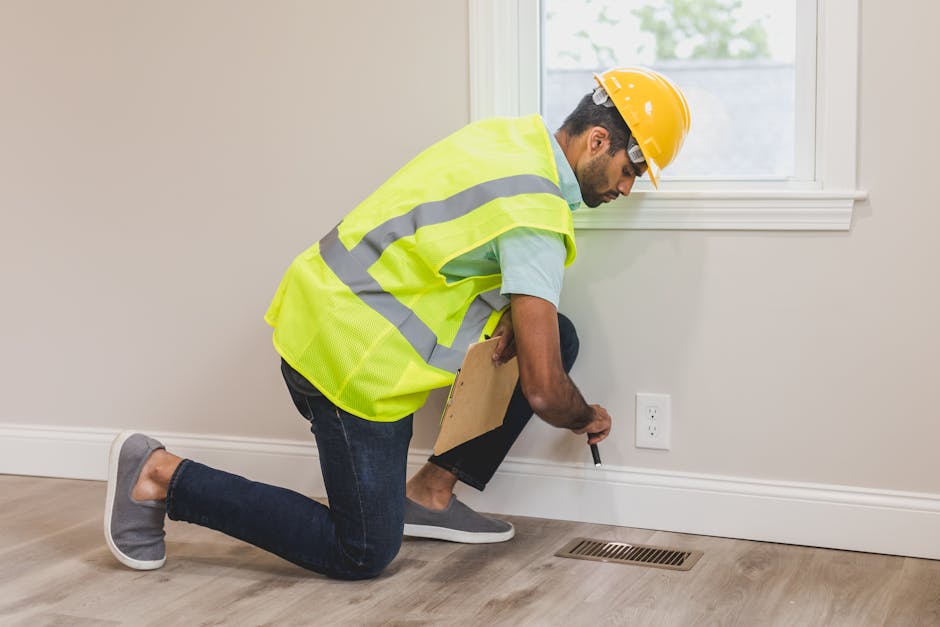
Inspection matters too. Sometimes the problem is not only in the ducts, but on coils, inside air handlers, at registers, or in damaged duct sections. That is why we recommend looking at the full system rather than one dusty grille and hoping for the best.
Learn more here:
- What is the Difference Between Duct Cleaning and HVAC Cleaning
- Benefits of Commercial Duct Cleaning
- HVAC Efficiency with Air Duct Cleaning
Best Practices, Compliance Challenges, and When to Call Professionals
One of the biggest IAQ challenges in the U.S. is the lack of one universal federal indoor air quality law for all buildings. Instead, we have a mix of EPA guidance, OSHA duties, model codes, and voluntary certifications. That makes implementation uneven, especially when older buildings, renovations, or mixed-use properties are involved.
Warning signs that should not be ignored:
- Persistent musty smells
- Visible dust blowing from registers
- Recurring condensation or damp spots
- Occupants feeling better after leaving the building
- Frequent headaches or irritation indoors
- Uneven airflow or stuffy rooms
- Water damage near HVAC components
- Suspicion of mold or soot in ductwork
Best practices for homes
For residential properties, the basics go a long way:
- Vacuum with a HEPA-equipped unit when possible
- Use lower-VOC paints, cleaners, and materials
- Repair leaks quickly
- Keep indoor humidity in the 30% to 50% range
- Vent bathrooms and kitchens properly
- Open windows when outdoor conditions allow
- Test for radon and mitigate when needed
- Replace filters on schedule
- Inspect ductwork after remodeling or contamination events
For more homeowner-focused guidance, see Residential Duct Cleaning - 5 Reasons to Have Your Ducts Cleaned.
Best practices for commercial buildings
Commercial properties benefit from more formal processes:
- Create an IAQ management plan
- Verify ventilation performance regularly
- Schedule preventive HVAC maintenance
- Use walk-off mats to reduce tracked-in dirt
- Control moisture aggressively
- Isolate renovation areas from occupied spaces
- Communicate with tenants about odors, construction, and complaints
- Reassess ventilation when occupancy changes
Documentation matters much more in workplaces and multi-occupant buildings than in homes. If five employees say the conference room feels stuffy, that is not "office drama." It may be a ventilation clue wearing business casual.
Why professional testing and remediation matter more in complex buildings
Professional services are especially important when:
- Occupants report recurring symptoms
- Mold is suspected
- A building has had water intrusion
- Air systems serve multiple zones or tenants
- Renovation dust may have entered the HVAC system
- Documentation is needed for management, ownership, or compliance purposes
Testing and remediation can include:
- Air quality assessment
- Moisture investigation
- Mold-related response
- Duct and HVAC inspection
- Targeted cleaning
- Post-remediation verification
In large buildings, guessing is expensive and delays the fix. In homes, guessing can leave families living with the same problem season after season.
For related reading, visit:
- NADCA Certified vs Uncertified Duct Cleaning Comparison
- Commercial Duct Cleaning Requirements for Commercial Properties
- Importance of Air Duct Cleaning
Frequently Asked Questions About Commercial and Residential IAQ
Is there a single federal indoor air quality law for homes and businesses?
No. There is no single federal IAQ law that covers all homes and all commercial buildings in one neat package. Residential IAQ is mostly shaped by local codes and public-health guidance. Commercial IAQ is influenced by OSHA responsibilities, adopted building and mechanical codes, and sometimes voluntary programs like WELL or LEED.
What indoor air number matters most: PM2.5, VOCs, CO2, or radon?
It depends on the building and the problem:
- PM2.5 matters for combustion, fine dust, and health effects
- VOCs matter after painting, remodeling, or off-gassing from materials
- CO2 is helpful as a ventilation indicator in occupied spaces
- Radon is critical in homes and lower-level spaces because of its cancer risk
If we had to simplify it, radon is one of the most important hidden risks in homes, while CO2 and particulate control are often major operational issues in offices and shared commercial spaces.
How often should ducts and HVAC components be inspected for IAQ problems?
There is no single calendar answer for every building. Inspections make sense:
- After renovations
- After water damage
- When visible dust or debris appears
- When odors persist
- When mold is suspected
- When occupants report recurring symptoms
- When airflow drops or rooms become unevenly heated or cooled
For homes, many systems benefit from periodic inspection, especially if there are pets, allergies, or remodeling projects. For commercial buildings, routine inspections should be part of preventive maintenance and triggered any time space use or occupancy changes.
Conclusion
When we compare residential and commercial indoor air quality standards, the takeaway is clear: the pollutants may look similar, but the rules, benchmarks, and building strategies are not the same.
Homes are more likely to rely on guidance, source control, moisture management, and practical maintenance. Commercial buildings must also think about ventilation calculations, shared air, documentation, occupant density, and workplace obligations. In both settings, cleaner indoor air supports health, comfort, and better building performance.
For businesses, meeting IAQ goals can support comfort, fewer complaints, and better productivity. For homeowners, it can mean easier breathing, lower allergen load, and more confidence that the air inside truly feels like home.
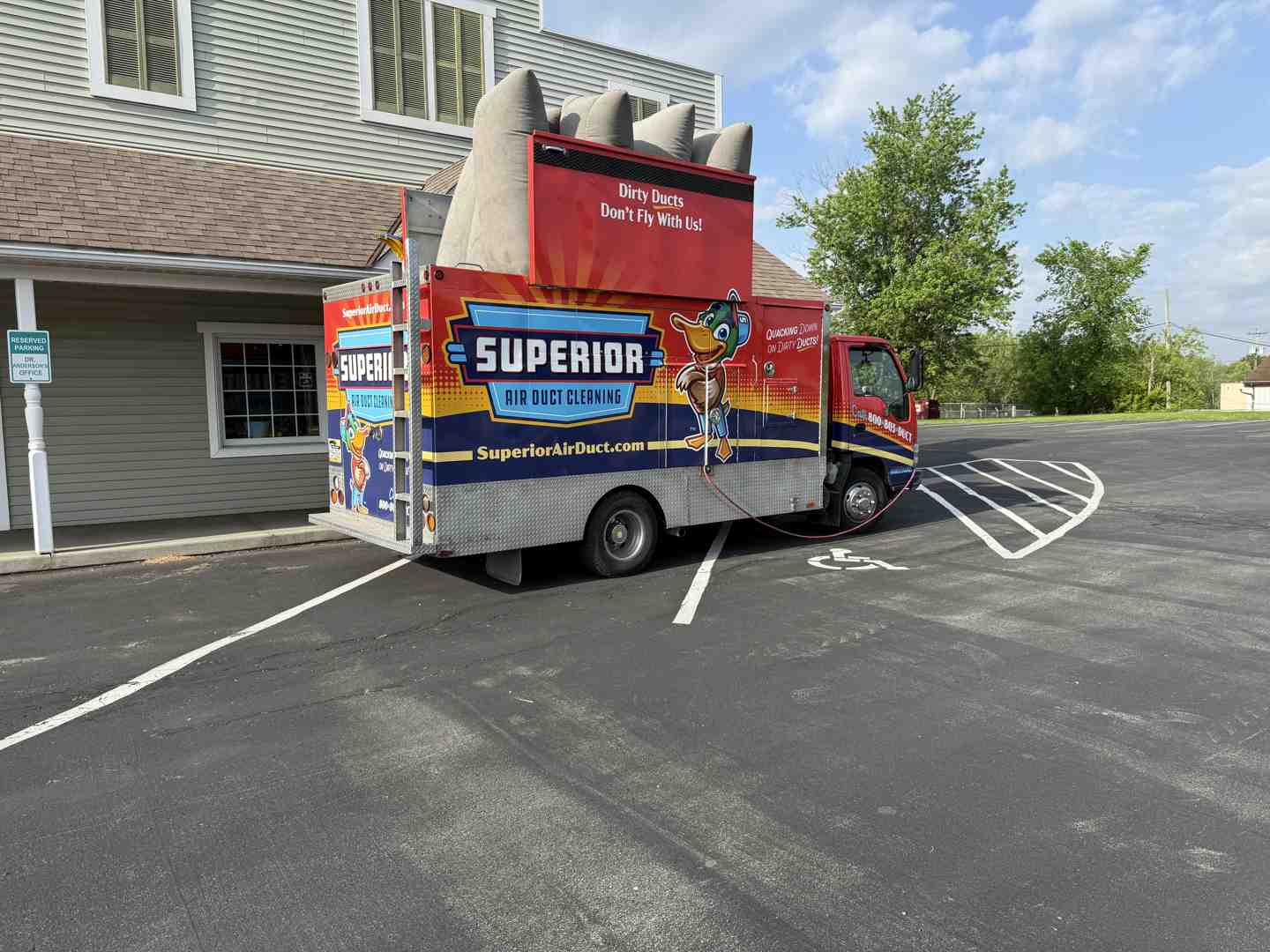
At Superior Air Duct Cleaning, we help property owners across Western Pennsylvania, Eastern Ohio, and nearby communities take a smarter approach to indoor air. Whether you need residential duct cleaning, commercial duct service, or help understanding what your system may be circulating, we are here to help.
If you want to continue comparing building needs, read our pillar guide on residential vs commercial duct cleaning.

Customer Reviews


Superior Air Duct cleaning did a phenomenal job in a timely manner with the tech “Rich” being very professional ,personable and considerate of our property! He explained things as he proceeded and answered all our questions!
I LOVE that they provide before & after photos to see the difference. Give them a try… you won’t regret it
Pam T.
Robert was on schedule and communicated what time he would arrive. He was polite, professional, and respectful of our home. I wanted to wait a couple weeks before posting a review because I wanted to see if the duct cleaning actually made a difference. I am happy to say it did! I vacuum multiple times a week and have already noticed a significant reduction in the amount of dust cleaned up each time. As a home with pets, there will always be something to clean, but getting the ducts cleaned has definitely helped improve the air quality and reduce the dust.
alice A.
Technician Rob arrived early explained the days agenda and then proceeded to work methodically and meticulously over the next 6+ hours cleaning my ductwork. Courteous and professional they answered all of my questions and went above and beyond the call of duty. They even located an old dusty box of rat poison buried in our vents. My only regret is not finding these guys sooner. As a realtor of 22 years and owner of a newly purchased (now dust free) home I highly recommended!
Eric K.
Excellent service! I’ve used them to clean out my air ducts as well as my dryer vent duct and they are excellent. I was very pleased with both jobs and will continue to use them in the future. Great communication as well- from the time I scheduled the appointment until they were at my door.
Erika C.
We had such an amazing experience with Superior Air Duct Cleaning. They were so nice and friendly and did an amazing job. I loved seeing the before and after pictures. Besides doing an amazing job cleaning our air ducts they were so quick at responding and setting up the appointment. We will definitely be using them in the future.
Amanda C.