The Chill of Early Fall: Recognizing Airflow Struggles in Older Properties
That familiar draft creeping across your living room floor isn't going away on its own. If you are actively Preparing Historic Homes in Beaver Falls for Winter Drafts and Airflow Demands, you might automatically assume your aging heating system is failing. Your furnace kicks on, runs constantly, and drives up your energy usage, yet the house still feels stubbornly cold in certain rooms. This disconnect leaves many property owners frustrated, believing the only solution is a massive, highly disruptive furnace upgrade.
Here is the thing: a cold, drafty home does not always mean you need a larger heating unit. In older properties, the true bottleneck is rarely the furnace itself. Instead, the problem lies in how retrofitted ductwork handles the necessary airflow. Pushing conditioned air through narrow, dusty, and compromised pathways is like trying to breathe through a heavy wool blanket. Addressing these structural challenges requires a closer look at your ductwork; prioritizing indoor air quality improvements and scheduling professional air duct cleaning are often the most effective ways to bridge the gap to true winter comfort.
During the critical September pre-heating season transition, property owners have a brief window to evaluate their system's performance before the severe cold sets in. Recognizing that your home is struggling with airflow—rather than just a lack of raw heat—is the first step toward a warmer, more efficient winter. When you shift your focus from the furnace to the delivery system, you unlock the secret to keeping older architecture comfortable without unnecessary equipment replacements.
The Architectural Reality of Beaver Falls Historic Districts
To understand why your heating system struggles, you have to look at how your home was originally built. The beautiful, enduring architecture found throughout Beaver Falls historic districts was never designed with central forced-air heating in mind. Original construction heavily relied on radiant heat, cast-iron radiators, or multiple fireplaces distributed throughout the floor plan. These homes were built with solid materials but completely lacked modern insulation standards and the dedicated wall cavities required for wide, efficient duct pathways.
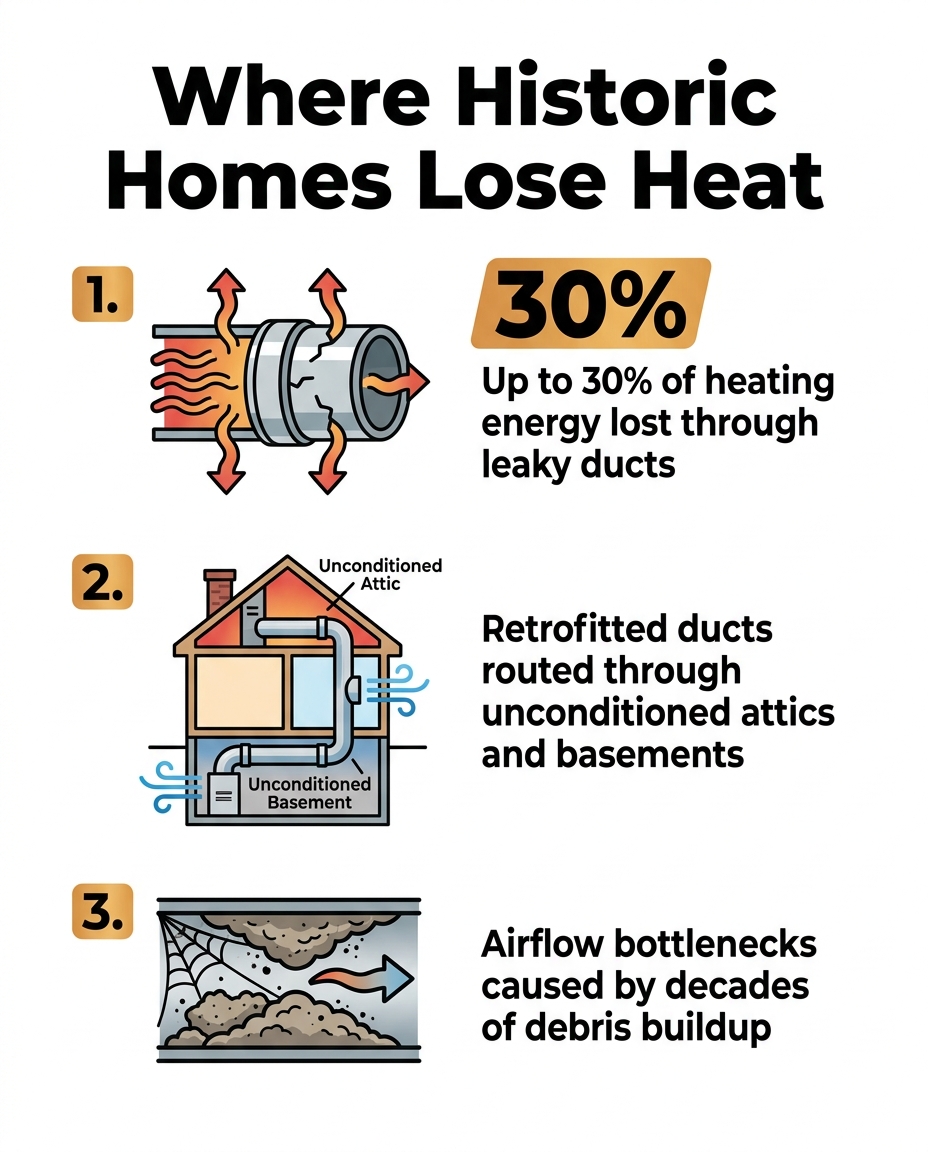
When modern HVAC systems were eventually retrofitted into these properties, installers had to work with whatever space was available. This often meant routing ductwork through entirely unconditioned spaces. Metal trunks were squeezed into drafty attics, snaked through field-stone basements, and hidden inside exterior walls with zero insulation. Because these spaces are exposed to ambient temperatures, the warm air traveling through the thin metal ducts rapidly loses its heat before it ever reaches your living room.
The true cost of retrofitted design: The U.S. Department of Energy reports that duct systems can lose up to 30% of their heating energy due to leaks, holes, and poor connections. In a modern home, this is a nuisance. In a historic property, it is a massive structural liability. This staggering energy loss connects directly to the persistent cold spots and drafts you feel walking from the hallway into the parlor.
• Thick Plaster Walls — Original Heating Intent: Retain radiant heat from fireplaces or boiler radiators. — Retrofitted HVAC Reality: Block traditional duct routing, forcing narrow, inefficient duct sizes.
• Field-Stone Basements — Original Heating Intent: Used for root cellars and coal storage; naturally damp and cool. — Retrofitted HVAC Reality: Act as unconditioned transit zones that strip heat from exposed metal ducts.
• Original Wood Windows — Original Heating Intent: Provided essential summer ventilation before air conditioning. — Retrofitted HVAC Reality: Allow massive heat loss that weakened airflow cannot overcome.
Understanding this architectural reality changes how you approach winter preparation. You are not just heating a space; you are actively fighting the building's original design. Overcoming this requires maximizing every single cubic foot of warm air your furnace produces so it actually survives the journey to your vents.

Why Your Furnace Isn't the Real Problem
It is incredibly common to stand over a barely-breathing floor register and assume the furnace in the basement is on its last legs. However, if the unit is firing up and producing hot air at the source, the equipment is doing its job. The breakdown is happening in transit. The mechanics of compromised, leaky ducts completely restrict the volume of warm air reaching your living spaces, creating a false narrative about your heating capacity.
The Problem: Starved Airflow and Cold Spots
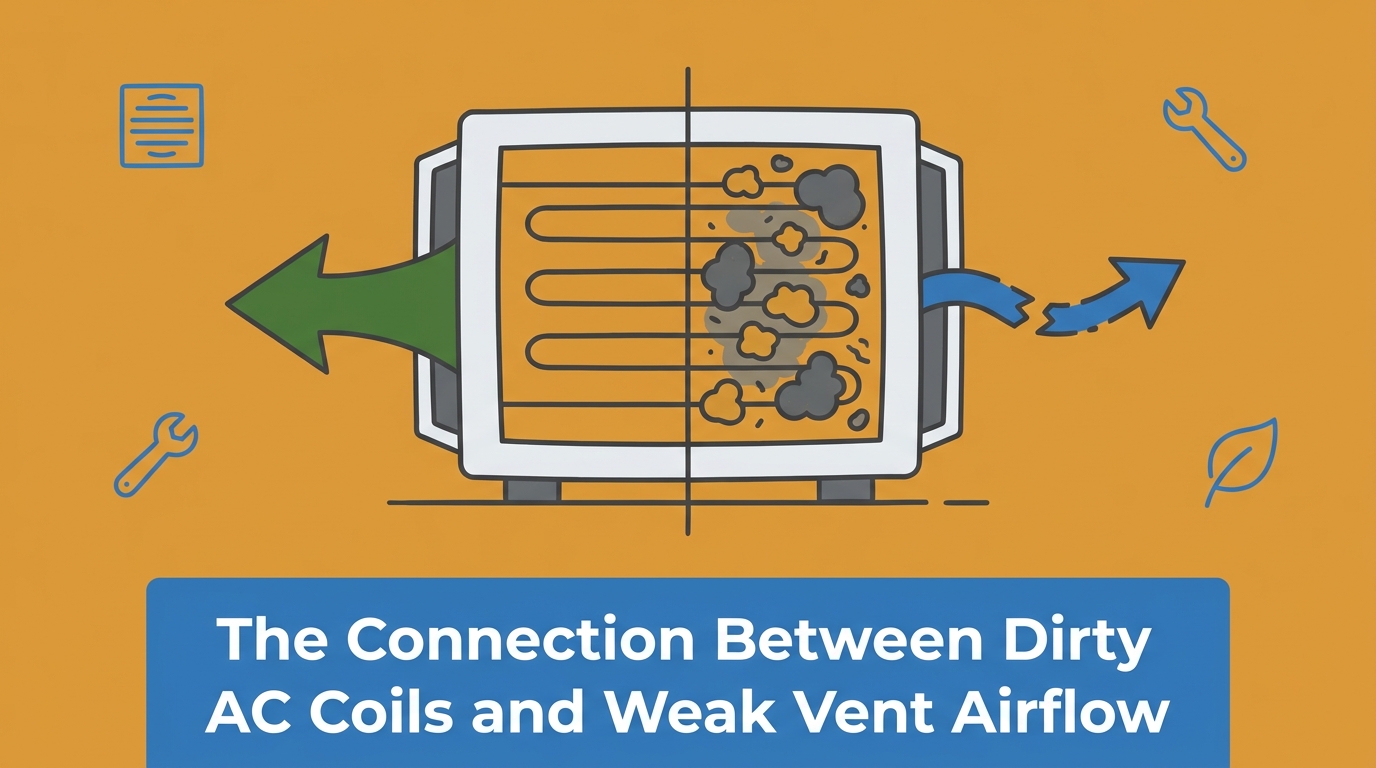
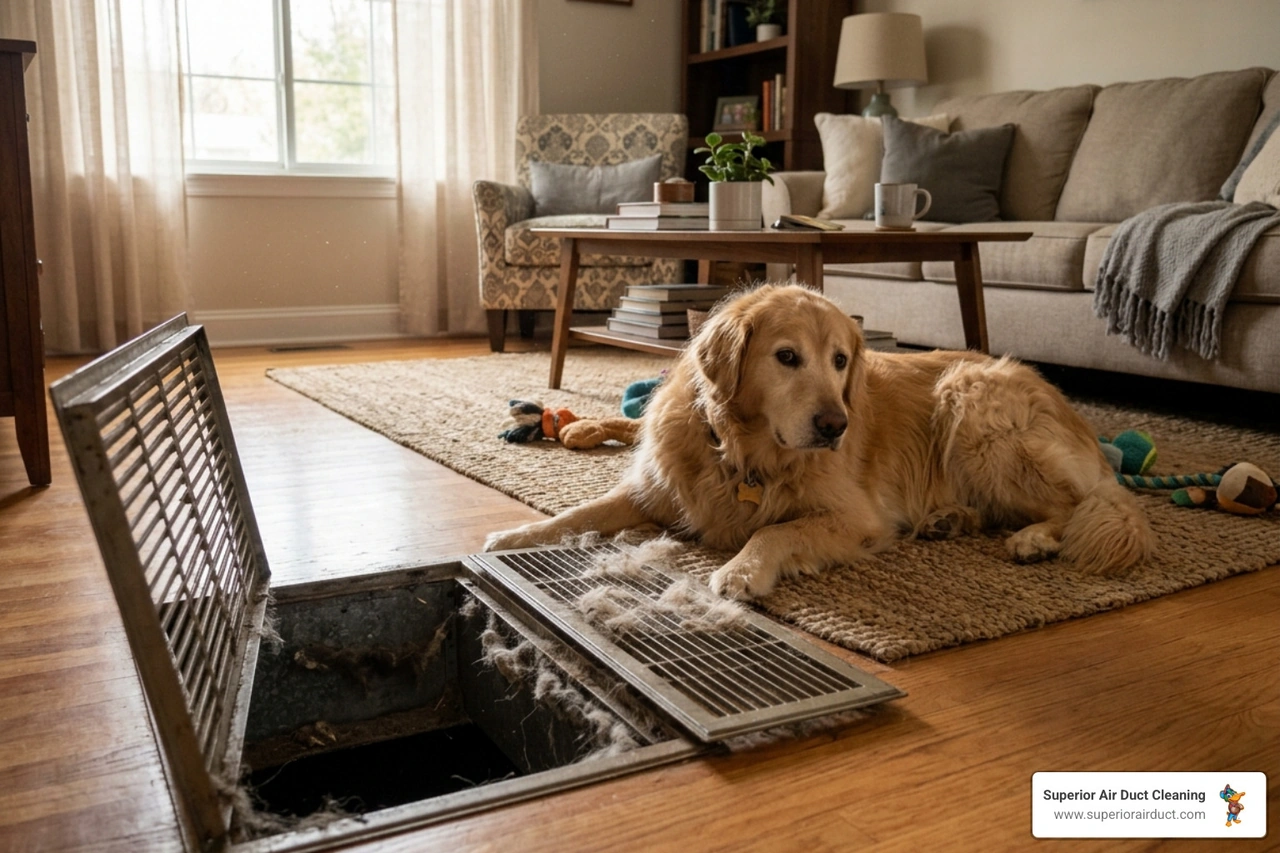
Your furnace relies on a delicate balance of static pressure. It expects to push a specific volume of air out and pull an equal volume of air back in. When retrofitted ducts are clogged with decades of household dust, pet dander, and construction debris from past renovations, the physical space inside the duct shrinks. The warm air hits these blockages and backs up. By the time the air navigates past the debris and out of the vent, the volume is too weak to displace the cold air dropping off your windows.
The Cause: Forcing the System to Overwork
Forcing a furnace to push air through clogged or severely restricted ducts does more than leave you shivering—it actively shortens the unit's lifespan. The blower motor has to work twice as hard to overcome the static pressure resistance. This leads to overheating, constant cycling on and off, and premature mechanical failure. During the September pre-heating season transition, a system that seems fine on a mild 60-degree day will quickly reveal its weaknesses when forced to run continuously during a freeze.
The Solution: Optimizing the Delivery Pathway
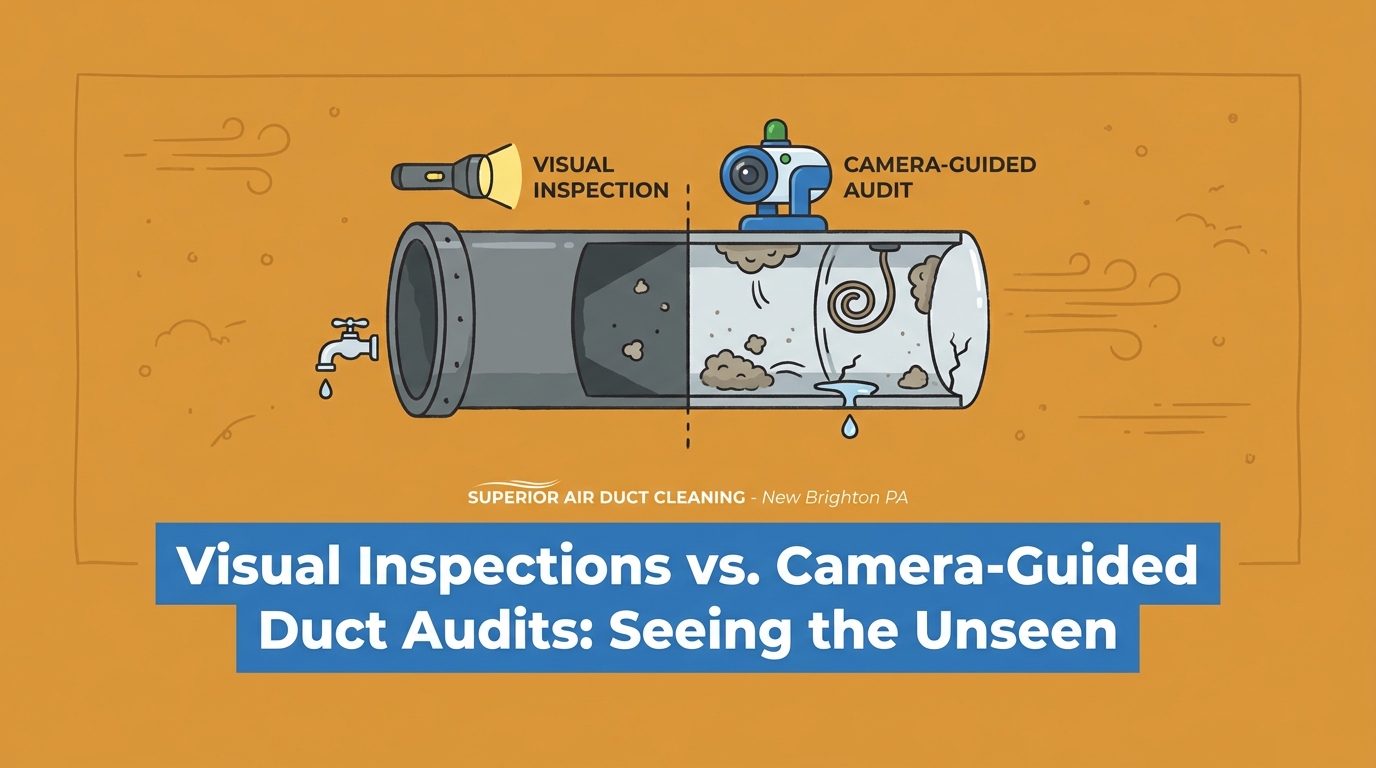
The challenge lies in navigating hard-to-reach ductwork in older homes to identify these hidden restrictions. Because historic homes often have ducts buried behind lath and plaster or tucked into tight crawlspaces, standard visual inspections fall short. The solution is to reframe your entire winter strategy: focus on optimizing airflow efficiency rather than continually turning up the thermostat. By clearing the pathways and ensuring the ducts are sealed, you allow the furnace to operate at its intended capacity, delivering the warmth you are already paying for.
The Unique Vulnerabilities of Retrofitted Ductwork
Standard modern HVAC assumptions simply do not apply to delicate, older setups. A house built in the last twenty years features wide, insulated, flexible ductwork designed specifically for optimal aerodynamic flow. Retrofitted systems in older properties are entirely different beasts, uniquely vulnerable to both internal blockages and external weather extremes.
Western Pennsylvania's winter climate brings freezing temperatures and biting winds that rapidly exploit the poor insulation and drafty original windows typical of older homes. When airflow is weak, these external forces win the battle for your indoor climate. The biting wind creates negative pressure on the leeward side of the house, literally sucking the warm air out through the gaps in historic window frames. If your vents cannot supply a robust, high-volume stream of warm air to replace it, the room temperature plummets.
Common structural bottlenecks in older systems:
• Sharp 90-degree turns: Installers often had to make abrupt, sharp angles to route metal trunks around existing load-bearing beams and original plumbing, destroying air velocity in the process.
• Narrow wall cavities: Ducts squeezed into plaster walls are often significantly smaller than modern standards require, severely limiting the cubic feet per minute (CFM) of air that can travel upstairs.
• Unconventional routing: Long, winding duct runs through unheated additions or enclosed porches mean the air has to travel too far, losing heat at every foot.
• Decades of accumulation: Because these systems are hard to access, they often go uncleaned for generations. A half-inch of petrified dust on the inside of a narrow duct can reduce total airflow by a massive percentage.
When you combine these physical limitations with the harsh realities of a Beaver Falls historic districts winter, the result is a heating system that works constantly but achieves very little. The weak trickle of air coming from the vents is instantly neutralized by the cold radiating off uninsulated walls.
Safely Restoring Airflow in Fragile Older Systems
Recognizing the airflow problem is only half the battle; fixing it requires a highly specialized approach. You must be extremely cautious when dealing with century-old architecture. Standard DIY cleaning methods—like shoving a shop vacuum hose down a register—are entirely ineffective against decades of hardened buildup. Worse, aggressive commercial methods used by budget cleaners can cause catastrophic damage to fragile older ducts, blowing out weak seams or damaging the surrounding lath and plaster.
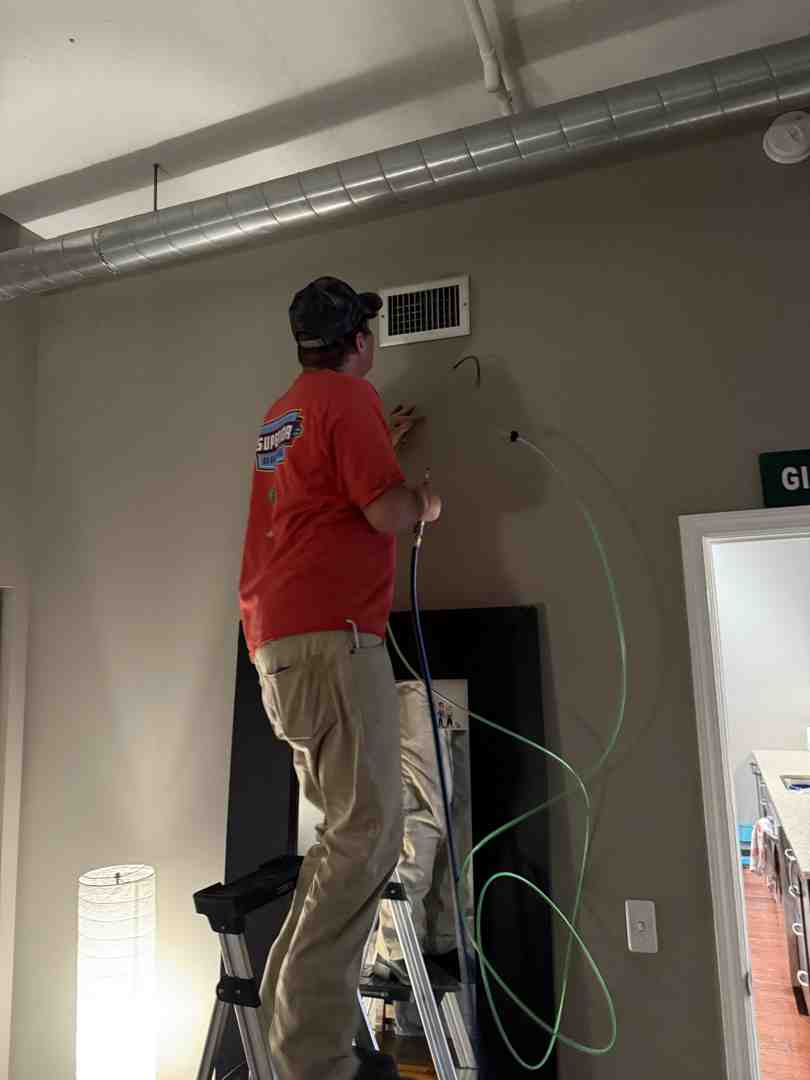
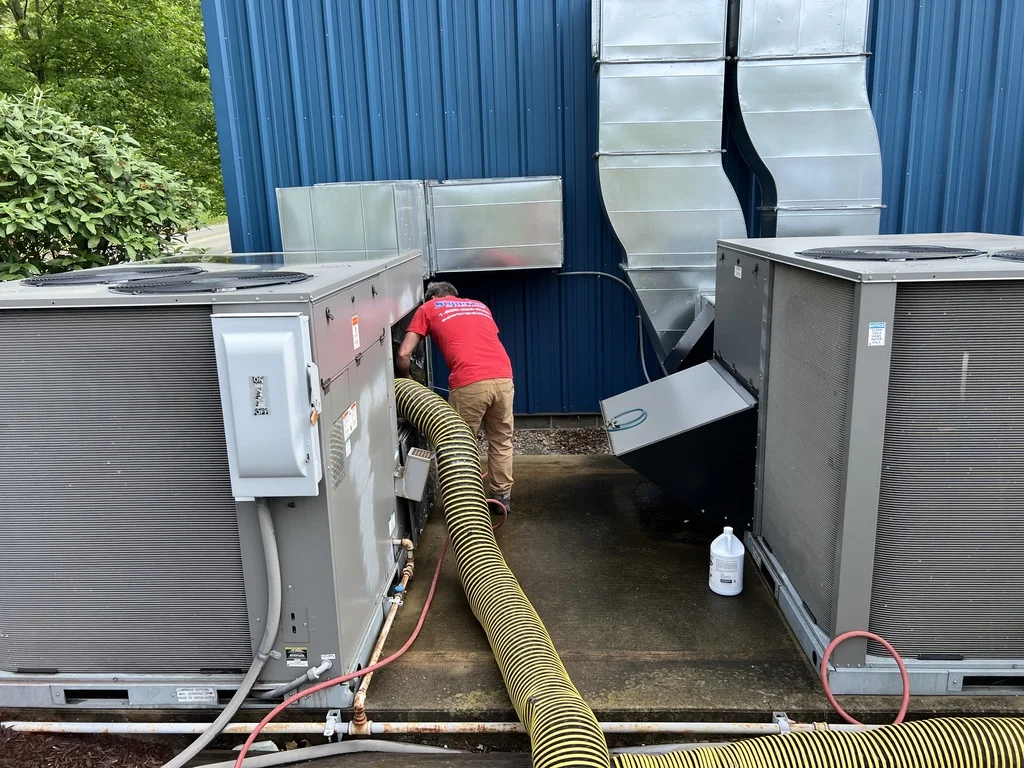
This is where specialized expertise becomes critical. Safely navigating, inspecting, and cleaning fragile, retrofitted ductwork in historic Western PA properties without causing damage requires specialized equipment and a delicate touch. A professional process relies on controlled negative pressure and gentle agitation, rather than violent rotary brushes that can tear apart aging metal joints.
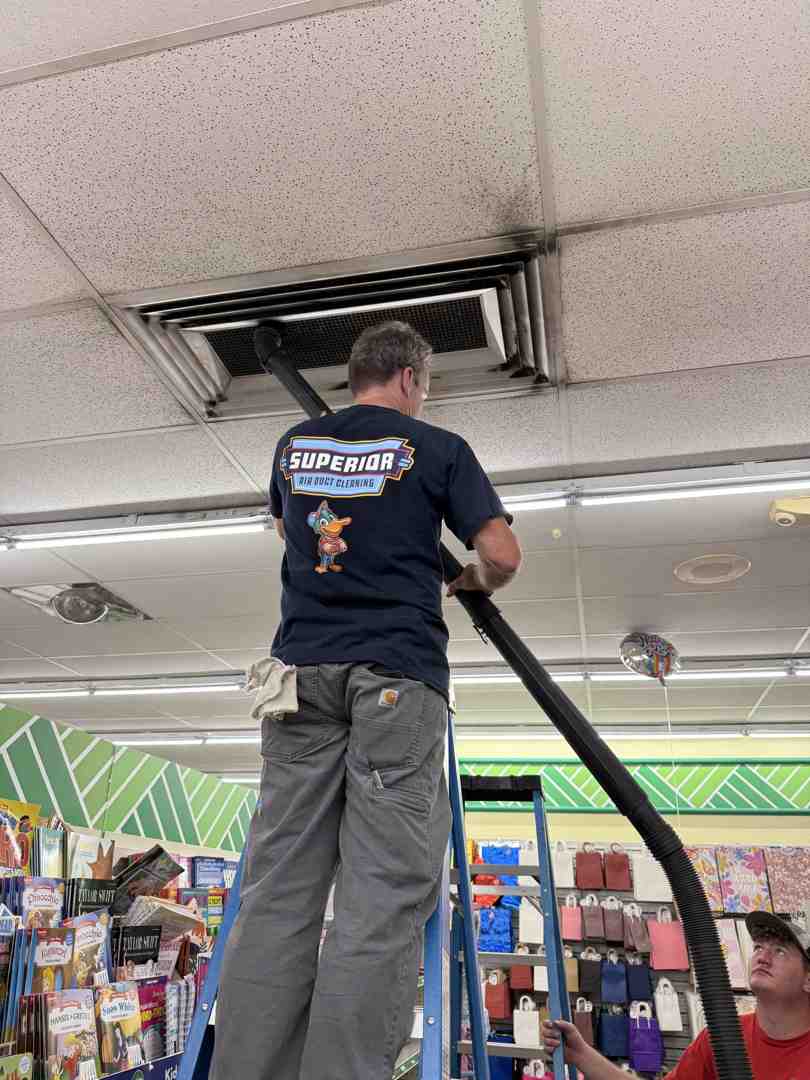
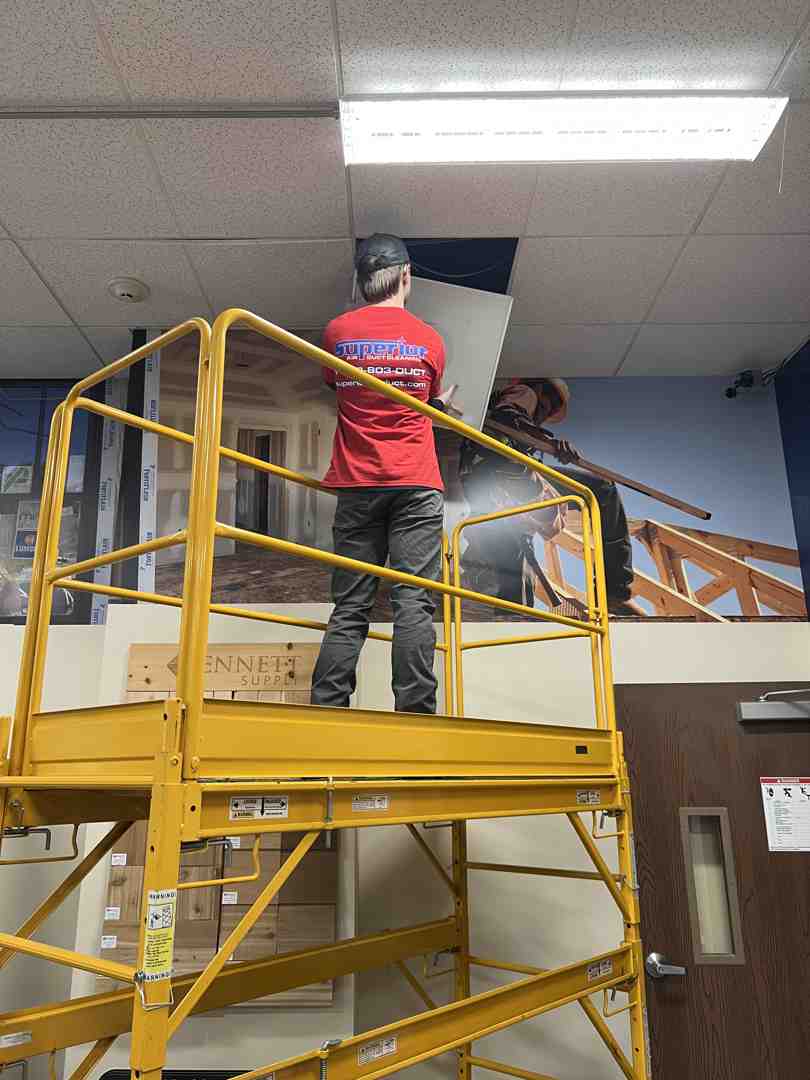
A recent summer service call illustrates this perfectly. A homeowner requested allergen reduction for a house with older, never-cleaned ducts that had been accumulating dust for at least 18 years. The technician performed a thorough, careful HVAC cleaning, taking the time to show the homeowner pictures of the entry points before and after the process. The fragile ducts were safely cleared of nearly two decades of buildup without any damage to the property. This immediately addressed the potential allergens and, crucially, restored the wide-open pathways necessary for efficient winter airflow.
What a safe, professional restoration process looks like:
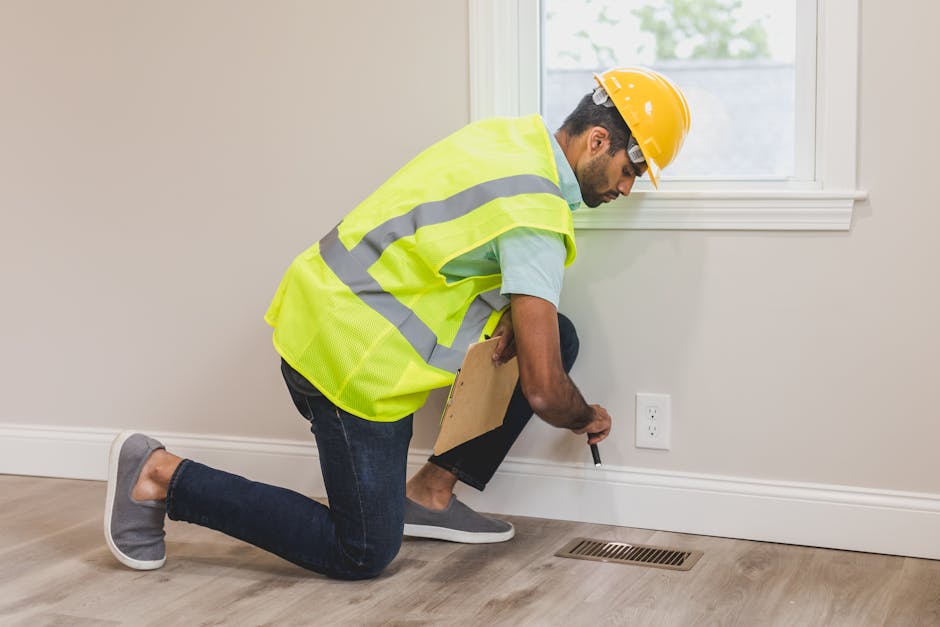
1. Comprehensive Inspection: Before any equipment is turned on, technicians assess the integrity of the retrofitted ducts to identify loose connections, rust, or unsealed joints in the attic or basement.
2. Targeted Isolation: The system is zoned off to ensure that decades of disturbed dust and debris are not blown back into your living spaces during the cleaning process.
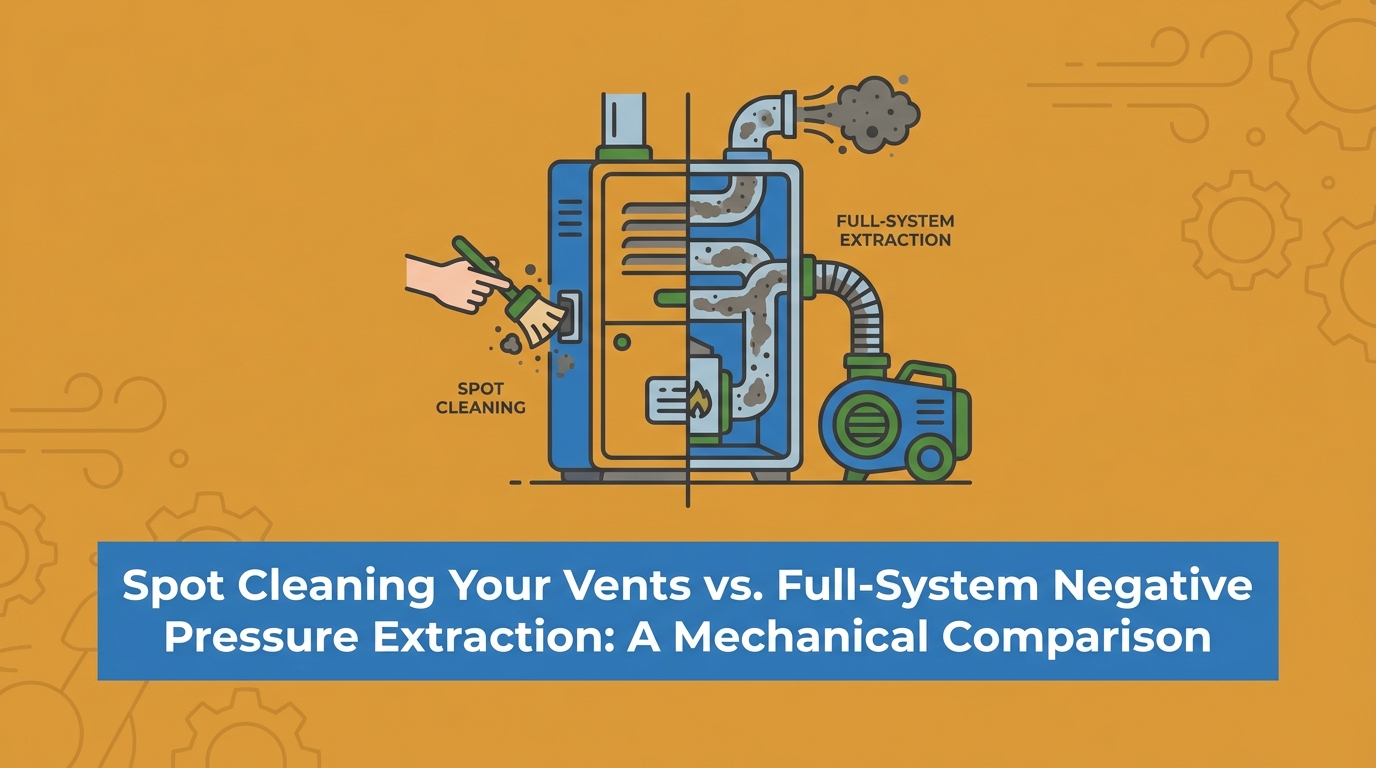
3. Gentle Negative Pressure: A powerful vacuum puts the system under negative pressure, pulling debris out safely while soft, flexible whips gently dislodge hardened buildup from the duct walls.
4. Visual Verification: Transparent professionals provide visual evidence—before and after pictures—so you can see exactly what was removed from your home's respiratory system.
By relying on professional air duct cleaning, you safely remove the severe bottlenecks choking your system. This restores critical airflow, allowing your furnace to push a high volume of warm air into the rooms that need it most, completely changing how the home feels during a freeze.
Sealing and Optimizing Before the First Hard Freeze
Timing is everything when it comes to winterizing an older property. The September pre-heating season transition is the absolute critical window to seal and clean your ducts. Waiting until November or December means you will already be dealing with a house that refuses to get warm, and you will be forcing your furnace into constant, inefficient operation just to maintain a baseline temperature.
Addressing duct leaks and blockages before the first hard freeze ensures that when you finally switch the thermostat to "heat," the system operates at peak efficiency. Every dollar you spend on energy is actually converted into warmth that reaches your living room, rather than bleeding out into the basement or getting trapped behind a wall of dust.
Take action in your home today: Walk through your property while the weather is still mild. Turn the system on and place your hand over the registers in the furthest rooms from the furnace. If the airflow feels weak, or if certain rooms are already noticeably cooler than the hallway, you have an airflow delivery problem. Do not wait for the snow to fall to address it. Advise checking local service areas to secure a professional evaluation before peak winter demand hits and schedules fill up.
Frequently Asked Questions About Historic Home Airflow
Why is airflow so poor in my historic home?
Airflow suffers in older homes primarily because the ductwork was retrofitted into a space not designed for it. These retrofitted ducts often feature sharp angles, narrow passages, and long runs through unheated areas. Furthermore, accumulated debris over decades further restricts the available space for air to travel, severely bottlenecking the volume of warm air that can reach your rooms.
How do you fix cold spots in an older house with retrofitted HVAC?
The most effective approach is to address the ductwork first by sealing leaks and professionally removing internal blockages. You must ensure the existing warm air can actually reach the rooms before considering expensive furnace upgrades or adding supplemental space heaters. Once the pathways are clear and sealed, the furnace can distribute heat much more evenly.
Can duct cleaning help a drafty older home?
Yes, professional duct cleaning is highly effective at mitigating drafts. By removing severe bottlenecks and decades of buildup, the system can push a much higher volume of warm air into the living space. This increased warm airflow helps counteract the cold drafts coming from older, single-pane windows and poorly insulated walls, raising the overall baseline comfort of the room.
Are drafty windows normal in historic homes?
Drafty windows are very common due to aging materials, shifting foundations, and original construction techniques that favored summer ventilation over winter insulation. While weatherstripping and window sealing certainly help, optimizing your HVAC airflow is strictly required to maintain a comfortable temperature against the constant heat loss these windows allow.
Is it safe to clean the ductwork in a 100-year-old house?
It is safe only when performed by specialized professionals who deeply understand fragile retrofitted materials. Aggressive DIY methods or standard heavy-duty commercial equipment can easily damage delicate metal joints and the surrounding historic plaster. A professional uses controlled negative pressure and gentle agitation to remove debris without risking the structural integrity of the home.
Secure Your Winter Comfort Today
Maintaining a warm, comfortable environment in an older property during the September pre-heating season transition does not have to be a battle of attrition. Remember that a cold house doesn't automatically dictate replacing your furnace; the secret often lies in how that heat is delivered. Professional duct optimization, cleaning, and sealing are the proven keys to overcoming winter drafts and restoring efficiency to retrofitted systems. Take control of your home's climate by scheduling a thorough inspection with a local expert who truly understands historic architecture, ensuring your system is ready long before the first freeze arrives.

Customer Reviews


Superior Air Duct cleaning did a phenomenal job in a timely manner with the tech “Rich” being very professional ,personable and considerate of our property! He explained things as he proceeded and answered all our questions!
I LOVE that they provide before & after photos to see the difference. Give them a try… you won’t regret it
Pam T.
Robert was on schedule and communicated what time he would arrive. He was polite, professional, and respectful of our home. I wanted to wait a couple weeks before posting a review because I wanted to see if the duct cleaning actually made a difference. I am happy to say it did! I vacuum multiple times a week and have already noticed a significant reduction in the amount of dust cleaned up each time. As a home with pets, there will always be something to clean, but getting the ducts cleaned has definitely helped improve the air quality and reduce the dust.
alice A.
Technician Rob arrived early explained the days agenda and then proceeded to work methodically and meticulously over the next 6+ hours cleaning my ductwork. Courteous and professional they answered all of my questions and went above and beyond the call of duty. They even located an old dusty box of rat poison buried in our vents. My only regret is not finding these guys sooner. As a realtor of 22 years and owner of a newly purchased (now dust free) home I highly recommended!
Eric K.
Excellent service! I’ve used them to clean out my air ducts as well as my dryer vent duct and they are excellent. I was very pleased with both jobs and will continue to use them in the future. Great communication as well- from the time I scheduled the appointment until they were at my door.
Erika C.
We had such an amazing experience with Superior Air Duct Cleaning. They were so nice and friendly and did an amazing job. I loved seeing the before and after pictures. Besides doing an amazing job cleaning our air ducts they were so quick at responding and setting up the appointment. We will definitely be using them in the future.
Amanda C.