Why Vacuum Power Is the Most Important Factor in Duct Cleaning Quality
How vacuum power affects duct cleaning quality comes down to one core principle: if the suction isn't strong enough to move debris all the way out of your ducts, that debris doesn't disappear — it just settles somewhere else inside your system.
Here's a quick breakdown of how vacuum power determines cleaning outcomes:
• Too low (shop-vac range) — What Happens to Debris: Debris is dislodged but re-settles a few feet downstream
• Moderate (underpowered portable) — What Happens to Debris: Surface debris removed, but buildup in trunk lines remains
• Sufficient working-load CFM — What Happens to Debris: Debris is transported completely out of the system
• High-volume with negative pressure — What Happens to Debris: Full containment — nothing escapes back into your living space
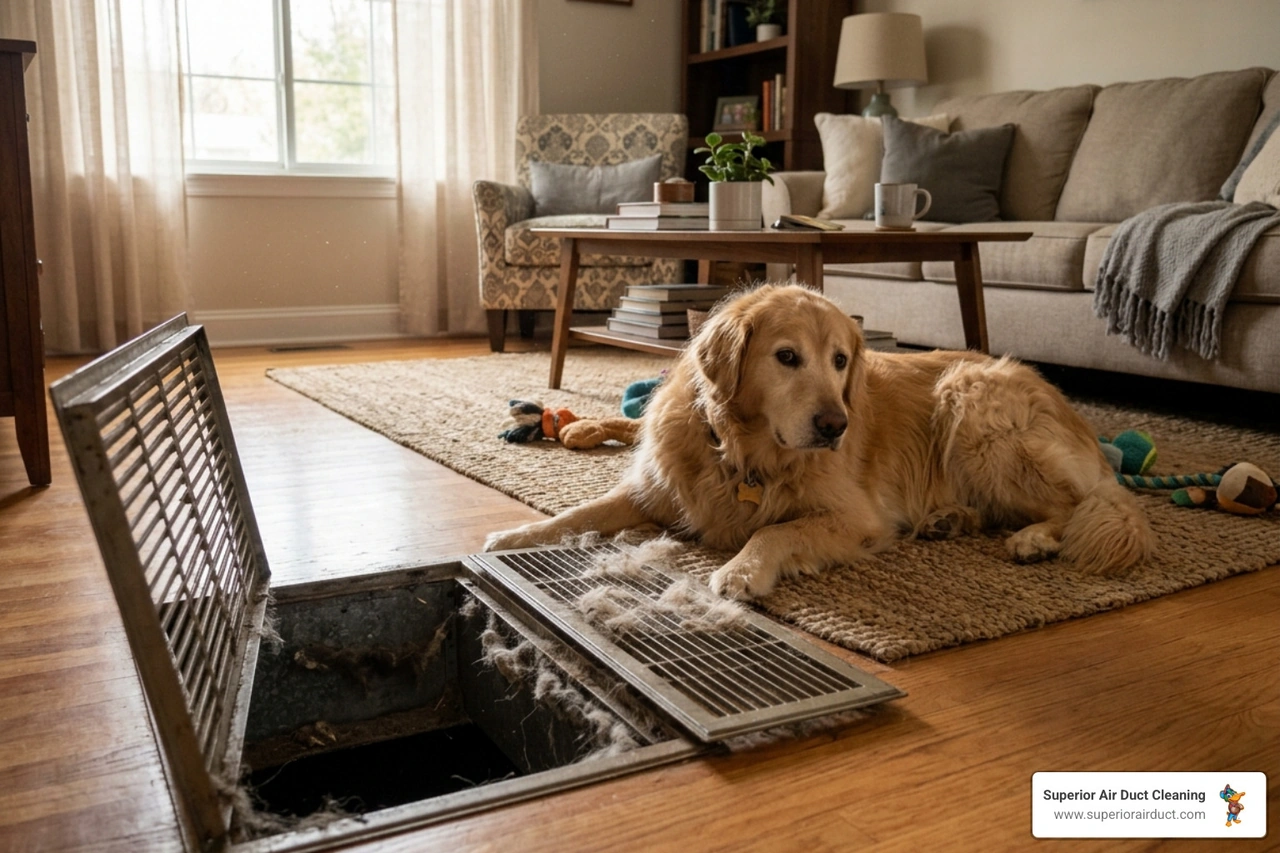
Most homeowners in Western Pennsylvania and Northeast Ohio assume that any duct cleaning service will leave their system cleaner than before. But that's only true when the right equipment is used correctly. When vacuum power falls short, agitating debris without extracting it can actually make indoor air quality worse — pushing fine particles like mold spores, dust mite fragments, and construction debris into the air you breathe every day.
The difference between a job that genuinely cleans your ducts and one that just stirs things up almost always traces back to one technical factor: vacuum power. Specifically, how much usable suction reaches the far end of your duct system while the job is actively in progress.
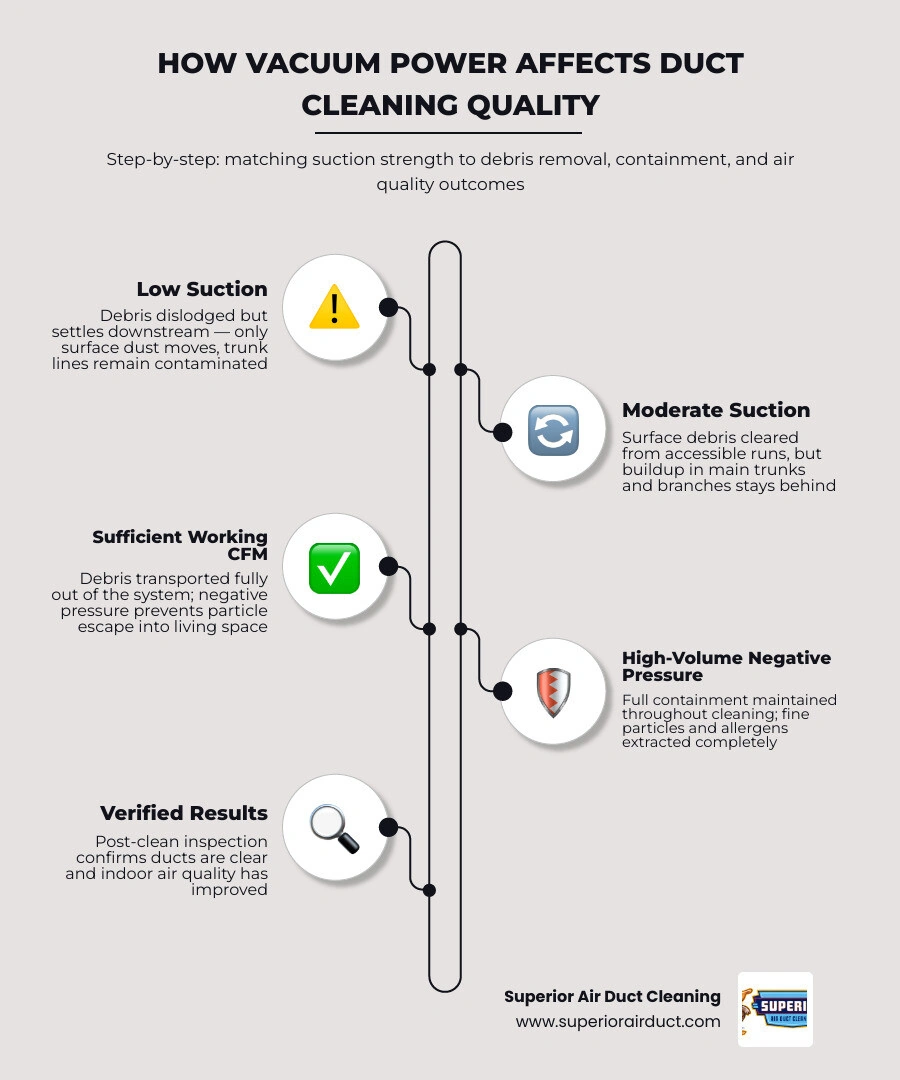
Quick look at how vacuum power affects duct cleaning quality:
• truck mounted vs portable duct cleaning comparison
• why equipment matters for duct cleaning results
The Physics of Suction: How Vacuum Power Affects Duct Cleaning Quality
When we talk about vacuum power in professional duct cleaning, we aren't just talking about a motor that hums loudly. We are talking about the fluid dynamics of air moving through a closed network of metal or flexible pathways. Your HVAC system is a complex web of supply vents, return lines, and large main trunk lines.
To clean this network successfully, a vacuum system must accomplish two mechanical goals simultaneously:
1. It must create enough suction to pull heavy particulate off the duct walls.
2. It must maintain a high enough airflow velocity to transport that debris over long distances without letting it drop back down.
This process is highly dependent on specialized machinery. To understand the tools required for this level of performance, you can read A Guide to Air Duct Cleaning Equipment.
Understanding Static Pressure and Debris Transport
To understand how vacuum power affects duct cleaning quality, we have to look at static pressure. Static pressure is the measure of a vacuum's resistance-overcoming force, typically measured in inches of water column (WC). Think of static pressure as the "torque" of the vacuum, while airflow volume (measured in Cubic Feet per Minute, or CFM) is the "speed."
As of 2026, industry standards emphasize that high CFM without sufficient static pressure is practically useless in a residential duct system. Here is why:
• Duct Resistance and Friction Loss: Every foot of ductwork, every 90-degree elbow, and every transition creates friction. As the vacuum hose stretches from our truck or portable unit into your basement, friction loss eats away at the suction.
• The Transport Velocity Threshold: To keep heavy debris like drywall dust, pet hair, and sand moving through a horizontal duct, the air must move at a specific speed. For light dust, a transport velocity of 300 to 500 Feet per Minute (FPM) is required. For heavier particulate, you need a transport velocity of at least 3,500 FPM.
• The Physics of Failure: If a vacuum system lacks the static pressure to overcome duct resistance, the transport velocity drops. The moment it falls below the threshold, the dislodged dust stops moving forward. It simply drifts a few feet down the line and re-settles in your main trunk line, leaving your system just as dirty as before.
Free-Air CFM vs. Working-Load CFM: Real-World Performance
One of the most common traps in the duct cleaning industry is the "CFM Deception." Many companies advertise the "free-air" CFM of their equipment. Free-air CFM is the volume of air the vacuum motor can move when it is sitting in a laboratory with absolutely no hoses, filters, or duct systems attached.
In the real world, the moment you attach a 50-foot hose and a multi-stage HEPA filter, the system is under a heavy working load. The table below illustrates how real-world resistance drastically reduces actual cleaning power:
• Standard Shop-Vac — Advertised Free-Air CFM: 150 – 300 CFM — Real-World Working-Load CFM: 50 – 100 CFM — Performance Impact: Completely inadequate; cannot maintain transport velocity beyond 2 feet.
• Budget Single-Motor Portable — Advertised Free-Air CFM: 2,000 CFM — Real-World Working-Load CFM: 1,100 – 1,400 CFM — Performance Impact: Drops 30% to 45% under load; fails to clean large main trunk lines.
• High-Performance Tri-Motor Portable — Advertised Free-Air CFM: 5,000 CFM — Real-World Working-Load CFM: 3,500 – 3,800 CFM — Performance Impact: Maintains excellent transport velocity; suitable for most residential systems.
• Commercial Truck-Mounted System — Advertised Free-Air CFM: 10,000 – 16,000+ CFM — Real-World Working-Load CFM: 8,000 – 12,000 CFM — Performance Impact: Massive volume margin; easily handles long hose runs and heavy debris loads.
When filter loading occurs during a job, dust accumulates on the vacuum's filters, further reducing suction. A system with a low working-load CFM will experience a rapid drop in performance, causing the containment field to collapse mid-job.
Equipment Comparison: Truck-Mounted vs. Portable Systems
To achieve the negative pressure required for a thorough clean, technicians rely on two main categories of equipment: portable negative-air machines and truck-mounted vacuum systems. Both have distinct roles in the field, and choosing the right one depends heavily on the layout and accessibility of your home.
For a detailed breakdown of these two options, check out our Truck-Mounted vs Portable Duct Cleaning Comparison.
How Vacuum Power Affects Duct Cleaning Quality in Portable Units
Historically, portable duct vacuums had a bad reputation. Early models often lacked the power to clean anything larger than a small apartment system. However, modern engineering has changed the landscape.
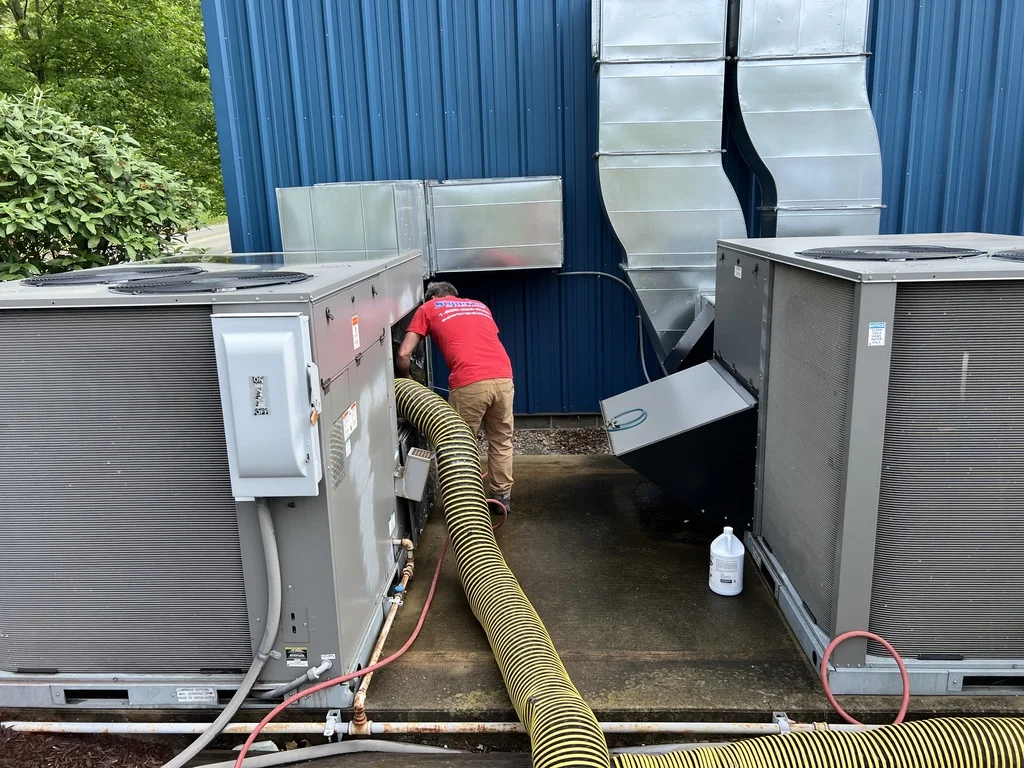
Today's high-end portable systems utilize a tri-motor architecture. By distributing the electrical load across three independent motors, these units can run on standard residential circuits without tripping breakers while still delivering a massive 5,000 CFM of airflow and up to 8 to 10 inches of static pressure.
To understand how these advanced systems maintain safety and suction in your home, you can read about How Our Air Duct Cleaning Machines Work.
• Pros of High-End Portables:
— Unmatched Accessibility: Perfect for high-rise condos in Pittsburgh, apartment complexes, or homes with limited driveway access where a truck hose cannot reach.
— Zero Thermal Loss: Because the unit is brought inside, there are no open doors or windows letting cold winter air or humid summer heat into your home.
— True HEPA Containment: These units employ a 3-stage filtration system ending in a medical-grade HEPA filter, ensuring that 99.97% of particles down to 0.3 microns are captured inside the machine.
• Cons of Portables:
— Lower Overall Volume: While a 5,000 CFM portable is incredibly strong, it still has less raw volume than a commercial truck-mounted system.
— Frequent Filter Maintenance: Because the collection bin is smaller, technicians must monitor and clean filters frequently to prevent suction loss.
Truck-Mounted Power and Large-Scale Systems
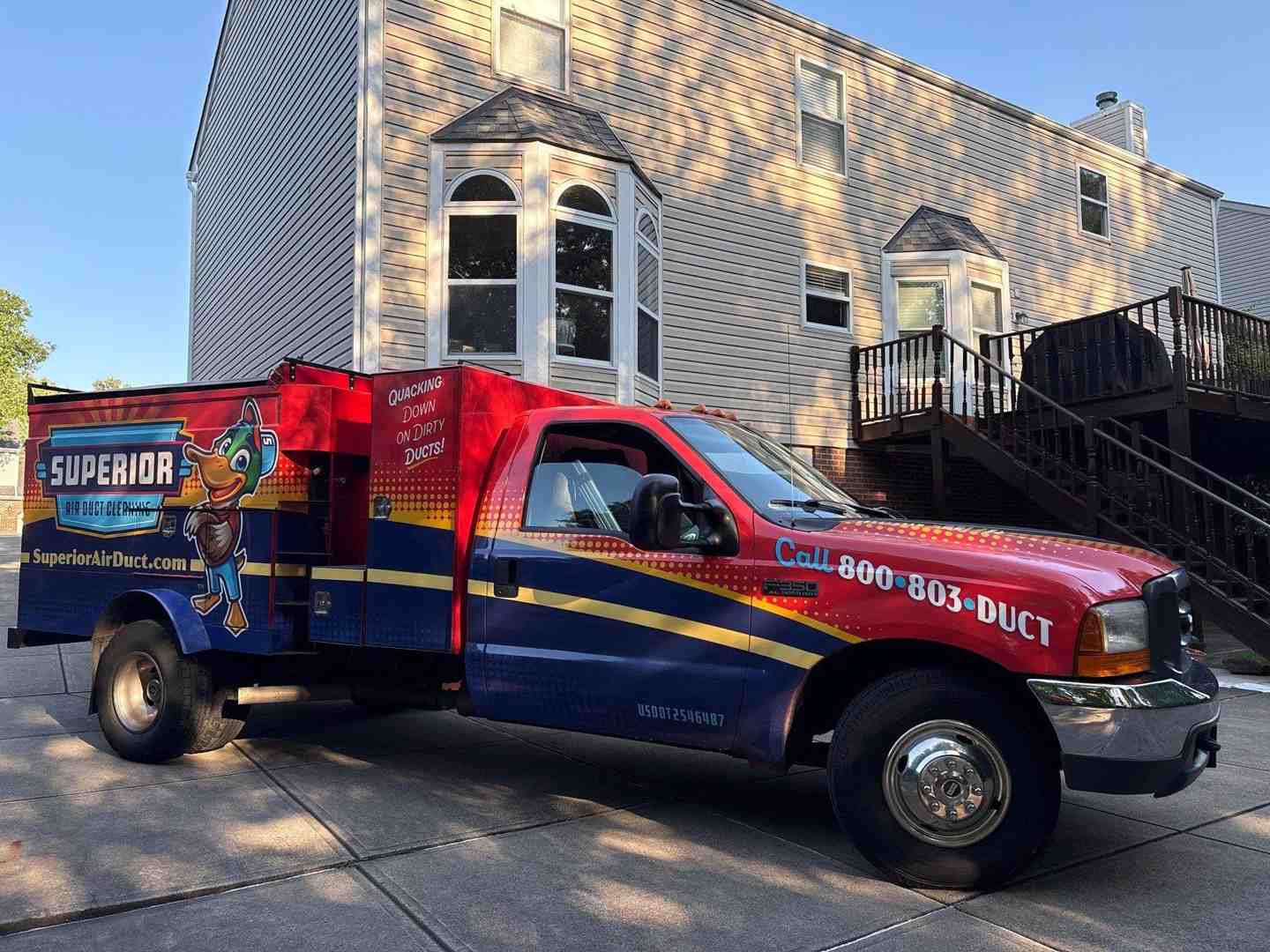
For the vast majority of suburban homes in Cranberry Township, PA, or Boardman, OH, truck-mounted vacuum systems represent the gold standard of duct cleaning. These systems are powered directly by the truck's gas or diesel engine, allowing them to generate airflows exceeding 16,000 CFM.
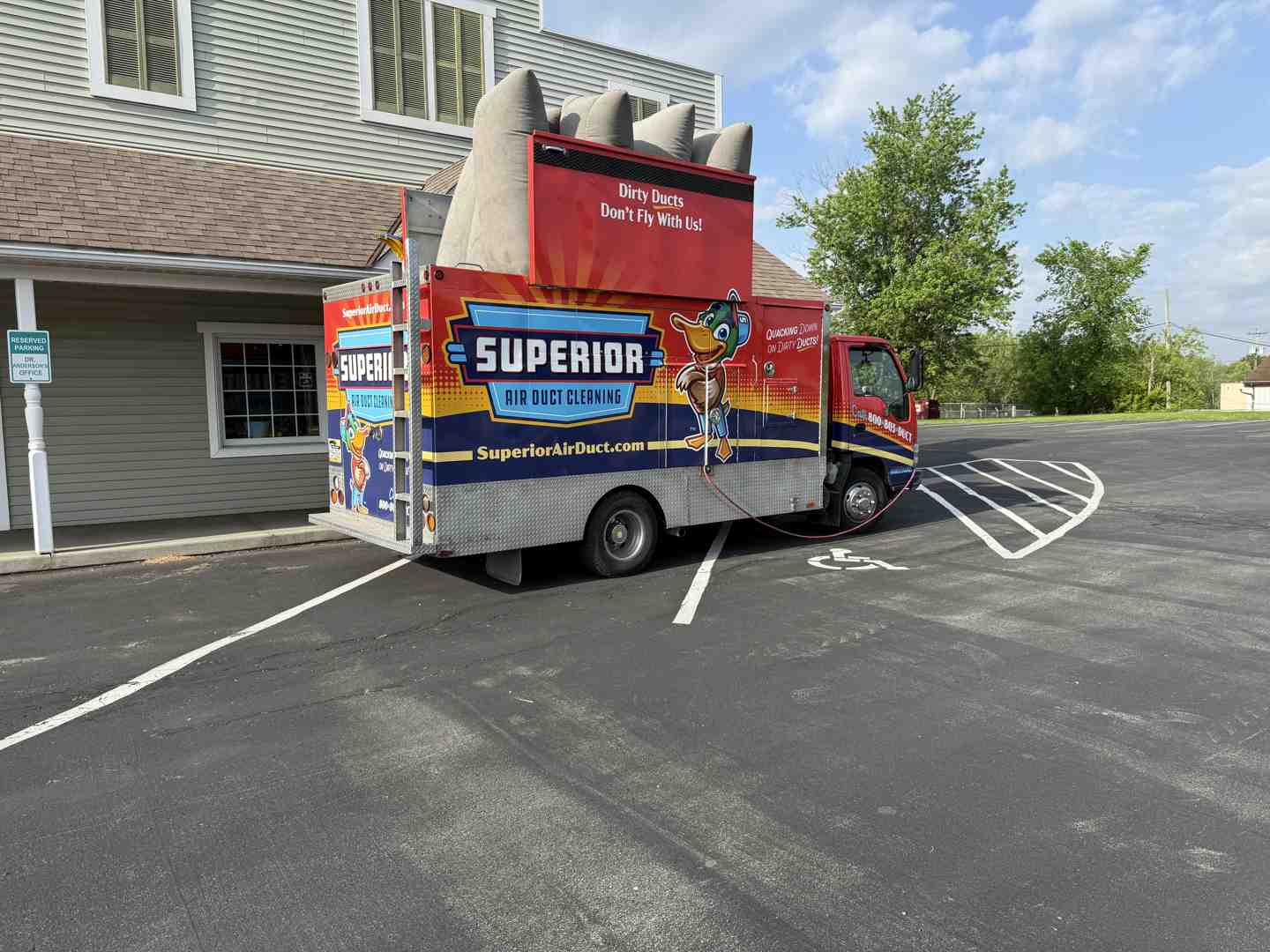
• Pros of Truck-Mounted Systems:
— Unrivaled Suction Power: The sheer volume of air moved by a truck-mount creates an incredibly strong containment zone. It easily pulls heavy debris out of large, complex trunk lines.
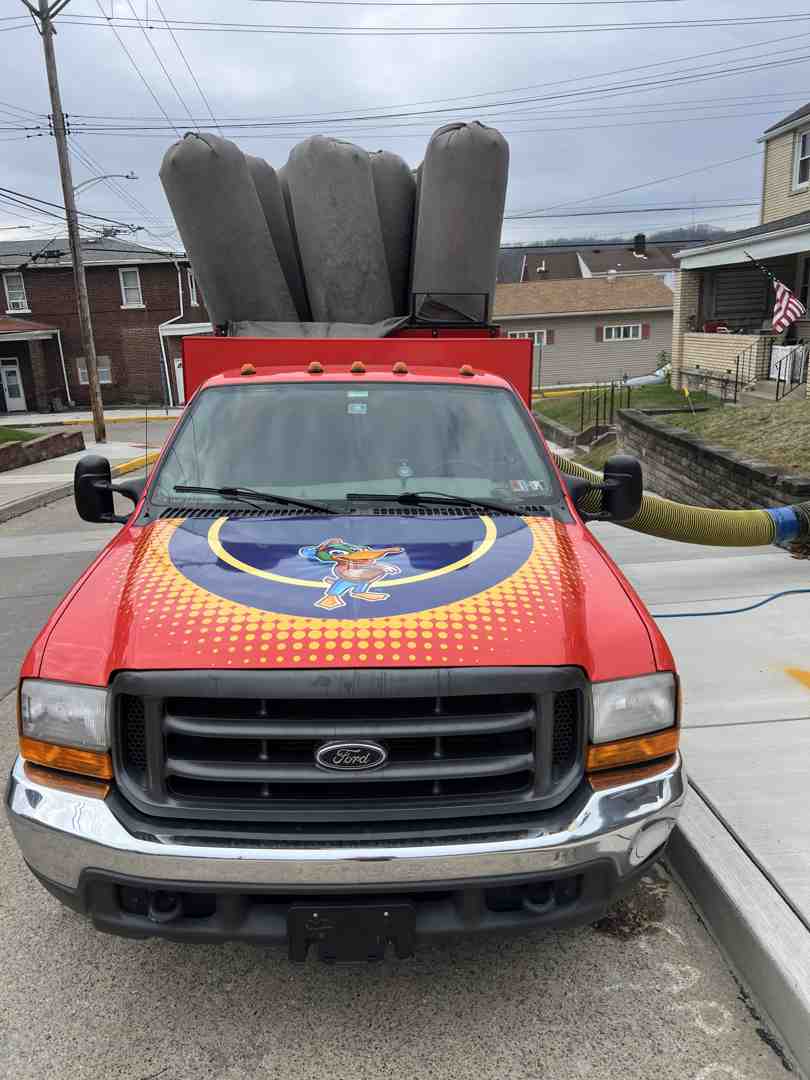
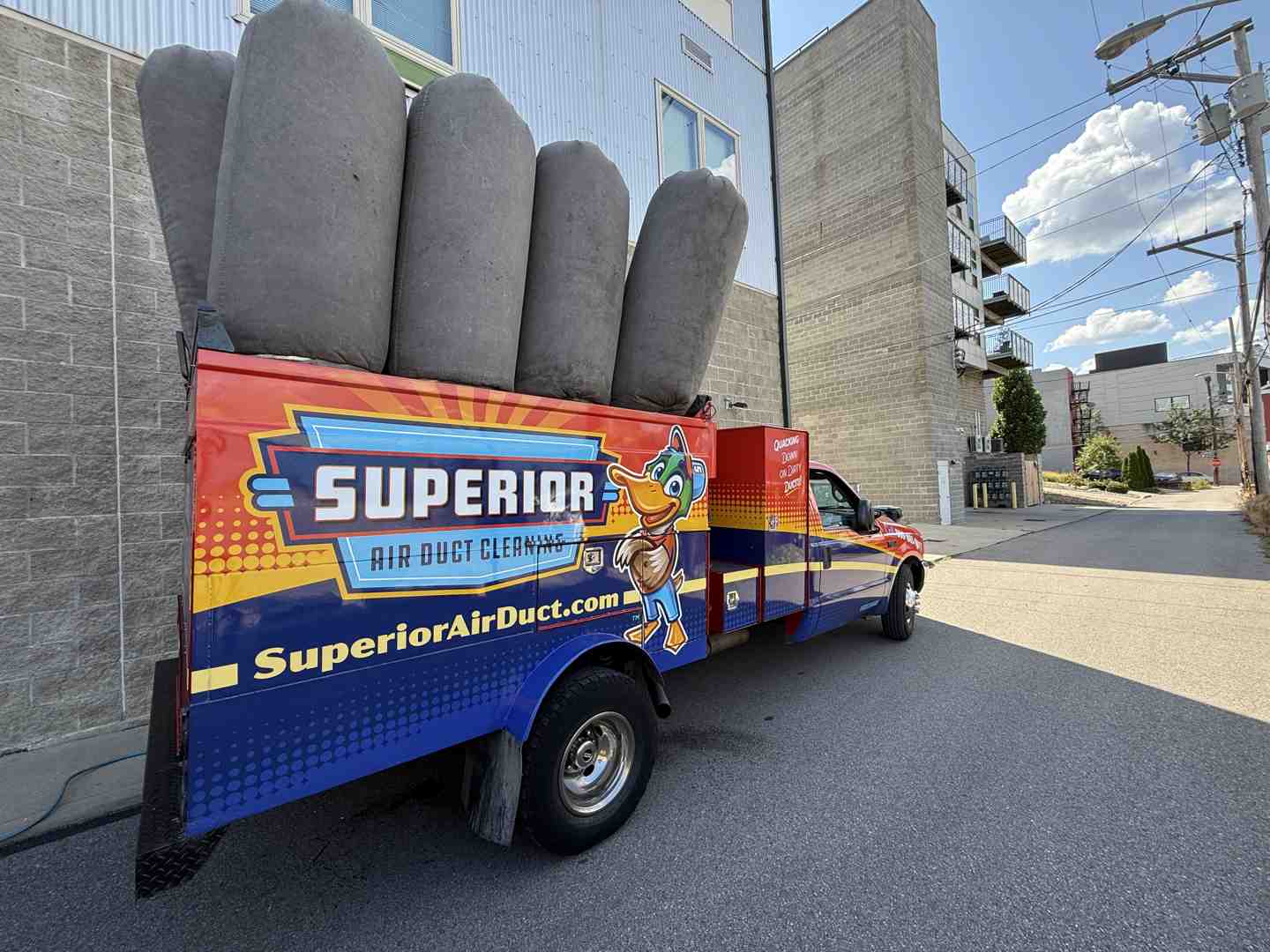
— Direct Outdoor Exhaust: Because the vacuum collector is mounted inside the truck, all dust and debris are pulled completely out of your home and deposited directly into the truck outside.
— Efficiency: The massive suction allows our team to complete a thorough cleaning in a shorter timeframe without sacrificing quality.
• Cons of Truck-Mounted Systems:
— Distance Limitations: If your HVAC system is located deep inside a large commercial building or high-rise structure, the physical length of the hose run can cause excessive friction loss, making a portable unit a better choice.
Cleaning Methods and the Risks of Inadequate Suction
The duct cleaning industry uses several different methods to agitate and remove dust. However, the effectiveness of these methods is entirely dependent on the vacuum power supporting them. To learn more about the industry's primary approaches, you can read about What Are the 3 Best Methods of Air Duct Cleaning.
Negative-Pressure Systems vs. Vacuum Agitators
There is a major difference between simply running a compressed-air tool down a duct and using a true negative-pressure system:
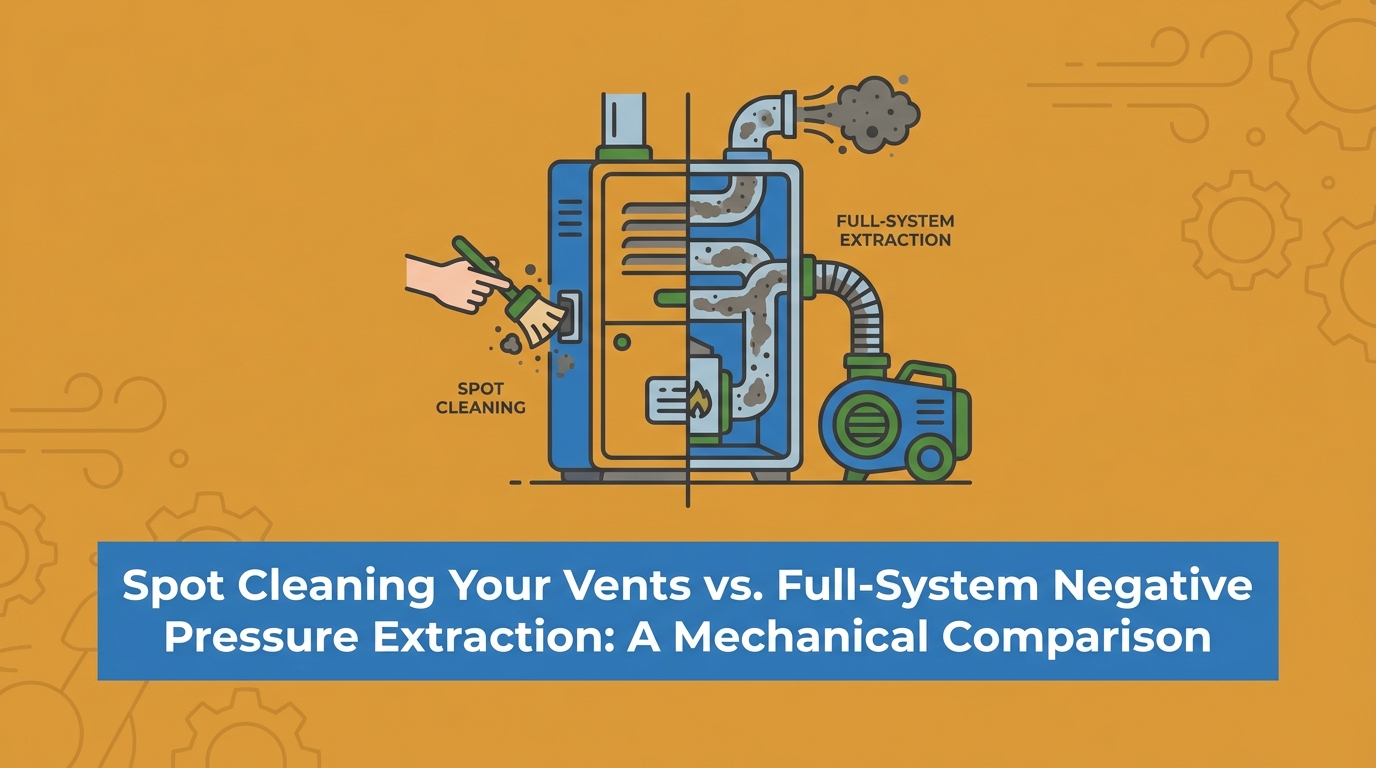
1. Vacuum Agitators (The Budget Method): This older, less effective method involves pushing a flexible hose with a spinning compressed-air tool on the end into your vents. The compressed-air tool spins rapidly, scraping dust off the walls, while a small vacuum built into the hose attempts to suck it up.
— The Risk: High-speed spinning compressed-air tools can easily catch on loose sheet metal, damage flexible ducts, or tear fiberglass duct boards. Furthermore, because there is no system-wide suction, the dislodged dust that escapes the small vacuum hose is free to settle deeper in your ductwork.
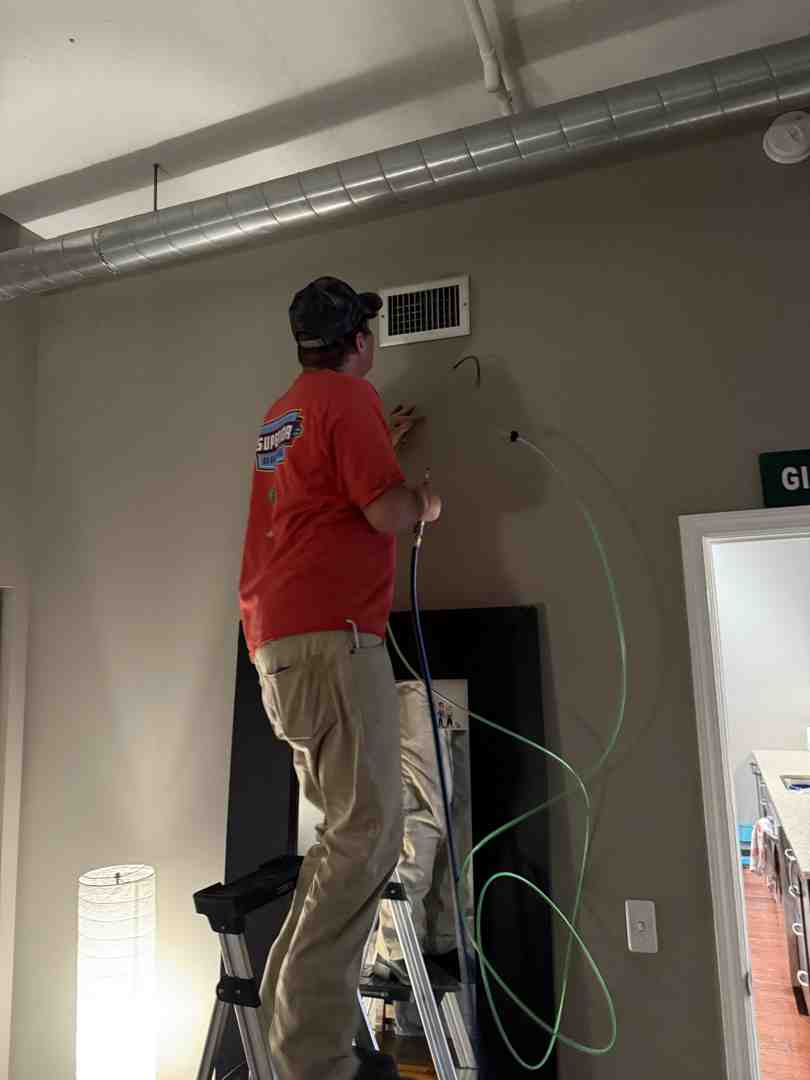
2. Negative-Pressure Systems (The Professional Standard): In this method, we seal your entire duct system and connect our high-power vacuum directly to the main trunk line. This pulls the entire duct envelope into a state of negative pressure. We then insert pneumatic whips and air sweeps through small access points. As these air-powered tools gently shake the dust loose, the constant, powerful vacuum suction immediately pulls the debris toward the collection system.
How Vacuum Power Affects Duct Cleaning Quality to Prevent Particle Re-Entry
The primary goal of negative pressure is containment. When a duct system is under negative pressure, air flows inward through any crack, seam, or register. This prevents dust from escaping into your living room during the cleaning process.
If a technician uses an underpowered vacuum, the negative pressure state can easily collapse the moment they begin agitating the dust. As debris clogs the vacuum's pre-filters, the suction drops. If the vacuum's CFM cannot outpace the air leaks in your duct system, the pressure inside the ducts becomes neutral or positive.
When this happens, the dust dislodged by the pneumatic whips will blow out of any unsealed register, coating your furniture, carpets, and air with fine particulate. Professional technicians prevent this by using a digital manometer to verify that a consistent negative pressure differential (ideally between -0.5 and -1.5 inches WC) is maintained throughout the entire cleaning cycle.
EPA Guidelines, Efficiency Gains, and Homeowner Best Practices
Duct cleaning is not a magic cure-all, and we believe in providing honest, evidence-based information to our customers. To understand the full scope of what a professional service entails, you can read our Ultimate Duct Cleaning Guide.
When to Clean and the Risks of Chemical Biocides
According to the U.S. Environmental Protection Agency (EPA), homeowners do not need to have their air ducts cleaned on a routine basis. Instead, the EPA recommends considering duct cleaning under specific, documented conditions:
• Visible Mold Growth: If there is substantial, visible mold growth inside your sheet metal ducts or on other components of your heating and cooling system.
• Vermin Infestation: If your ducts are infested with rodents, insects, or other pests.
• Excessive Clogging: If your ducts are clogged with large amounts of dust and debris, or if particles are actually being released into your home through your supply registers.
Furthermore, the EPA raises significant caution flags regarding the use of chemical biocides or sealants inside air ducts. No chemical biocides are currently registered by the EPA for use on internally-insulated duct systems.
Applying these chemicals can introduce harsh odors and respiratory irritants into your home. If a provider suggests sanitizing, it should only be done after physical debris removal is complete, using safe, approved methods. To learn how we safely handle this process, read How Our Technicians Accomplish Air Duct Sanitizing.
Preventing Contamination and Verifying Results
While cleaning only the air ducts has not been conclusively shown to improve overall HVAC efficiency, research suggests that cleaning the entire heating and cooling system (including coils, blowers, and heat exchangers) can restore system airflow, improve heat exchange, and extend equipment longevity. This can lead to noticeable energy savings and lower utility bills.
To prevent your ducts from becoming contaminated in the first place, we recommend these proactive steps:
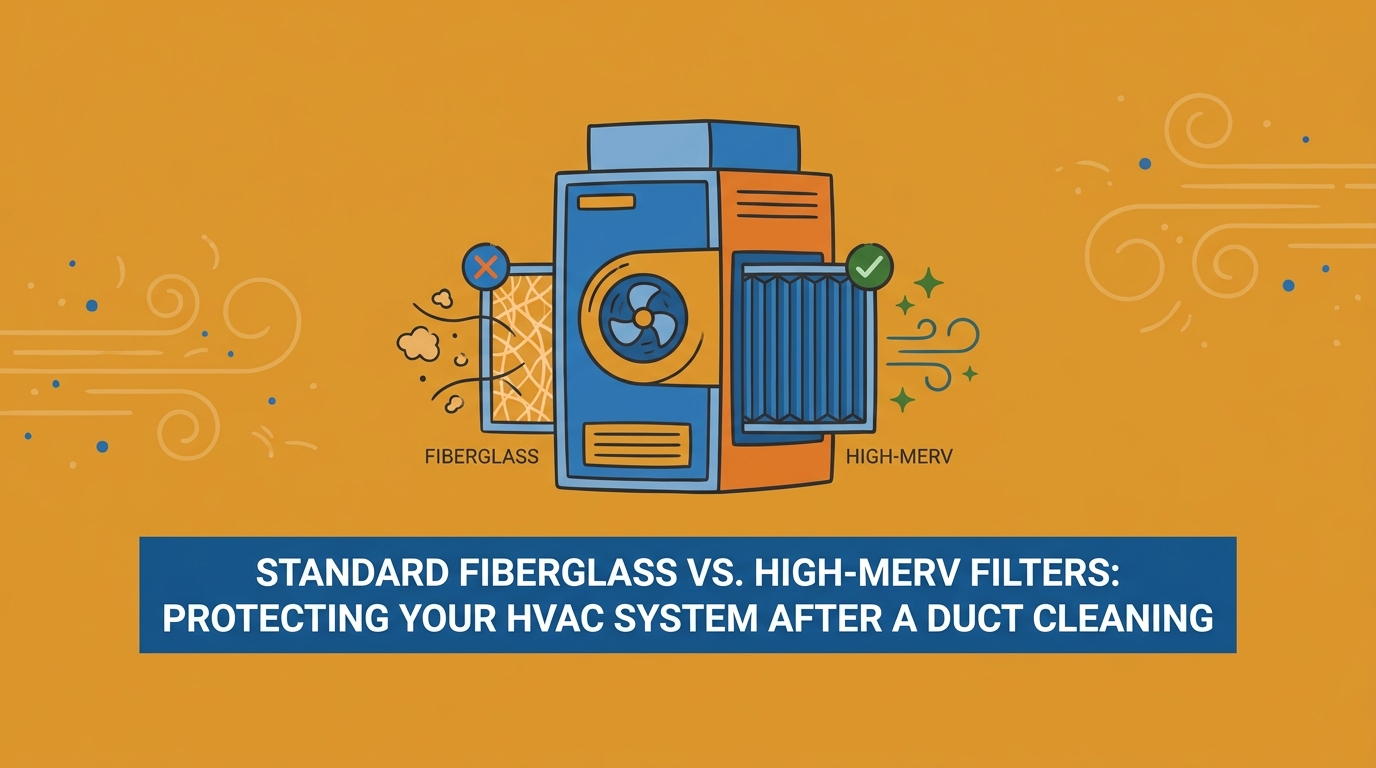
• Use High-Efficiency Filters: Change your HVAC filters regularly (every 30 to 90 days depending on pets and household size) and use the highest efficiency filter recommended by your system's manufacturer.
• Control Moisture: Ensure your condensate pans drain properly and promptly repair any water leaks inside your home to prevent mold growth.
• Seal Your Ducts: Ensure your return ducts are properly sealed to prevent dusty basement or attic air from being pulled into your system.
Once a professional cleaning is complete, you should always verify the quality of the work. For a step-by-step checklist on what to look for, check out our Expert Duct Cleaning Guide.
Frequently Asked Questions About Duct Cleaning Suction
How often should air ducts be cleaned in Western Pennsylvania?
While the EPA does not recommend routine cleaning for every home, industry groups like the National Air Duct Cleaners Association (NADCA) suggest having your system inspected every 3 to 5 years.
In Western Pennsylvania and Northeast Ohio, factors like humid summers, older home construction, pet dander, and recent home renovations (which introduce heavy drywall dust into the return vents) can accelerate dust accumulation, making more frequent cleanings beneficial.
Can low vacuum power actually make my indoor air quality worse?
Yes. If a service provider uses underpowered equipment (like a shop-vac or a cheap portable system) and combines it with aggressive brushing, they will loosen years of settled dust, mold spores, and allergens without successfully extracting them.
Once your HVAC fan turns back on, these newly loosened, highly mobile particles will be blown directly into your living spaces, severely degrading your indoor air quality.
How do I verify that my duct cleaning provider did a thorough job?
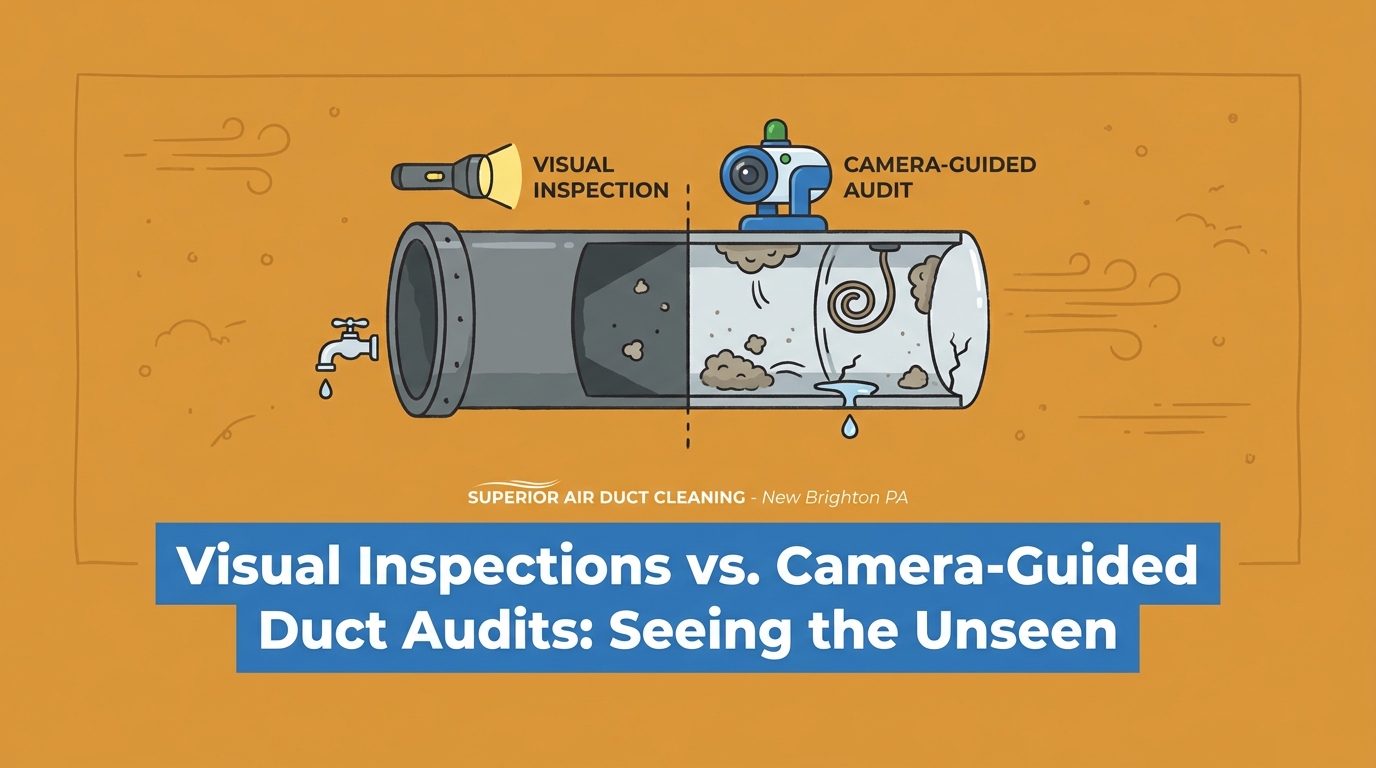
A reputable provider will always offer visual proof. You should request a post-cleaning visual inspection of the main trunk lines and branch ducts using a specialized mirror or a high-definition duct camera.
All supply and return registers should be clean, and there should be no visible debris left inside the system. Additionally, ensure that any access panels cut into your sheet metal ducts have been professionally sealed and secured with metal patches and screws.
Conclusion
At the end of the day, how vacuum power affects duct cleaning quality is a matter of simple physics. Without sufficient static pressure and a high working-load CFM, a duct cleaning service is simply rearranging the dust inside your home.
Whether you are in Pittsburgh, PA, Boardman, OH, or Cranberry Township, PA, we are committed to providing transparent, high-quality service using commercial-grade equipment that guarantees total containment and complete source removal.
To learn more about what to expect from a professional service in our region, check out our Professional Duct Cleaners Pittsburgh Guide.
Ready to experience the difference that professional-grade vacuum power makes? Schedule professional air duct cleaning today with our expert team and take the first step toward cleaner, healthier indoor air.

Customer Reviews


Superior Air Duct cleaning did a phenomenal job in a timely manner with the tech “Rich” being very professional ,personable and considerate of our property! He explained things as he proceeded and answered all our questions!
I LOVE that they provide before & after photos to see the difference. Give them a try… you won’t regret it
Pam T.
Robert was on schedule and communicated what time he would arrive. He was polite, professional, and respectful of our home. I wanted to wait a couple weeks before posting a review because I wanted to see if the duct cleaning actually made a difference. I am happy to say it did! I vacuum multiple times a week and have already noticed a significant reduction in the amount of dust cleaned up each time. As a home with pets, there will always be something to clean, but getting the ducts cleaned has definitely helped improve the air quality and reduce the dust.
alice A.
Technician Rob arrived early explained the days agenda and then proceeded to work methodically and meticulously over the next 6+ hours cleaning my ductwork. Courteous and professional they answered all of my questions and went above and beyond the call of duty. They even located an old dusty box of rat poison buried in our vents. My only regret is not finding these guys sooner. As a realtor of 22 years and owner of a newly purchased (now dust free) home I highly recommended!
Eric K.
Excellent service! I’ve used them to clean out my air ducts as well as my dryer vent duct and they are excellent. I was very pleased with both jobs and will continue to use them in the future. Great communication as well- from the time I scheduled the appointment until they were at my door.
Erika C.
We had such an amazing experience with Superior Air Duct Cleaning. They were so nice and friendly and did an amazing job. I loved seeing the before and after pictures. Besides doing an amazing job cleaning our air ducts they were so quick at responding and setting up the appointment. We will definitely be using them in the future.
Amanda C.