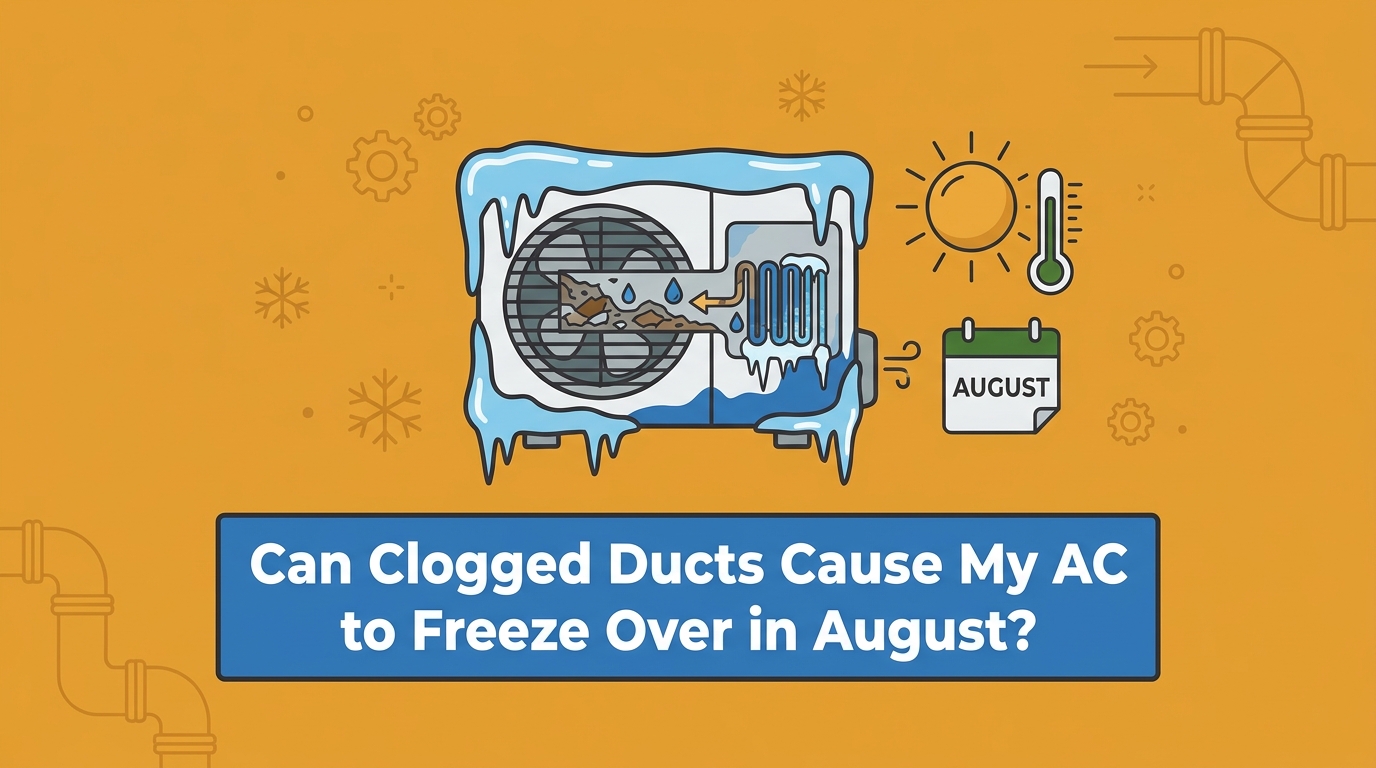
Why Is My AC Freezing Over in the Middle of August?
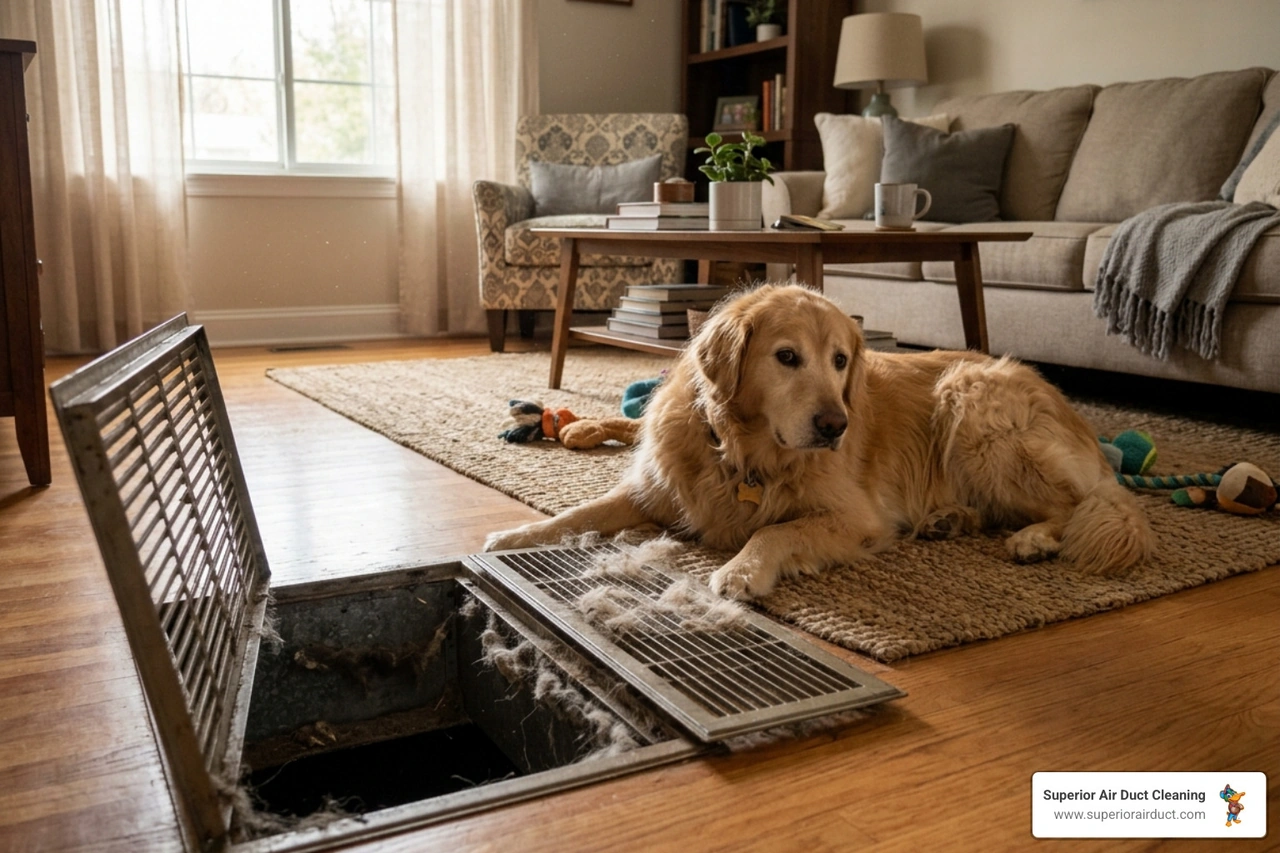
Is your air conditioner actually broken, or is it just suffocating under a thick layer of dust? If you find yourself asking, "Can clogged ducts cause my AC to freeze over in August?" the short answer is a definitive yes. While many homeowners immediately suspect a refrigerant leak or a failed compressor when they see ice forming on their unit, severe airflow restriction is often the hidden culprit. As the summer progresses, dust, pet hair, and debris accumulate deep within your ventilation system. By the time late summer arrives, this buildup can completely choke off the air your system needs to function.
Evaluating your ventilation system for airflow issues is a critical first step before assuming your air conditioning unit is permanently damaged. Taking care of your indoor air quality through professional air duct cleaning can often resolve the underlying mechanical stress that causes these end-of-season breakdowns. In neighborhoods across New Brighton PA, we frequently see perfectly functional air conditioners freeze solid simply because they cannot breathe.
How Your Air Conditioner Actually Cools Your Home
To understand why a dirty duct system leads to a block of ice on your air conditioner, you first have to understand how the equipment operates. Most people believe that an air conditioner "creates" cold air and pumps it into the living space. In reality, the system works based on the principles of thermodynamics. An air conditioner does not add cold air to your home; it removes heat from the indoor air and transfers that heat outside.
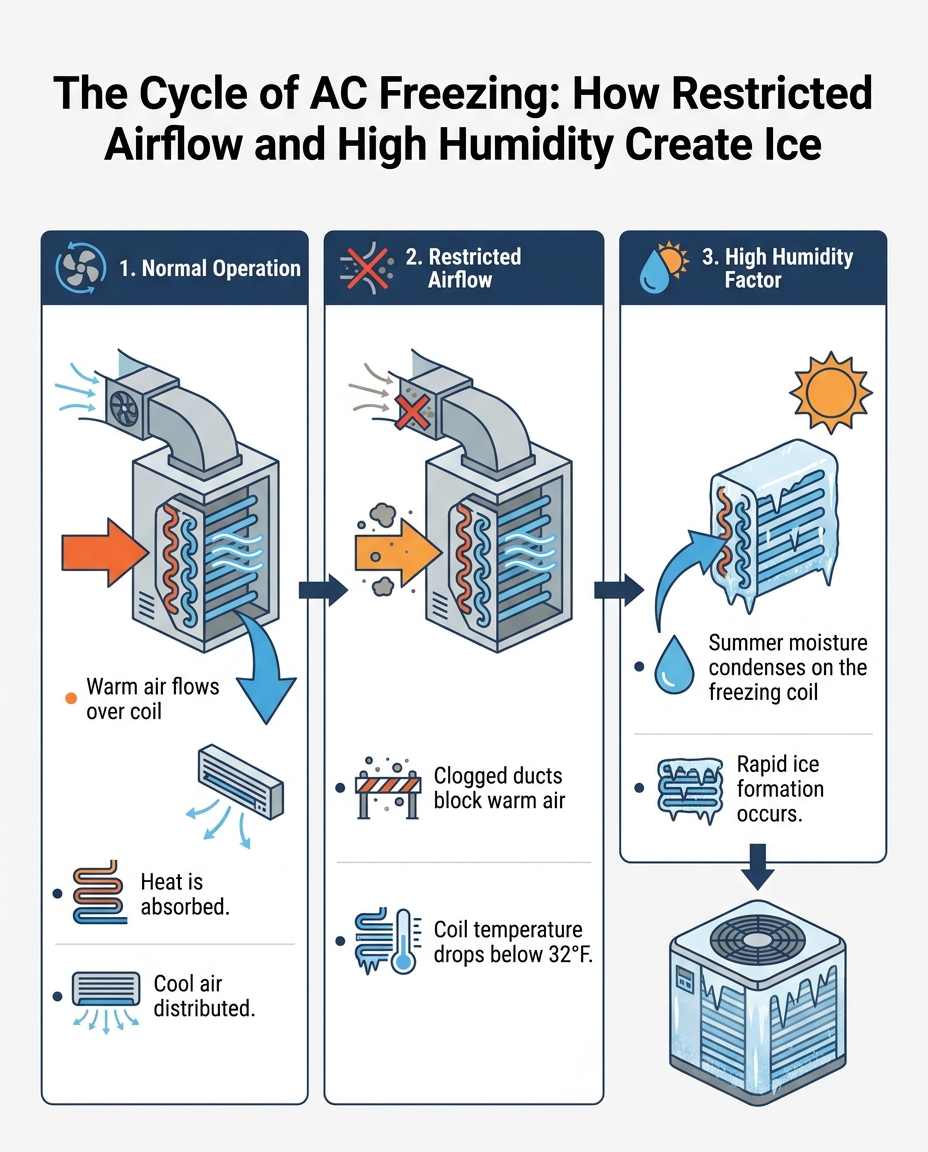
The central component in this process is the evaporator coil, which sits inside your indoor air handling unit. This coil is filled with a specialized chemical refrigerant. As warm air from your home is pulled through the return ducts and blown over the evaporator coil, the refrigerant absorbs the heat. The newly cooled air is then pushed back out through your supply vents. This entire process relies on a constant, uninhibited volume of warm air flowing over the coil. Without that steady stream of warm air bathing the metal fins, the internal temperature of the system drops drastically.
The Role of Heat Exchange in Cooling
The Department of Energy defines efficient heat exchange as a delicate balance between the temperature of the refrigerant and the volume of room air passing over it. When this balance is disrupted, the system fails. The refrigerant inside the evaporator coil is incredibly cold. It requires the heat from your home's air to keep its temperature above the freezing point of water. If restricted airflow prevents heat exchange from occurring, the temperature of the coil plummets. It is this specific failure in the heat exchange process that sets the stage for a frozen unit, turning a minor maintenance oversight into a major system failure.
The Connection Between Restricted Airflow and Evaporator Coils
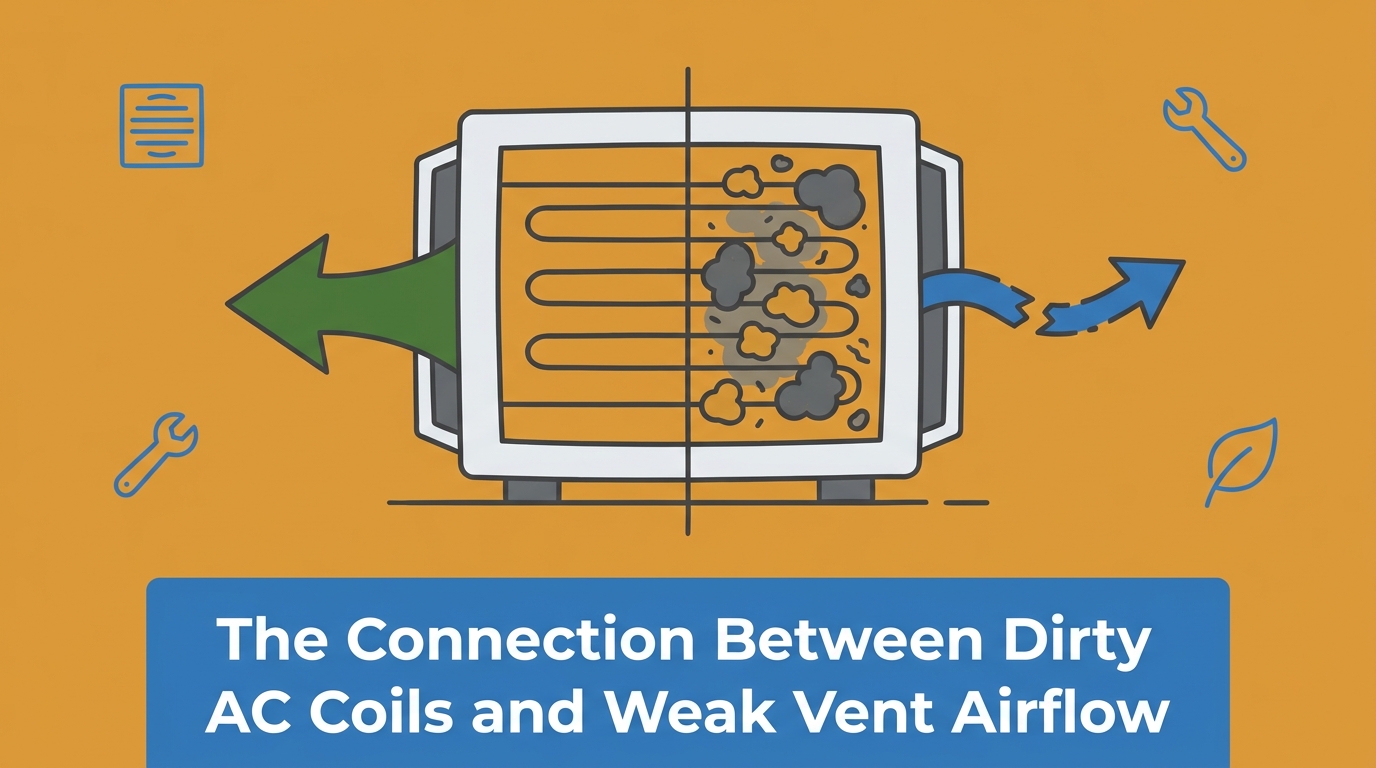
The physics of cooling are directly impacted by the physical blockages inside your ductwork. Over the years, your ductwork acts as a collection system for every airborne particle in your home. Dust mites, pet dander, construction debris, and everyday dirt settle into the ridges and corners of the metal and flex ducting. As this layer grows thicker, the pathway for air narrows.
When airflow is restricted, the evaporator coil temperature drops below 32 degrees Fahrenheit. This sets off a destructive chain reaction. The overly chilled coil begins to freeze the ambient condensation that naturally forms during the cooling process. A thin layer of frost develops first. Because frost acts as an insulator, it further restricts the heat exchange process, causing the system to get even colder. Soon, that thin layer of frost becomes a solid block of ice.
A typical pattern we see when evaluating systems is a homeowner who has many questions about why their system failed suddenly. Once a technician thoroughly answers those questions and performs an air duct inspection, the root cause is almost always discovered deep within the ventilation network. It is vital to recognize that a frozen coil is usually a mechanical failure driven by environmental buildup, not necessarily a broken AC component. Restricted airflow preventing heat exchange is the direct trigger for this icy cascade.

Why Late Summer Triggers AC Freezing in Western Pennsylvania
You might wonder why your air conditioner runs perfectly in June and July, only to freeze solid in the middle of August. The answer lies in the cumulative effect of summer usage and specific regional weather patterns. By the time late August arrives, your air conditioner has likely been running continuously for months. This constant circulation pulls maximum amounts of dust, pollen, and allergens into the ductwork. If the ducts were already dirty in the spring, the late August / end-of-season cooling demand pushes the system past its breaking point.
Furthermore, August in Western Pennsylvania often brings exceptionally high humidity levels. This regional climate factor plays a massive role in the freezing process. High humidity means there is a significant amount of moisture suspended in your indoor air. When this moisture-heavy air hits an evaporator coil that has dropped below freezing due to restricted airflow, the condensation turns to ice almost instantly.
The combination of maximum dust accumulation and peak atmospheric moisture creates the perfect storm for system failure. The heavy humidity provides the exact moisture needed to rapidly form thick ice on an airflow-starved coil. This is why late summer is the most common time for this specific type of breakdown, leaving homeowners sweltering precisely when they need relief the most.
What to Do (and Avoid) When You Discover a Frozen Coil
Discovering a block of ice on your indoor AC unit can be alarming. Your immediate actions dictate whether the system recovers or suffers permanent, catastrophic damage. Diagnosing and restoring proper airflow requires professional evaluation, but there are immediate steps you must take to protect your equipment.
The essential steps to take:
• Turn off the AC immediately: Switch your thermostat from "Cool" to "Off." Continuing to run a frozen system forces the compressor to pump liquid refrigerant instead of gas, which will destroy the compressor motor.
• Turn the fan to "On": Leave the system fan running. This forces whatever warm air is available in the home to blow over the ice, helping it melt naturally and safely into the condensate drain pan.
• Check your air filter: While you wait for a professional, check the main return filter. If it is completely caked in dirt, replace it. However, if the ducts themselves are blocked, a clean filter will not solve the problem.
• Schedule a professional evaluation: A technician needs to measure the airflow and inspect the ductwork to find the deep blockages causing the restriction.
What you must avoid:
• Do not chip away the ice: Never use a knife, screwdriver, or ice pick to break the ice off the coil. The metal fins and copper tubing are incredibly delicate. One slip will puncture the coil, releasing all the refrigerant and ruining the unit.
• Do not use a heat gun or hair dryer: Applying high, direct heat to frozen, pressurized metal components is dangerous. It can crack the tubing or melt the surrounding plastic drain pans and electrical housings.
• Do not ignore the root cause: Simply letting the ice melt and turning the system back on is a temporary fix. If the airflow restriction is not addressed, the unit will freeze again within hours.
Homeowners in New Brighton PA who follow these safety guidelines protect their investments and avoid turning a solvable airflow issue into a total system replacement.
Why Standard Cleaning Isn't Enough for Severe Airflow Blockages
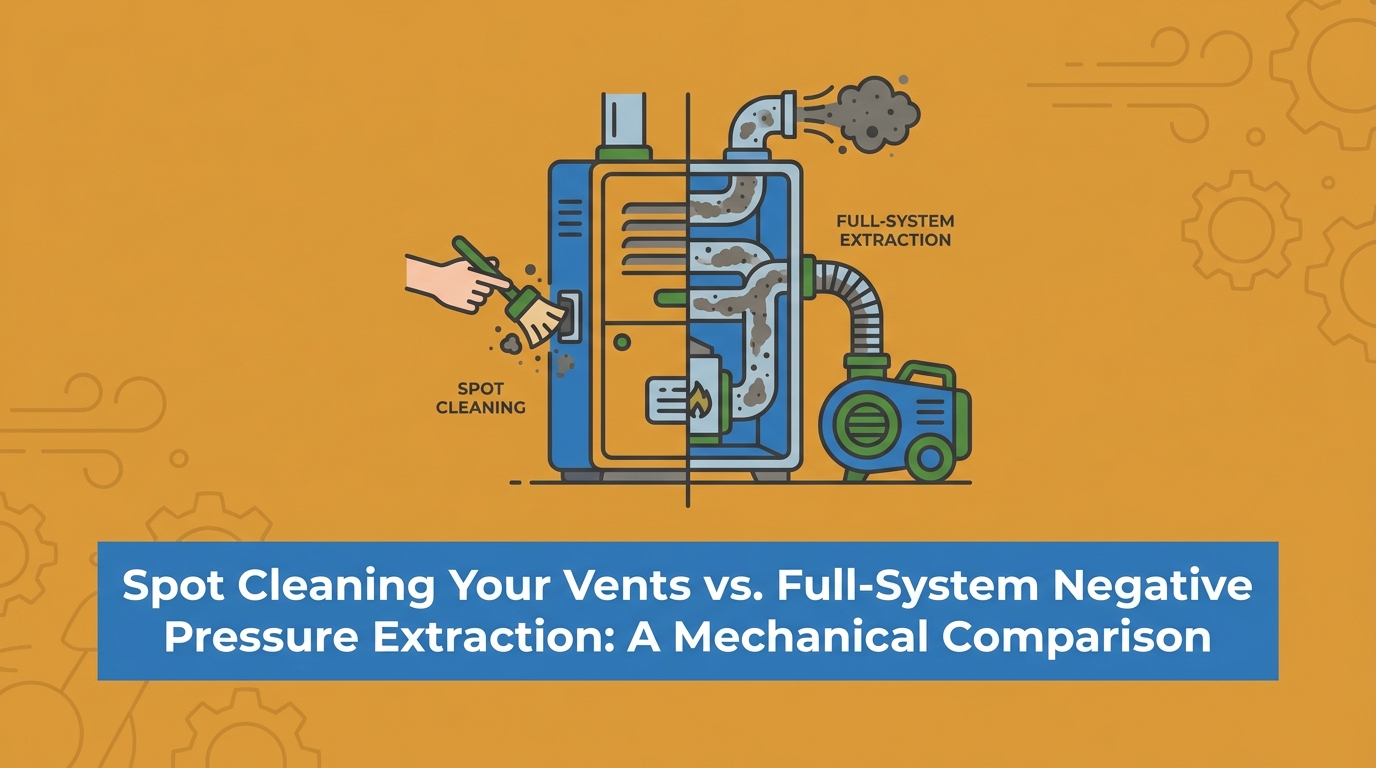
Not all duct cleaning methods are created equal, especially when dealing with blockages severe enough to freeze an air conditioner. There is a massive difference between a standard dirty filter and deep, compacted ductwork blockages that have hardened over years or even decades. When dealing with severe airflow restriction, standard portable vacuums simply lack the power to dislodge the debris.
In one instance we encountered, a home with 18-year-old ducts that had never been cleaned was suffering from severe allergen buildup and poor airflow. Once the deep cleaning process was fully explained and executed with high-powered equipment, the underlying restriction was finally resolved. Instantly restoring full airflow is the only way to permanently stop the freezing cycle.
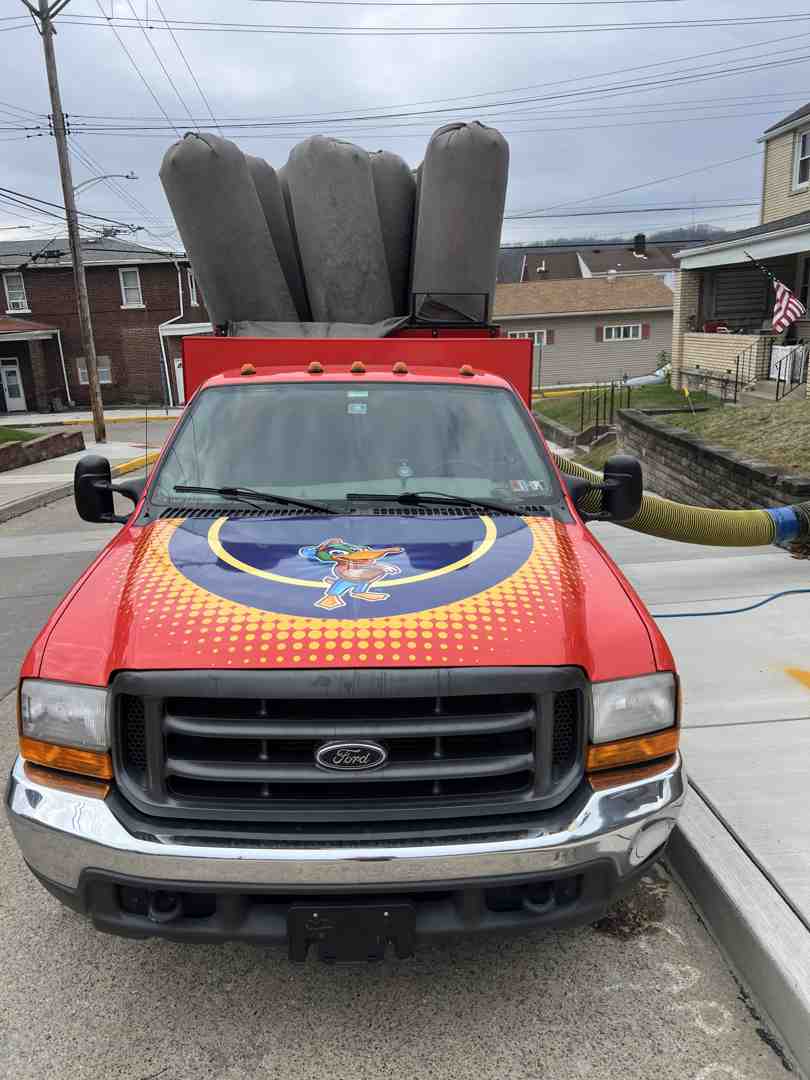
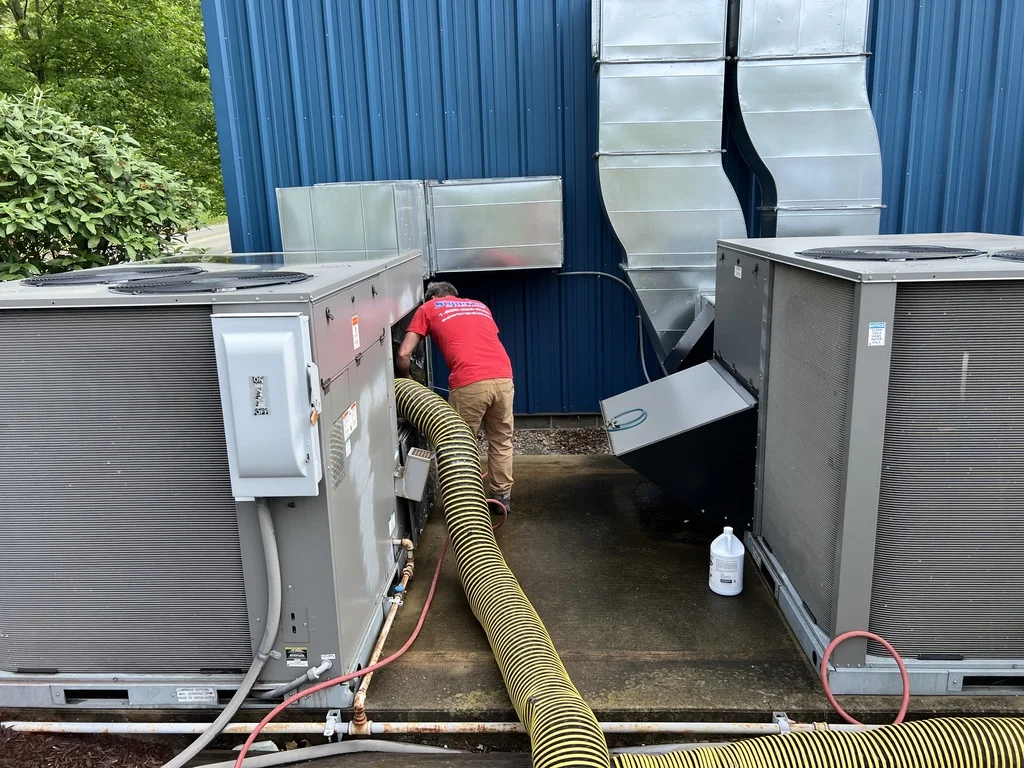
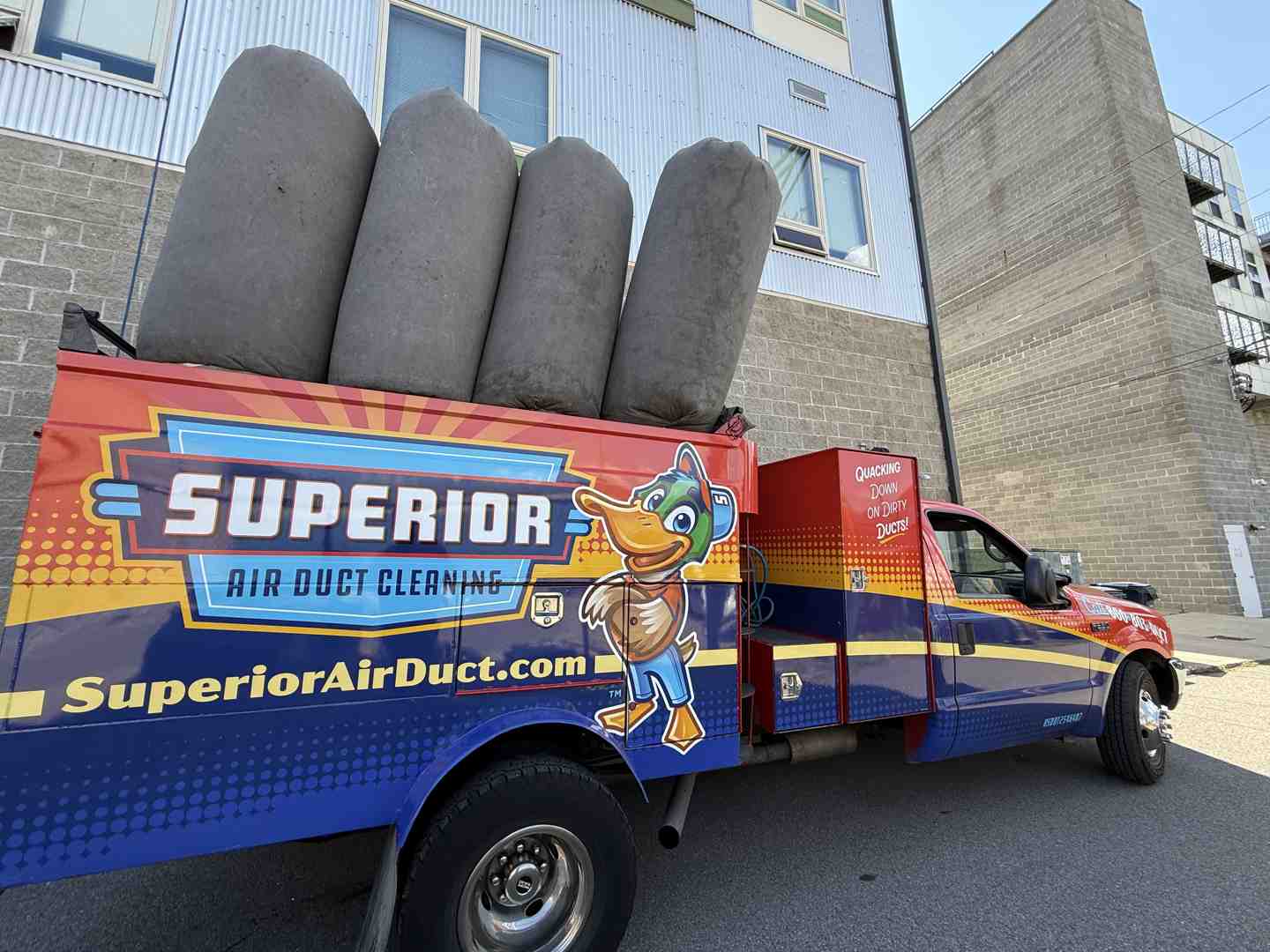
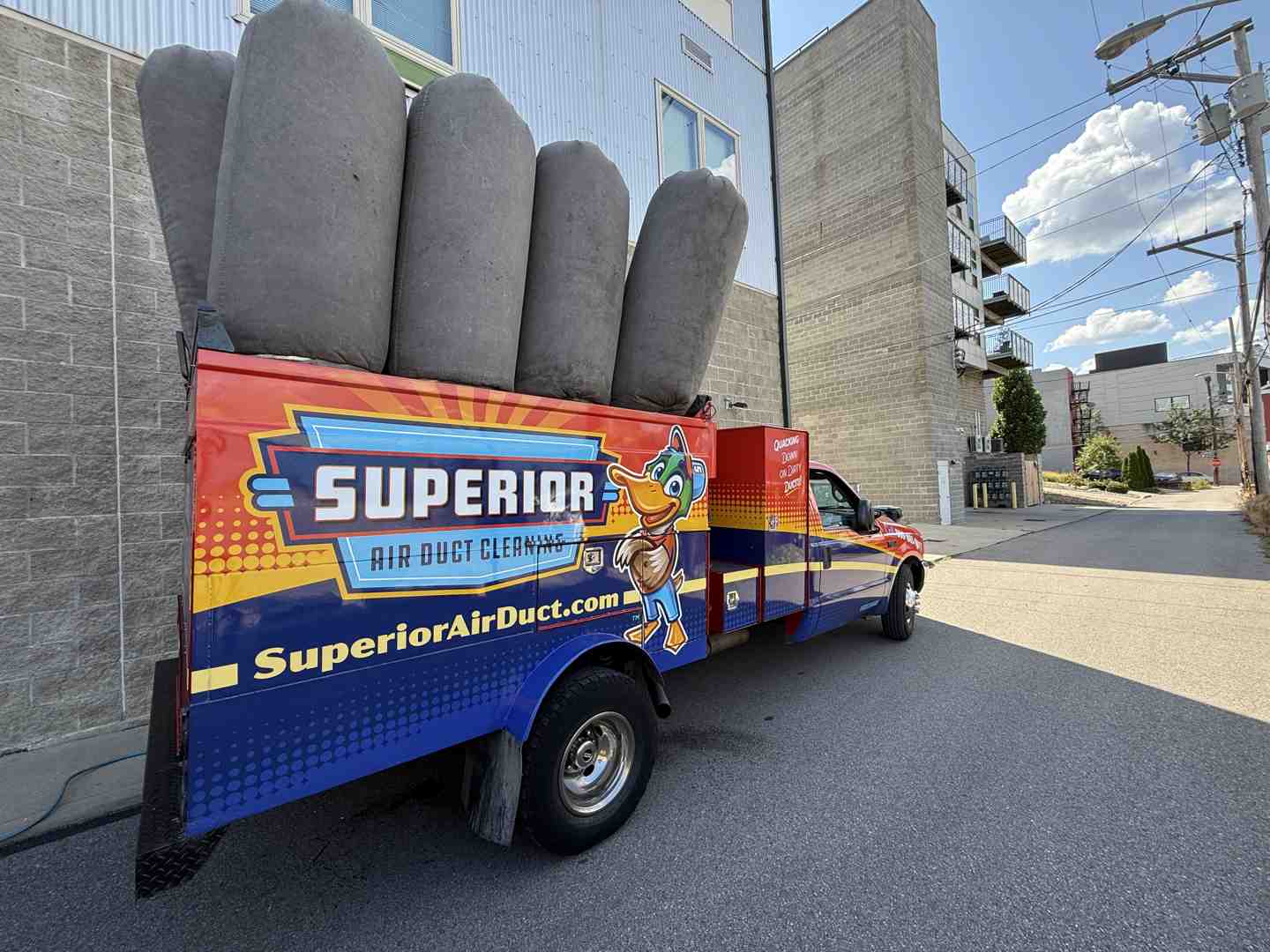
Positioning high-powered, truck-mounted extraction as the definitive solution is critical because it creates the massive negative pressure required to clear deep ductwork blockages. Weak portable units might clean the first few feet of a vent, but they leave the heavy, compacted dirt in the main trunk lines untouched.
• Suction Power — Portable Cleaning Units: Limited to standard household electrical output. — Truck-Mounted Extraction: Powered by a vehicle engine, creating massive negative pressure.
• Debris Removal — Portable Cleaning Units: Often leaves heavy, compacted dirt in the main trunk lines. — Truck-Mounted Extraction: Pulls heavy debris, pet hair, and compacted dust out of the home entirely.
• Airflow Restoration — Portable Cleaning Units: Minimal improvement for severely blocked systems. — Truck-Mounted Extraction: Fully restores the volume of air needed to prevent coil freezing.
• Best For — Portable Cleaning Units: Light surface dusting of register covers. — Truck-Mounted Extraction: Resolving late August / end-of-season cooling failures.
Preventing Future AC Freezes with Proper Duct Maintenance
Transitioning from a reactive mindset to a proactive one is the best way to protect your HVAC system. Once your ducts are professionally cleared and your airflow is restored, maintaining that baseline is relatively simple. Establishing a routine maintenance schedule prevents the cumulative dust buildup that leads to restricted airflow preventing heat exchange.
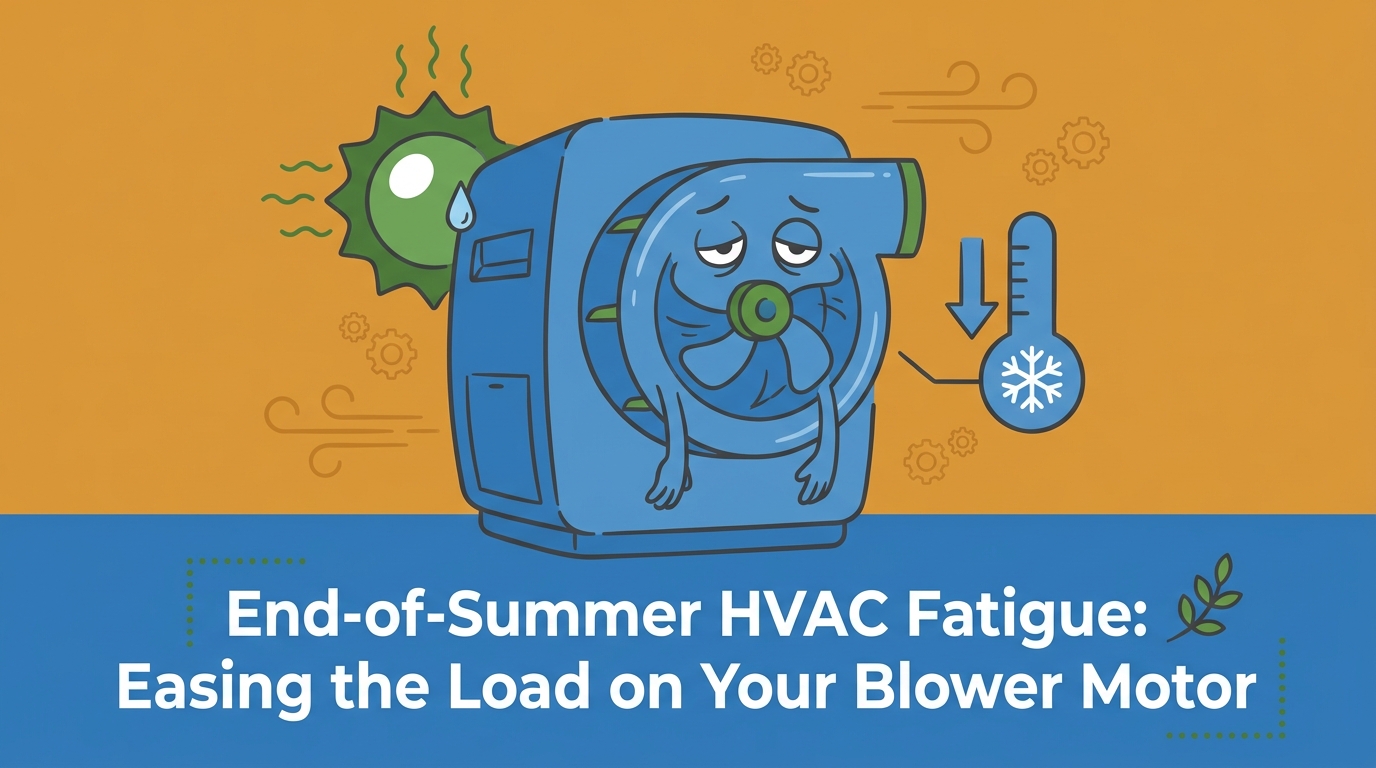
Clean ducts significantly reduce the workload on your HVAC system. When the blower motor doesn't have to fight against compacted debris to push air through the house, the entire system runs cooler and uses less electricity. This reduced strain can potentially extend the lifespan of your expensive heating and cooling equipment by years.
Furthermore, maintaining proper airflow can help your systems qualify for optimal energy efficiency. While specific programs vary, general utility incentives and federal tax credits often apply to high-efficiency systems—but those systems only reach their rated efficiency if the ductwork is clear. A high-efficiency AC attached to clogged ducts operates just as poorly as an outdated unit. We highly encourage scheduling an evaluation for duct cleaning in New Brighton before the final weeks of summer heat push your system to the brink.
Frequently Asked Questions About Clogged Ducts and AC Freezing
Can dirty air ducts cause my AC to freeze?
Yes, dirty air ducts are a primary cause of frozen air conditioners. Dirt and debris physically block the pathway of air through your ventilation system. This restricts the warm airflow needed to keep the evaporator coil above freezing. Without that warm air, the coil drops below 32 degrees, causing ambient condensation to freeze solid.
What causes an AC evaporator coil to freeze up in summer?
The two primary culprits for a frozen evaporator coil in the summer are severely restricted airflow and low refrigerant levels. Restricted airflow is usually caused by clogged ductwork, a filthy air filter, or blocked return vents. Low refrigerant, caused by a chemical leak in the copper lines, also causes the pressure and temperature inside the coil to drop below freezing.
Will cleaning air ducts help my AC run cooler?
Cleaning your air ducts restores proper airflow, which directly allows the system to remove heat more efficiently. When the blower motor can push the correct volume of air over the evaporator coil, the system cools the air properly and distributes that conditioned air effectively throughout every room in your home, resulting in a noticeably cooler living space.
Why does my AC freeze in high humidity?
High humidity means there is excess moisture suspended in your indoor air. When this heavily moistened air comes into contact with a cold evaporator coil, the water condenses on the metal fins. If your system is suffering from restricted airflow, the coil temperature drops below freezing, causing that heavy condensation to rapidly turn into a thick block of ice.
Does duct cleaning improve AC airflow?
Yes, professional duct cleaning directly improves AC airflow. By removing deep blockages, compacted dust, and pet dander with high-powered extraction equipment, you widen the pathway for air to travel. This directly increases the volume of air moving through the return and supply vents, relieving static pressure on the blower motor.
How can I tell if my frozen AC is caused by ducts or a refrigerant leak?
Both issues require a professional diagnosis, as they present with similar symptoms. However, if you notice heavy dust buildup around your vent covers, weak airflow coming from the registers, or if it has been years since your last duct cleaning, these signs strongly indicate an airflow issue rather than a refrigerant leak.
Restore Your Airflow and Protect Your AC Today
A frozen air conditioner is almost always a symptom of a much larger airflow problem hidden within your walls. Addressing the root cause of restricted airflow is vital before the end of the summer season forces your equipment into a permanent failure. If you are dealing with ice on your unit, weak airflow, or excessive dust in your New Brighton PA home, do not wait for the system to break down completely. Schedule a professional evaluation today to clear those deep blockages, restore your system's health, and ensure your home stays comfortable all season long.

Customer Reviews


Superior Air Duct cleaning did a phenomenal job in a timely manner with the tech “Rich” being very professional ,personable and considerate of our property! He explained things as he proceeded and answered all our questions!
I LOVE that they provide before & after photos to see the difference. Give them a try… you won’t regret it
Pam T.
Robert was on schedule and communicated what time he would arrive. He was polite, professional, and respectful of our home. I wanted to wait a couple weeks before posting a review because I wanted to see if the duct cleaning actually made a difference. I am happy to say it did! I vacuum multiple times a week and have already noticed a significant reduction in the amount of dust cleaned up each time. As a home with pets, there will always be something to clean, but getting the ducts cleaned has definitely helped improve the air quality and reduce the dust.
alice A.
Technician Rob arrived early explained the days agenda and then proceeded to work methodically and meticulously over the next 6+ hours cleaning my ductwork. Courteous and professional they answered all of my questions and went above and beyond the call of duty. They even located an old dusty box of rat poison buried in our vents. My only regret is not finding these guys sooner. As a realtor of 22 years and owner of a newly purchased (now dust free) home I highly recommended!
Eric K.
Excellent service! I’ve used them to clean out my air ducts as well as my dryer vent duct and they are excellent. I was very pleased with both jobs and will continue to use them in the future. Great communication as well- from the time I scheduled the appointment until they were at my door.
Erika C.
We had such an amazing experience with Superior Air Duct Cleaning. They were so nice and friendly and did an amazing job. I loved seeing the before and after pictures. Besides doing an amazing job cleaning our air ducts they were so quick at responding and setting up the appointment. We will definitely be using them in the future.
Amanda C.