When August Heat Takes Its Toll: Recognizing End-of-Summer HVAC Fatigue
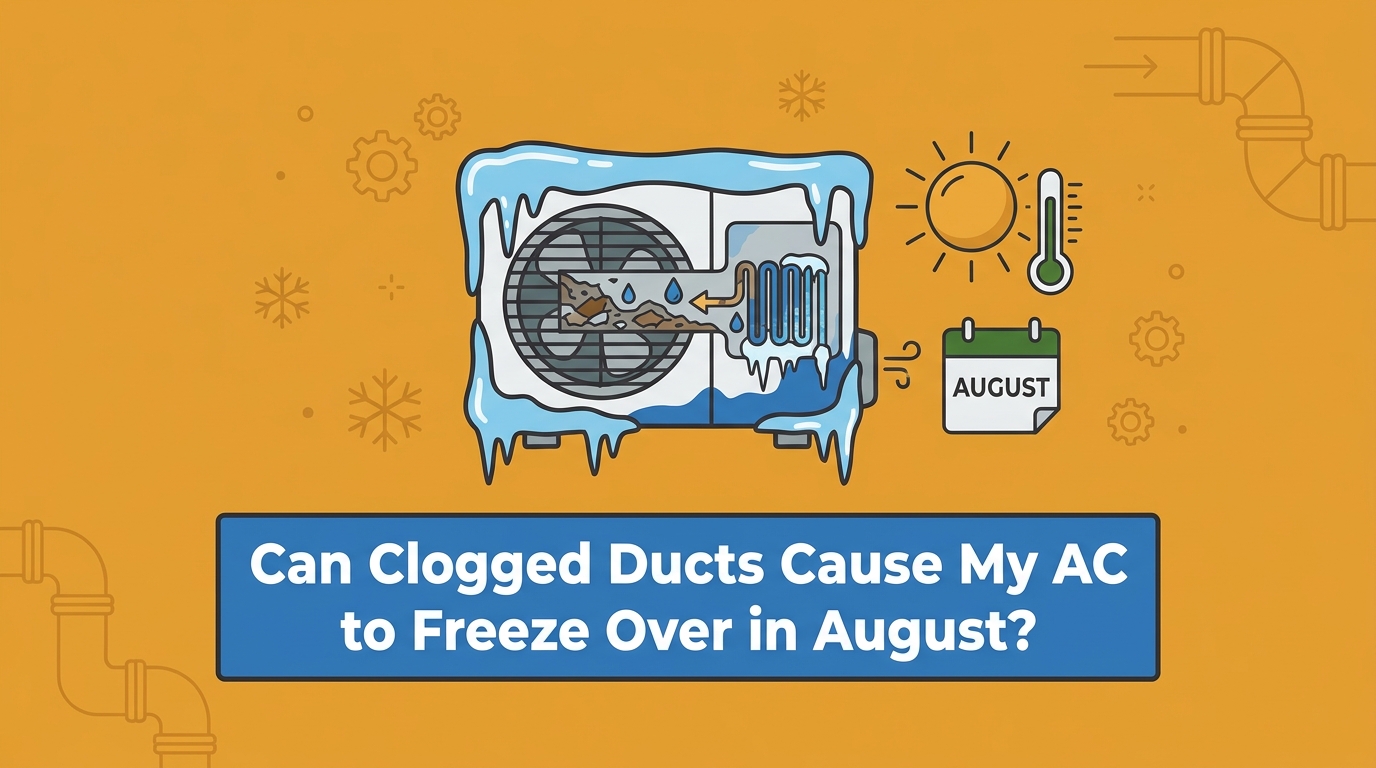
By the time the late August heat settles in, your air conditioning system has already run the equivalent of a cross-country marathon. Addressing End-of-Summer HVAC Fatigue: Easing the Load on Your Blower Motor becomes a critical priority right now, especially after your unit has spent months battling the rising temperatures. You might notice the vents aren't pushing air as forcefully as they did back in June, or your house takes hours to cool down after the afternoon sun hits the windows. This sluggish performance forces a tough decision for many homeowners: is your system just experiencing a normal seasonal quirk, or is it showing critical warning signs of mechanical suffocation? At Superior Air Duct Cleaning, this is a question our team answers daily as families prepare for the back-to-school transition.
The heavy workload your HVAC equipment endures after months of continuous summer cooling takes a massive toll on its internal components. The blower motor, which is responsible for physically moving conditioned air throughout your living space, bears the brunt of this strain. When airflow is restricted, this motor has to work twice as hard just to maintain a baseline level of comfort. Fortunately, addressing your home's indoor air quality through professional air duct cleaning can provide immediate mechanical relief to an overworked system.
The Hidden Threat in Your Ductwork: Understanding Static Pressure
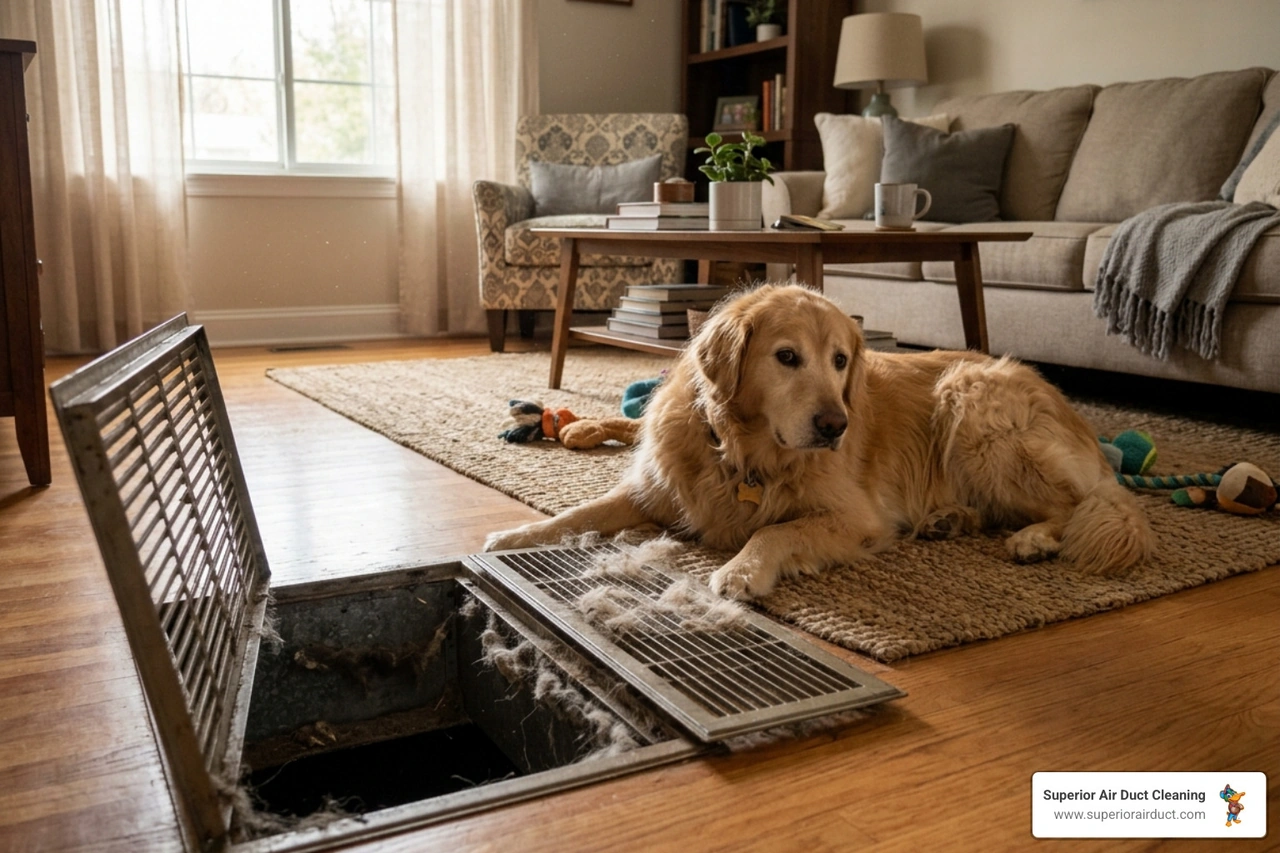
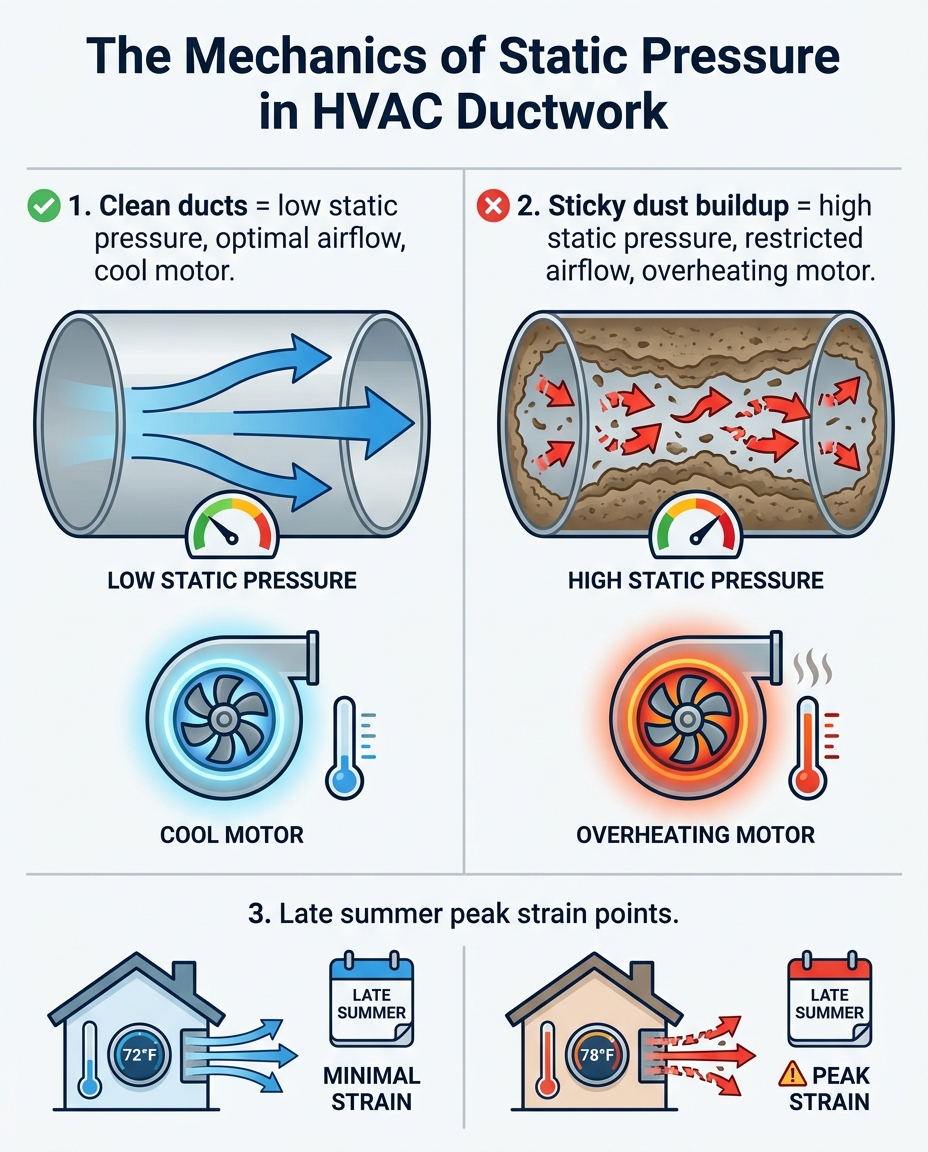
To understand why your air conditioner feels tired by late summer, you have to look at the invisible forces working against it. In the residential HVAC world, this force is called static pressure. Simply put, static pressure is the physical resistance that airflow faces as it travels through your home's duct system. Every bend, turn, and narrowing of the ductwork adds to this resistance. In our years of serving Western Pennsylvania and New Brighton area homes, our technicians have seen firsthand how months of cumulative dust, pet dander, and debris buildup drastically increase this resistance, shrinking the available space for air to travel.
Think of your ductwork like a major highway. When all lanes are open, traffic flows smoothly and efficiently. But when debris builds up along the walls of the ducts, it acts like a lane closure. The same amount of air is trying to push through a much tighter space. The mechanical consequences of this bottleneck are severe. Your blower motor does not know that the ducts are dirty; it only knows that the thermostat is calling for cool air. To push air through these blockages, the motor must work exponentially harder.
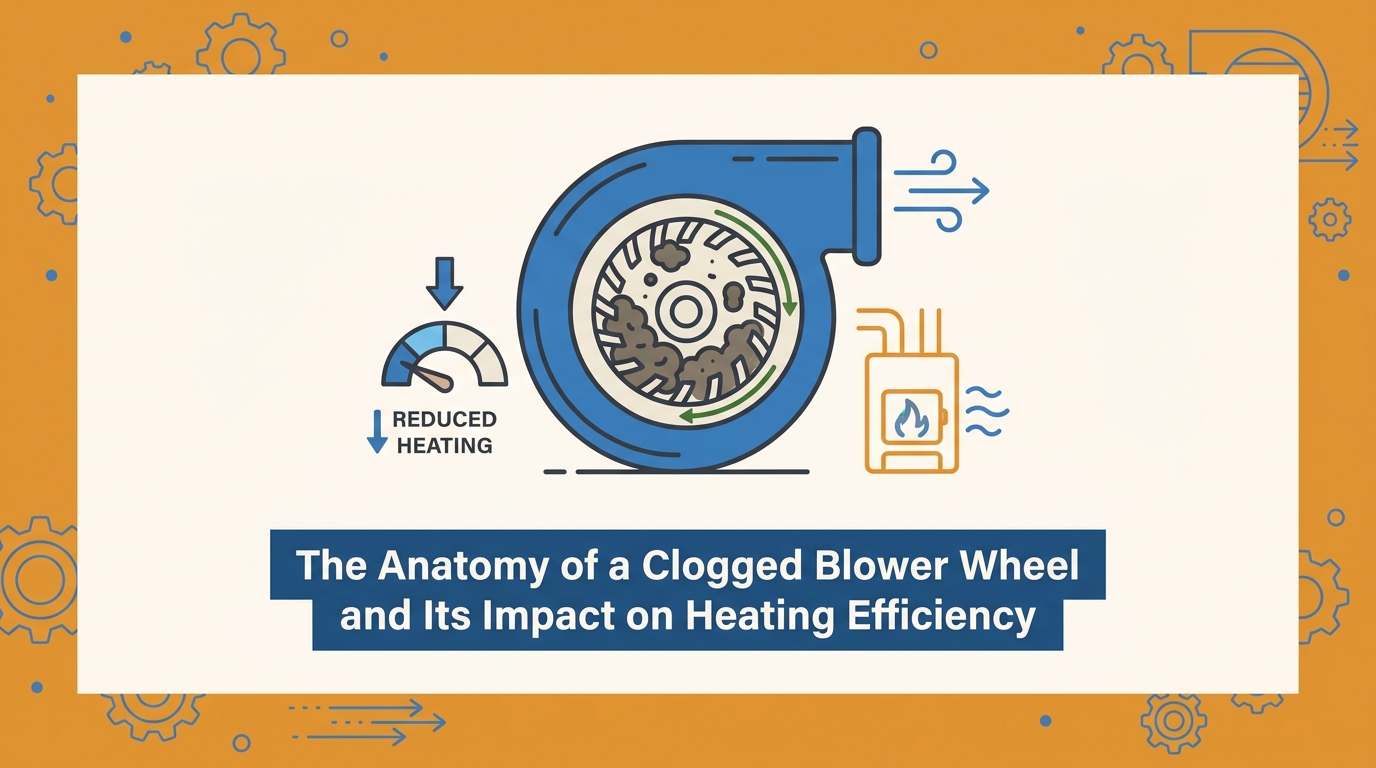
As the motor strains against high static pressure, it begins to draw more electrical amperage. This increased power draw generates excess heat within the motor housing. Over time, this constant overheating degrades the internal wiring and bearings, connecting high static pressure directly to premature motor failure and drastically reduced cooling efficiency.
The Cascade Effect of High Static Pressure
When static pressure rises beyond the system's design limits, the damage happens in stages. Understanding these stages can help you catch the problem before a total breakdown occurs.
• Clean & Clear Ducts — Airflow Impact: Optimal volume and velocity at all vents. — Blower Motor Strain: Normal operating temperature and low amp draw.
• Moderate Dust Buildup — Airflow Impact: Slight drop in airflow to the furthest rooms. — Blower Motor Strain: Motor runs slightly hotter, cycles lengthen.
• Heavy Embedded Debris — Airflow Impact: Noticeably weak airflow across the entire house. — Blower Motor Strain: High heat generation, extreme amp draw, risk of failure.

How Western Pennsylvania Humidity Creates a Sticky Trap for Debris
The climate you live in plays a massive role in how quickly your ductwork becomes restrictive. Western Pennsylvania summers are famous for prolonged periods of high heat and intense humidity. This environmental factor directly interacts with the airborne particulate matter circulating inside your home's ductwork. When the humid air is pulled into your return vents, it carries moisture deep into the dark, cool environment of the duct trunks.
This moisture is the catalyst for severe blockages. It takes normal, dry household dust and turns it into a sticky, heavy substance that clings stubbornly to the galvanized steel or flex-duct walls. Unlike dry dust, which might occasionally blow out of a vent, this damp mixture forms a dense, plaque-like coating. By the time late August arrives, this sticky accumulation has peaked. The continuous cooling cycles have layered month after month of debris onto the duct walls, creating a severely restricted pathway for conditioned air.
Because this buildup is glued to the walls by summer humidity, it requires much more than just a passing breeze from the blower motor to dislodge. The motor ends up fighting a losing battle against a heavy, textured surface that creates massive friction. This climate-driven buildup is exactly why our crews at Superior Air Duct Cleaning frequently see New Brighton area homes experience a sharp decline in HVAC performance as the summer draws to a close.
The Transformation of Household Dust
• Dry Particulates: Pet hair, dead skin cells, and loose dirt enter the return ducts easily.
• Moisture Introduction: High humidity levels introduce water vapor into the air stream.
• The Binding Process: The moisture causes the dry particles to swell and stick together, adhering to the metal surfaces.
• The Hardening Phase: As the AC cycles on and off, this sticky layer partially dries and hardens, creating a permanent, restrictive texture.
Red Flags: Is Your AC Motor Begging for Mechanical Relief?
Before an overworked blower motor fails completely, it will usually give you several physical warning signs. Recently, a local homeowner reached out to our team after living in an 18-year-old house where the ducts had never been cleaned. They were primarily seeking a way to reduce severe allergens as the kids headed back to school, but they also noticed their system was struggling to keep up with the late August continuous cooling cycles. Once our technicians performed a thorough cleaning, the restrictive buildup was removed, instantly improving both the air quality and the mechanical airflow.
If you know what to look for, you can catch a suffocating blower motor before it burns out. Identifying these symptoms early is the key to saving your system from a costly late-summer breakdown.
Watch for These Critical Warning Signs
• Weak or uneven airflow: You might notice that the air barely trickles out of the vents in rooms furthest from the furnace, even when the system sounds like it is running at full capacity.
• Unusually long cooling cycles: The air conditioner runs constantly but struggles to actually reach the temperature set on the thermostat.
• Strange motor noises: Listen closely to your indoor unit. A high-pitched whine or a deep, struggling hum often indicates that the motor is straining against high static pressure.
• Tripping circuit breakers: An overheating motor draws excess amperage. If your HVAC system frequently trips the breaker or shuts down unexpectedly, the motor is likely pulling too much power just to stay spinning.
Beyond the Filter: The Need for Deep Duct Intervention
When airflow issues arise, the first piece of advice most homeowners hear is to check the air filter. While changing your air filters regularly is absolutely crucial for system health, it only protects the intake side of the system. A fresh filter prevents new debris from entering the blower cabinet, but it does absolutely nothing to remove the thick, sticky buildup that has already bypassed the filter over the last several years.
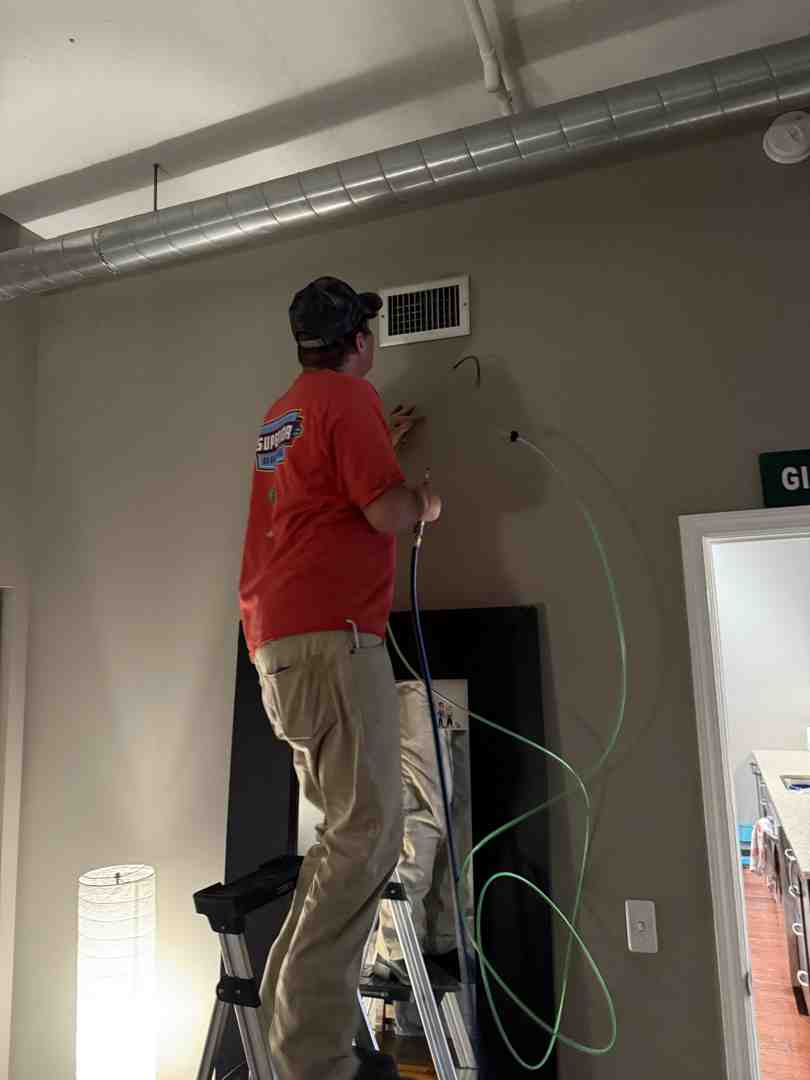
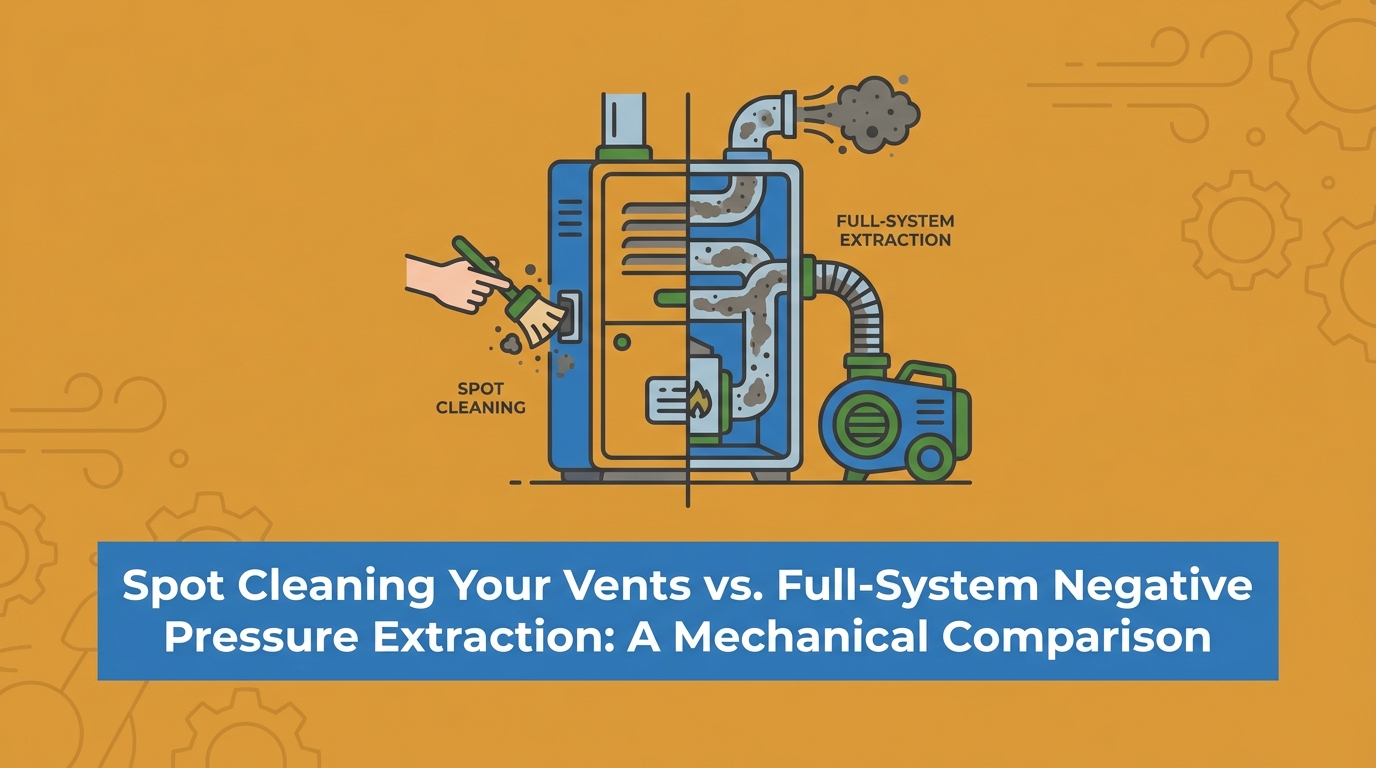
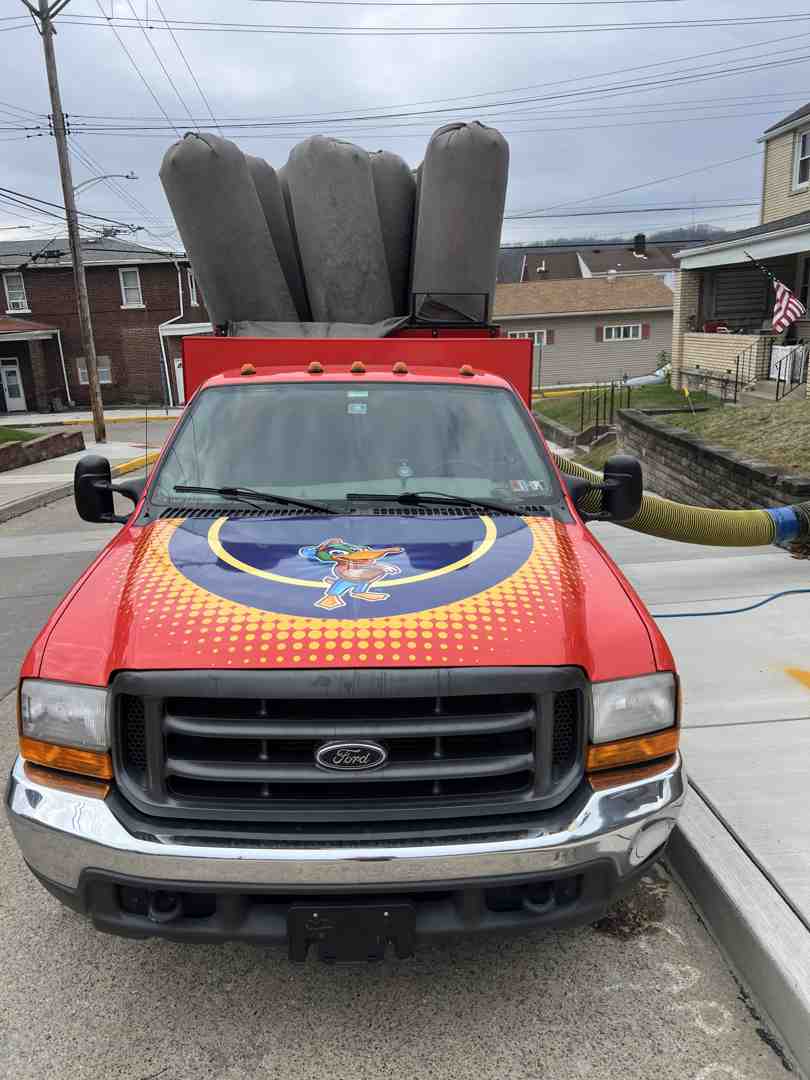
Standard filters cannot remove the embedded debris coating the main supply trunks of your ductwork. This is where a deep duct intervention becomes necessary. Using proper cleaning methods is essential to physically extract this heavy buildup. At Superior Air Duct Cleaning, our team utilizes a comprehensive approach, deploying professional-grade agitation tools and high-powered vacuum systems that safely scrub the duct walls. This removes the restrictive debris that standard filter changes completely miss.
This deep intervention should be viewed as a necessary mechanical reset for your entire HVAC system, not just an air quality upgrade. By restoring the intended, original diameter of the duct pathways, you remove the physical friction that has been choking your blower motor. For the New Brighton area homes we service, our team often sees this reset make the difference between a system that lasts another decade and one that fails prematurely.
Why Standard Maintenance Isn't Enough
Many homeowners assume a basic tune-up handles all airflow issues. However, standard maintenance typically focuses on moving parts, refrigerant levels, and electrical connections. Unless the technician is specifically equipped for deep duct extraction, the miles of hidden ductwork running through your walls and ceilings remain untouched, leaving the root cause of high static pressure completely unresolved.
Easing the Load: How Mechanical Clearing Saves Your System
The moment the heavy, sticky debris is removed from your ductwork, the system experiences an immediate drop in static pressure. This is the mechanical relief your blower motor has been begging for all summer. Another local customer recently called us out after realizing their ducts and vents desperately needed attention due to poor system performance. Our technicians thoroughly cleaned the entire network, explaining the process step-by-step, resulting in super clean pathways that instantly lowered the system's static pressure.
This lowered resistance allows the blower motor to draw less electrical power, run at a much cooler temperature, and push air effortlessly into every room of the house. Relieving this strain during the late August / end-of-summer continuous cooling cycles prevents catastrophic motor failure right before the critical transition to the fall heating season. When your furnace kicks on for the first time, it relies on that exact same blower motor to distribute heat.
Furthermore, combining this mechanical clearing with whole house sanitizing ensures that the newly unobstructed air is also clean, fresh, and free of the bacteria that thrived in the damp summer dust. You get the dual benefit of protecting your expensive HVAC equipment while simultaneously transforming the air you breathe every day.
Frequently Asked Questions About Blower Motor Strain and Duct Care
Why is my AC blower motor struggling in late summer?
Your AC blower motor struggles in late summer due to the cumulative runtime and heavy dust buildup from the previous months. As the system runs continuously to fight the heat, it pulls massive amounts of airborne debris into the ductwork. This buildup creates friction, forcing the motor to work much harder to push the same amount of air through narrowing passages.
Does ac duct cleaning help my blower motor?
Yes, comprehensive duct cleaning directly helps your blower motor by lowering the static pressure inside the system. Removing the thick layers of debris widens the pathway for conditioned air, providing immediate mechanical relief. This allows the motor to spin freely, use less electricity, and run at a much safer, cooler temperature.
What are the signs of end-of-summer HVAC fatigue?
The most common signs of end-of-summer HVAC fatigue include weak airflow at the vents, unusually long cooling cycles, and strange humming or whining noises coming from the indoor unit. You may also notice that certain rooms never seem to cool down, or the system frequently trips the circuit breaker due to the motor overheating and drawing too much power.
Can dirty ducts cause a blower motor to fail completely?
Dirty ducts are a primary cause of complete blower motor failure because they severely restrict airflow. When air cannot move freely, the motor has to overwork, causing its internal components to overheat. Over time, this constant heat degrades the motor's wiring and bearings, eventually leading to a total mechanical breakdown.
How does humidity affect the dust inside my ductwork?
High summer humidity introduces moisture into your ductwork, which mixes with dry household dust to create a sticky, heavy paste. Instead of blowing through the system, this damp mixture clings to the walls of the ducts and hardens over time. This makes the dust much harder for the system to push air past, severely restricting your overall airflow.
Don't Wait for a Breakdown: Relieve Your Blower Motor Today
End-of-summer HVAC fatigue is a serious mechanical issue, but it is one that can be completely solved with the right intervention. Pushing an overworked system through the late August / end-of-summer continuous cooling cycles without addressing the underlying static pressure is a recipe for a sudden, frustrating breakdown. By clearing out the restrictive debris now, you give your blower motor the mechanical relief it needs to finish the cooling season strong and transition safely into winter heating. Don't wait until the motor overheats and fails completely. Schedule a professional inspection and deep duct clearing today to protect your equipment and restore your home's comfort.

Customer Reviews


Superior Air Duct cleaning did a phenomenal job in a timely manner with the tech “Rich” being very professional ,personable and considerate of our property! He explained things as he proceeded and answered all our questions!
I LOVE that they provide before & after photos to see the difference. Give them a try… you won’t regret it
Pam T.
Robert was on schedule and communicated what time he would arrive. He was polite, professional, and respectful of our home. I wanted to wait a couple weeks before posting a review because I wanted to see if the duct cleaning actually made a difference. I am happy to say it did! I vacuum multiple times a week and have already noticed a significant reduction in the amount of dust cleaned up each time. As a home with pets, there will always be something to clean, but getting the ducts cleaned has definitely helped improve the air quality and reduce the dust.
alice A.
Technician Rob arrived early explained the days agenda and then proceeded to work methodically and meticulously over the next 6+ hours cleaning my ductwork. Courteous and professional they answered all of my questions and went above and beyond the call of duty. They even located an old dusty box of rat poison buried in our vents. My only regret is not finding these guys sooner. As a realtor of 22 years and owner of a newly purchased (now dust free) home I highly recommended!
Eric K.
Excellent service! I’ve used them to clean out my air ducts as well as my dryer vent duct and they are excellent. I was very pleased with both jobs and will continue to use them in the future. Great communication as well- from the time I scheduled the appointment until they were at my door.
Erika C.
We had such an amazing experience with Superior Air Duct Cleaning. They were so nice and friendly and did an amazing job. I loved seeing the before and after pictures. Besides doing an amazing job cleaning our air ducts they were so quick at responding and setting up the appointment. We will definitely be using them in the future.
Amanda C.