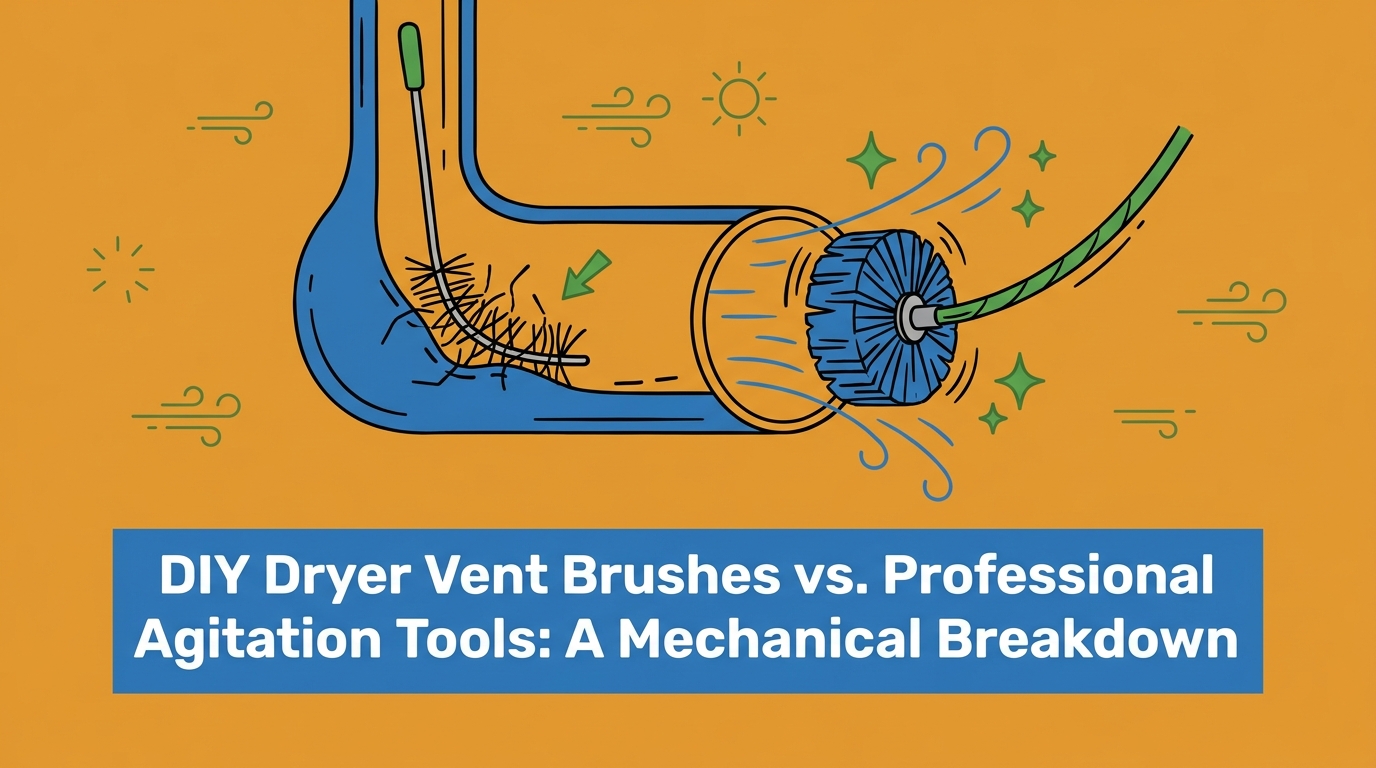
The Myth of the Quick Fix: When Hardware Store Brushes Meet Compacted Lint
When evaluating DIY Dryer Vent Brushes vs. Professional Agitation Tools, our team at Superior Air Duct Cleaning often sees homeowners assume a quick trip to the hardware store is all it takes to clear a sluggish system. The common myth suggests that a standard drill-attachment compressed-air tool, pushed through the exhaust line, will effortlessly sweep away years of accumulated lint. However, as we frequently explain to our customers, the reality of duct maintenance is far more complex, especially when hardware store brushes meet heavily compacted debris.
In our experience, the concrete problem usually surfaces during the August back-to-school laundry surge. As households transition from light summer wear to heavier autumn clothing, dryer usage spikes. Families running multiple loads a day suddenly notice their dryer taking two or three cycles to completely dry a single load of jeans or towels. This slow-drying symptom is a direct result of restricted airflow, prompting many to purchase a 10-to-15-foot DIY brush kit. The crucial decision point then becomes whether this consumer-grade equipment is actually safe and effective, or if the risk of compacting lint further into a fire hazard requires professional dryer vent cleaning to properly resolve.
While these brush kits might capture loose surface lint near the immediate exterior vent hood, they fundamentally fail to address the dense, cemented blockages deep within the ductwork. Homeowners attempting late-summer maintenance often find that these flexible rods cannot navigate the critical 90-degree elbows hidden behind walls and ceilings. Instead of extracting the debris, the compressed-air tool simply hits a structural wall, leaving the most dangerous blockages completely untouched. Understanding the mechanical limitations of these tools is the first step we recommend in protecting your home's laundry system.
Understanding Lint Compaction and Ventilation Physics
To understand why flimsy tools fail, it is essential to examine the environmental and physical factors that cause lint to harden inside the vent in the first place. A clothes dryer does not merely heat garments; it extracts significant volumes of water. This moisture mixes with microscopic fabric fibers that bypass the lint screen, creating a dense, heavy paste that coats the interior walls of the ductwork.
The problem of airflow restriction: As this moist paste accumulates, the internal diameter of the duct narrows. According to ventilation physics, forcing the same volume of exhaust air through a smaller opening increases static pressure. The dryer must work substantially harder to push the exhaust out, which creates a compounding cycle: the machine runs hotter, the airflow slows down, and even more moist lint drops out of the air stream to stick to the duct walls. Over time, this buildup transitions from a soft fuzz to a rigid, cardboard-like substance.
The climate factor: In our years servicing New Brighton and the surrounding areas of Western PA, we've observed firsthand how our cold, damp winter climate plays a massive role in this process. Throughout the freezing months, the stark temperature difference between the hot, humid dryer exhaust and the freezing exterior ductwork causes rapid condensation. This moisture acts as an adhesive. By the time late summer arrives, the lint has densely compacted and cemented inside the vents over several months. Attempting to remove this hardened buildup with a soft plastic brush is highly ineffective.
The necessary solution: Breaking down this cemented barrier requires significant mechanical force that DIY kits simply cannot generate. Homeowners dealing with severe compaction often look for dryer vent cleaning promotions to secure the heavy-duty intervention required to restore proper airflow and eliminate the compounding heat buildup.
The Mechanical Limitations of DIY Dryer Vent Brushes
Our technicians frequently receive emergency calls to retrieve snapped hardware store tools from inside walls. When you break down the physical shortcomings of consumer-grade hardware store brush kits, the reasons behind their high failure rate become clear. These kits are engineered for low-cost mass production, not for the rigorous demands of residential ductwork.
Material construction weaknesses: Most DIY kits consist of flexible fiberglass rods and nylon or plastic bristles. While these materials are cheap and lightweight, they lack the structural rigidity required for heavy scrubbing. When attached to a standard household power drill, the rotational torque travels down the rod. If the brush head meets significant resistance from compacted lint, the fiberglass rod absorbs that twisting force, often splintering or snapping entirely under the strain.
Severe reach limitations: The average residential dryer vent run can span 20 to 40 feet, winding through crawlspaces, interior walls, or attics before reaching the exterior. Most hardware store kits only extend 10 to 15 feet. This leaves the deep center of long duct runs completely untouched, creating a false sense of security for the homeowner who believes the entire line is clear.
Failure at 90-degree elbows: From what we see in the field, the most dangerous mechanical limitation occurs at the elbows. Ductwork relies on 90-degree bends to route exhaust out of the home. When a rigid fiberglass rod is forced around a sharp corner, it creates massive friction. The rods frequently snap, or the brush head becomes permanently wedged inside the wall, requiring drywall removal to extract the broken tool.
The danger of blind pushing: Perhaps the biggest risk of DIY brushing is the phenomenon of blind pushing. Because these kits lack a vacuum extraction component, pushing a brush into a clogged pipe often merely displaces the lint. Instead of pulling the debris out, the compressed-air tool acts like a plunger, shoving loose lint further down the line until it hits an elbow and forms a solid, impenetrable wall of highly flammable material.
The Engineering Behind Professional Pneumatic Agitation Tools
Contrasting the limitations of DIY kits with the exact mechanics and physics of professional-grade pneumatic whips reveals a massive gap in capability. Professional technicians do not rely on plastic bristles and household drills; they utilize specialized, air-driven tools designed specifically for residential and commercial ductwork.
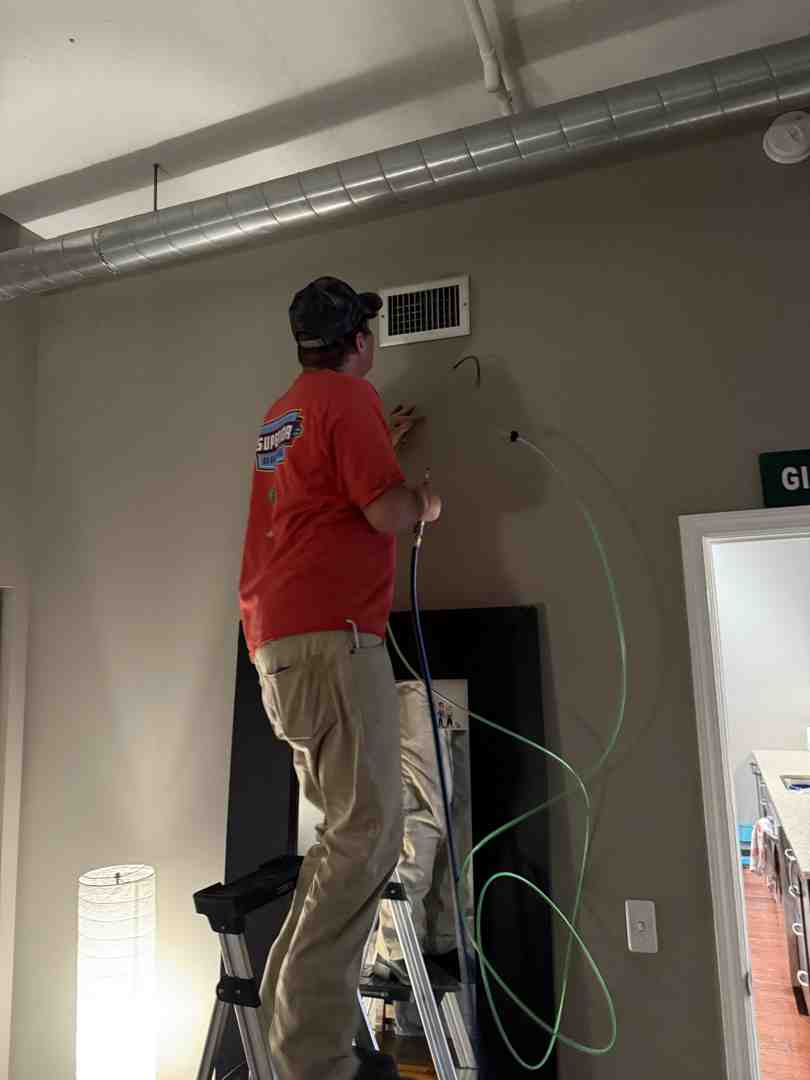
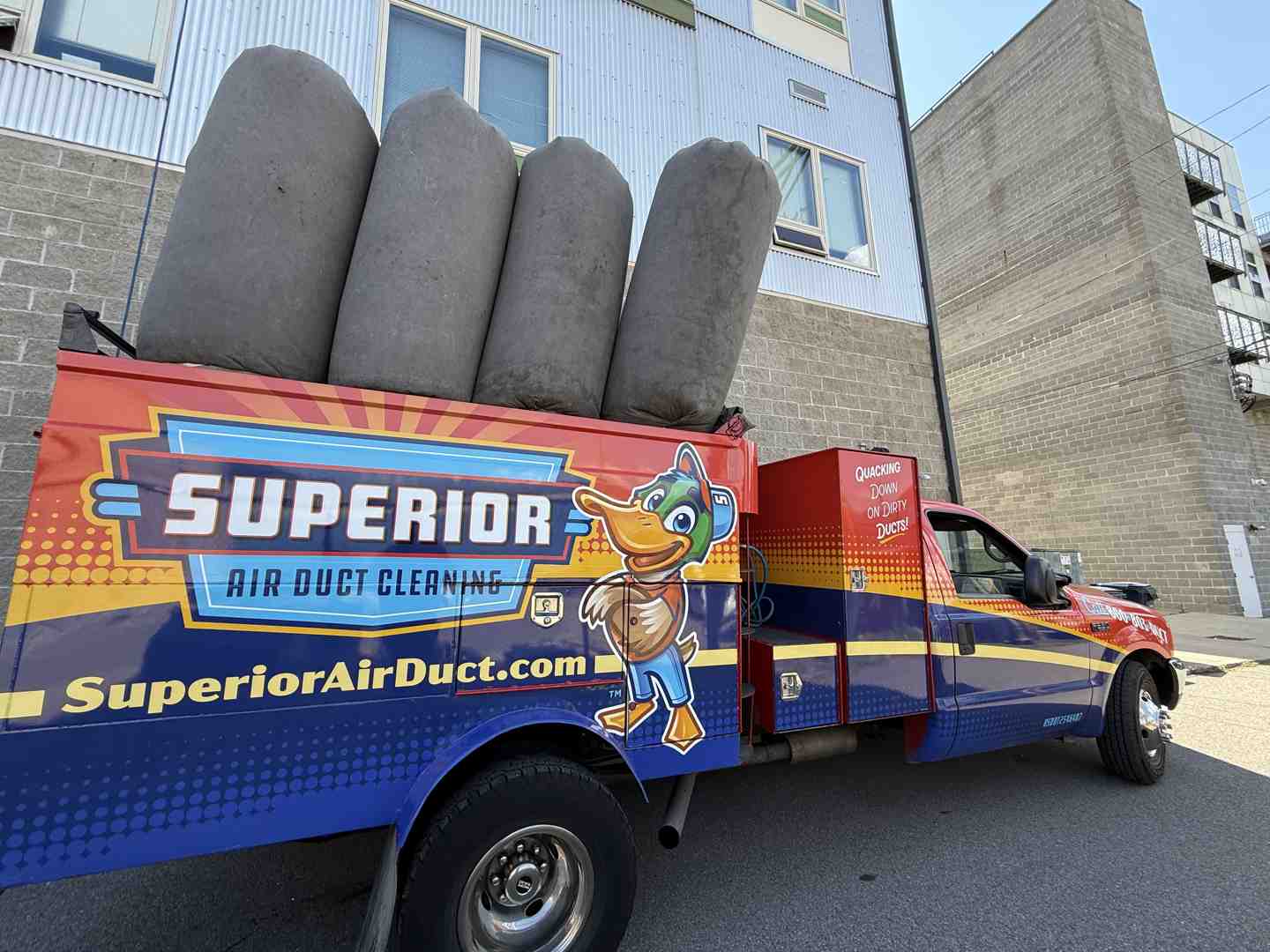
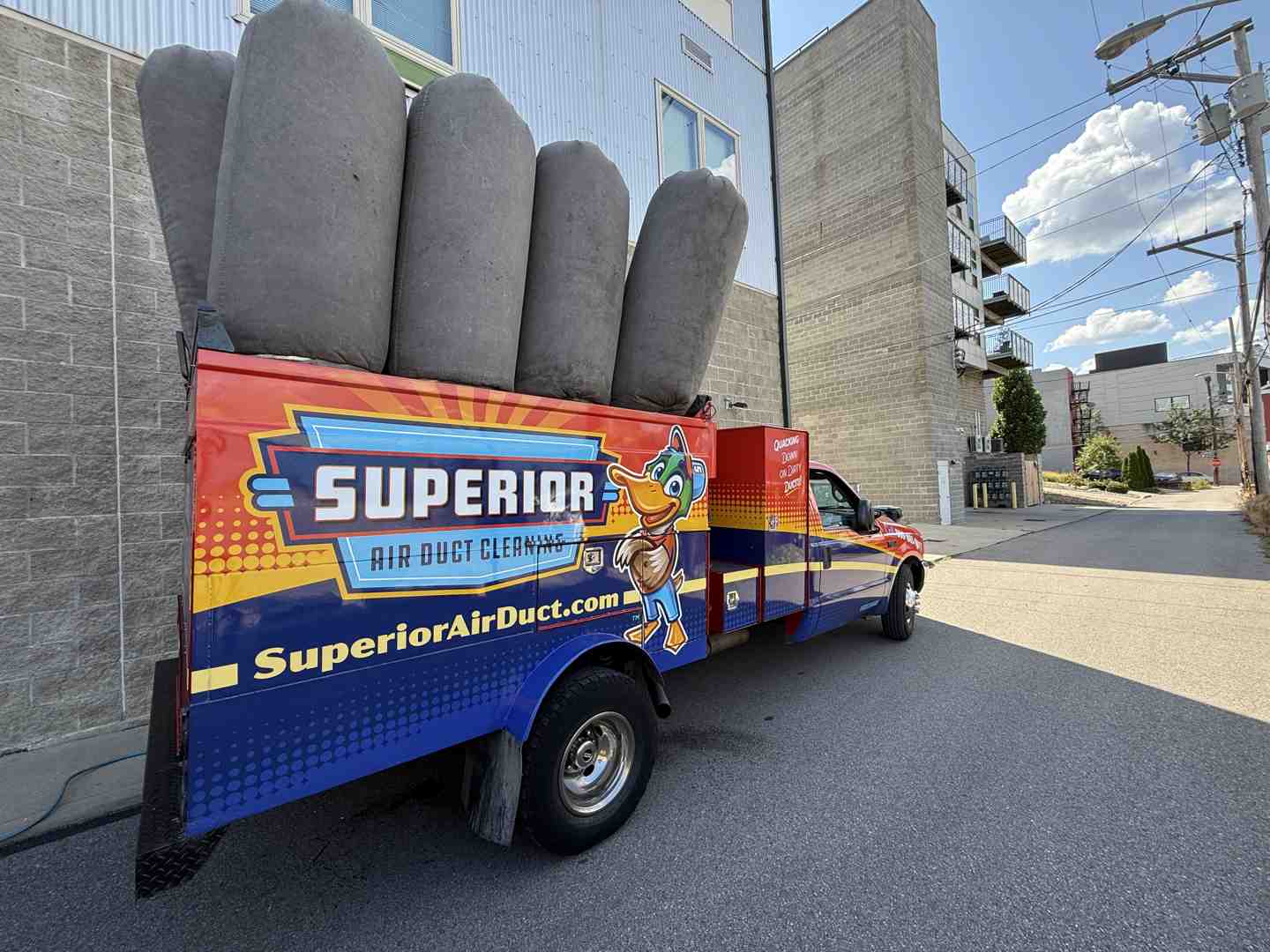
This is exactly why our crews at Superior Air Duct Cleaning utilize professional-grade pneumatic agitation tools paired with powerful suction that reaches deep into the vent system, far surpassing the capabilities of standard hardware store DIY kits. Just recently, as families geared up for the late-summer back-to-school rush, a local New Brighton homeowner reached out when their dryer vent needed a thorough cleaning. A technician performed the service efficiently, answering questions about the specialized equipment and ensuring the vent was cleaned well without risking damage to the hidden ductwork.
The mechanical process of professional cleaning follows a strict, highly engineered protocol:
1. High-Pressure Air Delivery: A pneumatic whip is a specialized tool powered by a commercial air compressor. Instead of rotational torque, it utilizes 150+ PSI pneumatic pressure to deliver concentrated blasts of air through a specialized nozzle.
2. 360-Degree Scrubbing Action: Attached to the nozzle are flexible, rubberized tentacles. As the high-pressure air forces its way through the nozzle, it causes these tentacles to thrash wildly in a 360-degree pattern. This continuous whipping action completely pulverizes cemented lint that plastic bristles cannot even scratch.
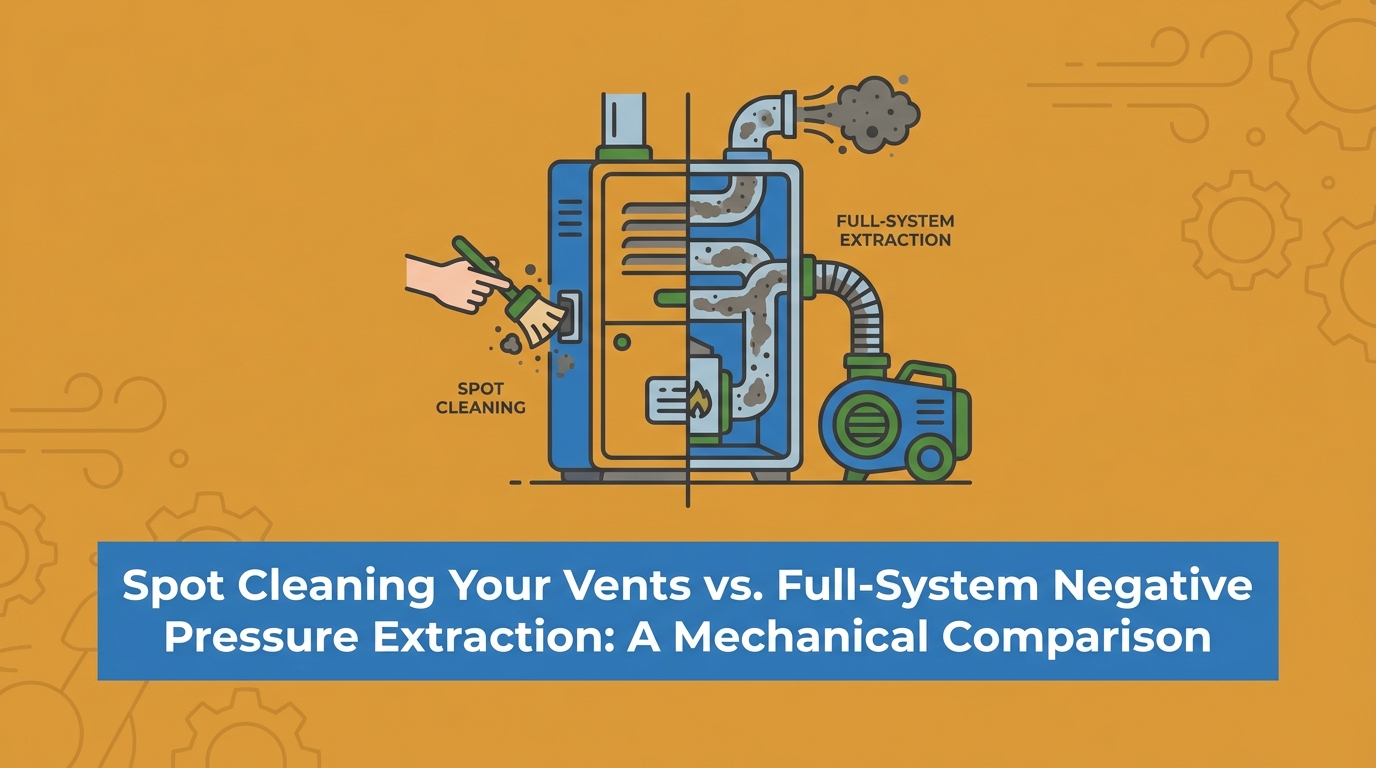
3. Simultaneous Vacuum Extraction: Agitation is only half the equation. While the pneumatic whip breaks the compacted lint loose, a high-powered, HEPA-filtered vacuum is attached to the opposite end of the duct. This creates negative pressure, instantly extracting the pulverized debris entirely out of the home rather than pushing it further down the line.
Navigating Complex Duct Layouts Safely
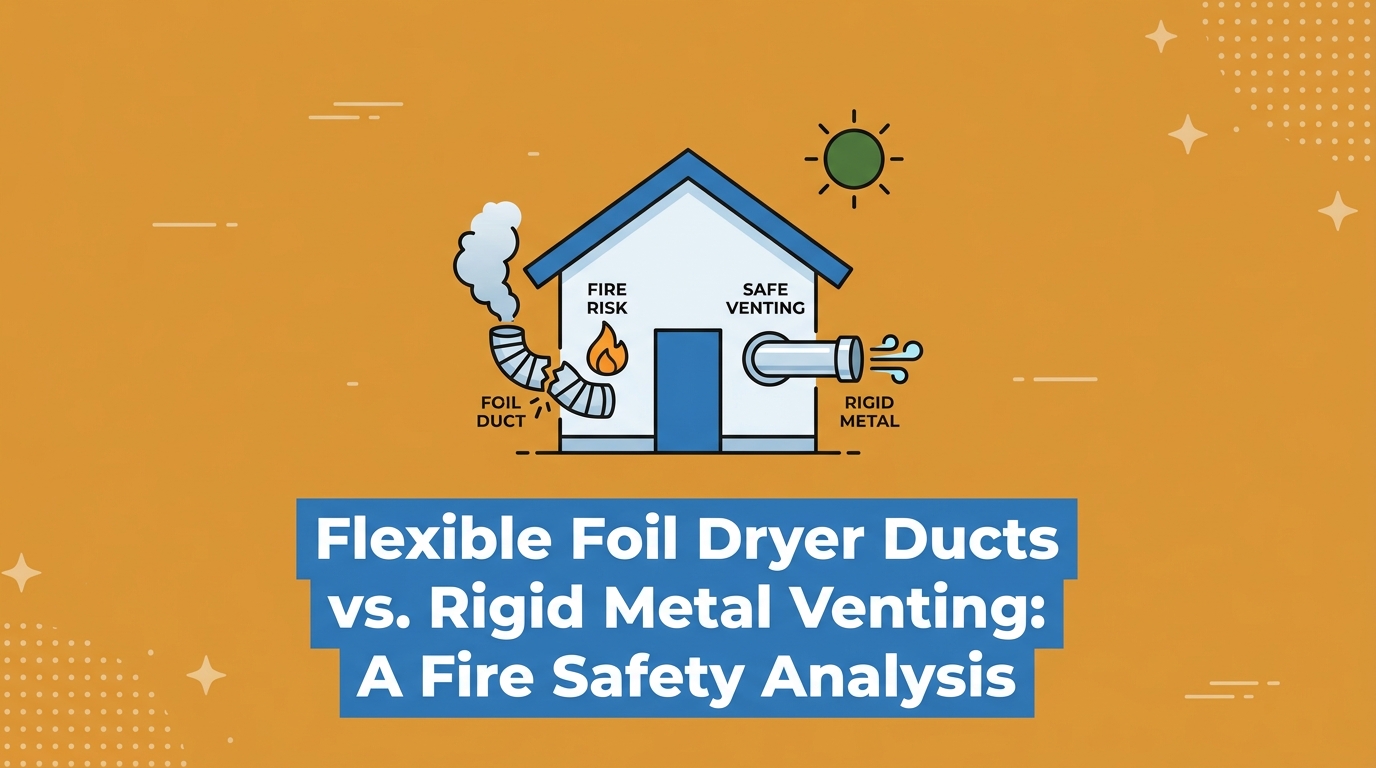
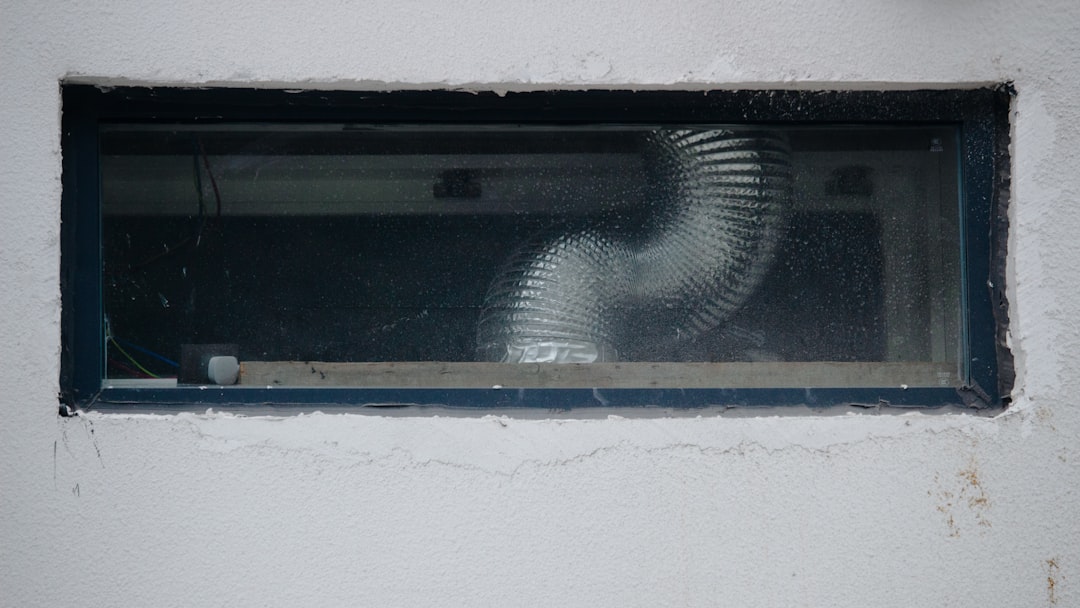
The engineering of a pneumatic line offers a distinct safety advantage when dealing with complex residential architecture. Unlike rigid fiberglass rods that snap under pressure, the pneumatic air lines we use are highly flexible and move effortlessly through multiple structural bends. The air-driven whips navigate 90-degree elbows seamlessly, protecting the structural integrity of both delicate foil transition ducts and rigid metal wall ducts without the risk of getting stuck behind the drywall.
Head-to-Head Comparison: DIY Kits vs. Professional Equipment
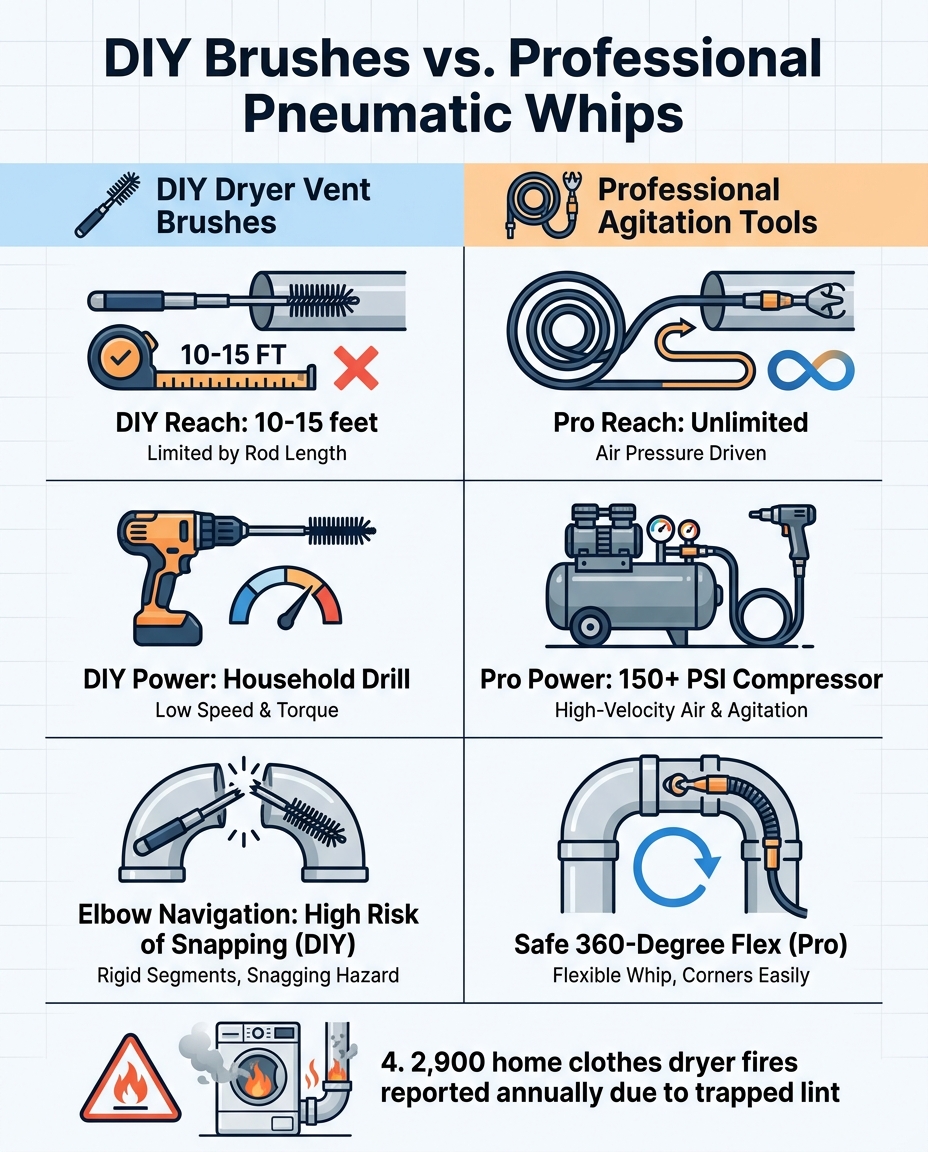
To help homeowners make a definitive safety decision, it is crucial to look at a side-by-side visual breakdown of the mechanical differences between consumer brush kits and commercial pneumatic systems. The physical disparities in power, reach, and debris removal dictate the safety and efficiency of the maintenance.
• Effective Reach — DIY Hardware Store Brush Kits: Limited to 10-15 feet; leaves center ducts dirty. — Professional Pneumatic Agitation: Unlimited line length; cleans entire vent run.
• Power Source — DIY Hardware Store Brush Kits: Standard household power drill (low torque). — Professional Pneumatic Agitation: Commercial air compressor (150+ PSI).
• Elbow Navigation — DIY Hardware Store Brush Kits: High risk of snapping or getting permanently stuck. — Professional Pneumatic Agitation: Seamless, flexible pneumatic navigation through bends.
• Debris Removal — DIY Hardware Store Brush Kits: Blind pushing; often compacts lint into dense plugs. — Professional Pneumatic Agitation: Simultaneous high-pressure agitation and vacuum extraction.
• Wall Scrubbing — DIY Hardware Store Brush Kits: Linear compressed-air agitation; misses the top and sides of ducts. — Professional Pneumatic Agitation: 360-degree thrashing action; cleans full circumference.
Relying on a tool that only reaches halfway into the system and lacks extraction capabilities leaves the most critical, hidden portions of your ductwork highly vulnerable to thermal buildup.
The Fire Hazard Threshold: When DIY Maintenance Becomes Dangerous
The mechanical limitations of DIY brushes do not just result in poorly dried clothes; they actively contribute to severe safety risks. Leaving compacted lint behind after a failed DIY attempt pushes the appliance toward a critical fire hazard threshold. We regularly remind our clients about U.S. Fire Administration (USFA) data, which shows 2,900 home clothes dryer fires are reported annually, leading to devastating property loss. The vast majority of these incidents trace back to restricted airflow caused by trapped lint.
The plugging phenomenon: When a homeowner uses a DIY brush, they often experience a phenomenon we call "plugging." The compressed-air tool gathers loose, fluffy lint from the first few feet of the duct and shoves it forward. When this mass of lint hits a 90-degree elbow or a patch of cemented, moisture-hardened debris, it stops moving. The homeowner continues to push the drill rod, packing that loose lint into a dense, highly flammable plug that completely seals off the exhaust line.
The thermal threshold: Once the duct is plugged, the dryer's exhaust has nowhere to go. The thermal threshold is quickly breached. The restricted airflow causes the dryer's internal heating element to overheat drastically. Because lint is highly combustible—often used as a survival fire-starter—the extreme heat backing up from the element can easily ignite the lint plug packed tightly in the ductwork.
Knowing when to stop a DIY attempt is vital. If your drill rod meets heavy resistance, if you cannot push the compressed-air tool past an elbow, or if you notice warning signs your dryer vent is clogged—such as the dryer top being excessively hot to the touch or a burning smell in the laundry room—cease the DIY attempt immediately and call a professional.
Comprehensive System Care: Beyond the Dryer Vent
Restricted dryer vents do not exist in a vacuum; they impact the broader laundry area and the overall air quality of your home. When a blocked dryer vent forces moist, lint-filled exhaust air to back up, that air has to escape somewhere. It typically leaks out of the back of the dryer cabinet or through compromised seals in the transition hose, dumping directly into your laundry room.
This bypass increases indoor humidity, encouraging mildew growth, and covers the laundry room surfaces in a fine layer of dusty lint. We frequently see this ripple effect in local homes. Recently, another homeowner faced a tight timeline before a late-summer move and needed their system addressed on short notice due to excessive dust and poor drying performance. Our team scheduled and completed the dryer vent cleaning quickly, ensuring the home's ventilation was clear and safe before the transition.
When heavy lint bypass is observed, it is often necessary to evaluate the entire home's ventilation system. Airborne lint particles can easily be pulled into the cold air returns of your HVAC system, circulating dust throughout the living spaces. Addressing interconnected ductwork through comprehensive air duct cleaning services ensures that your HVAC system isn't constantly recycling the debris generated by a failing dryer vent.
Protecting Your Home's Air Quality
Connecting dryer vent backdrafts to poor indoor air quality highlights the value of addressing both exhaust and supply ventilation simultaneously. A home operates as an interconnected pressure system. When exhaust ventilation (like a dryer vent) is blocked, it alters the air pressure balance, trapping pollutants, moisture, and allergens indoors. Sanitizing the space and clearing all ventilation pathways ensures a healthier, safer, and more efficient home environment.
Frequently Asked Questions
Why do dryer vent compressed-air tools get stuck in the wall?
Dryer vent brushes typically get stuck because rigid fiberglass rods cannot bend easily around 90-degree duct elbows. When forced, the friction increases exponentially, causing the rod to either snap off or wedge the plastic brush head permanently against the metal wall of the duct. Extracting a stuck compressed-air tool often requires cutting into the drywall to dismantle the ductwork.
Are professional dryer vent cleaning tools better than hardware store kits?
Yes, professional tools are vastly superior in both safety and effectiveness. While hardware store kits rely on weak rotational torque and blind pushing, professional systems use 150+ PSI pneumatic whips to safely scrub the entire circumference of the duct. This agitation is paired with high-powered vacuum extraction to remove the debris entirely, rather than just displacing it.
Can you clean a dryer vent with a 90-degree elbow yourself?
Attempting to clean a duct with multiple 90-degree elbows using a DIY brush is highly risky. The rigid rods provided in consumer kits are prone to breaking under the torsional strain of navigating sharp corners. Professionals use flexible, air-driven pneumatic lines that travel effortlessly through structural bends without damaging the duct or getting stuck.
What equipment do professionals use to clean dryer vents?
Professionals utilize a combination of heavy-duty air compressors, specialized pneumatic whips, and high-powered HEPA vacuums. The air compressor drives a specialized nozzle with rubberized tentacles that thrash in a 360-degree motion to pulverize cemented lint. Simultaneously, the vacuum system creates negative pressure to pull the dislodged lint safely out of the home.
How does damp winter weather affect dryer lint buildup?
Cold, damp winter weather accelerates lint compaction by causing rapid condensation inside the exhaust duct. When the hot, moist air from the dryer meets the freezing exterior duct walls, the moisture turns into liquid condensation. This water mixes with stray fabric fibers, cementing the lint to the duct walls in a dense paste that hardens over time.
Is it safe to use a drill attachment to clean a dryer vent?
Using a drill attachment carries significant mechanical risks, especially in long vent runs or heavily compacted ducts. The rotational force of the drill can cause the fiberglass extension rods to twist and shatter inside the wall. Furthermore, without a vacuum to extract the lint, a drill compressed-air tool often just pushes the clog deeper into the system, creating a severe fire hazard.
Make the Safe Choice for Your Home's Laundry System
Relying on a flimsy hardware store brush to clear compacted, moisture-hardened lint often leads to snapped rods, stuck brushes, and dangerous lint plugs. When we inspect residential systems, the mechanical superiority of 150+ PSI pneumatic agitation and powerful vacuum extraction makes the choice for your home's safety incredibly clear. Protect your property from fire hazards, improve your overall indoor air quality, and potentially qualify for generally applicable utility incentive programs by maintaining peak appliance efficiency. Reach out to our team today to schedule professional maintenance or explore our whole house sanitizing solutions to ensure your entire ventilation system is operating safely and efficiently.

Customer Reviews


Superior Air Duct cleaning did a phenomenal job in a timely manner with the tech “Rich” being very professional ,personable and considerate of our property! He explained things as he proceeded and answered all our questions!
I LOVE that they provide before & after photos to see the difference. Give them a try… you won’t regret it
Pam T.
Robert was on schedule and communicated what time he would arrive. He was polite, professional, and respectful of our home. I wanted to wait a couple weeks before posting a review because I wanted to see if the duct cleaning actually made a difference. I am happy to say it did! I vacuum multiple times a week and have already noticed a significant reduction in the amount of dust cleaned up each time. As a home with pets, there will always be something to clean, but getting the ducts cleaned has definitely helped improve the air quality and reduce the dust.
alice A.
Technician Rob arrived early explained the days agenda and then proceeded to work methodically and meticulously over the next 6+ hours cleaning my ductwork. Courteous and professional they answered all of my questions and went above and beyond the call of duty. They even located an old dusty box of rat poison buried in our vents. My only regret is not finding these guys sooner. As a realtor of 22 years and owner of a newly purchased (now dust free) home I highly recommended!
Eric K.
Excellent service! I’ve used them to clean out my air ducts as well as my dryer vent duct and they are excellent. I was very pleased with both jobs and will continue to use them in the future. Great communication as well- from the time I scheduled the appointment until they were at my door.
Erika C.
We had such an amazing experience with Superior Air Duct Cleaning. They were so nice and friendly and did an amazing job. I loved seeing the before and after pictures. Besides doing an amazing job cleaning our air ducts they were so quick at responding and setting up the appointment. We will definitely be using them in the future.
Amanda C.