Why You Must Know How to Verify Duct Cleaning Credentials
When you decide to have your air ducts cleaned, you aren't just paying for someone to vacuum out some dust. You are hiring a professional to handle the "lungs" of your home. If done incorrectly, duct cleaning can actually worsen your indoor air quality by kicking up settled allergens or damaging sensitive HVAC components. This is why understanding how to verify duct cleaning credentials is your first line of defense.
The primary authority in our industry is the National Air Duct Cleaners Association (NADCA). This non-profit organization sets the global standard for the assessment, cleaning, and restoration of HVAC systems (known as the ACR Standard). Companies that commit to NADCA membership aren't just joining a club; they are agreeing to follow high-level "source removal" methods. This means they use powerful vacuum suction and mechanical agitation to actually remove debris rather than just blowing it around.
Unfortunately, duct cleaning is the single most scammed business type online as of May 2026. Many "fly-by-night" operators use social media to post too-good-to-be-true deals. Research shows that in some markets, nearly half of the companies advertising services are either uncertified or actively lying about their credentials. By choosing a NADCA certified vs uncertified duct cleaning comparison, you ensure that you are working with a company that has external accountability. There are significant benefits of choosing a NADCA certified local company, including the peace of mind that the technicians have been tested on their technical knowledge.
The Gold Standard: NADCA and ASCS Certification
To be a member of NADCA, a company must meet strict requirements. The most important is having at least one employee who holds the Air Systems Cleaning Specialist (ASCS) certification. To earn this, a technician must pass a rigorous proctored exam covering HVAC system anatomy, safety, and cleaning standards.
Beyond the ASCS, you might see the CVI (Certified Ventilation Inspector) credential, which denotes an advanced level of expertise in system inspections. These certifications aren't "one and done." Technicians must earn six Continuing Education Credits (CECs) every year to maintain their status. This ensures they stay up to date with the latest HVAC technologies and safety protocols. When you learn how to choose a duct cleaning company, always look for these acronyms as a sign of technical competency and a commitment to a strict Code of Ethics.
How to Verify Duct Cleaning Credentials via Official Directories
Don't just take a company’s word for it if they have a logo on their website. Scammers often copy-paste these logos illegally. To be 100% sure, you should perform your own search.
- Use the NADCA Member Search: Go to the official directory and search by the company name or your zip code (e.g., 15201 for Pittsburgh or 44501 for Youngstown).
- Check Clickable Logos: Legitimate members often have a "verification logo" on their site that, when clicked, links directly back to their official profile on the NADCA server.
- Ask for Physical Certificates: A reputable company will happily show you a physical certificate. Check the expiration date! If it’s from 2023, they aren't current.
- Verify the ASCS Number: Each certified technician has a unique number. You can call NADCA headquarters directly to confirm that the number belongs to the person standing in your living room.
Whether you are looking for experts for duct cleaning in Mahoning County OH or searching in Beaver County, PA, this five-minute check is the most important step in the process.
Checking State Licenses and Insurance in PA and OH
National certifications tell you if a company is good at what they do, but state licenses tell you if they are legal. The requirements change the moment you cross the state line between Pennsylvania and Ohio.
| Requirement | Pennsylvania (PA) | Ohio (OH) |
|---|---|---|
| Primary License | Home Improvement Contractor (HIC) | HVAC Contractor License |
| Governing Body | PA Attorney General | OH Construction Industry Licensing Board |
| Verification Tool | PA HIC Search Portal | eLicense Ohio Portal |
| Insurance | Mandatory for Registration | Mandatory for Licensing |
In Pennsylvania, any contractor performing more than $5,000 of work per year must register as a Home Improvement Contractor (HIC). This registration ensures they have basic insurance and haven't been barred from doing business. In Ohio, the rules are often stricter for anyone touching the "mechanical" parts of your HVAC system. If a company tells you they don't need a license, be careful. You can read more about this in our guide: Do I need a license to clean air ducts?.
Verifying Insurance Coverage and Bonding
Insurance is non-negotiable. If a technician accidentally knocks over a ladder and smashes your flat-screen TV—or worse, falls and gets injured on your property—you could be liable if they aren't properly insured.
- General Liability: This protects your property. Look for a minimum of $500,000 to $1,000,000 in coverage.
- Workers' Compensation: This protects you from being sued if a worker is hurt.
- Bonding: A bond is a form of consumer protection that guarantees the company will follow state regulations. While insurance protects against accidents, a bond protects against "bad actors."
Always ask for a Certificate of Insurance (COI). A common trick for shady operators is to show an old COI for a policy they stopped paying for. To be safe, call the insurance agency listed on the document and ask, "Is policy #12345 currently active and in good standing?" It takes two minutes and provides total protection. Our ultimate guide to choosing a reputable duct cleaning company goes into even more detail on these safety nets.
Spotting Red Flags and "Blow and Go" Scams
We have all seen the coupons in the mail: "$49 Whole-House Duct Cleaning!" If you see this, run the other way. This is the classic "blow and go" scam. These companies use the low price to get into your home, then spend 20 minutes using a household shop-vac to clean your vents.
Once they are inside, they often use "fake inspections" to claim you have "black mold" or dangerous system failures that require immediate, expensive repairs. A proper, high-quality duct cleaning for an average home takes between 6 and 8 hours and involves a two-person crew. If a company claims they can do it in an hour for fifty bucks, they aren't doing the job. You can see more examples of what to watch out for in our article where Superior Air Duct Cleaning looks at some common scams.
Essential Questions to Ask Before Hiring
Before you sign a contract, put the contractor on the "hot seat" with these questions:
- "Will you clean the blower wheel and air handler?" If they say no, or don't know what those are, they aren't following NADCA standards.
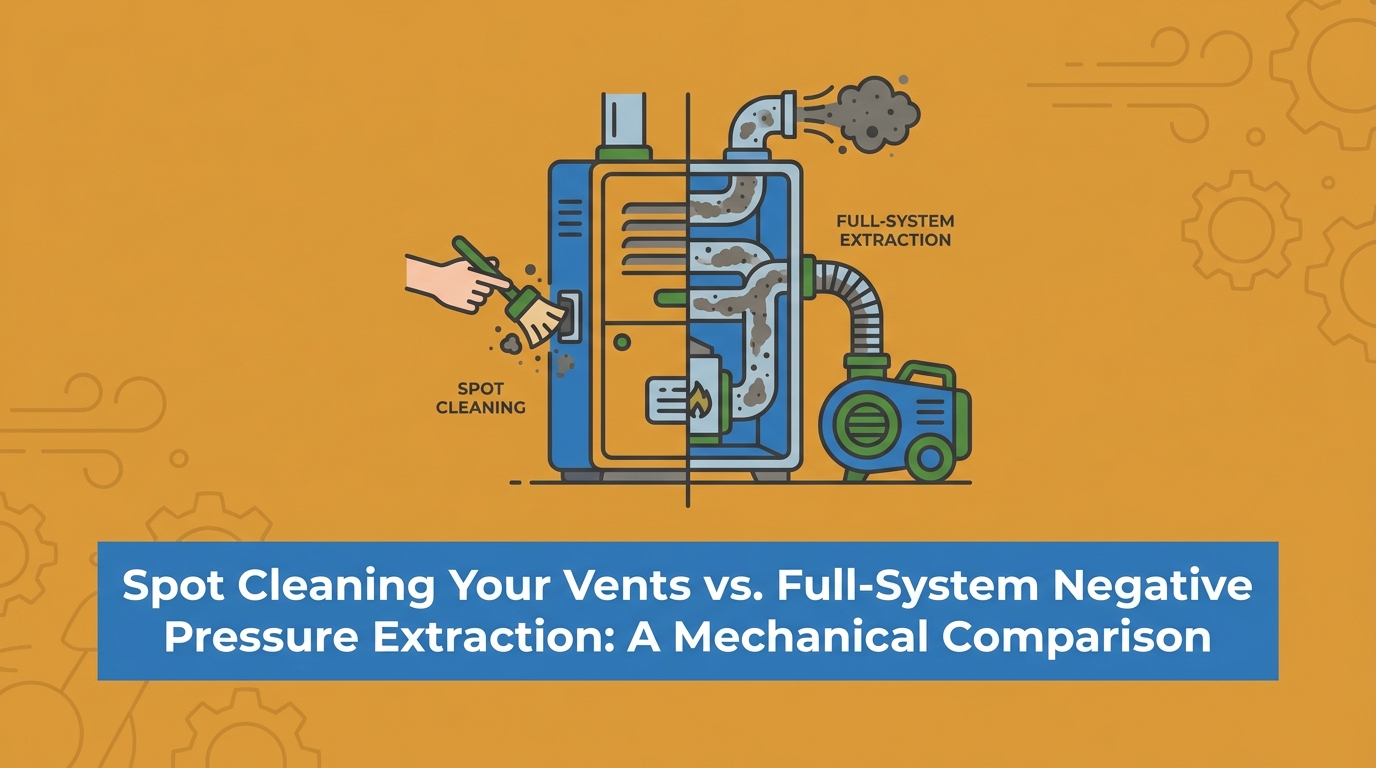
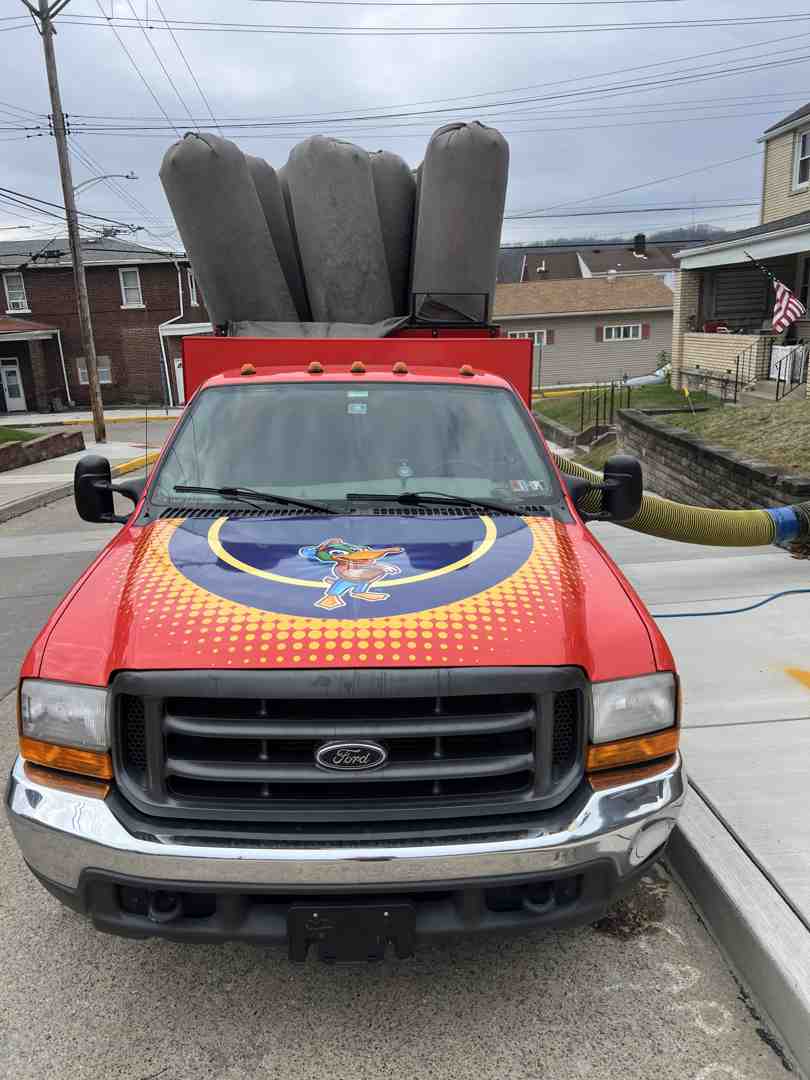
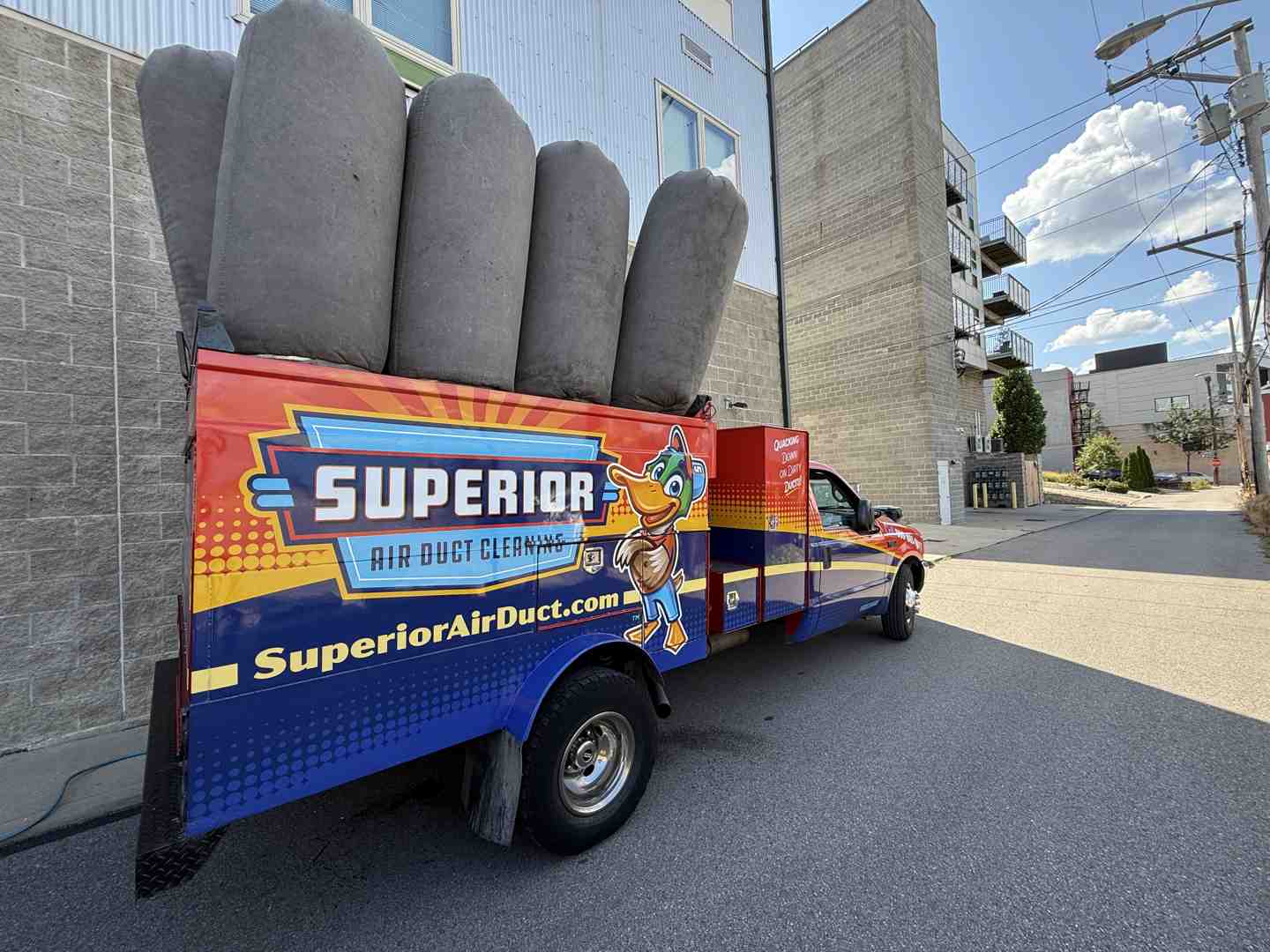
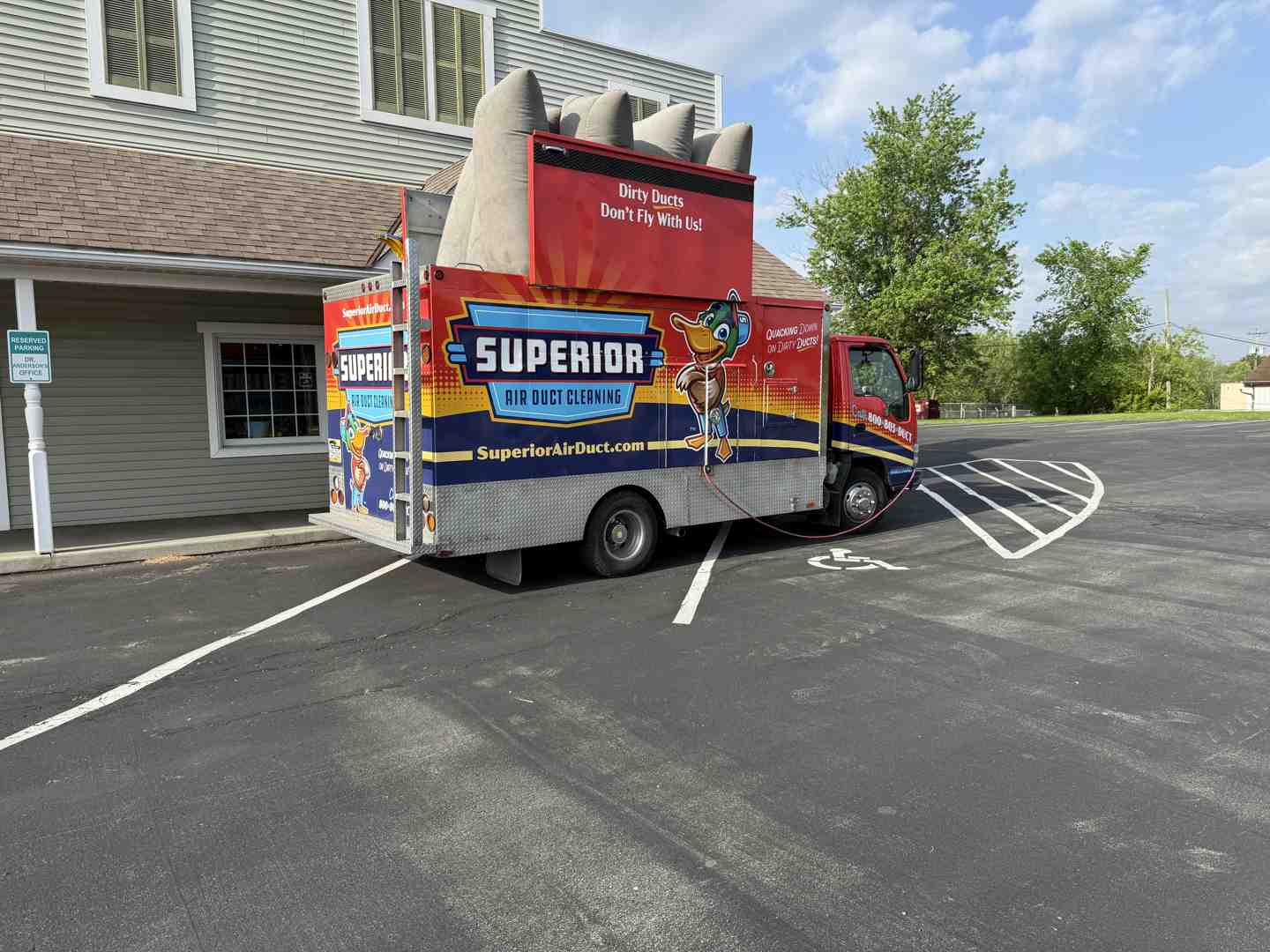
- "Do you use negative pressure?" A professional uses a truck-mounted vacuum to create a vacuum inside your ducts so dust is pulled out of your house, not blown into your rooms.
- "How many jobs do your crews do per day?" If the answer is 5 or 6, they are rushing. A quality company usually schedules only one or two jobs per crew per day.
- "Are your technicians paid on commission?" High-pressure sales often come from technicians who only make money if they sell you "extra" services.
For more help, check out our full list of questions to ask before hiring a duct cleaning company.
Advanced Verification for Specialized Services
If you are a business owner in Pittsburgh or Boardman looking for commercial services—especially for a restaurant—the stakes are even higher. Kitchen exhaust cleaning is a major fire safety issue.
For these jobs, you should look for IKECA (International Kitchen Exhaust Cleaning Association) certification. These professionals must follow NFPA 96 standards, which are the "laws" of fire protection for commercial cooking.
How to Verify Duct Cleaning Credentials for Commercial Kitchens
Verification for commercial work involves checking for:
- CECS (Certified Exhaust Cleaning Specialist): The gold standard for kitchen exhaust leads.
- CESI (Certified Exhaust System Inspector): Required for many municipal fire code inspections.
- ANSI/IKECA C-10: This is the specific standard for how the cleaning must be performed.
Many cities, like Pittsburgh, have specific municipal ordinances regarding how often these systems must be cleaned. Hiring an uncertified person for a commercial kitchen isn't just a bad idea; it could lead to your business being shut down by the fire marshal or your insurance claim being denied after a fire.
Frequently Asked Questions about Duct Cleaning Paperwork
How do I know if a NADCA certificate is real?
The easiest way is to cross-reference the company name on the NADCA Find a Professional directory. You can also look for the ASCS number on the certificate and verify that the individual listed is still employed by that company.
Is a business license the same as a duct cleaning certification?
No. A business license is just a permit from the city or county to operate a business and pay taxes. A duct cleaning certification (like ASCS) is proof of technical knowledge and training. You need both to ensure a company is both legal and competent.
What should I do if I suspect false credentials?
If you find a company is lying about being NADCA certified, you should report them to NADCA immediately. You should also file a complaint with the Better Business Bureau (BBB) and the State Attorney General’s office to protect other homeowners in your community.
Conclusion
At Superior Air Duct Cleaning, we believe that transparency is the "secret sauce" to a great service experience. Whether we are serving our neighbors in New Brighton, PA, or helping a business in Boardman, OH, we always come prepared with our paperwork. We are proud of our NADCA membership and our commitment to the health and safety of our local communities in Western Pennsylvania and Northeast Ohio.
Don't let a "blow and go" operator gamble with your home's air quality. Take the 30 minutes to verify your contractor's credentials—it’s the best investment you can make for your home this year.
Ready for a cleaning that actually meets the gold standard? Contact us for Air Duct Cleaning today.

Customer Reviews


Superior Air Duct cleaning did a phenomenal job in a timely manner with the tech “Rich” being very professional ,personable and considerate of our property! He explained things as he proceeded and answered all our questions!
I LOVE that they provide before & after photos to see the difference. Give them a try… you won’t regret it
Pam T.
Robert was on schedule and communicated what time he would arrive. He was polite, professional, and respectful of our home. I wanted to wait a couple weeks before posting a review because I wanted to see if the duct cleaning actually made a difference. I am happy to say it did! I vacuum multiple times a week and have already noticed a significant reduction in the amount of dust cleaned up each time. As a home with pets, there will always be something to clean, but getting the ducts cleaned has definitely helped improve the air quality and reduce the dust.
alice A.
Technician Rob arrived early explained the days agenda and then proceeded to work methodically and meticulously over the next 6+ hours cleaning my ductwork. Courteous and professional they answered all of my questions and went above and beyond the call of duty. They even located an old dusty box of rat poison buried in our vents. My only regret is not finding these guys sooner. As a realtor of 22 years and owner of a newly purchased (now dust free) home I highly recommended!
Eric K.
Excellent service! I’ve used them to clean out my air ducts as well as my dryer vent duct and they are excellent. I was very pleased with both jobs and will continue to use them in the future. Great communication as well- from the time I scheduled the appointment until they were at my door.
Erika C.
We had such an amazing experience with Superior Air Duct Cleaning. They were so nice and friendly and did an amazing job. I loved seeing the before and after pictures. Besides doing an amazing job cleaning our air ducts they were so quick at responding and setting up the appointment. We will definitely be using them in the future.
Amanda C.